
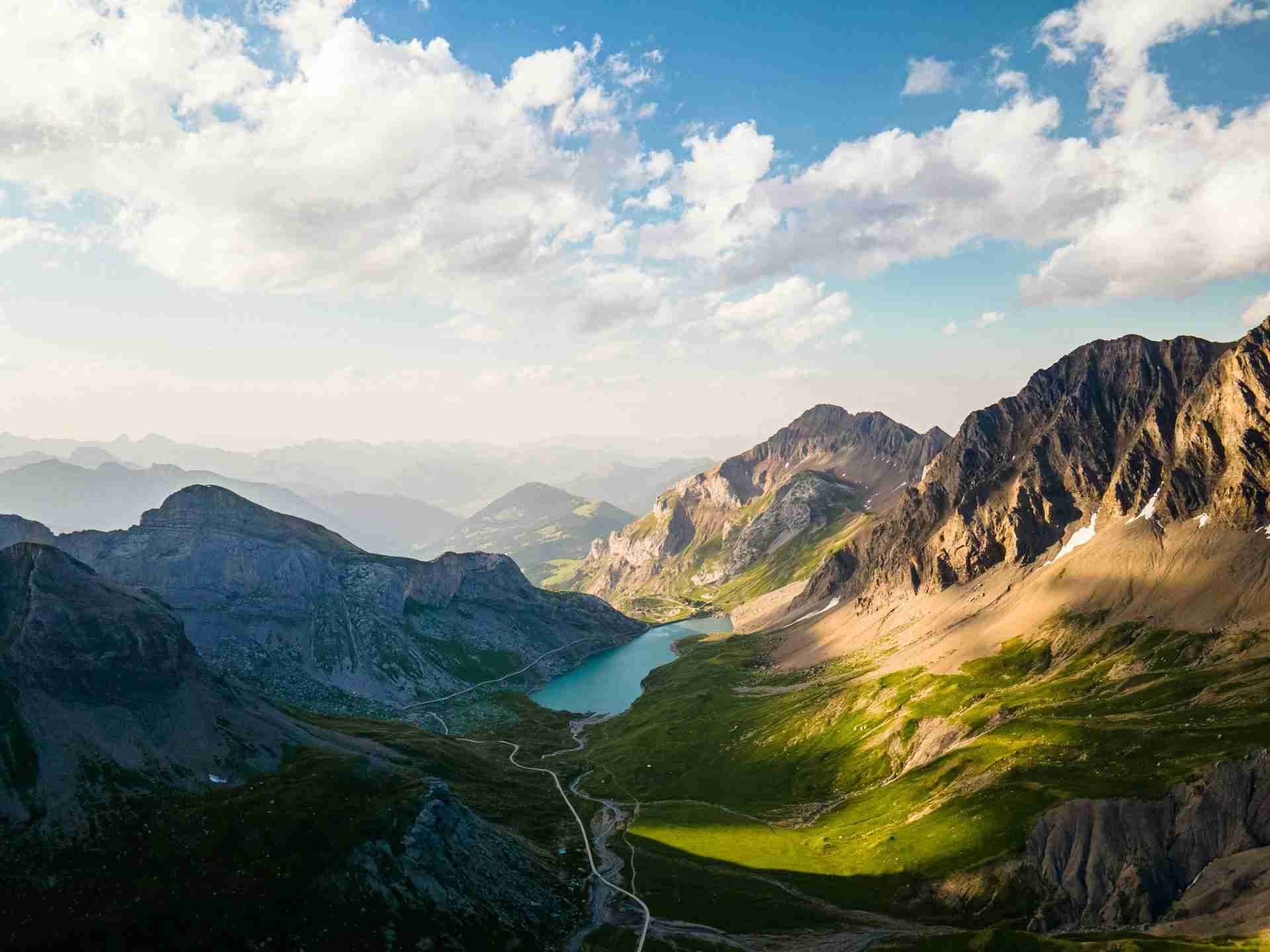
Col du Sanetsch sits high above the Rhône Valley in Valais, reached by a narrow mountain road that climbs steadily into open alpine terrain. Just below the pass lies Lac de Sénin, a clear mountain reservoir surrounded by rocky slopes and sweeping ridge lines. The setting feels expansive and exposed, with sharp peaks, open sky, and long sight lines in every directions. You can see weather moving in from a distance, light shifting across slopes, and shadows sliding over the water. For photographers, the strength of this location is the combination of dramatic terrain and accessible viewpoints without committing to a long hike.
Best Photography Opportunities
• Ridgeline Views
From the pass itself, you get wide open views across jagged alpine peaks and deep valleys. A wide lens works well here to emphasize scale, especially when clouds build over the higher summits. Positioning yourself slightly below the crest of a ridge can create stronger foreground interest with rock or alpine grass anchoring the frame. Early or late light defines the contours of the terrain and prevents the scene from feeling flat. On clear days, distant peaks layer beautifully into the background. This is where you capture the raw alpine character of the area.
• Lac de Sénin Reflections
Down by Lac de Sénin, the mood shifts from expansive to calm. When wind is low, the water reflects surrounding slopes and sky with surprising clarity. Working the shoreline allows you to include rocks or grassy patches in the foreground to build depth. A moderate focal length helps balance reflection and landscape without stretching perspective too far. Slightly overcast conditions can enhance color and preserve detail in both water and stone. This area works especially well at sunrise when the surface is often still.
• Road Curves and Mountain Layers
The winding access road itself offers strong compositional lines. Shooting from a slightly elevated position lets you include the curve of the road leading into layered peaks beyond. This works well with a standard zoom lens that can compress the curves slightly without flattening the mountains. Including a vehicle for scale can help communicate the size of the landscape. Late afternoon light can create shadow patterns across the road and slopes, adding dimension.
• Drone Perspectives Over the Lake and Pass
An aerial view reveals how Lac de Sénin sits within its broad alpine basin. From above and slightly angled, you can show the relationship between lake, pass road, and surrounding peaks in one cohesive frame. Flying too high can make the terrain feel flat, so maintaining moderate altitude preserves depth. Calm conditions are important for clean water reflections from above. Early morning light often creates the most balanced shadows across ridges and slopes. (As always, check local drone regulations before flying.)
• Storm Light and Changing Weather
Because the pass sits at elevation, weather can change quickly. Incoming clouds and shifting light create opportunities for dramatic contrast between sunlit slopes and darker sky. Using a slightly longer focal length can isolate sections of terrain where light breaks through. These moments are brief, so staying alert and ready matters. This type of shot often produces the most dynamic results of the day.
Best Time to Visit
Late spring through early autumn is generally the most accessible period, as the road to Col du Sanetsch is typically closed in winter due to snow. Summer offers the most reliable access and greener alpine meadows, though midday light can feel harsh under clear skies.
Early morning is ideal for both calm lake reflections and softer light across the ridge lines. Late afternoon brings warmer tones and stronger shadow definition, especially along the road and slopes. Autumn can introduce cooler tones and thinner crowds, though weather becomes less predictable. Because of the elevation, wind can build quickly, so planning around forecast conditions is important.
How to Get There
Col du Sanetsch is reached by road from the Valais side near Sion. The ascent is narrow and winding, so careful driving is required. Parking areas are available near the pass and along sections close to Lac de Sénin.
There is no entrance fee to access the pass or lake area. Facilities are limited at higher elevations, so arriving prepared with water and appropriate clothing is important. Weather can shift rapidly, and temperatures are noticeably cooler than in the valley below. The accessibility by car makes it possible to carry a full photography kit without committing to a long hike.
Recommended Photography Gear
A wide lens is essential for capturing expansive alpine views from the pass. A standard zoom covers most general compositions, including road curves and moderate landscape framing. A short telephoto helps isolate distant peaks or compress layers during dramatic light.
A tripod is highly recommended for sunrise or sunset sessions and for working with changing light conditions. A polarizer can help deepen sky tones and reduce glare on the lake surface, though removing it may strengthen reflections depending on angle. Given the exposed environment, bringing wind protection for both yourself and your gear is wise.
Nearby Photography Locations
A striking alpine dam and reservoir surrounded by steep peaks. It offers bold geometric lines contrasting with rugged terrain.
• Sion
A historic town known for its twin hilltop castles. It provides architectural contrast to the high alpine landscape of the pass.
A quieter alpine lake set within a dramatic mountain cirque. It offers reflection opportunities in a more enclosed setting.
A mountain resort area with elevated viewpoints across the Rhône Valley. It expands perspective beyond the immediate basin of Sanetsch.
One of the tallest gravity dams in the world, offering massive scale and strong architectural lines within an alpine setting.
Comments
Loading comments…