
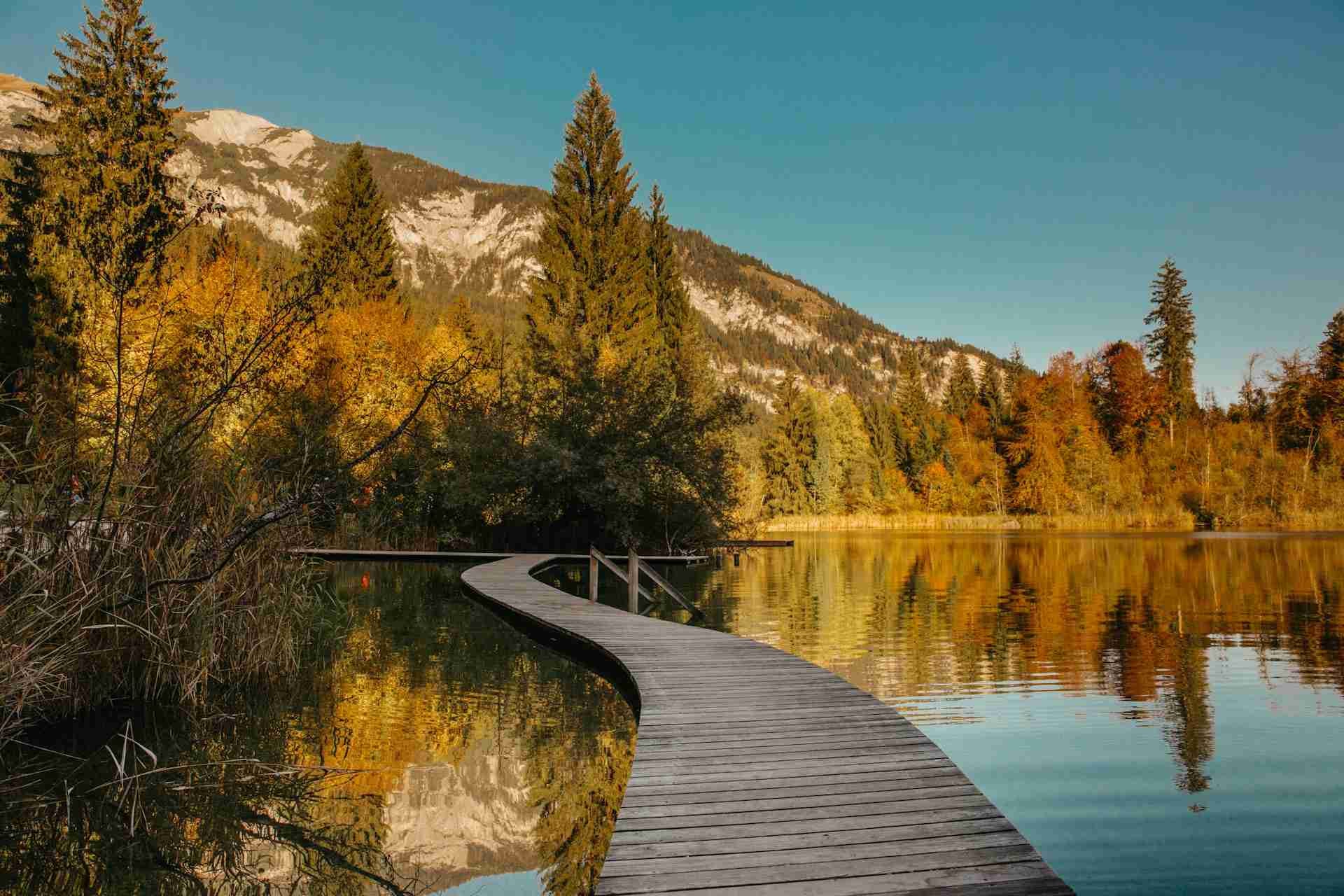
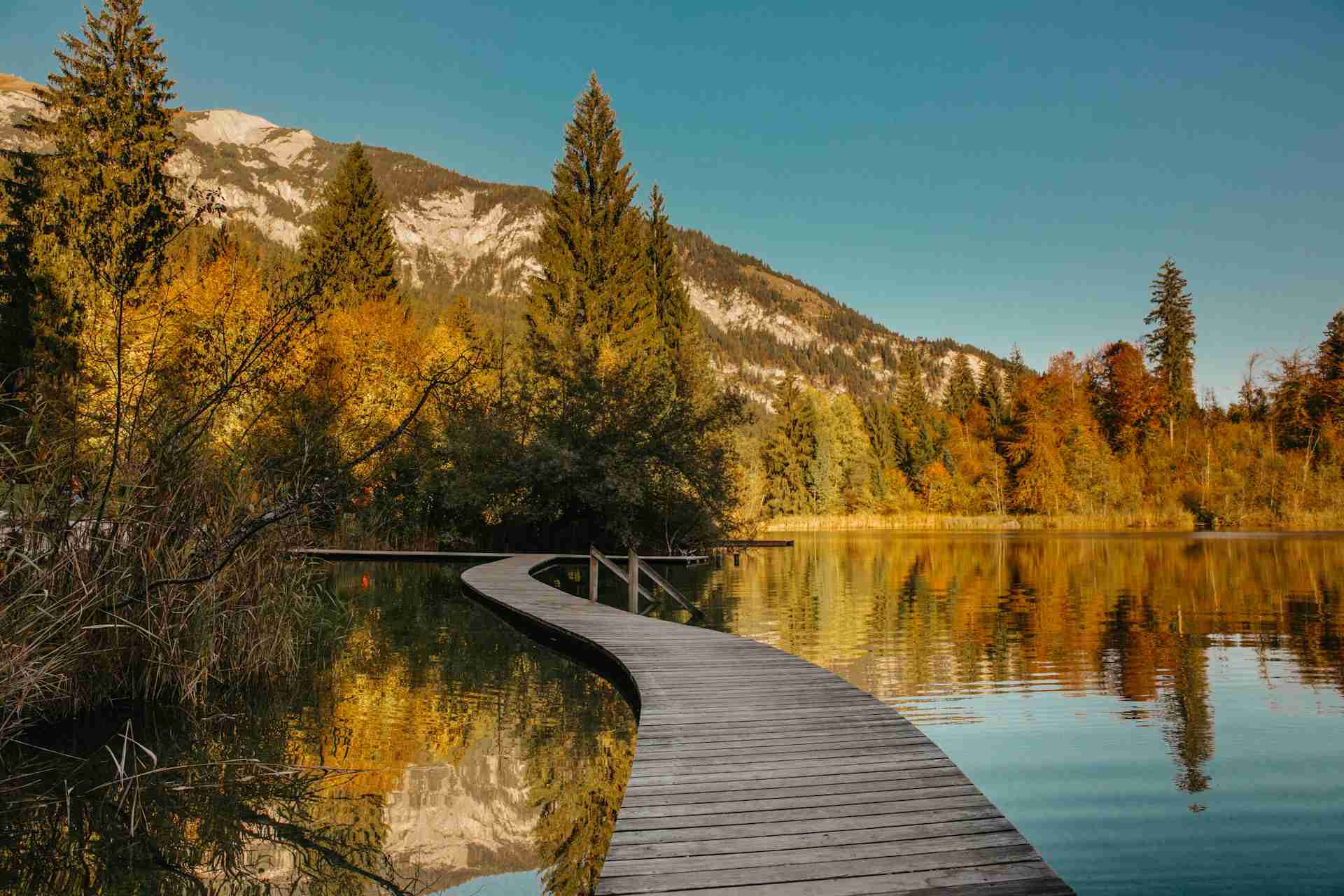
Crestasee, also referred to as Lake Cresta, is a small alpine lake near Flims in Switzerland that feels almost perfectly composed by nature. The water sits in a woodland clearing at 844m above sea level, ringed by trees that form a natural frame around its shoreline. Its emerald green color is what first draws most photographers in, especially when sunlight filters through the surrounding forest and intensifies the tone. Unlike larger alpine lakes with wide open mountain panoramas, Crestasee feels intimate and contained. The enclosed setting means reflections, color, and subtle light shifts matter more than dramatic skyline compositions. Because access is only on foot, the lake retains a quieter atmosphere, particularly in the early hours. For photographers who appreciate controlled compositions and strong color contrast, this is a rewarding and focused location.
Best Photography Opportunities
• Classic Lake Reflections –
One of the strongest compositions comes from the small wooden dock that extends into the lake. From here, you can capture symmetrical reflections of the tree line across calm water. Early morning is ideal, when wind is minimal and the surface remains glassy. Keeping the horizon centered can work well here because the lake naturally lends itself to symmetry. Slight adjustments in height change how much shoreline versus water you include, so experiment with lower and higher perspectives. When the water is perfectly still, the mirrored trees double the impact of the emerald color.
• Low Angle Shoreline Framing –
Walking around the lake gives you opportunities to use shoreline rocks and tree roots as foreground elements. Shooting low to the ground emphasizes texture in the forest floor while drawing the eye toward the water. A wide lens works well in this setting, but careful framing is important to avoid clutter from fallen branches or uneven terrain. Side light filtering through trees adds depth and highlights variations in green tones. This approach works best when you take time to clean up your composition visually rather than rushing.
• Sunlight Through Trees –
Mid to late morning can be productive when sunlight begins filtering through the forest canopy. Beams of light hitting the lake surface intensify the green color and create subtle highlights on ripples. Positioning yourself so that light strikes part of the shoreline adds contrast between illuminated and shaded areas. Because the lake is enclosed by trees, you often get controlled patches of brightness rather than full direct sunlight. This allows for more balanced exposures compared to wide open alpine lakes.
• Autumn Colors –
In autumn, the forest around Crestasee introduces warmer tones that contrast beautifully with the cool green water. Yellow and orange leaves reflect softly in the lake, creating layered color without overwhelming the scene. A moderate focal length helps compress the shoreline and intensify the color relationship between water and foliage. Calm conditions enhance reflection detail, making this one of the strongest seasons for photography here. The setting feels especially balanced during this period.
• Winter Minimalism –
In winter, Crestasee can transform into a quiet, snow lined basin. Snow clings to tree branches and outlines the lake's edge, creating strong contrast between white surroundings and darker water, if the lake is not fully frozen. If the surface freezes, patterns in the ice introduce subtle texture for minimalist compositions. The forest enclosure keeps the scene intimate even under snow cover. Winter access requires caution, but visually it offers one of the cleanest and most graphic interpretations of the lake.
Best Time to Visit
Late spring through early autumn offers the most reliable access and comfortable hiking conditions. Early morning is consistently the best time for reflections, calm water, and fewer visitors. Because Crestasee sits in a woodland clearing, harsh midday light is softened by the canopy, making it more forgiving than open alpine lakes.
Autumn is particularly rewarding due to seasonal color contrast around the shoreline. Winter can be visually striking, but access depends on trail conditions and snow levels. The short walk from Trin Mulin is generally manageable, though icy sections may require care. Always check local trail and weather reports before visiting in colder months.
How to Get There
Crestasee is located near Flims in the canton of Graubünden, Switzerland. The lake is only accessible on foot. The most common approach is a roughly twenty minute walk from Trin Mulin along a marked forest path. Alternatively, you can hike approximately one and a half to two hours from the Caumasee area if linking locations.
There is no road access directly to the lake. Parking is available near Trin Mulin, and from there the trail is well marked and relatively straightforward. There is typically no entrance fee specifically for Crestasee, though regional parking policies may apply. Wear appropriate footwear, as the path can be uneven and occasionally muddy.
Recommended Photography Gear
A wide lens is ideal for incorporating foreground elements and maximizing reflections. A mid range zoom provides flexibility for tighter shoreline compositions. A tripod is highly recommended for early morning sessions and low light conditions, especially if you want perfect reflection sharpness.
A polarizer can be useful for controlling glare on the water surface, though rotating it carefully is important to maintain reflection strength. Neutral density filters are less essential here compared to fast moving water locations. Because access involves walking, keeping your kit lightweight is practical. In autumn and winter, bring extra batteries and weather protection for your gear.
Nearby Photography Locations
• Caumasee
is another striking alpine lake near Flims with bright turquoise water. It offers more open shoreline compared to Crestasee and is strong for wider compositions. Early morning works best to avoid crowds and capture calmer water.
offers dramatic cliffs and sweeping valley views. Elevated viewpoints provide strong landscape compositions that contrast with the enclosed setting of Crestasee. Clear weather enhances depth and scale.
offers river scenes and woodland paths. It serves as the practical access point to Crestasee and can provide additional forest and water compositions. Early light along the river can be particularly calm.
offers a more open water setting surrounded by alpine terrain. It provides opportunities for broader sky compositions and seasonal reflections. It pairs well with Crestasee for variety in lake photography.
is a high alpine plateau with waterfalls and open mountain views. It offers expansive landscape compositions that contrast strongly with the intimate forest setting of Crestasee. Sunrise and late afternoon light enhance texture in the terrain.
Comments
Loading comments…