
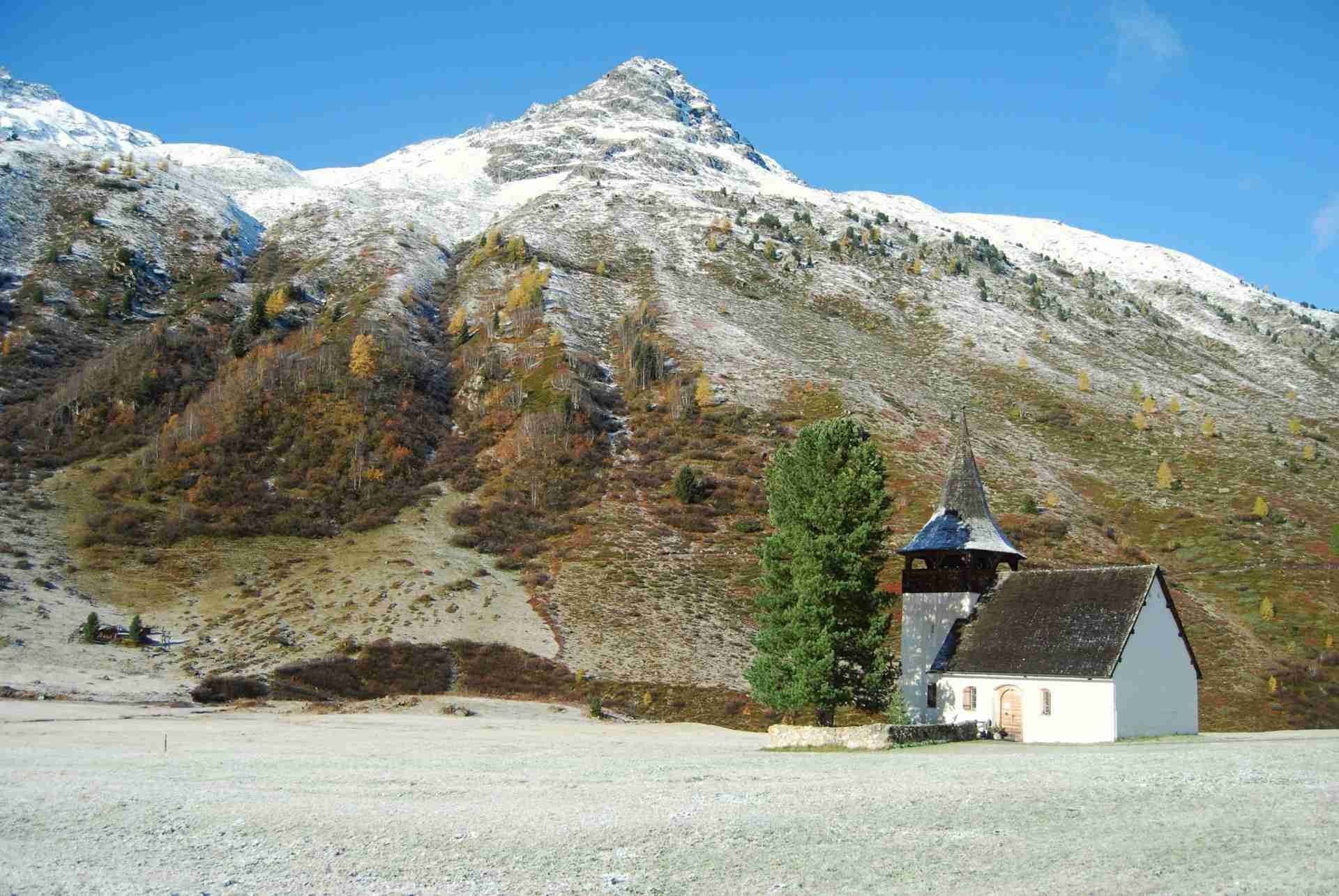
Tucked into the remote valley of Sertig-Dörfli near Davos, the Evangelische Kirche St. Johann stands as a storybook alpine church that captures the serenity and timeless charm of the Swiss Alps. Framed by the dramatic peaks of the Sertig Valley, this whitewashed church with its modest steeple is an ideal subject for landscape, architectural, and atmospheric photography. Its simplicity is its strength—offering clean lines, historical textures, and powerful contrast against the wild, towering mountains and sweeping meadows that surround it. Whether dusted with snow in winter or flanked by wildflowers in summer, St. Johann provides a canvas for a range of moods and compositions, appealing to photographers who favor both environmental storytelling and minimalist structure within a vast natural setting.
Best Photography Opportunities
• Classic Wide-Angle Landscape with the Church
Perhaps the most iconic composition at Sertig-Dörfli is the wide-angle landscape featuring the Evangelische Kirche St. Johann positioned centrally or slightly off-axis within the towering confines of the Sertig Valley. Use a lens in the 16–24mm range to emphasize the scale of the valley walls, which rise dramatically behind and around the church. From an elevated position on the trail leading southeast out of the village, you can frame the church in a broad panorama that highlights the jagged alpine ridges in the background. This composition works especially well during golden hour, when the low-angled sun casts long, sculptural shadows across the terrain and bathes the white church in warm, directional light. Be mindful of exposure balance—bracketing exposures or using graduated ND filters will help retain sky detail while preserving the subtle tones of the church's facade.
• Framing Through Alpine Meadows
During the summer months, the valley bursts into vibrant life, and the surrounding fields become a foreground opportunity rather than just a backdrop. By positioning yourself low to the ground and shooting through clusters of alpine wildflowers or tall grass, you can create compositions that add depth and a strong sense of place. Selective focus techniques with apertures like f/2.8 or f/4 will allow you to gently blur the floral foreground while maintaining clarity on the church, drawing the viewer's eye naturally through the frame. Try incorporating elements such as fence lines or stone paths that lead into the frame—they help visually connect the natural environment to the man-made structure. Mid-morning offers slightly harsher but clearer light that can emphasize the richness of the greens and the crisp lines of the architecture.
• Snow-Covered Minimalism in Winter
In winter, the church becomes a minimalist dream. The surrounding landscape softens under deep snow, and color fades to a muted palette of whites, greys, and shadows. This is the season for simplicity—isolating the church in an expanse of snow under a moody alpine sky can result in compositions that feel timeless and meditative. A drone allows you to explore perspectives that are otherwise unreachable, capturing the stark symmetry of the church within the curved contours of the valley or tracing the snaking lines of snow-covered footpaths. With a telephoto lens, consider compressing distant mountain peaks behind the church for a cinematic, layered effect. Early morning mist or post-snowfall clouds clinging to the valley flanks only enhance the surreal, tranquil quality of winter compositions.
• Interior Details and Window Light
While often overlooked, the church interior offers quiet and rewarding photographic moments. The restrained design—bare whitewashed walls, exposed beams, and narrow windows—makes for a serene atmosphere that responds beautifully to natural light. Visit in the early afternoon when the sun sits high enough to stream through the south-facing windows, casting soft beams and warm tones across the otherwise cool interior. A 35mm or 50mm lens with a wide aperture works well for capturing intimate details, from the aged wood of the pews to the texture of the plaster walls. If the space is dim, a tripod will allow for longer exposures to capture the full dynamic range of the shadows without losing subtle highlights from the incoming light. HDR techniques can also be helpful, but avoid over-processing to maintain the gentle, contemplative tone of the scene.
• Moody Skies and Atmospheric Conditions
The Sertig Valley is known for its quick-shifting alpine weather, which creates ideal conditions for capturing drama and mood. Low clouds brushing the peaks, rolling fog, and bursts of sunlight breaking through stormy skies are common even in summer. Use these atmospheric elements to your advantage by composing from a western or southwestern position, with the church facing into the incoming weather system. This direction allows you to photograph the building head-on while clouds roll down the valley behind it, creating a sense of dynamic motion. A polarizing filter can enhance contrast in the sky and add structure to the clouds. Consider a time-lapse or long exposure technique to emphasize movement in the clouds while keeping the church static, giving your images a feeling of stillness amidst change.
Best Time to Visit
Sertig-Dörfli is photogenic year-round, but the choice of season greatly impacts the type of imagery you'll capture. Each season offers distinct visual themes—from pastoral abundance to austere minimalism—and selecting the right time to visit depends on the aesthetic you're aiming for.
Late spring and early summer, particularly from mid-June through July, are ideal for capturing the vibrant life of the alpine meadows. This is when the valley comes alive with wildflowers, the trees are in full foliage, and the mountains still retain some snow at their highest elevations. Light remains soft for longer in the mornings and evenings, making golden hour more generous and forgiving. Early morning visits allow you to photograph the church as the sun rises behind the eastern ridge, casting delicate light across the steeple and revealing detail in the surrounding rock faces.
Autumn, from late September to mid-October, provides a warm, earthy palette. Larches begin to turn golden, and the grassy slopes shift to deep ochres and rust-colored hues. This is the best time for capturing contrast-rich compositions that pair the clean, pale walls of the church with the rich textures of the landscape. Mornings tend to be misty, which adds atmosphere and drama, while afternoon light casts long shadows that play well with the rugged topography.
Winter transforms the entire valley into a monochrome canvas. The best months are January and February, when the snow is most consistent and the skies are typically clear. The sun sits low in the sky for most of the day, offering long windows of diffused light ideal for snow photography. The church becomes a point of orientation in a sea of white, and its simple geometry works beautifully in compositions that explore symmetry, isolation, or minimalist aesthetics. Be prepared for very cold conditions and reduced mobility, but the photographic rewards are considerable if you're equipped for them.
Shoulder seasons—late May or early November—offer a more unpredictable but unique atmosphere. The weather is transitional, resulting in mixed conditions such as snow-dusted green meadows or frosted trees beneath bright skies. These brief seasonal overlaps can produce hauntingly beautiful and unusual images if you're willing to embrace some weather-related unpredictability.
How to Get There
Sertig-Dörfli is located approximately 9 kilometers south of Davos Platz and can be reached by car, bus, or on foot via well-marked hiking trails. If arriving by car, follow Route 28 from Davos toward Frauenkirch and take the turnoff into the Sertig Valley. A small parking area is available near the village center, just a short walk from the church itself. During winter months, ensure your vehicle is properly equipped for snow, as the road can become narrow and icy. For public transit users, the PostAuto bus (Line 313) from Davos Platz to Sertig Sand offers a scenic ride and drops passengers within easy walking distance of the church. The final approach by foot is along a gentle, paved lane that offers framing opportunities before you even reach your destination.
Recommended Photography Gear
Photographing the Evangelische Kirche St. Johann in Sertig-Dörfli calls for a kit that balances versatility, weather resilience, and the ability to work with changing light and scale. A full-frame DSLR or mirrorless camera will give you the dynamic range needed to handle the bright snow in winter or the deep shadows of the valley floor. A wide-angle lens in the 14–35mm range is essential for capturing the full breadth of the church set against the dramatic mountain backdrop. Pair that with a 70–200mm telephoto to isolate architectural details or compress the valley walls behind the steeple for a more graphic composition.
A lightweight, stable tripod is highly recommended, especially for early morning low-light shots, HDR exposures inside the church, or long exposures of moving clouds and streams in the valley. Graduated ND filters and circular polarizers can help manage the dynamic sky and reduce glare on snow or wet rock. In winter, bring spare batteries and keep them warm—temperatures can drain them quickly, particularly if you're shooting for extended periods in sub-zero conditions.
For drone photography, a compact but capable drone like the DJI Air 3 or Mavic 3 will allow you to capture overhead perspectives and contextualize the church within its alpine basin. Be sure to check local regulations and respect privacy and environmental guidelines when flying near inhabited areas or wildlife zones.
A weather-sealed camera body and lens are a wise investment for this region, especially during shoulder seasons when rain, sleet, or snow can arrive without warning. Finally, pack microfiber cloths and lens hoods to manage fogging and moisture, especially during transitions between the cold outdoors and the warmer church interior.
Nearby Photography Locations
Just a short drive from Sertig-Dörfli, Lake Davos offers mirror-like reflections, particularly in the early morning when the wind is low. The lake is bordered by forested hills and mountain silhouettes, and the changing light throughout the day allows for experimentation with water texture and color contrast. Sunset here, with the light catching the water's edge and surrounding pine trees, provides a warm and dynamic composition.
This high mountain pass east of Davos delivers rugged alpine drama in every direction. Known for its stark peaks, glacial streams, and mirror-like tarns, it's a destination ideal for both wide-angle landscapes and abstract texture studies of rock, ice, and lichen. In late spring, snowmelt creates rivulets and temporary waterfalls that photograph beautifully against the dark stone.
Accessible by funicular from Davos Platz, Schatzalp offers panoramic views over the Davos basin and a chance to photograph the famous "magic forest" — a preserved alpine botanical garden. The combination of high-altitude flora, old-world architecture, and sweeping vistas makes it a multifaceted subject for both macro and landscape work.
Less trafficked than the Sertig, the Rinerhorn area is ideal for those seeking pastoral scenes with dramatic alpine backdrops. Wooden barns, grazing livestock, and high-elevation walking trails create a slow-paced, immersive environment where photographers can wait for the perfect cloud break or sidelight across the ridges.
Monstein is one of the highest villages in Switzerland and home to a well-preserved traditional layout. The textures of old wood, slate roofs, and the surrounding terraced fields offer rich material for documentary and architectural photography. In winter, the snow-covered rooftops and frosted evergreens frame the village beautifully against the backdrop of soaring peaks.
St. Johann in Sertig-Dörfli offers more than just a beautiful subject—it provides a complete photographic environment where scale, light, weather, and human craftsmanship interact within one of the most serene alpine settings in Switzerland. Whether you're chasing golden-hour glow across the valley, composing a snow-blanketed minimalist study, or capturing quiet moments inside the church's contemplative interior, this location rewards patience and attention to subtle shifts in mood and light. Combined with the accessibility of nearby alpine passes, lakes, and preserved villages, a trip to this remote corner of Graubünden becomes a rich visual journey—one that's as much about discovering silence and solitude as it is about creating compelling images.
Comments
Loading comments…