
![Hidden Flow and Forest Calm near Blumenstein Tucked into a steep valley just outside the village of Blumenstein in Switzerland’s […]](https://storage.googleapis.com/pixeo-blog.firebasestorage.app/article-images/wp-import/featured-135708.jpg)
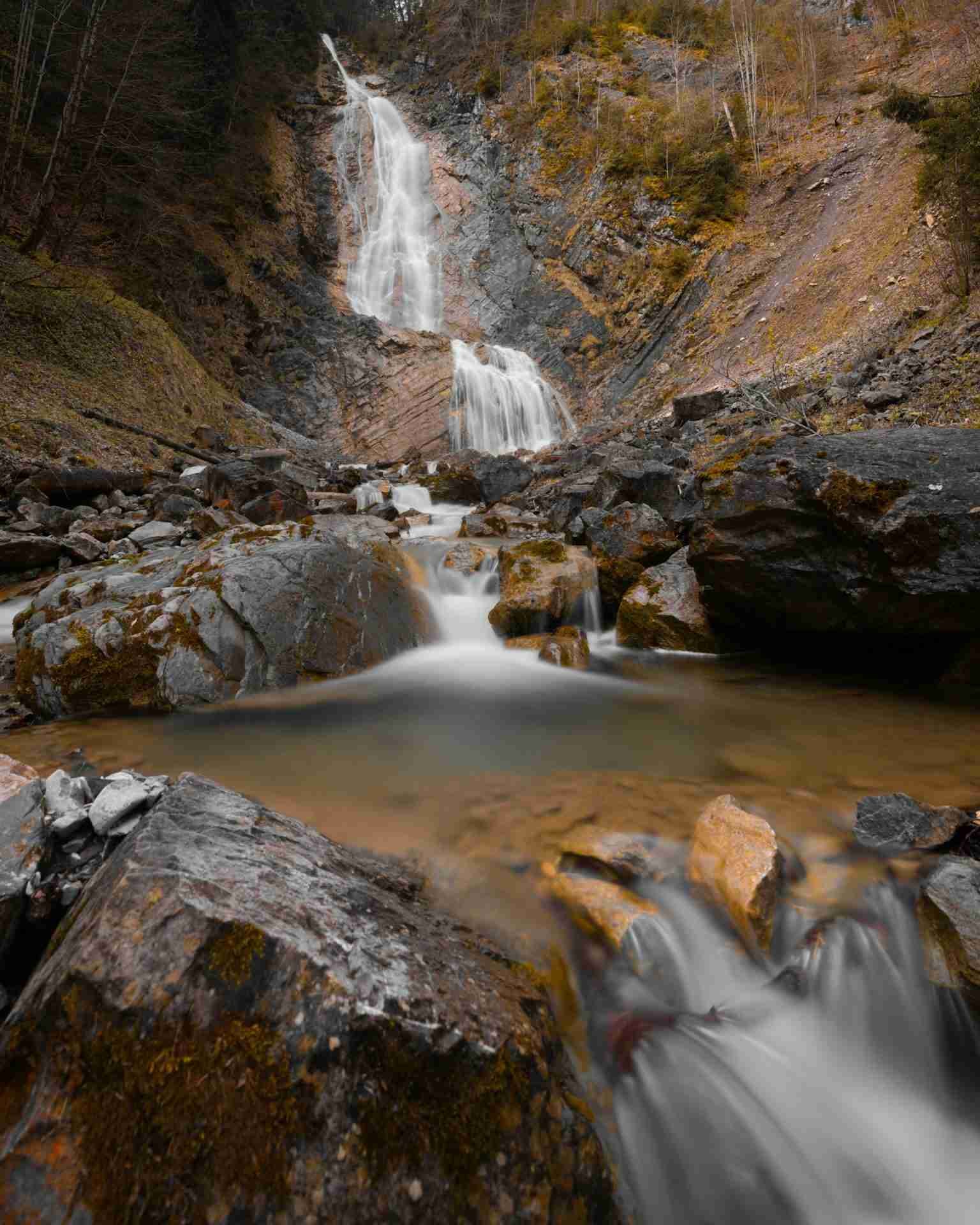
Tucked into a steep valley just outside the village of Blumenstein, Fallbachwasserfall is a slender, graceful waterfall that drops from a high cliff into a green basin below. It emerges unexpectedly from the rock face and cuts a clean line of water down into the surrounding forest. Unlike the more dramatic alpine waterfalls found deeper in the mountains, Fallbach offers quiet power and intimacy, framed by moss covered stone, shifting light, and a sense of enclosure. This waterfall is a great spot for capturing both wide views and close up details, especially for photographers who enjoy quiet, natural scenes.
Best Photography Opportunities
• Wide Composition from the Base of the Falls
From the clearing at the base of the waterfall, you can frame the full height of the water drop with surrounding forest, rock, and sky. A wide angle lens helps capture the vertical sweep and the space around it. Position yourself slightly off center to avoid flattening the background and to emphasize the natural curve of the falls as it drifts in the breeze. Early morning or overcast light works best here, softening contrast and allowing for balanced exposure between the water and the darker stone. Including nearby vegetation in the foreground can help build depth and scale into the composition.
• Long Exposure
The stream that flows away from the base of the falls moves gently through a bed of stone, moss, and forest debris. This area is ideal for long exposure photography using a tripod and neutral density filter. Shutter speeds between one and four seconds create smooth water motion while keeping surrounding textures crisp. Compose low to the ground with leading lines from the stream to the falls itself. The subtle flow and surrounding detail offer quiet frames that contrast with the more direct view of the waterfall above.
• Framed View through Forest Canopy
As you approach Fallbachwasserfall along the trail, there are several spots where trees part just enough to reveal the upper section of the falls through the canopy. Use these natural openings to frame the water from a distance, placing branches or trunks at the edges of your composition. A standard or short telephoto lens works well here, especially in soft or side light. This technique draws the eye through the forest and gives a sense of scale and setting without revealing everything at once.
• Detail Study of the Cliff Face and Water Line
Close to the base of the waterfall, the cliff wall is streaked with mineral lines, moss, and damp lichen. With a 50mm or macro lens, you can isolate sections where the water interacts with the rock, capturing droplets, spray, or texture in sharp relief. These shots benefit from cloud cover, which reduces glare and allows you to work with subtle shifts in tone. These compositions feel especially intimate and emphasize the micro landscape within the larger scene.
• Seasonal Changes
In spring and early summer, the area around the waterfall is lush with ferns, grasses, and small forest flowers. These can be used as compositional anchors in the lower third of your frame, adding a pop of color or contrast to the darker rock and white water above. In autumn, the forest takes on warmer tones, with fallen leaves scattered across the stream and paths. Use a mid-range lens to create balanced shots that place the fall within its seasonal context.
Best Time to Visit
Spring and early summer are the best times to photograph Fallbachwasserfall, as snow melt feeds a stronger flow and surrounding vegetation is rich with color and texture. Early morning is ideal for calm air, minimal foot traffic, and soft, directional light filtering through the trees. Overcast days offer excellent conditions for both long exposure and detail photography, removing glare and flattening harsh contrast. Autumn also works well, especially if you're interested in color and texture, though the flow may be reduced. Avoid midday, when overhead light can wash out the highlights and flatten the image. Rainy weather can add atmosphere but requires care when shooting near slippery rock and moving water.
How to Get There
Fallbachwasserfall is located near the village of Blumenstein in the Canton of Bern. From Thun, it's a short drive south through rolling farmland into the foothills. The waterfall can be reached by foot from Blumenstein via a well marked trail that leads through forest and meadow. The hike is short and moderate, with gentle elevation gain and clear signage. There is no entrance fee, and access is available year round, though winter conditions may make the trail slippery or obscure the view. Parking is available in the village, with trail access starting near the local church. Sturdy shoes are recommended, especially after rainfall when the ground may be muddy or uneven.
Recommended Photography Gear
A wide angle lens is key for capturing the height and setting of the waterfall from close range. A standard zoom or 50mm lens allows for flexible framing of the surrounding forest, stream, and trail. A lightweight tripod is essential for long exposure work and shooting in lower light conditions beneath the canopy. A polarizing filter will help manage reflections on wet rock and enhance color in the foliage. Bring a microfiber cloth to keep your lens dry near the base of the waterfall, especially when working close to the spray. Waterproof footwear and a small camera backpack will keep you mobile and prepared for changing terrain.
Nearby Photography Locations
• Gürbetal Valley
Just to the north, this agricultural valley features wide open landscapes, distant mountain views, and traditional Swiss farmhouses. Soft evening light and cloud filled skies make this area well suited for peaceful rural scenes.
A short drive away, this protected area offers alpine trails, dramatic ridgelines, and panoramic viewpoints. Perfect for sunrise and sunset landscape photography, especially along the Gurnigel Pass.
Accessible by cable car from Erlenbach im Simmental, the Stockhorn provides sweeping views over Lake Thun and the Bernese Alps. On clear days, you can shoot high altitude compositions with strong leading lines from the ridges and trails.
Thun offers a mix of castle architecture, covered bridges, and lake views backed by mountains. Best photographed during golden hour or early morning when the streets are quiet and the lake reflects soft light.
A small glacial lake surrounded by forest, Blausee is known for its clear turquoise water and reflective surfaces. Visit on a calm morning for perfect mirror shots and balanced color between water and trees.
Comments
Loading comments…