
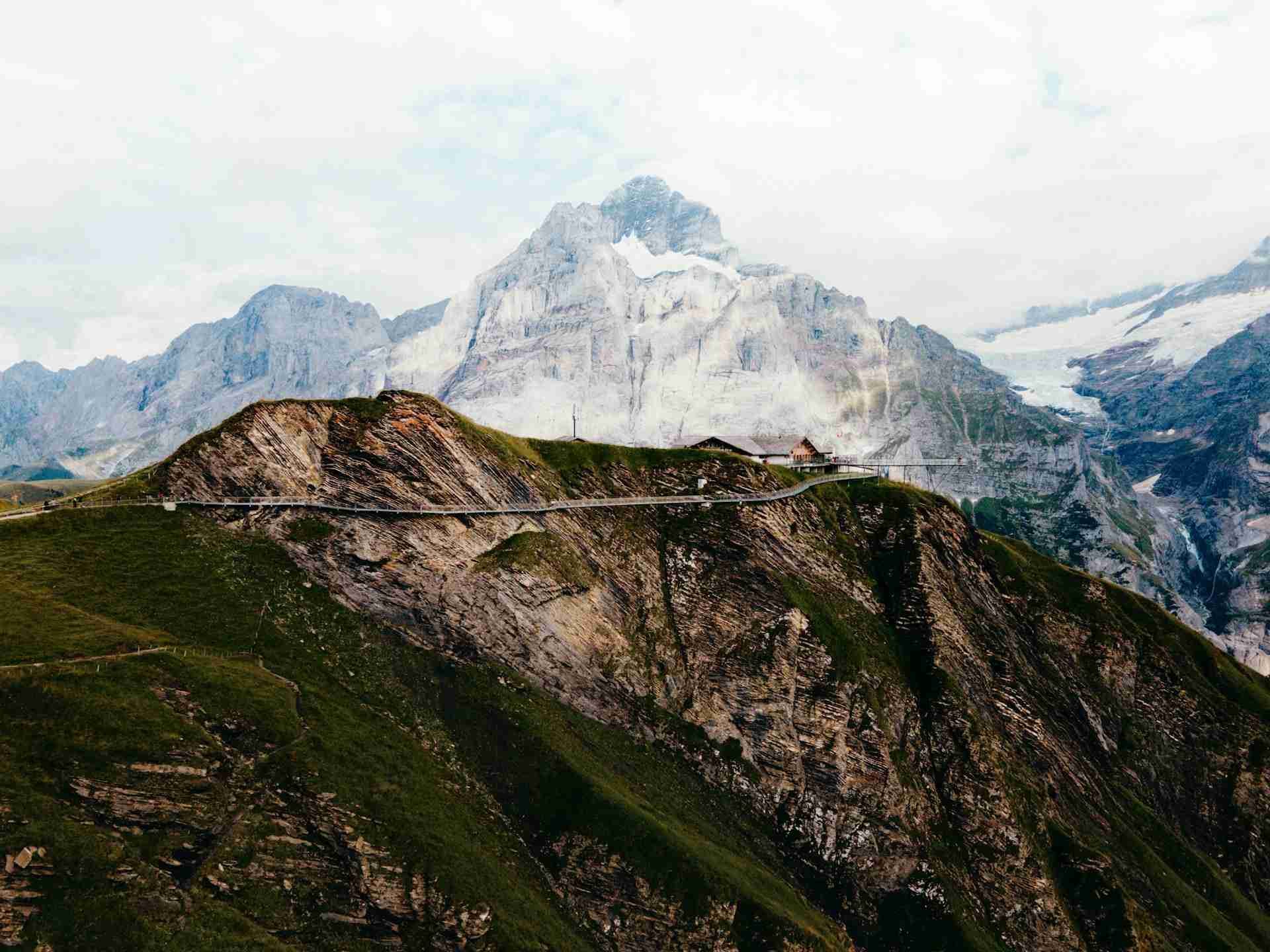
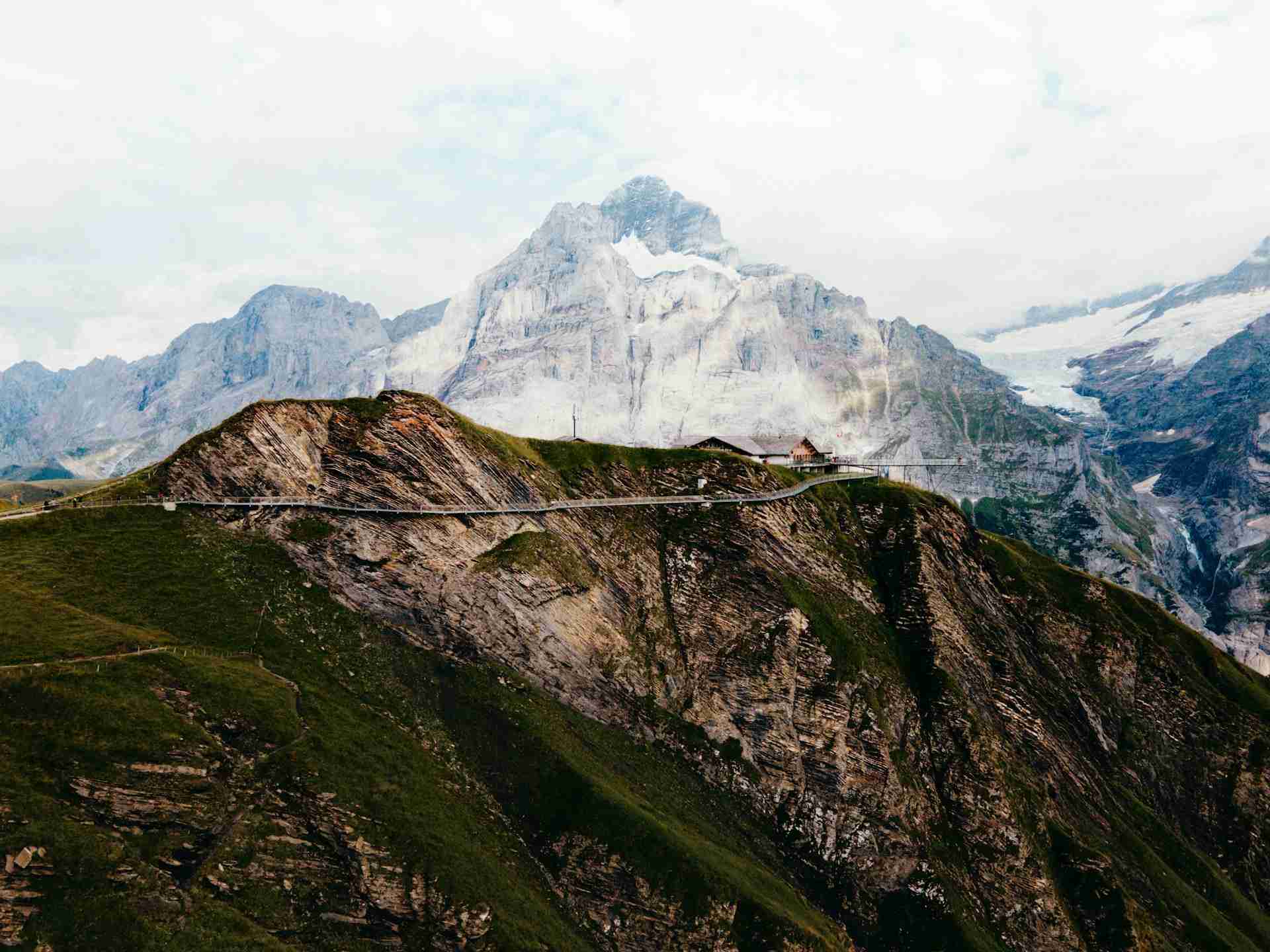
The alpine area known as First, located just above Grindelwald in Switzerland's Bernese Oberland, offers some of the most dramatic and accessible mountain scenery in the region. Reached by a cable car that climbs directly from the village, First places photographers at the edge of a high plateau with wide views toward the towering Eiger, the Wetterhorn, and the deep valleys below. The terrain is a blend of cliffside trails, alpine meadows, and glacier-fed lakes that shift in character with each change in light or season. With easy access to elevation, reliable golden hour conditions, and multiple clear sightlines, First is a natural studio for landscape photographers looking to work at scale. Every direction offers potential, and the landscape rewards both fast reaction and long observation.
Best Photography Opportunities
View Toward the Eiger at Sunrise
The main viewing platform at First faces directly toward the Eiger, with a deep valley falling away to the left and the Wetterhorn rising to the right. Just after sunrise, the peaks catch the first light while the valley remains in shadow, creating strong contrast and visual drama. Shooting with a wide lens captures the full sweep of the scene, while a longer focal length helps isolate the peak and its details. Including hikers on the ridge or the edge of the platform adds scale to an already impressive landscape. Cloud movement and changing light conditions often shift the balance of the frame quickly, so working on a tripod with careful timing is key.
Bachalpsee Reflections
A short walk from First, the small alpine lake called Bachalpsee is one of the most iconic reflection spots in the Bernese Alps. On calm mornings, the twin peaks of the Schreckhorn and Finsteraarhorn reflect cleanly in the lake's surface. Arriving early is essential to avoid crowds and to catch still water before wind rises. Shooting from the lake's lower edge allows you to frame both the foreground grasses and the full mountain backdrop. Compositions vary depending on cloud cover, but the strongest frames often use the mirror symmetry of the water to anchor the image.
Alpine Trail Scenes With Dramatic Drop-Offs
The hiking trails between First and other alpine huts offer strong leading lines, high elevation perspective, and dramatic views over the valley below. These trails are built into the edge of the slope, giving photographers a chance to frame compositions with bold diagonals and deep space. Shooting into side light helps carve out texture in the grass and stone. Including hikers or local cows grazing along the trail helps add character and context. A midrange zoom lens is ideal here for adjusting quickly while walking between viewpoints.
Cloud Movement and Afternoon Storm Light
First is positioned at just the right elevation to catch fast-changing alpine weather. In the late afternoon, clouds often build around the Eiger and the ridge, filtering the light and casting strong shadows across the landscape. These conditions are excellent for capturing shifting mood, whether through timelapse, long exposure, or fast frame adjustments. A polarizer helps deepen sky contrast and shape the clouds, while a neutral density filter allows for subtle blur across moving weather. These compositions are strongest when you let the light dictate the timing, waiting for the break that shapes the scene.
Minimal Frames From the Cliff Walk
The metal walkway that clings to the cliff face near the First gondola station gives access to spare, abstract compositions using layers of steel, sky, and rock. Shooting from the platform or along the walkway itself, you can build clean vertical frames with just a portion of a ridge or a drop-off into open air. This is especially effective in low cloud or during the blue hour when color is reduced and shape becomes more important than detail. Working with a standard or short telephoto lens helps isolate these scenes without including distractions.
Best Time to Visit
Late spring through early autumn is the best time to photograph First, with each season offering its own palette and challenges. June and July bring deep green meadows, full trails, and long daylight hours. The lakes are clear, and wildflowers appear along the paths. August offers stable weather and warm temperatures, while September often provides the best light, thinner crowds, and more defined shadow play. October is quieter and more atmospheric, with low clouds and golden grass beginning to take over the scene.
Sunrise is especially rewarding, with strong front light on the high peaks and a calm stillness before the day begins. Bachalpsee is best visited in the first hour after sunrise to catch reflections and avoid ripples from hikers or breeze. Sunset can also be productive, especially when clouds build over the Eiger and the light breaks from behind. Midday is less useful for grand landscapes unless clouds are active, but it works well for detail studies, minimal compositions, or wildlife.
Weather shifts quickly at this elevation, so flexibility is key. Some of the most photogenic conditions come just before or after a passing storm when the landscape is partially revealed in bands of cloud and sun.
How to Get There
First is reached via a gondola that departs directly from Grindelwald village. The ride to the top takes about twenty-five minutes and includes stops along the way. Tickets can be purchased at the base station, and the schedule runs regularly during the peak season from May through October. Once at the top, trails to Bachalpsee and other destinations begin immediately from the gondola station. The paths are well marked, well maintained, and suitable for moderate hiking with photography gear.
If arriving by car, there is paid parking near the gondola base station in Grindelwald. The village is also connected by train to Interlaken and other parts of the Bernese Oberland, making it easy to access from other photography destinations in the region. No special permits are needed for personal photography, but tripods and large gear bags may attract attention in busy areas, so planning your sessions early or late in the day is best. Food, water, and restrooms are available at the First station, as well as along the trail at alpine huts.
Recommended Photography Gear
Because First is easily accessed by gondola, you can afford to carry a bit more gear than you would on a full backcountry hike. A wide angle lens is essential for shooting reflections at Bachalpsee, open views of the valley, and framing both lake and sky in the same composition. A 24 to 70 millimeter lens gives flexibility for general shooting along the trail or from the viewing platform. For compressing mountain layers or capturing distant cloud formations, a 70 to 200 millimeter lens is especially useful.
A tripod is strongly recommended for sunrise, long exposures, and low light detail work. A circular polarizer helps reduce glare on the lakes and improves sky contrast on clear or partially cloudy days. Neutral density filters can be helpful for smoothing reflections or managing light during slow shutter work. A weatherproof bag is important, as conditions can change quickly. Good footwear, layered clothing, and a hat for sun exposure are also essential, since the trails are exposed and there is little shelter once you leave the station.
Nearby Photography Locations
A high trail with views toward both Lake Brienz and the Lauterbrunnen Valley, this ridge walk offers flower-strewn meadows and wide vistas. It is ideal for panoramic work and early morning compositions with shifting clouds.
Just across from Grindelwald, this valley is home to waterfalls, steep cliffs, and postcard-perfect villages. It works well for early and late light, and for tight compositions of barns, spires, and the narrow valley floor.
Reached by hiking or by bus from Grindelwald, this quiet pass provides broad views of the Wetterhorn and surrounding peaks with very few crowds. The road itself curves beautifully and works well for storytelling or long-lens landscape frames.
A longer hike from First, Faulhorn offers a high vantage point and full views of the Bernese Alps. It is best visited at sunrise or sunset for strong side lighting across the ridges and glaciers.
Traditional Swiss chalets, wooden barns, and winding lanes sit below massive mountain backdrops. The village is best photographed in the early morning when the streets are quiet and the surrounding cliffs are lit with warm side light.
First is a location that rewards both planning and stillness. With its mix of structured access and natural openness, it offers photographers a wide range of alpine compositions with minimal effort. Whether you are chasing light at Bachalpsee, isolating clouds over the Eiger, or simply walking the trails with a ready frame, First delivers a quiet kind of drama that holds strong in every season.
Comments
Loading comments…