
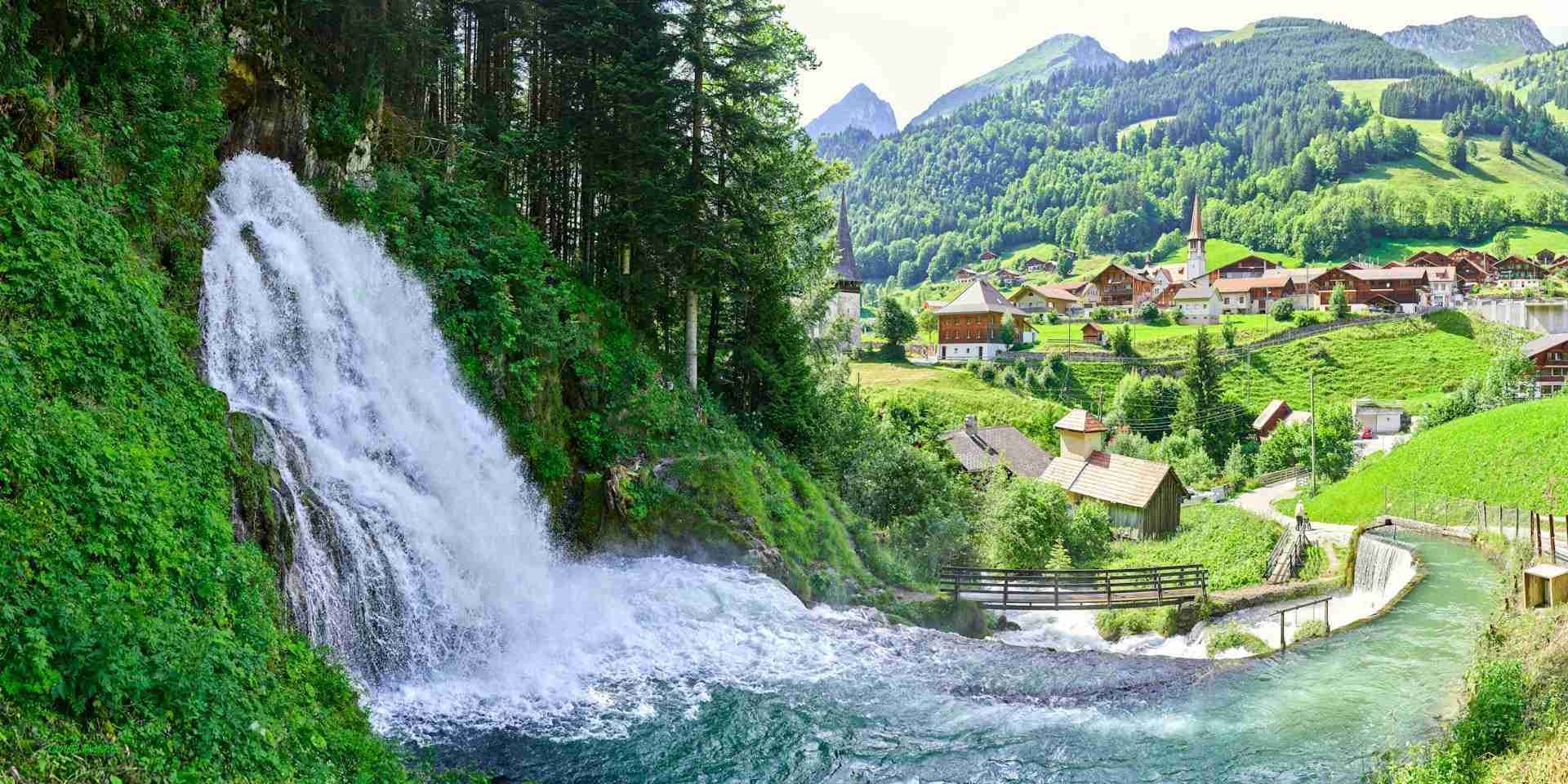
Just outside the alpine village of Jaun in the Swiss canton of Fribourg, Jaunbachfall offers a chance to photograph moving water in a deeply textured mountain setting. This multi-tiered waterfall, also known simply as the Jaun Waterfall, emerges directly from a limestone cliff at the base of the Gastlosen range and tumbles into the Jaunbach below. The scene is compact but dynamic, with layered rock, mossy ledges, and a constant interplay of shadow and spray. For photographers, it's an accessible location that combines alpine atmosphere with close-in detail, allowing for both broad views and tight compositions. Whether you're chasing soft morning light or working with neutral filters for long exposure studies, Jaunbachfall rewards both quick stops and careful sessions.
Best Photography Opportunities
• Long Exposures of the Main Cascade
The central waterfall is best photographed from the footbridge or along the adjacent path, where you can compose with the full drop framed by stone and vegetation. Use a wide-angle lens to capture the context, especially if recent rain or snowmelt has increased the water volume. A 3- or 6-stop ND filter lets you slow the shutter to blur the water while maintaining texture in the rocks and moss. Tripod placement is easy on the path's edge, and shooting early in the day helps avoid harsh contrast or crowds.
• Detail Work on Rock Textures and Water Flow
The cliff face behind the waterfall is heavily layered, with sedimentary rock lines that form natural visual guides. Small rivulets and moss-covered ledges make strong subjects for close framing. A mid-telephoto lens or a 100mm macro can help isolate these elements and bring out fine detail. Use side light in the morning or an overcast sky to reduce glare and retain surface contrast. Look for spots where water moves across diagonal rock lines for the most dynamic compositions.
• Misty Light and Spray in the Lower Pool
Below the main fall, the water collects in a shaded basin surrounded by stone and vegetation. Early morning light sometimes filters through rising mist, catching droplets in midair and highlighting the edge of the pool. Position yourself slightly downstream to frame up the full basin, or move in closer for wide shots that emphasize mist and motion. Keep a microfiber cloth ready to clear spray from your lens between shots.
• Framing with Foreground Vegetation
In spring and early summer, the area around the falls fills with alpine greenery and wildflowers. Use these elements to frame the waterfall from a lower angle. Ferns, grasses, and flowering stalks add texture and depth when placed along the edge of the frame. A shallow depth of field can separate them from the background waterfall, or stop down for a sharp scene throughout. Soft, diffused light works best for this approach.
• Black-and-White Water and Rock Studies
If the light is flat or the contrast between water and stone is strong, consider working in monochrome. The scene holds a wide tonal range, especially on cloudy days, and the rock face offers leading lines and framing opportunities. Focus on the interaction between vertical falls and horizontal ledges, and use a polarizer to fine-tune reflections and surface shine. Tripod stability is key to precise alignment.
Best Time to Visit
The waterfall flows year-round, but the most photogenic conditions occur between April and October. In spring, snowmelt increases water volume, and the surrounding plant life begins to fill in, softening the scene with vibrant greens. This is the best time for high flow and lush foregrounds. Summer offers longer days and slightly more controlled light in the early morning and late afternoon.
Autumn brings changing tones in the surrounding trees, although the vegetation near the waterfall itself remains more evergreen. Fall's lower sun angles provide excellent side light, especially on cool, clear mornings when mist is more likely to form at the base.
Winter access is more difficult due to snow and ice, and the path may be slippery or restricted. That said, frozen water formations around the edges of the fall can create unique abstract compositions. If attempting winter photography here, wear proper traction gear and check local conditions beforehand.
For ideal lighting, arrive shortly after sunrise, when the surrounding trees filter in soft directional light. Midday often brings too much contrast, while late afternoon can cast the falls into deep shade, especially in the narrow basin. Cloudy days are excellent for managing exposure and capturing fine surface texture.
How to Get There
Jaunbachfall is located just outside the village of Jaun in western Switzerland. From Fribourg, the drive takes about one hour, passing through Charmey and ascending into the Jaun Valley. If arriving from Bern, expect about 90 minutes by car. Public transportation is also available via bus connections through Bulle and Charmey to Jaun-Dorf.
The waterfall is easily accessible from the main road through Jaun. There is a small parking area near the base of the trail, and signs clearly mark the path to the waterfall viewpoint. The footpath is well-maintained and only a short walk from the road, with several vantage points along the way. There is no entrance fee or restriction on photography. Tripods are allowed and easy to set up along the gravel or wooden viewing areas.
There are no facilities directly at the waterfall, but the village of Jaun offers a few cafes, rest stops, and accommodation options. Cell service is generally reliable in the area, and the roads remain open throughout the shooting season. Be aware that the path can be slippery after rain, so good footwear is essential.
Recommended Photography Gear
A solid landscape setup will serve you well here. A wide-to-standard zoom such as a 16 to 35mm or 24 to 70mm lens allows for both wide waterfall views and tighter compositions of the surrounding textures. For compressing the scene or picking out details in the rock, bring a 70 to 200mm lens or a sharp prime in the 85mm to 135mm range.
A sturdy tripod is necessary for long exposures and precise framing, especially on the uneven surfaces around the viewing platform. A 3- or 6-stop neutral density filter is essential for softening water flow without overexposing highlights. A circular polarizer helps reduce glare on wet stone and brings out moss and water detail.
Microfiber cloths and a waterproof lens cover are useful for dealing with mist and occasional spray. A rain jacket for your gear is a smart addition, especially in spring or early summer. If you plan to shoot interior or shadowed sections of the falls, a camera body with good high ISO performance and weather sealing will help you work without concern.
Hiking boots with good grip are important for safety on wet paths. Bring water, layers for changing weather, and a small pack to carry filters and cleaning tools. The area is quiet, but you may encounter other visitors midday, so early arrivals give you the best chance at uninterrupted shooting.
Nearby Photography Locations
Just above Jaun, this jagged limestone ridge offers high-altitude views, dramatic light on sheer cliffs, and sweeping panoramas of the surrounding Prealps. Morning hikes provide excellent golden hour conditions and cloud layering.
Accessible by trail from Jaun, this mountain hut sits beneath the Gastlosen and offers strong architectural framing in an open alpine setting. It's a great complement to the more intimate waterfall scene.
A short drive west, Charmey features classic Swiss village elements such as wooden balconies, stone paths, and meadows that roll into forested slopes. It's a quiet place for rustic architecture and pastoral landscapes.
Near the base of the valley, this reservoir sits in a forested basin and provides a mirror-like surface for early morning reflections. It works well for wide landscape compositions and long exposures with neutral tones.
• Musersbergli Viewpoint
This lesser-known spot offers expansive views across the Jaun Valley. Use a telephoto lens to compress ridges and valleys into layered frames, especially at sunset when light angles across the eastern slopes.
Jaunbachfall may be small compared to some of Switzerland's more famous waterfalls, but it holds a quiet strength that rewards careful composition. Whether you're experimenting with exposure times, looking for shape and contrast, or simply enjoying the sound of the water moving through stone, this is a place that offers more than it shows at first glance. All it asks is that you slow down and look closely.
Comments
Loading comments…