
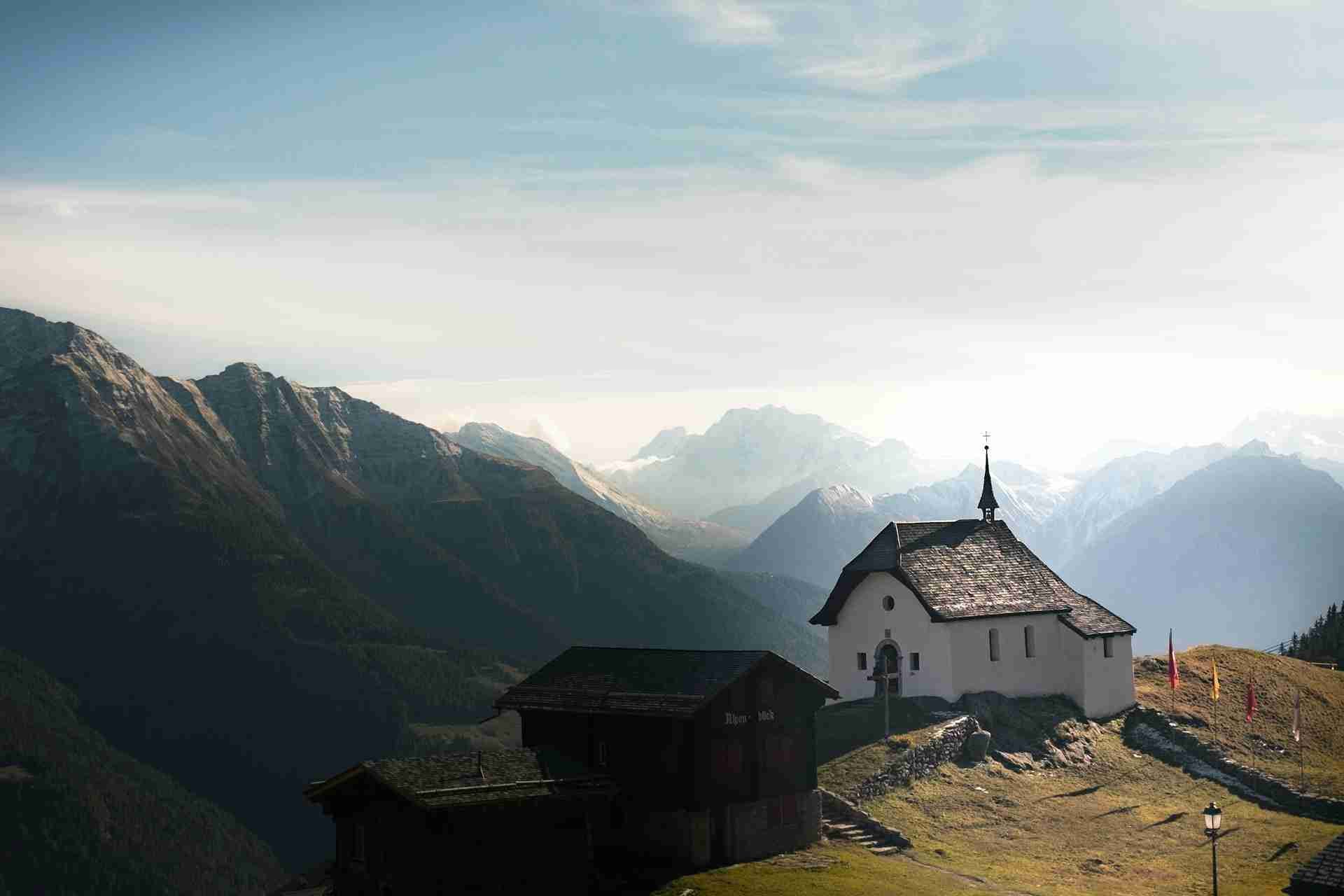
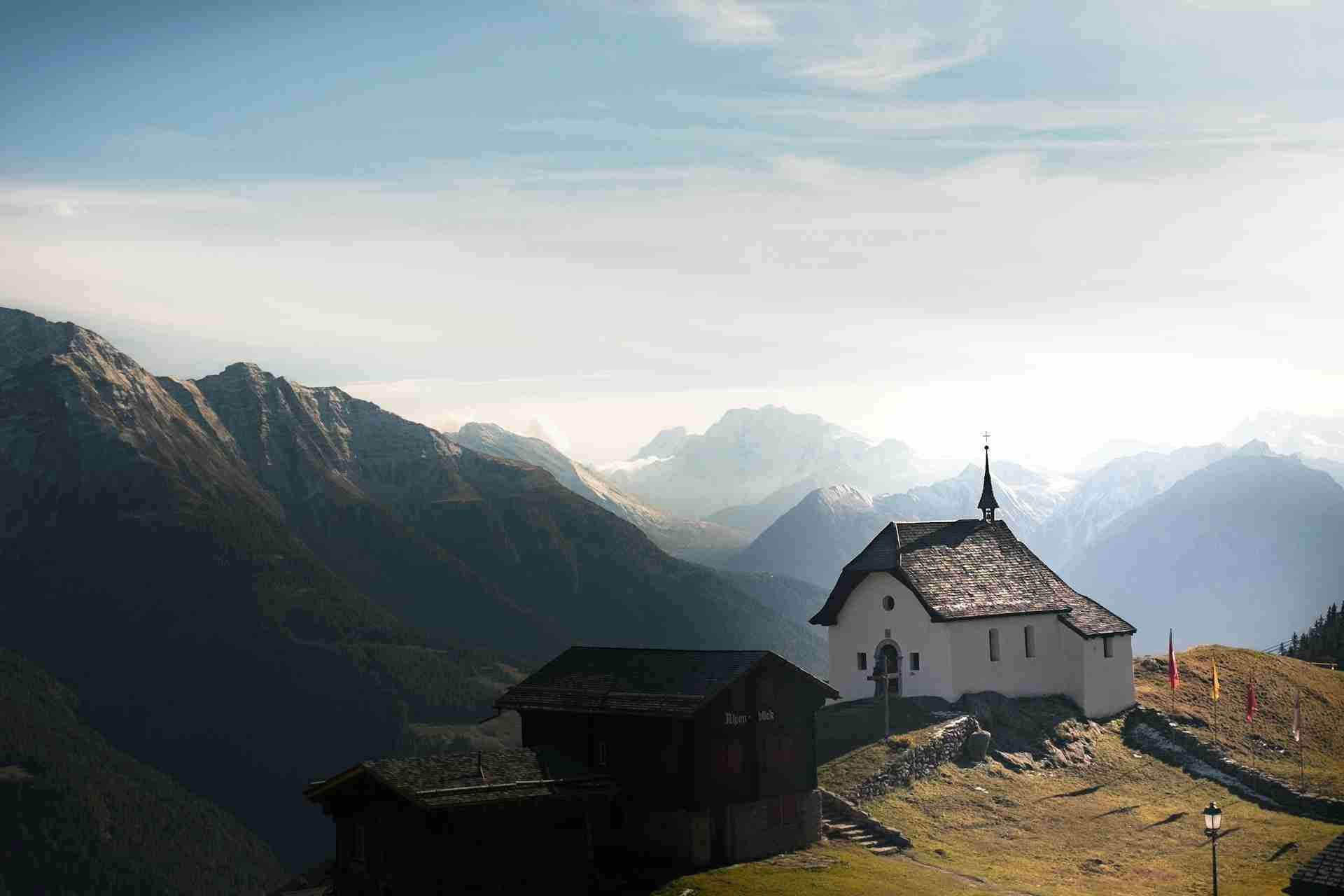
High above the Rhône Valley in the car-free village of Bettmeralp, Kapelle Maria zum Schnee stands as a small but striking chapel set against the vast backdrop of the Swiss Alps. Built in the 20th century, the chapel's name translates to Mary of the Snow, a fitting tribute to its alpine setting where peaks and glaciers dominate the horizon. Its simple whitewashed walls and dark wooden roof form a powerful contrast with both summer greens and winter snowfields. For photographers, the charm of the chapel lies in its balance between modest scale and monumental surroundings. The building serves as both subject and anchor, grounding wide mountain scenes with human presence while also rewarding closer architectural detail. Whether photographed in soft morning light, under star-filled skies, or surrounded by snowdrifts, Kapelle Maria zum Schnee offers compositions that combine serenity with grandeur.
Best Photography Opportunities
• Chapel with Aletsch Glacier Backdrop
From certain vantage points around Bettmeralp, you can frame the chapel with the sweeping ice of the Aletsch Glacier and its surrounding peaks in the distance. These compositions highlight the juxtaposition of human devotion and natural power, with the small chapel set against one of Europe's most immense landscapes. A wide-angle lens emphasizes the scale of glacier and mountain, while the chapel anchors the frame. Early morning or late afternoon light gives form to the glacier and adds warmth to the chapel walls, creating balanced contrast between foreground and background. On clear days, the sky's deep blue adds further richness to the scene.
• Intimate Compositions of the Chapel Exterior
The chapel's whitewashed walls, steep roofline, and wooden details make it an excellent subject for closer architectural photography. Shooting from low angles emphasizes the roof and bell tower, while side light enhances texture in the stucco walls. Details such as the cross atop the roof or the wooden entrance door provide opportunities for tight compositions. Overcast conditions work especially well here, as soft light reduces contrast and allows subtle textures to come through. These closer shots complement wider landscapes by telling the story of the building itself.
• Seasonal Framing with Snow or Summer Greenery
In winter, snow blankets Bettmeralp, surrounding the chapel in a scene of pure white minimalism. This is an ideal time for stark, high-contrast compositions where the structure stands cleanly against the landscape. In summer, the same scene shifts into vivid greens and colorful alpine flowers, which can be used as foregrounds in wider shots. Autumn adds golden tones to the meadows and cool air that often brings morning fog, enhancing atmosphere. Each season transforms the mood of the chapel, making repeat visits rewarding for varied photographic results.
• Chapel at Sunset and Blue Hour
Sunset light warms the limestone peaks of the surrounding Alps, casting long shadows across the meadows while the chapel remains a steady focal point. Blue hour provides equally strong opportunities, when the sky deepens into rich tones and the chapel can be framed against silhouettes of the mountains. A tripod is essential for low-light exposures, and incorporating foreground grasses or snow textures adds interest to long exposures. The simplicity of the chapel makes it a strong subject for silhouettes against the glowing horizon as well.
• Night Photography with Alpine Stars
The remote location of Bettmeralp, free from heavy light pollution, makes the chapel an ideal subject for astrophotography. On clear nights, the Milky Way often arcs over the surrounding mountains, and the chapel's sharp silhouette anchors the scene. A fast wide-angle lens is essential for capturing both stars and building detail. Long exposures reveal star trails circling the sky, while shorter exposures freeze the Milky Way in crystalline detail. Including the chapel in the foreground provides a sense of scale and grounding for the cosmic display above.
Best Time to Visit
Kapelle Maria zum Schnee is rewarding in every season. Summer offers accessible trails, warm evening light, and clear conditions for glacier views. Winter transforms the setting into a snow-covered wonderland, best for minimalist compositions and contrasts between white snow and dark roof. Spring brings melting snow, fresh greens, and streams that can be incorporated into foregrounds. Autumn adds golden tones to grasses and occasional fog that enhances atmosphere. For daily timing, early morning provides soft light and solitude, while evening light is dramatic with long shadows across the meadows. Blue hour and night are particularly productive for photographers staying in Bettmeralp overnight. The chapel's small size and simple geometry mean that light conditions play an outsized role in defining mood, so revisiting at different times of day is highly rewarding.
How to Get There
Bettmeralp is a car-free village accessible only by cable car from Betten Talstation in the canton of Valais. From the valley floor, the ride takes just a few minutes and delivers you directly to the alpine plateau. From the Bettmeralp cable car station, Kapelle Maria zum Schnee is only a short walk through the village, taking no more than 10 minutes along paved paths. The chapel is freely accessible year-round, and there are no entry fees or restrictions on casual photography. Tripods are permitted, and the surrounding meadows and open spaces provide ample room to set up without obstruction. In winter, the area is part of a ski resort, so caution is advised when moving around snow-covered slopes. Summer and autumn visits are straightforward, with clear paths and open terrain. Overnight stays in Bettmeralp are highly recommended for photographers planning sunrise, sunset, or night shoots.
Recommended Photography Gear
A balanced kit will help capture both the chapel's architectural detail and its vast alpine surroundings. A wide-angle lens between 14 and 24 millimeters is essential for framing the chapel against mountain and glacier backdrops. A mid-range zoom such as a 24 to 70 millimeter lens provides flexibility for closer architectural shots and compositions that balance the chapel with foreground flowers or snowdrifts. A lightweight tripod is indispensable for twilight, night, and long exposure work, particularly for astrophotography. A circular polarizer enhances skies and reduces glare on snow, while neutral density filters are useful for smoothing moving clouds in long exposures. Extra batteries are essential in winter, as cold temperatures drain power quickly. For night photography, a fast prime lens and remote shutter release allow sharp, noise-controlled exposures. Weather protection for both gear and clothing is advised, as alpine conditions can change rapidly. Sturdy boots and layered clothing are necessary year-round, whether hiking in summer or moving through snow in winter.
Nearby Photography Locations
Accessible by cable car from Bettmeralp, this summit offers panoramic views of the Aletsch Glacier, the Bernese Alps, and distant peaks including the Matterhorn. Sunrise and sunset are particularly dramatic from this elevated viewpoint.
Another high summit near Bettmeralp, Eggishorn provides one of the most complete views of the Aletsch Glacier. Its exposed position and sweeping perspective make it an excellent place for wide-angle alpine photography in clear weather.
A neighboring car-free village, Riederalp offers softer, pastoral scenes with chalets, alpine meadows, and long views across the Rhône Valley. It complements the more dramatic settings around Bettmeralp with quieter compositions.
This trail follows the edge of the glacier, providing constantly shifting perspectives of ice, crevasses, and surrounding peaks. It is an excellent place for both detailed ice photography and sweeping alpine landscapes.
Another plateau village nearby, Fiescheralp offers views toward the eastern section of the Aletsch Glacier and surrounding high peaks. It is less visited than Bettmeralp and rewards those looking for quieter compositions and expansive skies.
Kapelle Maria zum Schnee is a place where modest architecture and immense landscape meet in perfect harmony. For photographers, it provides an anchor point in compositions that stretch from simple detail to alpine vastness. Whether blanketed in snow, surrounded by wildflowers, or silhouetted under stars, the chapel speaks of stillness and faith in a landscape that feels eternal.
Comments
Loading comments…