
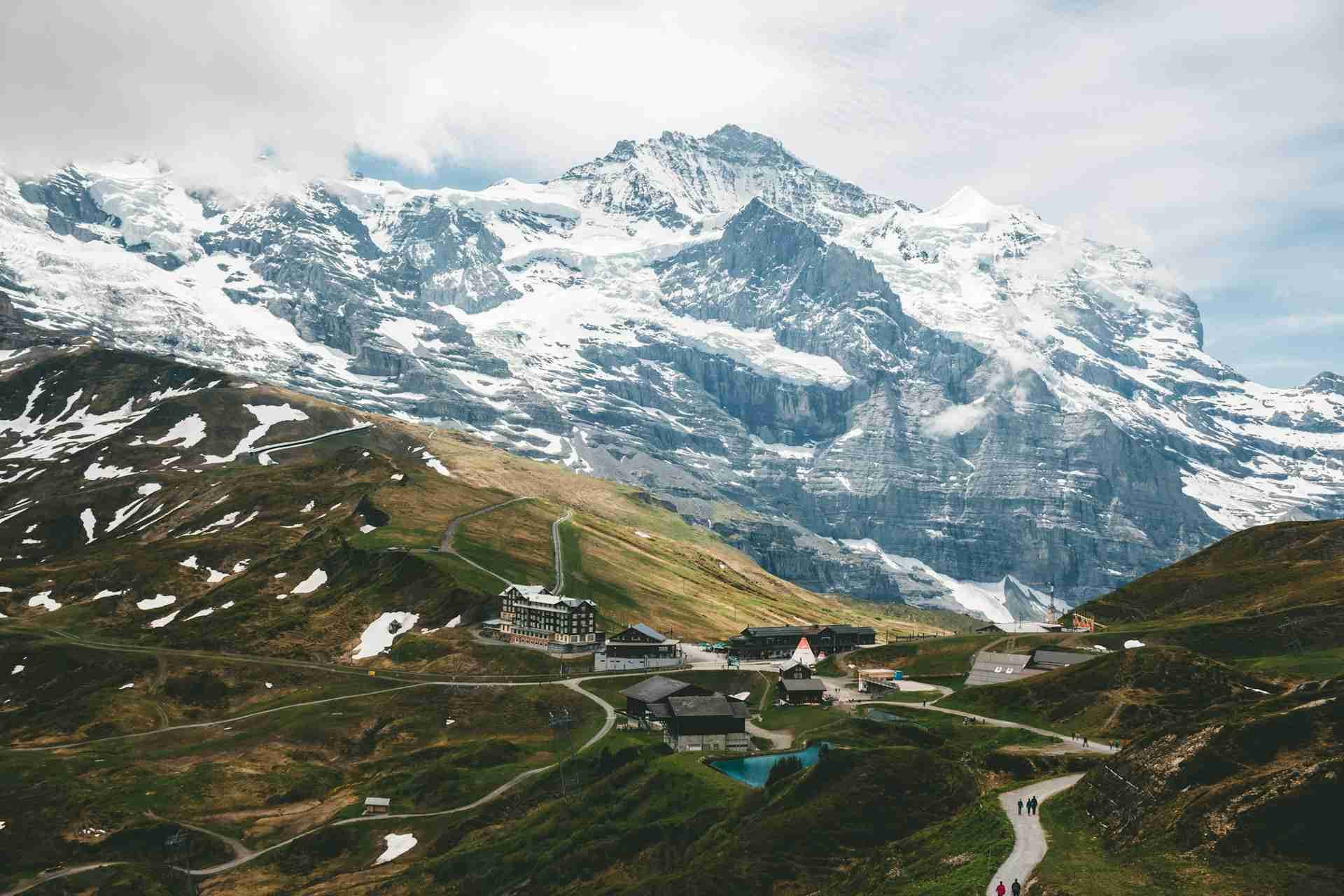
Set high in the Bernese Alps between the towering peaks of the Eiger, Mönch, and Jungfrau, Kleine Scheidegg is one of Switzerland's most rewarding alpine photography locations. This high mountain pass above the Lauterbrunnen Valley serves as both a railway junction and a panoramic gateway into the heart of the Jungfrau region. Here, jagged rock faces meet glaciated slopes, wide meadows roll into dramatic drop-offs, and the light moves fast and clean across the high alpine air. Whether shooting expansive vistas, high-mountain train lines, or the ever-changing drama of weather against stone, photographers will find Kleine Scheidegg an inspiring and diverse landscape. The scale is massive, yet the scene remains surprisingly intimate when approached with care and intention.
Best Photography Opportunities
Eiger North Face at Sunrise
The north face of the Eiger dominates the skyline at Kleine Scheidegg and becomes especially photogenic when lit by early morning sun. As the first rays crest the ridges, the upper slopes catch a warm glow while the lower rock face remains in shadow. This contrast allows for powerful vertical compositions that emphasize scale and depth. A telephoto lens can isolate striations in the rock and patterns in snow or ice, while a wide-angle lens allows you to include foreground elements like alpine grass or station buildings. The changing light in the first twenty minutes after sunrise creates rapid transitions, so arrive early and be prepared to adjust quickly.
The Jungfrau Railway Cutting Through the Landscape
The bright red or yellow trains of the Jungfrau Railway are striking visual elements against the natural landscape. Whether climbing the final slope toward the Jungfraujoch or descending into the valley, these trains offer opportunities for dynamic compositions. Shoot from slightly elevated vantage points to capture the train winding through meadows with the Eiger or Mönch as a backdrop. Use a shutter speed fast enough to freeze the train's movement, or slow slightly to add motion blur for a more graphic effect. The best light occurs mid-morning when the eastern ridgelines are fully lit and the valley floor is still cool and shadowed.
Storm Clouds Rolling Over the Pass
Mountain weather in this region is highly dynamic. In the span of minutes, clouds can gather over the ridges and change the tone of the landscape entirely. These conditions are ideal for moody, contrast-rich photography. Position yourself to the west of the station, facing east toward the Jungfrau, where light often breaks through as storms shift. Use a telephoto lens to compress cloud layers and mountain ridges, or go wide to show scale between the landscape and any hikers or trains in frame. A graduated neutral density filter can help balance the exposure between cloud-heavy skies and darkened terrain.
Wildflower Meadows in Summer
From June through August, the alpine meadows surrounding Kleine Scheidegg erupt with color. Purple asters, yellow cinquefoil, and delicate alpine bellflowers create rich foregrounds that contrast against the grey and white backdrop of the mountains. Shooting low and wide allows you to frame these flowers close to the lens while retaining sharp focus on distant peaks. Use a small aperture to maximize depth of field, and watch for backlighting in the early evening when flower petals glow translucent. These scenes work particularly well under slightly overcast conditions when the light is soft and even.
Golden Hour Above Lauterbrunnen Valley
One of the most rewarding perspectives from Kleine Scheidegg is looking westward back down toward the Lauterbrunnen Valley as the sun begins to set. This view gives you soft sidelight across the ridges and reveals the texture of the valley's steep walls. Golden hour light pulls out color in the grass and rock, while fog or cloud banks often build up just above the valley floor. Frame your shot from one of the trails leading south from the station, where you can find clean compositions without overhead wires or buildings. Bring a medium zoom to easily adapt as the light shifts and elements move through the frame.
Best Time to Visit
Kleine Scheidegg is photographable in all seasons, but each one brings its own distinct challenges and rewards. Summer, from June through September, offers the most accessible trails, longest shooting windows, and colorful alpine flora. This is also when the trains run most frequently, allowing for flexibility and timing. Autumn brings richer color tones in the grasses and golden light on the peaks, though weather can be unpredictable and snowfall may arrive early. Winter transforms the area into a stark, high-contrast snowscape with limited mobility but striking clarity. Spring offers melting snow, emerging wildflowers, and atmospheric changes, but access to higher trails may be restricted.
Light is most reliable in the early morning, when winds are calmer and cloud cover more controlled. Sunrise is particularly effective for shooting the Eiger and surrounding peaks, while sunset lends itself to scenes facing west down the Lauterbrunnen Valley. Midday light can be harsh and flat, though storm fronts or high clouds often soften the scene. For best results, check weather and live webcams in advance, as light and cloud conditions change rapidly in this high-altitude terrain.
How to Get There
Kleine Scheidegg sits at 2,061 meters in the Bernese Oberland and is only accessible by train. From Lauterbrunnen or Grindelwald, take the cogwheel railway to Wengen or Grindelwald Terminal, then transfer to the Wengernalpbahn, which climbs directly to the Kleine Scheidegg station. Trains run year-round and are reliable, though scheduling may be reduced in off-season months or during inclement weather.
There are no public roads to the pass, so all access must be via the rail system or on foot from surrounding trails. Once at the station, a network of marked trails branches out in every direction, many offering excellent photographic vantage points within a ten to thirty-minute walk. There are no entry fees to access the area, though tickets for the Jungfrau Railway are required and can be purchased as part of regional travel passes. Accommodations are available at the station or in nearby villages for those planning sunrise or sunset shoots.
Recommended Photography Gear
A wide-angle lens in the 16 to 35 millimeter range is essential for capturing the full scale of the landscape, especially when working close to wildflowers, ridgelines, or trail-side compositions. A standard zoom from 24 to 70 millimeters is excellent for walking the area and adjusting quickly to changes in light or subject. A telephoto lens in the 70 to 200 millimeter range or longer is critical for isolating distant peaks, compressing cloud layers, or capturing the trains within the broader landscape.
A tripod is useful for low-light conditions, long exposures, or compositional control in early or late hours. Graduated neutral density filters help manage contrast between bright sky and shaded terrain, while a polarizing filter improves color contrast and removes glare from snow or wet rock. Weather protection for both camera and lens is strongly recommended due to sudden shifts in wind or precipitation. Bring extra batteries, as cold air at altitude can reduce power faster than expected. Comfortable hiking shoes, layered clothing, and a daypack will help you move between locations efficiently and safely.
Nearby Photography Locations
Just below Kleine Scheidegg, Lauterbrunnen is a deep glacial valley known for its waterfalls and towering cliffs. Early morning fog, afternoon sidelight, and the contrast between green pasture and sheer rock walls make it ideal for both dramatic and pastoral landscape shots.
Accessible by gondola from Grindelwald, this ridge offers wide panoramic views of the Eiger and surrounding peaks. The elevation allows for dynamic sky compositions and clean alpine light, particularly in the evening when warm light catches the ridgelines.
The hike from Männlichen to Kleine Scheidegg follows a high ridge with open views in all directions. It is one of the most rewarding easy hikes in the region, offering continuous photographic opportunities across grassy slopes, distant peaks, and high-mountain farm buildings.
Perched on the mountainside above Lauterbrunnen, Wengen offers a softer alpine atmosphere with traditional wooden chalets, narrow lanes, and framed views of the Jungfrau. It is best photographed in the early evening when light sweeps across the village rooftops.
Starting just below Kleine Scheidegg, this trail runs along the base of the Eiger's north face and offers a close-up view of one of the Alps' most famous walls. The path gives changing perspectives of the face as you walk and is especially powerful under moody skies or evening light.
Kleine Scheidegg is not a place of subtle scale. Everything here is oversized—peaks, clouds, trains, and light. Yet within that immensity are quiet moments of precision and contrast that make it a dream for landscape photographers. Whether you are tracking the first rays hitting the Eiger, waiting for a train to round a curve, or watching fog shift across the valley, this place asks you to stay longer, frame wider, and see the land with both awe and care.
Comments
Loading comments…