
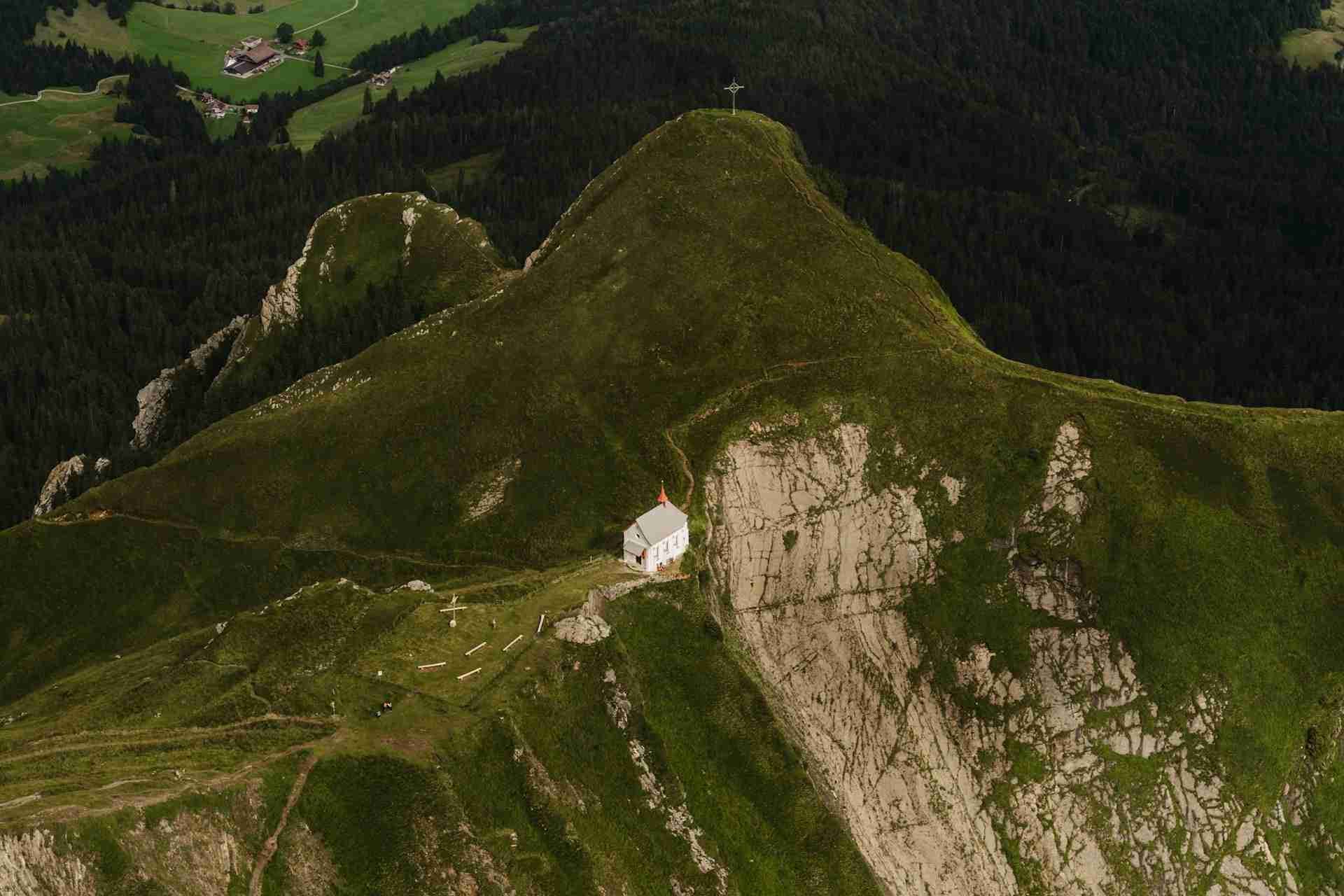
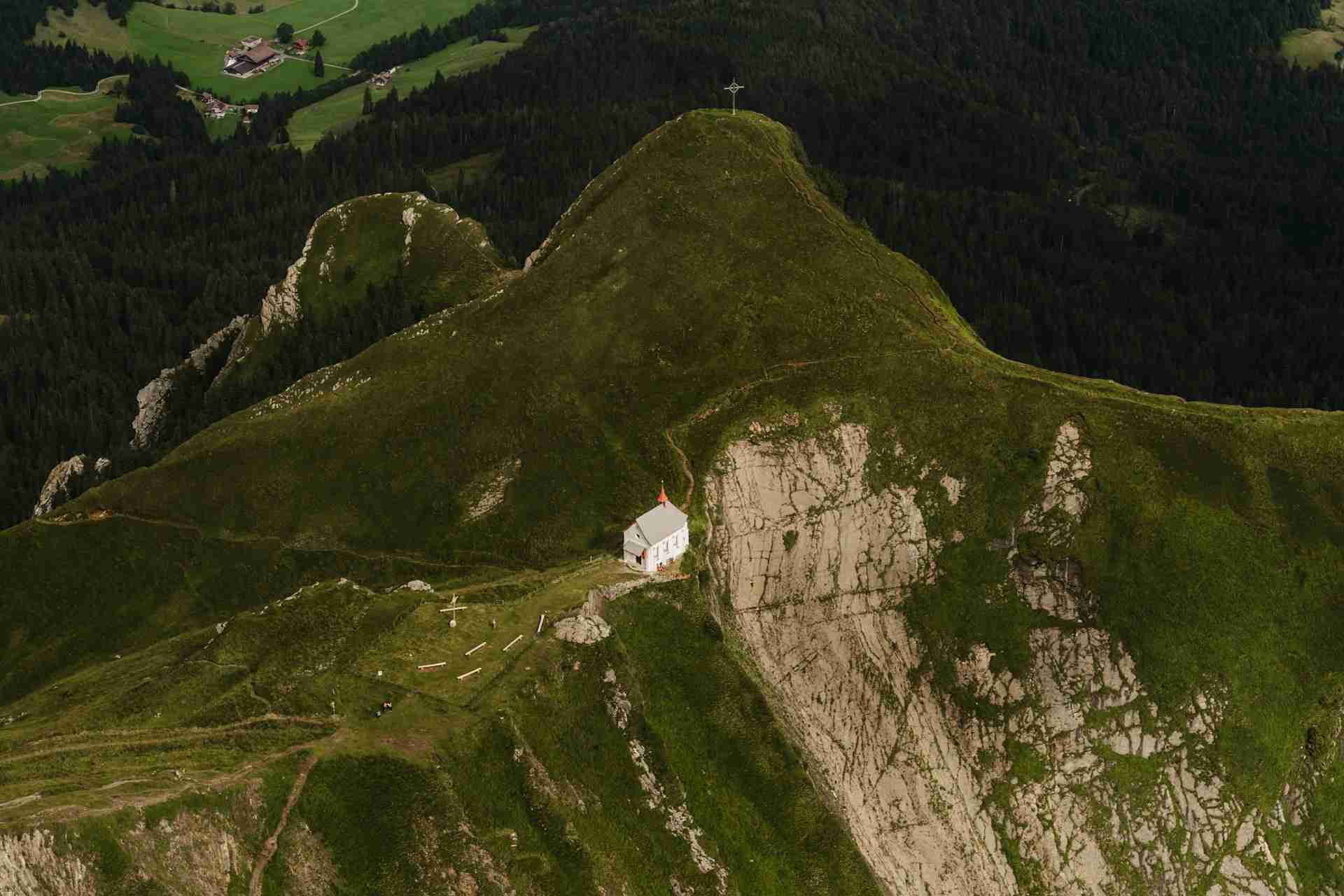
High above the shores of Lake Lucerne, tucked against the steep alpine slopes of Mount Pilatus, Klimsenkapelle stands as one of central Switzerland's most photogenic mountaintop chapels. Built in the 19th century and perched at 1,864 meters, it overlooks an extraordinary panorama of the lake below, ringed by mountain peaks and shifting cloud layers. The site is quiet, remote, and visually dramatic—an ideal setting for photographers interested in alpine light, architectural isolation, and bold natural backdrops.
Best Photography Opportunities
• Alpine sunrise with the chapel in foreground
Early morning light is one of the most rewarding times to photograph the chapel. As the sun rises behind the eastern ridges, it paints the surrounding peaks and casts a soft glow across the front of the building. Use a wide-angle lens to include the chapel, grassy slope, and the deep blue lake in the background. This scene is strongest in late spring through early autumn, when the ground is clear of snow.
• Cloud inversion over Lake Lucerne
During cooler mornings in autumn and spring, the lake below is often blanketed in a sea of low clouds while the chapel rises above it. This creates a surreal scene of the structure floating above the mist. A telephoto lens can help compress the chapel against the soft background, while a tripod allows you to fine-tune focus and horizon alignment.
• Detail shots of chapel architecture against rock and sky
The small scale of the chapel makes it easy to isolate against the steep rock face or open sky. Close-ups of its roofline, cross, and arched windows contrast beautifully with the textures of stone and grass. Side lighting adds depth, particularly in early or late hours.
• Golden hour trail views approaching the site
The trail leading up to Klimsenkapelle offers dramatic reveal moments, where the chapel appears suddenly at the edge of the ridge. Position yourself along the switchbacks in the final ascent to shoot the chapel from below, lit warmly in evening light with sweeping valley views behind. This is also a great time for layered mountain compositions.
• Snow-covered solitude in winter
For photographers willing to hike in snowy conditions, the chapel under fresh snow offers an entirely different scene. The soft blanket quiets the landscape, and side light in winter months produces long, expressive shadows. Check safety conditions before attempting winter access.
Best Time to Visit
The prime seasons for photographing Klimsenkapelle are from late May through October, when trails are free of snow and weather conditions are more stable. In early summer, wildflowers and green grass contrast with the white stone and give the area vibrant life. Autumn brings shifting light, golden tones, and the possibility of cloud inversions that transform the entire landscape.
Golden hour is especially productive here, both at sunrise and sunset. Sunrise gives more even light on the front of the chapel and reveals the lake below, while sunset casts longer shadows and lights the rocky backdrop. Midday light is strong and direct at this altitude and can work for dramatic contrasts but is often harsh on reflective surfaces.
Early morning visits offer calm conditions and soft color, while evening light provides depth and isolation against the darkening terrain. Overcast or foggy days can still be rewarding, especially when mist surrounds the chapel and removes background distractions.
How to Get There
Klimsenkapelle is located above the municipality of Hergiswil in the canton of Nidwalden. There are no roads to the chapel, and access is by hiking trail only. The most direct and scenic approach is from the Pilatus Kulm summit, which can be reached by cogwheel train from Alpnachstad or by cable car from Kriens.
From Pilatus Kulm, the hike to Klimsenkapelle takes approximately 45 minutes and descends along marked mountain trails with steep sections and exposed areas. Good hiking shoes, weather-appropriate clothing, and plenty of water are essential. Alternatively, experienced hikers can ascend from Hergiswil directly, though this route is much more strenuous and should only be attempted in dry, stable weather.
There are no fees to access the chapel or surrounding trails. The site is open year-round, but winter access is weather-dependent and should be researched carefully in advance. Cell coverage is limited, and facilities are nonexistent, so plan for full self-sufficiency.
Recommended Photography Gear
Bring a wide-angle lens (16–35mm) to frame the chapel in its environment, especially when shooting from the slope or near the trail. A mid-range zoom (24–70mm) is ideal for balancing the building and the landscape in one composition. A telephoto (70–200mm) is excellent for isolating the chapel against cloud, lake, or distant peaks.
A tripod is essential for golden hour, low light, and long exposures with fog or mist. A polarizing filter helps deepen blue skies and manage glare off the stone facade. Lens cloths are useful in damp or misty conditions, and a weather-sealed bag helps protect gear from sudden changes in mountain weather.
Since the hike is moderately challenging, pack light but bring essentials. A water bottle, high-energy snack, and light layers for changing temperatures are strongly recommended.
Nearby Photography Locations
• Pilatus Kulm summit
, just above the chapel, provides a sweeping 360-degree view across central Switzerland. Photographers can frame Lake Lucerne, distant alpine ranges, and layered ridgelines in morning or evening light.
• Fräkmüntegg station area
, located along the gondola line, offers forested trails, open meadows, and cable infrastructure that can be used creatively in compositions.
• Lake Lucerne shoreline near Hergiswil
, where the mountain rises sharply above the water and offers contrasting views between lowland settlements and the high ridge where Klimsenkapelle sits.
, the highest peak along Mount Pilatus, provides elevated views over the entire ridge and down toward the chapel. It's a good choice for a wide alpine landscape with Klimsenkapelle visible in the lower terrain.
• Alpnachstad lakefront
, ideal for early morning shots looking toward Mount Pilatus with reflections in calm water and atmospheric clouds building over the ridge.
Comments
Loading comments…