
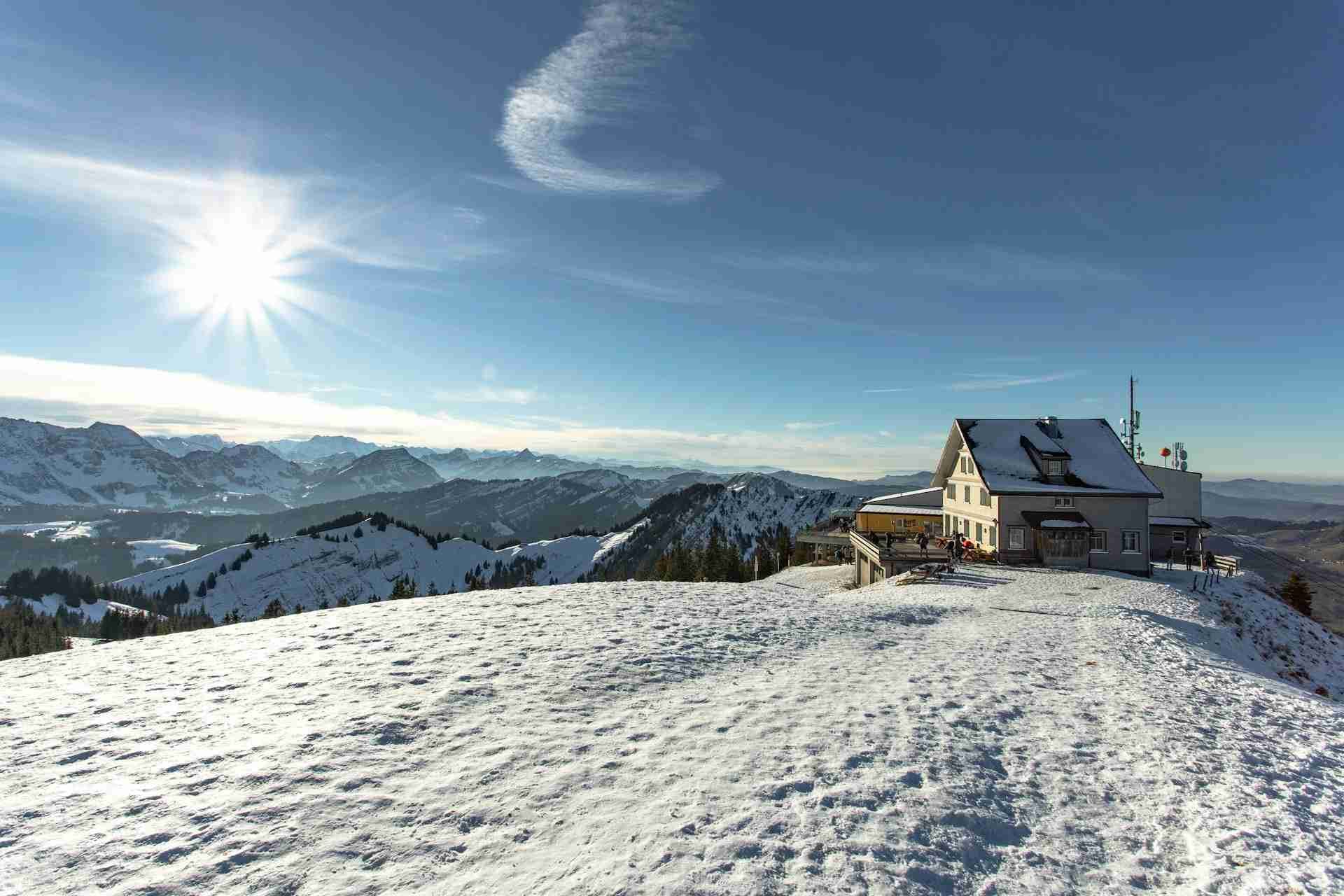
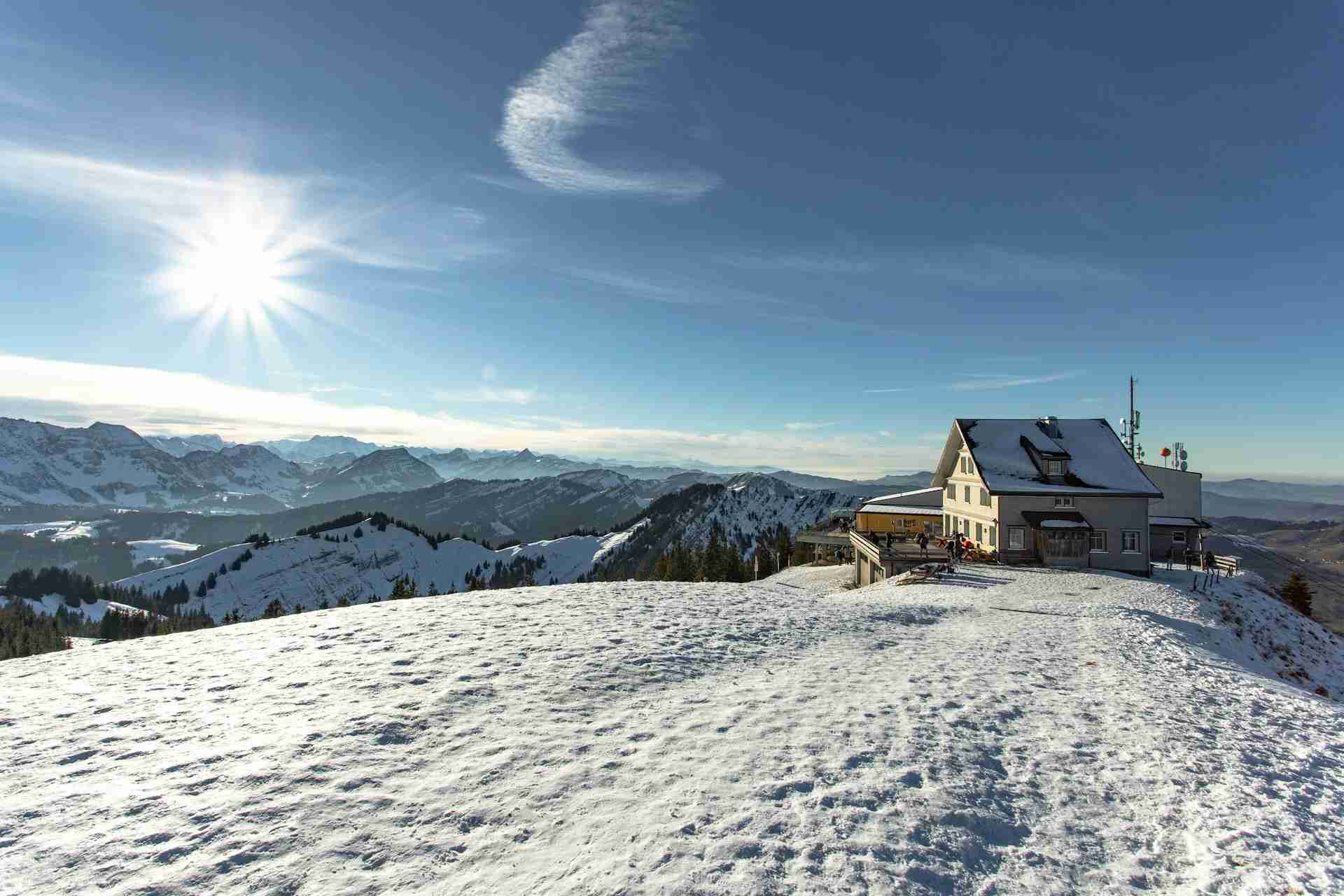
Kronberg rises gently above the village of Jakobsbad in Switzerland's Appenzell region, offering a balance of rolling green meadows, well-marked hiking trails, and views toward the rugged Alpstein mountains. While not as towering as nearby Säntis, it provides a highly accessible mountaintop with uninterrupted panoramas and a peaceful alpine character that appeals to photographers looking for both detail and breadth. The summit is reachable by cable car, making it one of the easier locations to access for sunrise or sunset without a demanding climb. With pastureland below and dramatic peaks in the distance, Kronberg offers variety for those who shoot both wide-angle landscapes and intimate rural scenes.
Best Photography Opportunities
• Summit Views Toward Säntis and the Alpstein Ridge
The summit of Kronberg provides a clean, open perspective toward the eastern Alpstein range, with Säntis clearly visible in the distance. Using a medium telephoto lens allows you to compress the ridgelines and highlight the contrast between the grassy foreground and rocky background. Early morning light catches the side of Säntis and creates long shadows across the valleys. Weather changes quickly in this region, so repeating the same composition in varying conditions produces very different images. Including a fence post or patch of wildflowers in the foreground can add context and anchor your frame effectively.
• Working the Slopes for Rural Detail
Instead of taking the cable car both ways, walking down from the summit opens up many strong compositions along the slopes. Wooden barns, grazing cattle, and rolling hills provide steady opportunities for layered rural photography. These elements are often positioned along trails that curve with the terrain, creating natural leading lines. Light in the late afternoon is especially good for cross-lighting these scenes, bringing out the texture in the grass and adding dimension to the hills. A flexible zoom lens helps you adjust quickly to changing views and isolate interesting scenes along the way.
• Paths, Fences, and Open Meadows
The trails around Kronberg weave gently through open pastureland, with wooden fences that can be used as compositional elements. These features are well suited to wide-angle compositions, particularly when shot low to the ground in golden hour. Even without dramatic weather, the slope of the land and subtle layering in the terrain provide structure for clean, balanced images. Watch for small trees or posts that break the repetition and give a clear focal point. This is a good area to slow down and focus on the interaction between shape and light.
• Sunrise and Sunset from the Panorama Deck
A small platform near the cable car station allows for open shooting in all directions. At sunrise, the light comes in from behind the Alpstein ridge and gradually works its way across the landscape. Sunset can produce a warm backlight along the western side of the slope, ideal for silhouettes or side-lit detail in the grass. Long exposures are possible with a tripod, but even handheld work can be effective when the light is soft and balanced. Use a graduated filter if the sky is significantly brighter than the land.
• Winter Conditions and Seasonal Contrast
In winter, the meadows become snow-covered and form smooth, undulating shapes that work well in soft light or during snowfall. The area is popular for snowshoeing, and footprints can add scale or context depending on your frame. In shoulder seasons, patches of snow remain even after the grass has returned, offering a visual mix of seasons that is uncommon at higher elevations. These frames work best in overcast or low-contrast light, which allows the tones of snow and grass to blend naturally. Short telephoto lenses help you isolate clean shapes and avoid distracting backgrounds.
Best Time to Visit
The most productive months for photography on Kronberg are from May through October, when the trails are fully open and the cable car operates on an extended schedule. Early summer offers wildflowers and fresh grass in the lower meadows, while autumn brings golden tones that add warmth to every scene. Morning light is best for views toward Säntis, while late afternoon is ideal for detail shots along the western-facing slopes.
Sunrise and sunset provide the strongest directional light, but the area also holds up well in overcast conditions, especially for rural compositions and trail scenes. Winter visits can be excellent if you are equipped for snow and cold. The snow cover smooths the landscape and creates opportunities for graphic compositions without excessive contrast.
Avoid high midday sun during the summer, as the overhead light tends to flatten the meadows and remove shadow definition. Fog is common in the valleys during the early morning, which may obscure distant views but create soft conditions for shooting nearby elements.
How to Get There
Kronberg is located above the village of Jakobsbad in the Appenzell Innerrhoden region of northeastern Switzerland. The easiest access is via the Luftseilbahn Jakobsbad–Kronberg, which departs directly from the Jakobsbad train station. Trains connect from Appenzell and Gossau, making it accessible from larger cities such as St. Gallen or Zurich within two hours.
Parking is available at the base of the cable car, and tickets can be purchased on-site or online. The summit station includes a restaurant, restrooms, and a panoramic viewing platform. There are no entry fees for photographers beyond the cable car fare.
Hiking to the summit is also possible via marked trails that begin in Jakobsbad and take roughly two hours on foot. Trails are maintained and safe during the warmer months, with clear signage throughout. In winter, the route is suitable for snowshoes but may require caution depending on snow and ice conditions.
Recommended Photography Gear
A wide-angle lens between 16 and 35mm is ideal for working with fences, paths, and meadow compositions. A mid-range zoom, such as 24 to 70mm, provides flexibility for walkable scenes and rural structures along the trail. A short telephoto from 85mm to 135mm is useful for compressing the Alpstein ridges or isolating barns and trees from the surrounding landscape.
Bring a tripod for sunrise and sunset shooting or when working with longer exposures during twilight. A polarizer is helpful for cutting glare on grass and deepening the blue of clear alpine skies. Graduated ND filters help manage exposure differences when working with bright skies and shadowed hills. A lens cloth is essential, particularly in winter or misty conditions when condensation is common.
Use a weatherproof camera bag and bring layers of clothing even in summer, as conditions can shift quickly. While the location is easy to access, the open summit and meadows offer little shelter from wind or changing weather.
Nearby Photography Locations
A short drive or train ride away, Säntis is the tallest peak in the Alpstein range and offers dramatic high-altitude views. The summit can be reached by cable car from Schwägalp and works well for sunrise and telephoto compositions.
A popular alpine lake surrounded by steep walls and traditional farmhouses. The still water offers excellent reflection shots at sunrise, and the walk in provides varied landscape opportunities.
Known for its painted buildings and tidy streets, the village of Appenzell is a strong location for photographing cultural details, window textures, and street-level storytelling.
This nearby mountain has a revolving restaurant and a cliffside path that gives access to wider views across the Rhine Valley and toward Liechtenstein. Best visited in the morning for crisp light on the eastern horizon.
• Alp Sigel and Brülisau Region
A quieter area with sweeping ridgelines, small alpine huts, and strong directional light in the early morning. This location is less trafficked and ideal for working with more open compositions.
Kronberg offers a rare mix of ease and range. Its summit can be reached in minutes, but the variety of photographic subjects across time of day and season makes it worth repeated visits. Whether you're drawn to rural details, changing light on distant peaks, or quiet scenes along winding trails, the area provides clean compositions and reliable conditions without requiring a strenuous effort. It is a mountain that works as well for slow, reflective photography as it does for bold sunrise frames.
Comments
Loading comments…