

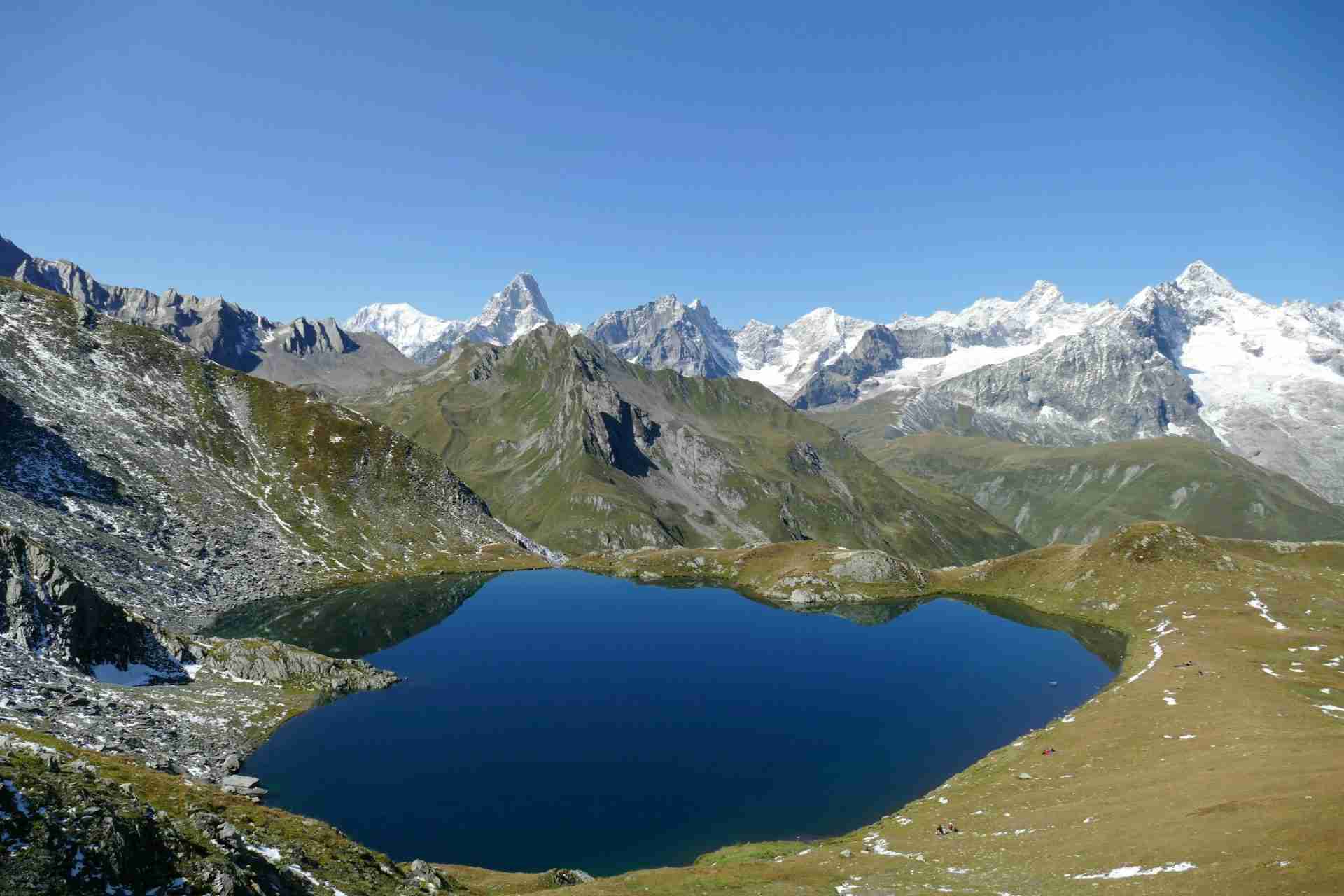
Lacs de Fenêtre is one of those alpine spots that feels a bit removed from the more crowded areas, even though it is still fairly accessible with a bit of effort. Sitting above Orsières near the Swiss Italian border, the area opens up into a calm basin with a handful of small lakes scattered between rock and grass. It is not dramatic in an overwhelming way, which actually makes it easier to work with as a photographer. The scale is there, with surrounding peaks giving context, but the scene stays clean and manageable. Once you reach the lakes, you can move freely between them and find different angles without feeling boxed in. It is a place where you can slow down, explore properly, and build a strong set of images without rushing.
Best Photography Opportunities
• Lake Edge Reflections with Mountain Backdrop
The main draw here is the set of small alpine lakes, which work really well when the water is calm. You can position yourself close to the edge and use the shoreline to guide the viewer into the reflection. The surrounding peaks are not overly jagged, which helps keep the composition clean and balanced rather than chaotic. Small changes in position can shift how the mountains sit within the reflection, so it is worth taking time to refine your angle. Early or late light adds more shape to the terrain and helps separate elements in the frame. It is a straightforward setup, but one that consistently delivers strong results.
• Foreground Rocks and Layered Depth Compositions
There are plenty of rocks scattered around the lakes that can be used to build depth in your images. Placing these in the foreground helps anchor the shot and creates a natural progression from front to back. You can experiment with different distances between elements to control how compressed or open the scene feels. This approach works well with both wider and slightly tighter focal lengths. Paying attention to how the rocks line up with the water and mountains makes a big difference in the final image. It is a reliable way to add structure to what might otherwise feel like an open scene.
• Multiple Lake Perspectives Within the Basin
One of the advantages of this location is that you are not limited to a single viewpoint. The lakes are spread out across the basin, which gives you the freedom to move and find new compositions without much effort. Each lake has its own shape and orientation, which changes how reflections and background elements appear. Walking a bit further between them often leads to less obvious angles that feel more unique. It is worth taking the time to explore rather than settling at the first lake you reach. This flexibility is one of the strongest aspects of the location.
• Minimal Compositions with Water and Sky
Some areas of the lakes allow for very simple compositions where you focus on water, sky, and a small amount of land. This works especially well in softer light when the tones are more subtle. You can use negative space to create a calm, balanced image that feels less busy than the wider scenes. It is a good option if conditions are not dramatic but still visually interesting. Small ripples in the water can add just enough texture without distracting from the simplicity. This approach gives you a different look compared to the more layered compositions.
• Hiking Approach Details and Mid Route Scenes
The hike up to Lacs de Fenêtre is not just a means to an end, it offers its own set of photographic opportunities. Along the way, you will pass through changing terrain with smaller details like rocks, plants, and shifting views back down the valley. These moments are easy to overlook, but they can add variety to your overall set of images. Stopping occasionally to shoot along the route helps break up the session and gives you more to work with. It is also a good way to stay engaged with the landscape rather than focusing only on the final destination.
Best Time to Visit
Late summer into early autumn is usually the best time to visit Lacs de Fenêtre. By this point, most of the snow has cleared, and the lakes are fully accessible, making it easier to move around and explore different angles. The water levels tend to be stable, which helps with reflections, especially during calm conditions. Early summer can also work, particularly if you like the contrast between lingering snow patches and the exposed terrain, though access may be more limited depending on conditions.
Light is one of the most important factors here. Early morning is especially rewarding, as the air tends to be calmer and the light softer, which helps with reflections and overall balance in the scene. Late afternoon into evening also works well, with warmer tones adding depth to the rocks and surrounding slopes. Midday can be more challenging due to flatter light, but it is still usable if you focus on detail work or simpler compositions. Weather changes quickly in alpine areas, so being prepared to adapt to shifting conditions will help you make the most of your time.
How to Get There
Lacs de Fenêtre is accessed from the village of Orsières in the Valais region of Switzerland. From there, you head toward the La Fouly area, which serves as a common starting point for hikes in this part of the mountains. The trail to the lakes is well marked but involves a steady uphill climb, so you should be prepared for a moderate hike, especially if you are carrying camera gear.
There are a couple of route options depending on where you start, but most involve several hours of walking to reach the lakes. The terrain is not technical, though it does require a reasonable level of fitness and proper footwear. There are no specific fees to access the lakes themselves, but parking or transport in the area may involve costs. Planning your timing is important, as you will want enough daylight to hike in, shoot, and return safely.
Recommended Photography Gear
A standard zoom lens is a strong choice here, as it gives you flexibility to move between wider lake scenes and more focused compositions without constantly changing lenses. A wide lens is useful for emphasizing foreground elements and capturing the full spread of the basin. A short telephoto can help isolate reflections or compress layers in the landscape for a different look.
A tripod is highly recommended, especially if you are aiming for reflections or shooting in lower light during early morning or evening. It also helps you take your time and refine compositions more carefully. A polarizer can be useful for managing reflections on the water, depending on the look you are going for. Since you will be hiking, keeping your gear as light and efficient as possible is important. Weather can shift quickly, so having basic protection for your equipment is also a good idea.
Nearby Photography Locations
• La Fouly
La Fouly is a small alpine village that works well as a base for exploring the area. It offers open valley views with a mix of traditional buildings and mountain backdrops. It is a good place to shoot early or late in the day when light moves across the valley.
Mont Dolent sits near the border of Switzerland, Italy, and France, and stands out as a distinct peak in the region. It works well as a subject for more focused mountain compositions, especially when viewed from surrounding trails. Clear conditions help bring out its shape against the sky.
Val Ferret offers a longer stretch of alpine scenery with rivers, meadows, and mountain views. It gives you a broader landscape compared to the more contained setting of the lakes. The variety along the valley makes it worth exploring beyond a single viewpoint.
Col Ferret is a high mountain pass that gives you wide views across the surrounding peaks and valleys. It is a good spot for more open, expansive compositions that emphasize scale. The change in elevation provides a different perspective compared to lower areas.
Champex Lac is a larger lake surrounded by forest and mountains, offering a different kind of water based composition. It is easier to access than Lacs de Fenêtre and works well for calmer scenes with reflections. The setting feels more developed but still provides strong photographic opportunities.
Comments
Loading comments…