
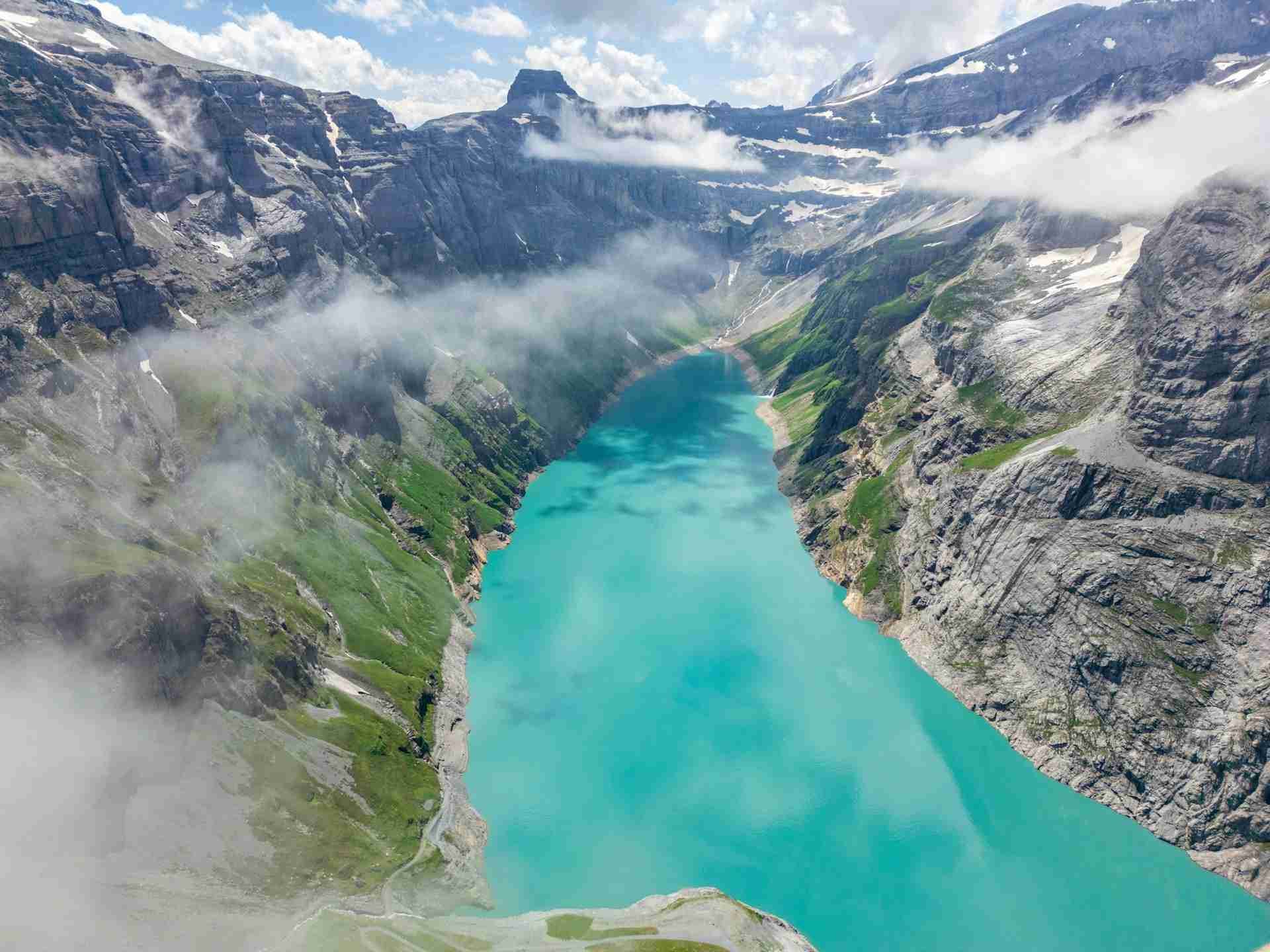
Limmerensee sits high in the Glarus Alps, framed by steep rock faces and a curved concrete dam that holds back the pale, glacier-fed water. Nestled in a narrow valley above the village of Linthal in Glarus Süd, this alpine reservoir blends natural drama with engineered structure, offering photographers a rare chance to capture both within a single frame. The lake is long and quiet, its still surface often reflecting the towering cliffs that rise abruptly from its banks. These reflections form clean compositions that reward patience and timing, while the dam itself adds geometry and contrast. With a range of perspectives available from below, above, and across the water, Limmerensee is well-suited to photographers who appreciate simplicity, precision, and strong alpine light. Though lesser known than some of Switzerland's more publicized lakes, its controlled access, isolation, and visual clarity make it a destination worth the effort.
Best Photography Opportunities
• Morning Light Across the Reservoir
When the sun rises above the ridgeline to the south, it gradually reveals the upper slopes and rock walls surrounding the lake. The light touches the cliff tops first, then slides down to meet the cool water below. On calm mornings, the reflections are sharp and symmetrical, especially from the northern shore. With a wide-angle lens, you can include the full arc of light as it moves across the frame. A medium focal length works well too, especially when you want to isolate lit sections of cliff within the larger scene. The moment passes quickly, so arrive early and scout your position before the sun breaks over the edge.
• Reflections Framed by Sheer Rock Faces
Limmerensee is flanked by steep granite walls that fall directly into the lake. These vertical surfaces create mirrored shapes and hard lines that define the frame. By placing the cliffs on either side and letting the reflections fill the lower third, you can build layered, balanced images. Overcast days reduce harsh contrast and allow detail to hold across the whole exposure. Use a polarizer with care. A slight turn can help manage surface glare, but too much will erase the reflection entirely. Pay attention to water movement, especially later in the day, as light winds may break the mirror.
• High Vantage Points along the Ridge Trail
Photographers willing to hike will find stronger, more expansive views by gaining elevation along the trail toward the Muttseehütte. From above, the dam's curve becomes more pronounced, and the color of the lake stands out against the surrounding gray rock. These views lend themselves to top-down compositions that emphasize contrast between the engineered structure and the natural valley. Shoot around midday when the lake surface turns a richer blue and the shadows fall cleanly behind the ridges. A mid-telephoto lens is helpful to compress the scene and pull distant peaks into frame. Take time to look for moments when cloud shadows move across the terrain to add depth.
• Long Exposures from the Dam Walkway
The concrete dam offers a wide, stable shooting position and a unique perspective across the length of the lake. From this angle, the northern cliffs rise directly out of the water, and the lake stretches into the distance with a clear line of symmetry. Neutral density filters allow you to smooth the surface and simplify the composition. This technique works well in both color and black and white, depending on the cloud texture and light conditions. A tripod and remote shutter are necessary to avoid camera shake, especially if you are working with exposures longer than thirty seconds. Use the dam's curve as a foreground lead-in or step back to let the lake take center stage.
• Evening Light on the Western Face
As the sun lowers behind the valley walls, the western cliff face catches warm side light that brings out texture and tone. This is the time to work with directional light and simple contrast. The golden edge of the sun against cold rock creates natural tension in the frame. If wind is minimal, the lake will still reflect the color shift with clarity. Use a low angle near the waterline and frame for depth, placing the cliff reflection just off center for balance. Be aware that the sun drops quickly behind the peaks, and the best light may last only a few minutes.
Best Time to Visit
Limmerensee is accessible seasonally, with most trails and access routes opening from late June through mid October. Snow lingers on the ridges well into early summer, and conditions higher up may still be icy even as the lower valley clears. July and August offer the most stable light and temperature, with long daylight hours and the best chance of calm water. During these months, morning reflection shots are most reliable, especially if you can arrive before wind begins to stir the surface. Late summer brings stronger light and cleaner skies, which help with higher-contrast compositions from above the lake.
Autumn begins early in the mountains, and by late September the surrounding slopes take on dry golden tones that contrast beautifully with the water's blue-green surface. Early October can be one of the best times to photograph Limmerensee, as the air is clearer, the trails are quieter, and the low sun creates longer shadows across the cliffs. Watch for fast-changing weather during this season, especially if you plan to hike to higher viewpoints.
Winter access is generally not possible, as roads close and the cable car stops running. Snow and avalanche risk limit both visibility and trail safety. If you want to photograph the lake under snow or with ice forming along the dam, you will need to time your visit carefully toward the end of October, when early snow may arrive but the area is not yet fully closed.
How to Get There
Limmerensee is located above the town of Linthal in the canton of Glarus. To reach the lake, most photographers begin their journey in Tierfehd, where a cable car provides access to the Kalktrittli station above the Linth-Limmern power station. From the top station, follow a well-maintained service tunnel that cuts through the mountain and leads directly to the lake and dam walkway. The tunnel is long but flat and straightforward, taking around forty minutes to walk. Bring a headlamp, though the path is lit during open hours.
Parking is available in Tierfehd, and the cable car operates seasonally. There is no entrance fee for visiting the lake or photographing the area, but the lift ticket must be purchased. Photography is permitted from the dam and trails, and tripods are allowed. Drone use is restricted near the dam due to infrastructure and wildlife protection, and permits are required for any commercial use. Always check local signage and weather conditions before heading out, and be prepared for sudden temperature changes at altitude.
Recommended Photography Gear
Bring a wide-angle lens in the 16 to 35 millimeter range for shoreline shots, dam compositions, and symmetrical views of the lake and cliffs. A mid-telephoto lens between 70 and 200 millimeters will help compress the background and isolate light on distant slopes. If you plan to hike above the lake, a light kit and versatile zoom lens will save weight and allow quick changes between wide and tight framing.
A tripod is essential for long exposures and low light sessions. Pack a circular polarizer to help manage glare on the lake, especially during midday. Be careful when using it for reflection shots, as over-polarization can dull the surface. A six-stop or ten-stop neutral density filter will allow you to create smoother images of water and clouds. A lens cloth and weather cover are useful, as wind can bring moisture from the cliffs.
Footwear with grip is recommended, even in dry conditions. The shoreline can be slick, and the dam surface may gather condensation in cooler hours. Bring layers, as mornings are often cold even in summer, and the valley loses light quickly in the evening. A remote shutter release and headlamp are helpful if you plan to shoot long exposures or return through the tunnel after sunset.
Nearby Photography Locations
This smaller alpine lake and mountain hut are located above Limmerensee and offer broad views across the peaks. The area is less visited and features open compositions with snowfields and light patterns on the ridges.
Just a short drive from Linthal, Klausen Pass delivers a classic Swiss mountain road scene with tight switchbacks, wide valley views, and early light pouring over the ridges. It is a strong location for golden hour and moody weather photography.
• Linthal Valley
The valley below Limmerensee features barns, alpine streams, and wide meadows framed by cliffs. Fog and low cloud often gather here in the morning, giving you soft layering and diffused light.
• Elm and the Tschingelhörner Ridge
The mountain region near Elm includes the UNESCO-listed Tectonic Arena Sardona and a group of jagged peaks that photograph well during sunrise and early morning. The nearby trails are quiet and offer both wide views and foreground interest.
• Tierfehd Cable Station Trails
If you descend early or arrive late, the area around the lower station includes narrow trails with views back toward the cliffs and waterfall systems that spill down the rock face. These work well for telephoto studies in side light.
Limmerensee is quiet, steep, and composed almost entirely of shape, light, and reflection. Its alpine setting challenges you to simplify your frame and work with precision. Whether you are standing on the curved edge of the dam or watching light fall across the rock from a high trail, the scene offers a structured kind of beauty. It is a place for patient work, subtle shifts, and images that hold together without distraction.
Comments
Loading comments…