
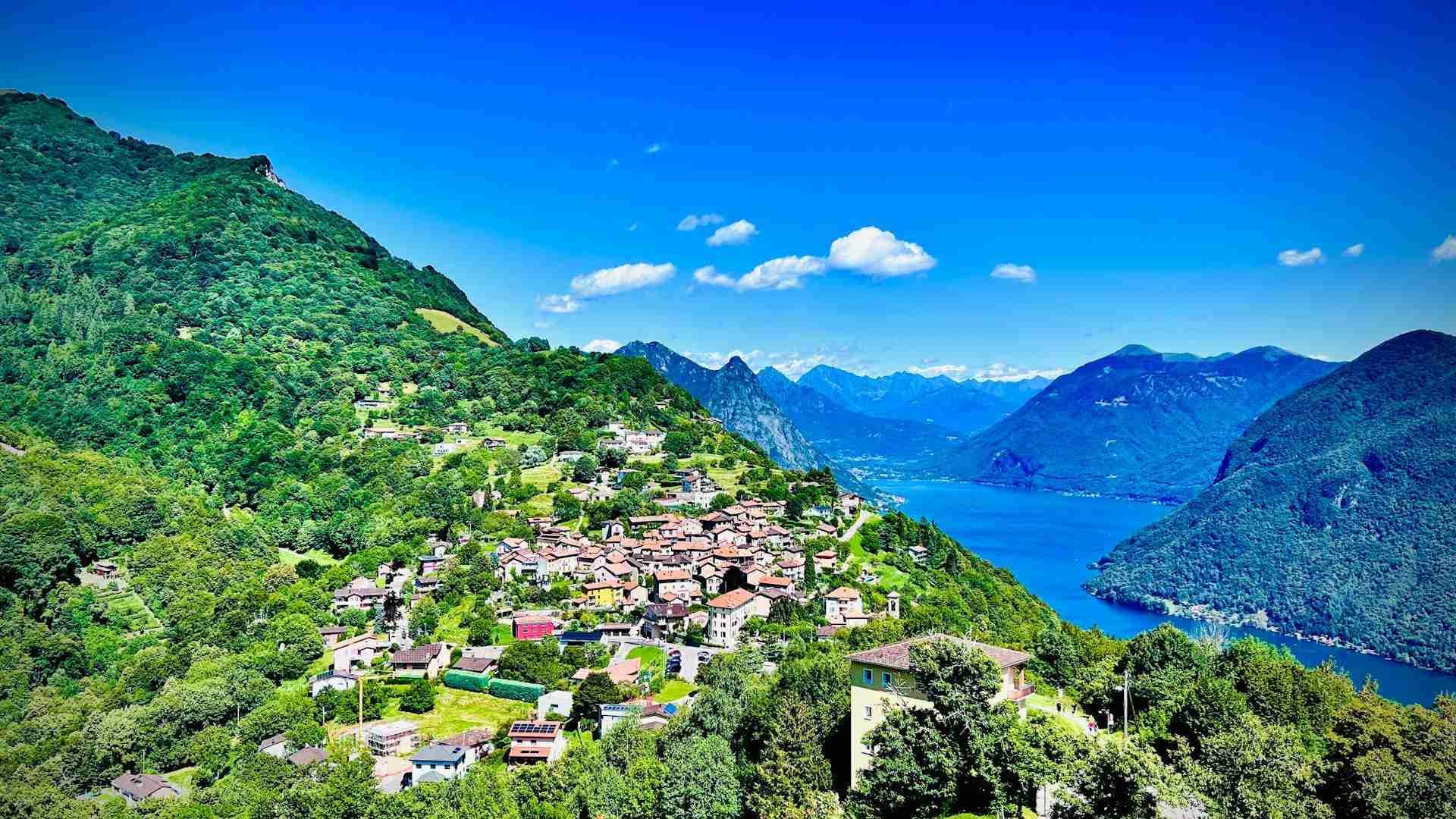
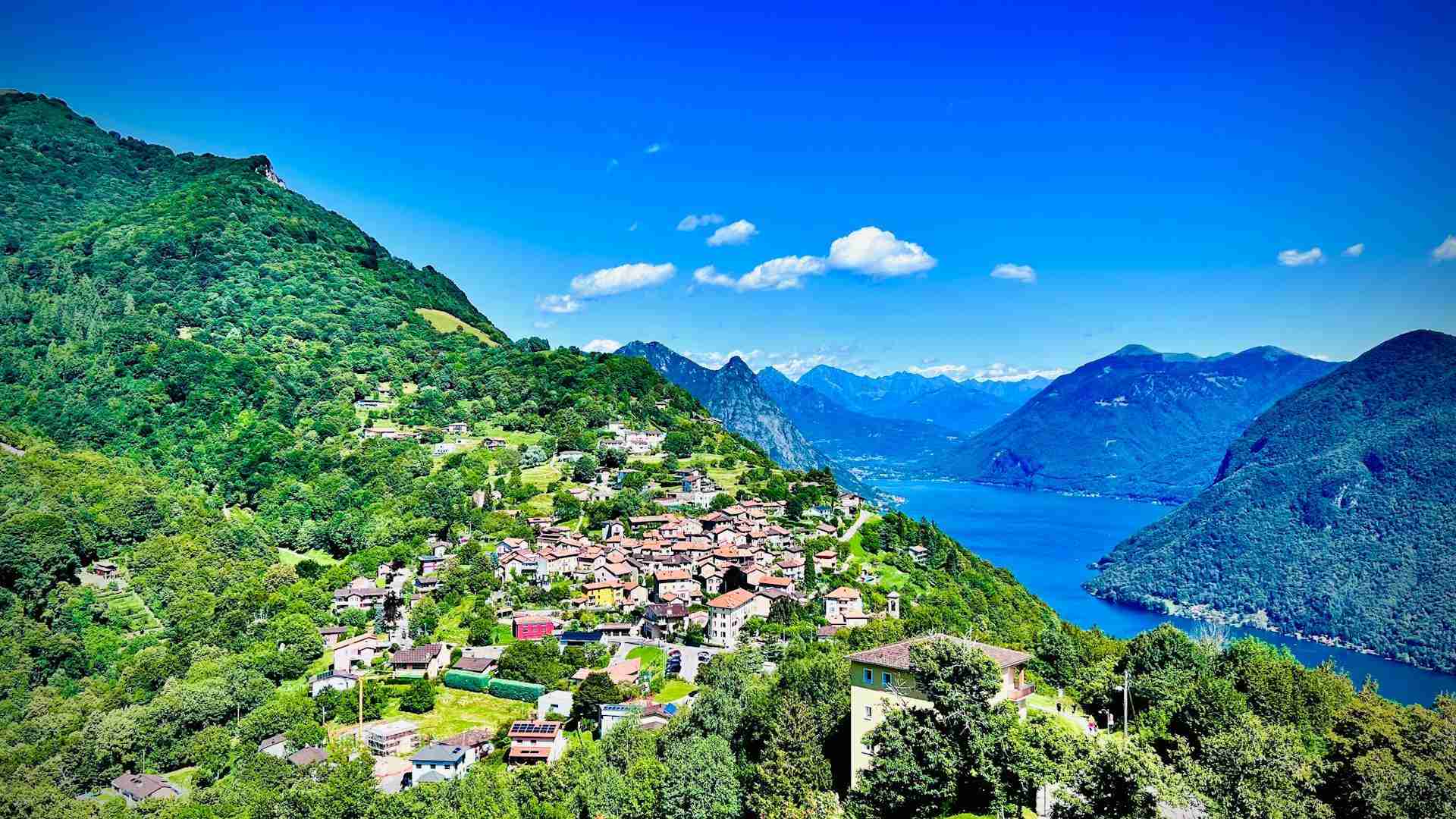
Monte Brè Overlook, known locally as Punto Panoramico, stands high above the Swiss village of Brè and looks westward across the wide expanse of Lago di Lugano. This overlook is one of the most visually rewarding locations in the region, offering a multi-layered landscape that brings together natural ridgelines, the glimmer of lake water, and a compact village of stone homes nestled into the hillside. From a photographer's perspective, Monte Brè is not just a viewpoint—it's a place where light interacts with terrain in a constantly shifting dance. There are scenes here for every style of shooting, from architectural studies and long lens layering to expansive sunset panoramas. The location combines accessibility with range, making it suitable for both slow, deliberate compositions and fast-changing weather reactions.
Best Photography Opportunities
View Over Lago di Lugano
From the overlook', Lago di Lugano opens like a winding corridor of water, cutting westward through mountain silhouettes and mirrored skies. The shape of the lake itself helps lead the eye deep into the image frame, which works well for landscape photographers who want natural flow in their compositions. The surface of the lake changes throughout the day: calm in the early morning, textured by wind mid-afternoon, and reflective during the golden hour. Light raking in from the west gives the scene a three-dimensional feel, particularly when shadows stretch across the hills and towns along the shoreline begin to glow. Whether shot wide to include sky and ridgeline, or cropped tighter for abstraction and layering, this view is the core anchor of any visit to Monte Brè.
Rooftops of the Village of Brè
Directly below the overlook, the rooftops of Brè appear as a clustered mosaic of weathered tiles, angular chimneys, and narrow courtyards. These rooftops can be flattened with a long lens for a graphic, pattern-driven composition or photographed in softer light to bring out color variations and textures. The architectural forms interact beautifully with the terrain; houses hug the contours of the hillside, creating diagonal lines and shifts in elevation that make the scene feel alive. In early morning, mist may settle between rooftops, while later in the day, low sunlight casts defined shadows that add dimension to the stacked forms. Photographers interested in detail and abstraction will find no shortage of material here, especially when experimenting with focal length and angle.
Backlight on Monte San Salvatore
To the west across the lake stands Monte San Salvatore, a distinct peak that becomes most photogenic in the last hour of daylight. As the sun lowers behind it, the mountain is edged in a soft halo of light that outlines its shape with subtle glow. This is an ideal moment for silhouette compositions or for layering the peak against the sky using medium to long focal lengths. The gradation of light from warm highlights to cooler shadows below helps to build tonal separation in the frame. On clear days, atmospheric haze between the overlook and the mountain adds depth without losing detail. Shooting toward the light also invites experimentation with flare control, highlight preservation, and subtle use of lens filters.
Twilight and Long Exposures over Lugano
When the sky turns from pale gold to deep blue, the lights of Lugano begin to flicker to life in the valley below. This is a rewarding time to set up for a long exposure that balances the fading sky with artificial light across the city grid. At twilight, the lake often remains reflective, catching the last ambient tones of the sky and allowing for a dynamic lower third in the composition. Exposures in the 10 to 30 second range can smooth water, capture moving clouds, and trace light from boats and cars below. This scene works well from just after sunset through the onset of night, with each stage revealing different contrasts and light relationships. Bring extra batteries and a solid tripod—once you start, you'll likely stay until the stars appear.
Color and Contrast in Autumn
In autumn, Monte Brè's overlook becomes a high platform for viewing the seasonal transition of the surrounding forested slopes. Yellows, oranges, and deep reds take over the treeline, while the lake retains its cooler blue tone, offering strong color contrast for any composition. Early morning side light intensifies these colors without washing them out, and overcast days are equally effective for even tones and soft contrast. A polarizing filter becomes particularly useful during this season, cutting glare off the leaves and increasing color separation. This is also one of the few times of year when the entire landscape—village, forest, lake, and distant mountains—holds equal visual weight in a single frame. The combination of crisp air and vibrant tones makes autumn one of the best seasons to visit Monte Brè if you're seeking full-frame compositions rich in detail and contrast.
Best Time to Visit
Monte Brè Overlook offers worthwhile shooting conditions throughout the year, but the light and seasonal context change significantly across months. From April to June, mornings often begin with mist or low cloud over the lake, which clears by mid-morning to reveal distant mountain lines. These spring conditions are excellent for shooting with longer lenses and isolating small subjects against soft, layered backdrops. Summer, especially from late June through August, brings the clearest visibility and long golden hours, with light remaining usable well into the evening. The sun sets directly across the lake from the overlook during this time, creating an ideal angle for warm-toned landscapes and soft blue hour transitions.
Autumn is arguably the richest season for color work. From mid-September to early November, the forests around Monte Brè take on a palette of red, yellow, and rust. This period provides the most satisfying contrast between warm foliage and the cool, reflective water of Lago di Lugano. The sun rises later and sets earlier, offering strong directional light for longer portions of the day. Winter transforms the terrain into a more minimal landscape. Snow occasionally dusts the higher ridgelines and roofs of Brè, while the bare trees open new sightlines that are otherwise blocked by summer growth. Photographers working in black and white or looking for sparse, graphic compositions will find plenty to explore during these colder months. However, access may be limited after snowfall, and light can be harsher at midday due to reflection off snow and ice.
How to Get There
Monte Brè Overlook is easily accessed by car or funicular from Lugano. By road, begin in Cassarate and follow signs for Monte Brè via Via alla Vetta. This paved mountain road is narrow with frequent switchbacks, and while it is maintained year-round, winter travel requires caution. The final stretch approaches the summit and offers a few scenic turnouts, but the main parking area is located near Ristorante Vetta and the upper station of the Monte Brè funicular. From there, the overlook is reachable via a short, well-marked footpath that takes less than five minutes to walk.
Alternatively, the Monte Brè funicular departs regularly from the Cassarate station in Lugano and ascends the mountain in two segments. This option provides a more relaxed journey and can be especially useful during peak tourist seasons when parking is limited. No entrance fee is required to access the overlook itself, though funicular tickets and public parking may involve payment depending on time and day. Public transportation to Cassarate from central Lugano is reliable and frequent, making it possible to visit the overlook without a car.
Recommended Photography Gear
Monte Brè Overlook rewards photographers who pack with flexibility and layering in mind. A wide-angle zoom lens (such as 16–35mm) is essential for capturing the full spread of the lake, the arc of the mountain ridgelines, and expansive skies at sunrise or sunset. For tighter work, especially when photographing the village rooftops or isolating distant peaks like Monte San Salvatore, a mid-range telephoto lens (70–200mm or longer) is extremely valuable. The vertical drop from the overlook down to Brè provides excellent angles for compression, allowing you to create stacked compositions that feel more abstract or architectural.
A sturdy tripod is crucial, particularly for those interested in twilight photography, bracketing, or long exposures of water and sky. Twilight sessions at Monte Brè can last a long time, so a remote shutter release or intervalometer will help with consistent exposures and reduce camera shake. Graduated ND filters can assist in balancing the exposure between sky and foreground, especially when shooting west into the setting sun. A circular polarizer helps reduce glare on the water and boosts contrast between the sky and the lake's surface, especially around midday. For autumn or post-rain conditions, bring a lens cloth or microfiber towel to manage moisture buildup on glass. Photographers planning to explore trails around the area should wear sturdy footwear and consider a small daypack to carry gear without strain. Though the overlook itself is easy to reach, shifting weather and changing light often call for fast, nimble repositioning.
Nearby Photography Locations
Located just beyond the summit of Monte Brè, Monte Boglia offers a higher and more remote view of the surrounding landscape. The hiking trail leading to its summit presents numerous points of interest, from narrow forest paths to open ridgelines with clear views into Italy. Photographers who make the effort to climb higher are rewarded with scenes that include the entire arc of Lake Lugano framed by rugged terrain and deep valleys.
This lake-hugging village just below Monte Brè is a maze of stone paths, sloped roofs, and quiet docks that face the water's edge. Gandria's charm lies in its ability to deliver close, intimate compositions and reflections off the lake, especially in the early morning when everything is still. Its position below the overlook makes it a natural extension of a full-day shoot.
Halfway up Monte Brè's slope, Parco San Michele offers a quieter, tree-covered setting with filtered views of the lake and surrounding towns. The elevation here is lower, but it allows for a different angle on Lugano's sprawl and softer scenes framed by evergreens and small stone structures. This location is well-suited for handheld shooting and short stays.
Across the lake from Monte Brè, Monte San Salvatore offers a reverse view looking back toward Brè and the Lugano basin. The light from this angle behaves differently in both morning and evening, making it a useful complement to shots from Monte Brè. From its summit, photographers can build panoramic images or focus on fine details using a long lens.
Alpe Bolla
A short hike north of the Monte Brè summit leads to Alpe Bolla, an open meadow surrounded by forested slopes. This highland clearing provides both foreground interest and space for shooting sunrise light as it breaks over the ridges. It's an ideal location for wide-format compositions or environmental portraits if you're photographing people in the landscape.
The Monte Brè Overlook is more than a pretty viewpoint—it is a versatile photography destination that delivers strong compositions in every direction. Whether you're working in early morning mist or chasing the last glow of daylight, this location has the potential to stretch your creative vision across seasons, light, and lens choice.
Comments
Loading comments…