
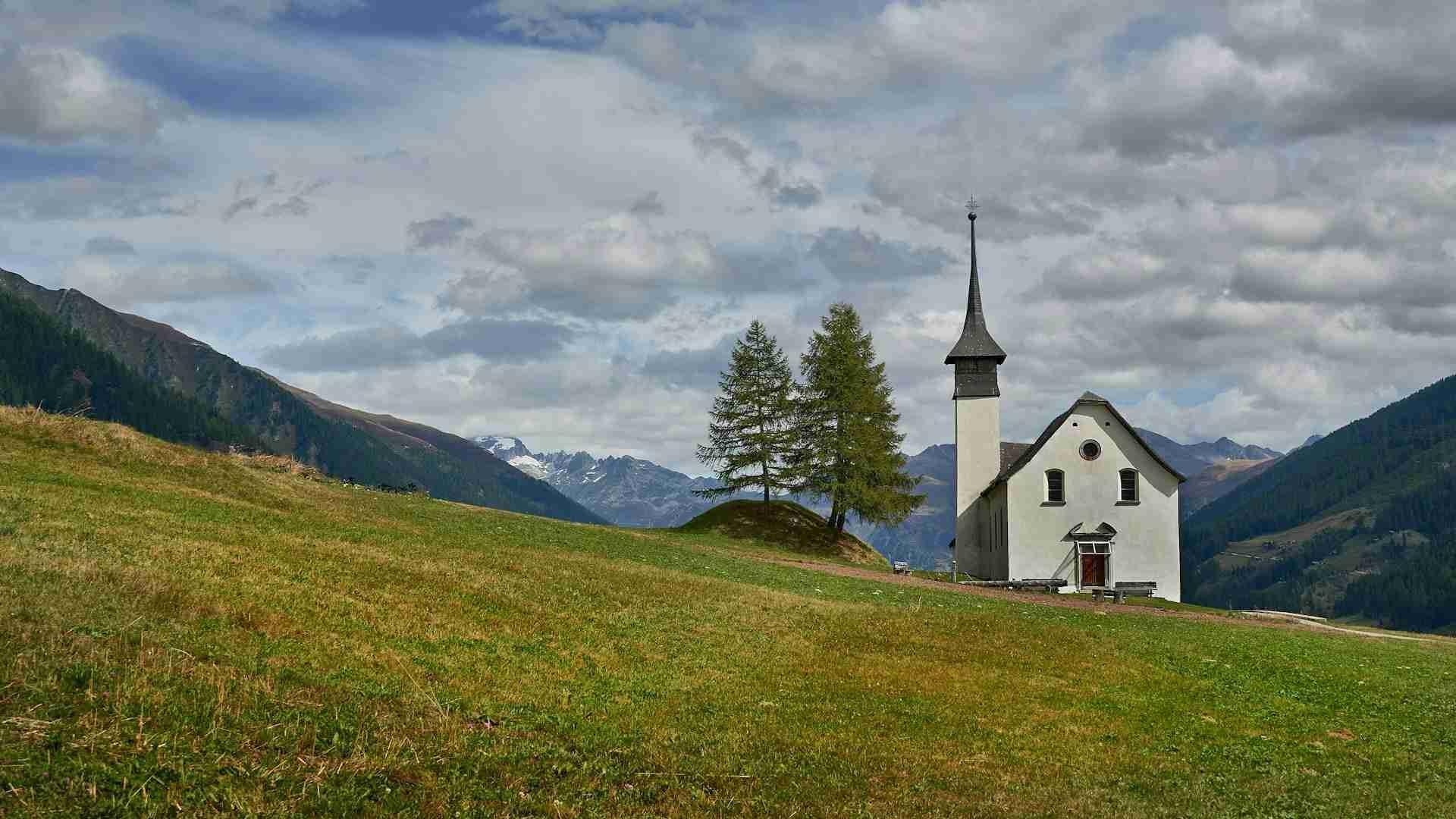
Standing alone in a wide alpine meadow above the small Swiss village of Ritzingen, the Muttergotteskapelle im Ritzinger Feld is a chapel that invites calm, patience, and minimalist composition. Its small scale contrasts with the sweeping curves of the surrounding Valais landscape, where open pastures, layered ridgelines, and distant peaks stretch toward the horizon. The chapel's pale walls and simple form hold light gracefully throughout the day, shifting in character as the weather and seasons change. With no distractions nearby, the building becomes both subject and anchor, allowing photographers to experiment with line, mood, and proportion. This is a place where the silence of the landscape works in your favor and the slow pace of the environment encourages careful framing and thoughtful exposure.
Best Photography Opportunities
Golden Morning Light from the Eastern Trail Approach
The chapel's orientation makes it a natural subject for morning light, which rises over the eastern ridge and gradually paints the front face and roof. The open field leading up to the structure is gently sloped and allows for clean low-angle compositions that build depth from the grass to the chapel and onward to the mountains beyond. This is a prime location for wide-angle work that emphasizes sky and ground equally, especially when early light casts long shadows across the field. On cooler mornings in autumn, ground fog sometimes lingers in the valley below, creating a soft separation between foreground and distant ridges. This is a great time to explore centered compositions or subtle shifts in balance as the light slowly fills the scene.
Side Profiles in Flat Light or Overcast Conditions
The form of the Muttergotteskapelle is clean and geometric, with a roofline that contrasts nicely with the gentle curves of the field and sky. On overcast days, this simplicity becomes an asset, letting the shape of the chapel stand out without harsh shadow or glare. Shooting from either side allows you to work with negative space and natural leading lines from the field. These conditions are also ideal for black and white photography, where tone and texture take precedence over color. A longer lens can compress the layers of field, chapel, and background hills into a tighter frame, reducing visual noise and emphasizing form.
Backlighting and High Contrast Near Sunset
In the evening, the chapel becomes a silhouette against the sky, especially when the sun drops low behind the ridge to the west. This side lighting creates high contrast around the edges of the building and adds richness to the nearby grasses, which often catch the last light before the hill goes into shadow. Shooting from a lower elevation facing west allows for powerful silhouettes or rim-lit scenes. A small aperture can help create sunstar effects if timed correctly. This is also a good opportunity for layering the structure against the distant peaks, especially when clouds begin to pick up color late in the day.
Seasonal Minimalism in Winter Snowfields
When snow covers the meadow in winter, the chapel becomes the single dominant element in an otherwise open landscape. Compositions here rely heavily on space, shadow, and tonal contrast. The building's dark roof and trim lines offer enough structure to stand out against the snow without the need for additional subjects. If skies are clear, the setting sun can cast warm light across the snow, while cloudy conditions push the scene toward near-monochrome simplicity. This is a good time to work with square formats or centered symmetry to emphasize the stillness and clarity of the environment.
Foreground Textures and Leading Lines from the Meadow
During spring and summer, the field surrounding the chapel becomes rich with detail. Wild grasses, blooming alpine plants, and old walking tracks add texture and interest to the foreground. These features help guide the eye toward the structure and give weight to the lower part of the frame. Using a wide-angle lens and positioning the camera low to the ground can build strong compositions that use these natural lines to frame the chapel. Early morning dew or side lighting from the late afternoon makes these small elements stand out without overpowering the main subject.
Best Time to Visit
The best time to photograph the Muttergotteskapelle is from late spring through early autumn, when the meadow is accessible and weather conditions are generally stable. June and July offer lush green fields and wildflowers, while the surrounding peaks retain some snow, adding contrast and elevation to wide compositions. Morning light is especially gentle during these months, spreading across the open landscape and revealing textures in both grass and sky. Clear mornings are ideal for warm front lighting, while cloudy conditions later in the day support moody, simplified images.
August through early October brings drier air and changing tones in the grasses and trees that frame the valley. The light becomes lower and more directional, casting long shadows and offering excellent golden hour conditions. Autumn mornings often start with fog patches that lift gradually, softening distant features and adding a sense of depth. September is especially good for combining sharp architectural edges with atmospheric layering from shifting valley weather.
Winter is possible but more demanding. Access depends on snow levels and whether the trail is cleared or walkable. The chapel can be reached on snowshoes or skis depending on conditions, and the visual payoff is significant. Clear, cold days produce bright light with high reflectivity, while overcast skies reduce the landscape to soft tonal gradients. Because the area is exposed, strong winds and sudden weather shifts are common in winter, so planning and flexibility are important. Battery life, exposure balance, and visibility should all be monitored closely in cold weather.
How to Get There
The Muttergotteskapelle is located above the village of Ritzingen in the Goms region of Valais, Switzerland. To reach the site, start in Ritzingen, which is easily accessible by train via the Matterhorn Gotthard Bahn line. From the Ritzingen station, it is a short walk through the village to reach the trail that leads up into the field where the chapel stands. The path is wide and well maintained, with a gradual incline that makes it suitable for carrying camera gear without difficulty.
The walk from the village to the chapel takes roughly 15 to 20 minutes and passes through open meadow with occasional benches and signs. There are no fees or permits required to access the chapel or trail, and the area is open year round depending on snow conditions. Parking is available near the village center for those arriving by car. The chapel is visible from below and easy to find even without a map. There are no restrooms or services at the site, so bring water and any essentials with you. Early morning and evening visits are best timed with natural light, as the area is unlit and remote.
Recommended Photography Gear
A minimalist but capable kit works well for photographing the Muttergotteskapelle and the surrounding meadow. A wide-angle lens in the 16 to 35 millimeter range is the most useful tool for capturing the full structure against the open sky, with enough field of view to include foreground textures or sky interest. A polarizing filter can help manage glare from wet grass or snow and deepen sky contrast when conditions are right. For tighter compositions or distant mountain layering, a 70 to 200 millimeter telephoto lens gives strong compression and isolates the chapel against background ridgelines.
A tripod is essential for low light work at sunrise or sunset, as well as for slower shutter speeds when shooting long exposures during moody weather. Bring a set of neutral density filters if you want to experiment with motion in the sky or create smoother tones in blowing grass. A cable release or timer function will help with clean long exposures, especially when working with silhouettes or sunstars near golden hour.
Weather protection is important, especially in shoulder seasons and winter. A rain cover for your camera and a waterproof backpack insert can protect gear from mountain weather changes. In cold months, battery life drops quickly, so keep spare batteries warm and accessible. If visiting during snowy periods, use lens hoods or cloths to manage condensation and protect glass surfaces. Lightweight hiking shoes or boots with grip are recommended even in summer, as morning dew and uneven ground can be slippery. A headlamp is helpful if you plan to shoot in twilight or pre sunrise conditions.
Nearby Photography Locations
Kapelle St Anna in Niederwald
Just a short train ride or drive west of Ritzingen, this hillside chapel sits above the Rhône valley and offers a very different backdrop with stonework, dense forest, and sweeping valley views. It is excellent for side lighting near sunset and works well in tighter compositions that feature the chapel tucked into the slope.
Biel Forest and Alpine Ridge Trails
Above Ritzingen, the higher ridge lines and forest trails near Biel offer broad views of the Goms valley and clean air for telephoto compositions. The path system includes panoramic overlooks that are especially striking during sunrise when light spreads across the lower villages and fields.
Oberwald Viaduct and Glacier Valley
Further up the railway line, the old stone viaduct near Oberwald provides a chance to work with engineered structure in a high mountain setting. The area is also a gateway to the Rhône Glacier and its glacier-fed streams, with dynamic water and rock textures that contrast with the stillness of the chapel fields.
Blitzingen Alpine Pasture Roads
Between Ritzingen and Blitzingen, the old alpine roads curve through meadows with scattered barns and stone huts. These winding paths create natural leading lines and are excellent for both wide and compressed shots with the mountains in the background. Early morning mist often hangs low here before lifting.
Bellwald Cliff Viewpoint
Across the valley, the mountain village of Bellwald offers a high elevation perspective on the entire Goms region. From the edge of the trail system near Bellwald, you can frame the open valley floor below with soft morning light or wait until late afternoon for deep shadow contrast along the slopes.
The Muttergotteskapelle im Ritzinger Feld is a quiet location that rewards restraint, timing, and subtlety. Its power lies in its simplicity and in the way it holds light without distraction. Whether you visit during a clear sunrise, under heavy sky, or in winter's full silence, the chapel remains a stable point around which the entire landscape seems to turn. For photographers seeking to work with space, light, and rhythm, this alpine meadow offers a place to slow down and pay close attention.
Comments
Loading comments…