
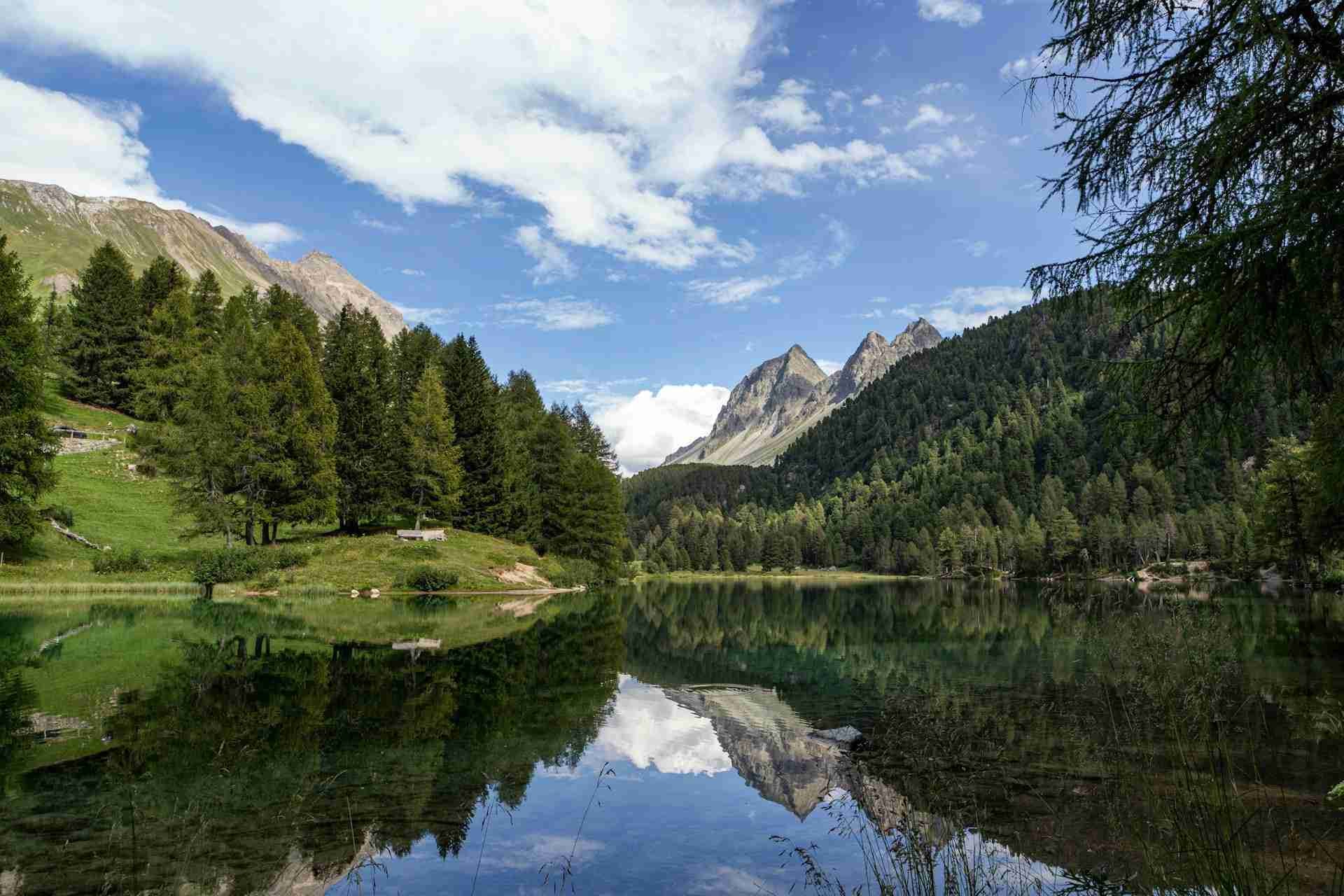
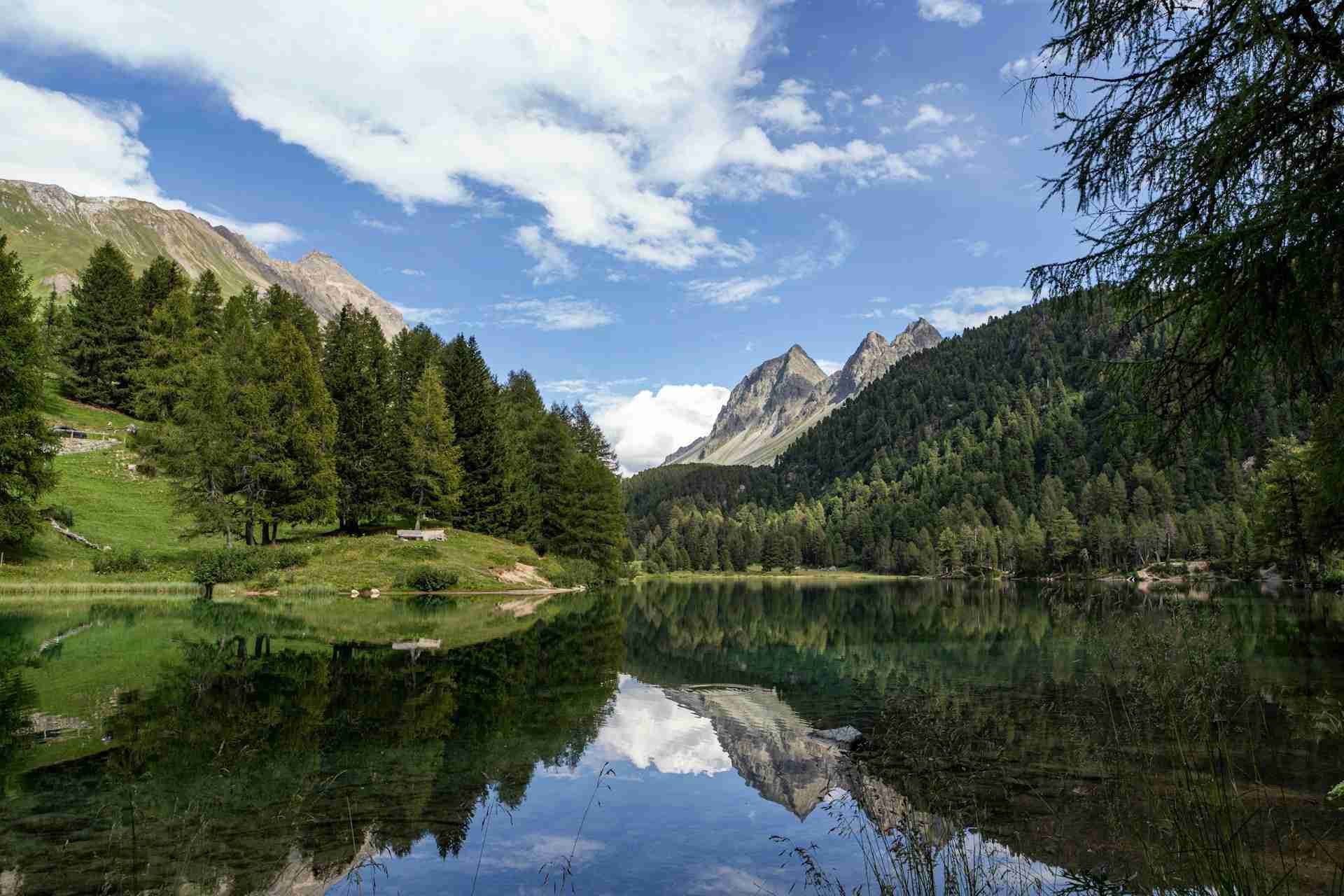
Tucked into a quiet alpine valley in the canton of Graubünden, Palpuognasee is a small mountain lake with a peaceful atmosphere and a reputation among landscape photographers for delivering clean compositions and near-perfect reflections. Surrounded by larch forest, distant peaks, and grassy hillsides, the lake offers a natural balance of shape, tone, and light. Located just off the Albula Pass near Bergün Filisur, it is easily accessible yet feels remote, especially during early mornings or off-season visits. The water's mirror-like surface, combined with the symmetry of the shoreline and forest, makes it ideal for photographers looking to build images around stillness, reflection, and subtle alpine color.
Best Photography Opportunities
• Morning Reflections Across the Lake
Palpuognasee is best known for its crystal-clear reflections in the early hours of the day. With no wind and soft light coming over the ridgeline, the surface of the lake becomes a flawless mirror. You can frame the tree line and distant peaks as a near-perfect symmetrical image, especially from the eastern shore. A wide-angle lens works well to include the full spread of water and sky, while a medium lens lets you tighten your composition and reduce distractions. For best results, arrive well before sunrise so you can set up and catch the first light as it touches the treetops.
• Autumn Larches and Golden Light
In early to mid-October, the larch trees around the lake turn a vibrant yellow, creating one of the most colorful alpine scenes in Switzerland. The golden foliage reflected in the calm water adds warmth and contrast to the blue of the sky and the cooler tones in the surrounding rock. This is one of the busiest times for photographers, but also one of the most rewarding. Try working from a slightly elevated point along the trail to gain a better angle on the trees and reduce clutter in the foreground. A polarizer helps control glare on the water and brings out detail in the trees.
• Fog and Forest in Low Light
On cool mornings in spring and fall, fog often settles over the lake and moves slowly through the trees. These conditions are perfect for soft, moody compositions. A longer lens allows you to isolate sections of the forest as they fade in and out of view. You can also use the trail that wraps around the lake to shoot back through the mist, framing trees and reflections in the foreground. Overcast light works well in this setting and helps maintain soft transitions between light and shadow. These are quiet conditions that reward a slower pace and careful framing.
• Minimalist Compositions with Stones and Grass
The shoreline of Palpuognasee is dotted with smooth stones, submerged branches, and patches of tall grass. These elements can be used to create simple, balanced foregrounds that lead into the reflection or sky. Look for areas where a single boulder or tuft of grass stands alone against the mirrored lake. This is a great place to work on minimal compositions and to focus on subtle variations in texture and color. Shooting from low to the ground helps exaggerate the sense of depth and separation in your frame.
• Night Photography and Star Reflections
With little light pollution and clean alpine air, Palpuognasee can be an excellent location for night photography during clear weather. The lake's still surface allows for bright star reflections and clear sky detail, especially in late summer and early fall. Use a fast wide-angle lens and a sturdy tripod to capture longer exposures. A headlamp is useful for setting up, but keep artificial light to a minimum to preserve the natural feel of the scene. Framing the larches or nearby peaks under the Milky Way gives you a strong composition that still feels quiet and grounded.
Best Time to Visit
Palpuognasee is open to visitors from late spring through mid-autumn, but the conditions vary depending on what you want to capture. Late May through June brings lush grass, blooming wildflowers, and melting snow patches along the peaks. The air is cool and clear, and the light is softer than in high summer. This is a good time for texture and layering, especially in the morning when fog sometimes forms on the lake.
July and August offer long days, stronger sun, and dry weather. While reflections are still excellent in the early morning, midday light tends to be harsher and creates strong contrast. These months are best for hikers, and the trails around the lake can get busy. If you want stillness, plan to arrive early or late in the day.
The highlight for most photographers is October, when the larches change color. The trees typically peak in the second or third week of the month, depending on weather. Light is lower in the sky and golden hour lasts longer, creating ideal conditions for both wide and intimate landscape shots. After the leaves drop, the scene becomes more minimal and winter-like. From November through spring, the lake is often frozen and snow-covered, and access may be limited depending on road and trail conditions.
How to Get There
Palpuognasee is located just off the Albula Pass road (Route 748) between Preda and La Punt in the municipality of Bergün Filisur. From Chur or St. Moritz, the drive takes about one hour, depending on road conditions. The Albula Pass is typically open from June through October, though exact dates depend on snow and weather. There is a small parking area along the road, just a few minutes' walk from the lake.
For those arriving by public transport, take the Rhaetian Railway (RhB) to Preda station. From there, it is about a 30-minute walk to the lake via a marked hiking trail. The path is easy and mostly flat, though it can be muddy after rain. There are no entry fees, permits, or restrictions on photography at the lake, but drone use may be limited due to proximity to protected natural areas. Always follow local signage and stay on marked paths to protect the fragile alpine environment.
Recommended Photography Gear
Palpuognasee does not require extreme gear, but a solid, lightweight kit will help you get the most out of your visit. A wide-angle lens is essential for capturing reflections, tree lines, and the entire lake in one frame. A mid-range zoom, like a 24 to 70 millimeter lens, gives you flexibility for tighter compositions or shots from the trail above the water. If you enjoy details or minimal scenes, a short telephoto or macro lens can help isolate textures in grass, rock, or leaves.
A tripod is important for morning low light, long exposures, and night shooting. Pack a circular polarizer to help manage glare on the water and to deepen color in the forest and sky. Neutral density filters are useful for smoothing the lake surface during windier conditions or adding softness to moving clouds. A remote shutter release or built-in camera timer will help maintain sharpness during slow exposures.
Bring waterproof shoes or boots if you want to move along the shoreline, especially in spring or fall. A microfiber cloth and lens wipes will help deal with moisture or condensation. For night photography, include a headlamp with a red light setting and spare batteries. The location is not rugged, but temperatures can drop quickly, so dress in layers even during the warmer months.
Nearby Photography Locations
Just beyond the lake, the Albula Pass offers expansive views of alpine terrain with winding roads, rock fields, and distant peaks. It is a great place for high contrast mountain photography, especially in early morning or late afternoon when light cuts across the pass.
• Lai da Palpuogna Upper Trail
This trail follows above the lake and provides elevated views down onto the water and forest. It is an ideal spot for more abstract or compressed compositions using a telephoto lens, and works well when the lake is covered in morning fog.
• Preda and the Landwasser Viaduct
The area around Preda features both alpine scenery and access to the Landwasser Viaduct, one of Switzerland's most famous railway bridges. The viaduct is especially photogenic when the red Rhaetian trains pass over it during golden hour.
Located about 30 minutes away by car, this larger reservoir offers reflections of pine forest and dramatic light in both summer and fall. It is less visited than other alpine lakes and provides wide-open compositions along its shoreline.
• Val Bever
This quiet side valley near Bever features open meadows, scattered alpine huts, and a river that winds through the landscape. It is ideal for slow-paced photography, with opportunities for both grand and intimate scenes depending on season and light.
Palpuognasee is a rare kind of location. It is easy to reach, peaceful to work in, and offers a consistent set of conditions that help you focus on light, shape, and timing. Whether you are chasing golden larch reflections, shooting long exposures in low fog, or just waiting for a ripple to settle, this small lake delivers the kind of quiet, thoughtful frames that build strong landscape portfolios.
Comments
Loading comments…