
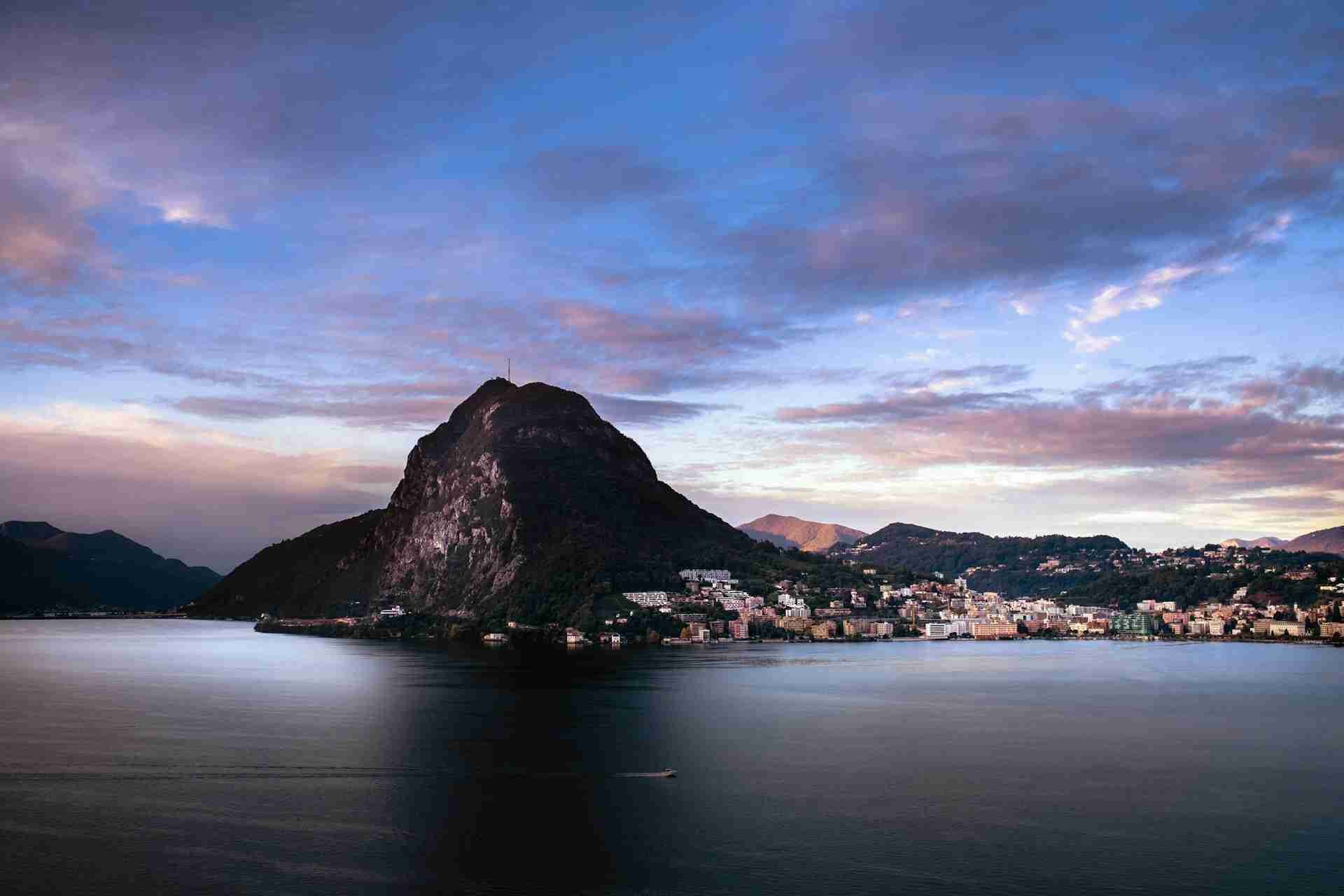
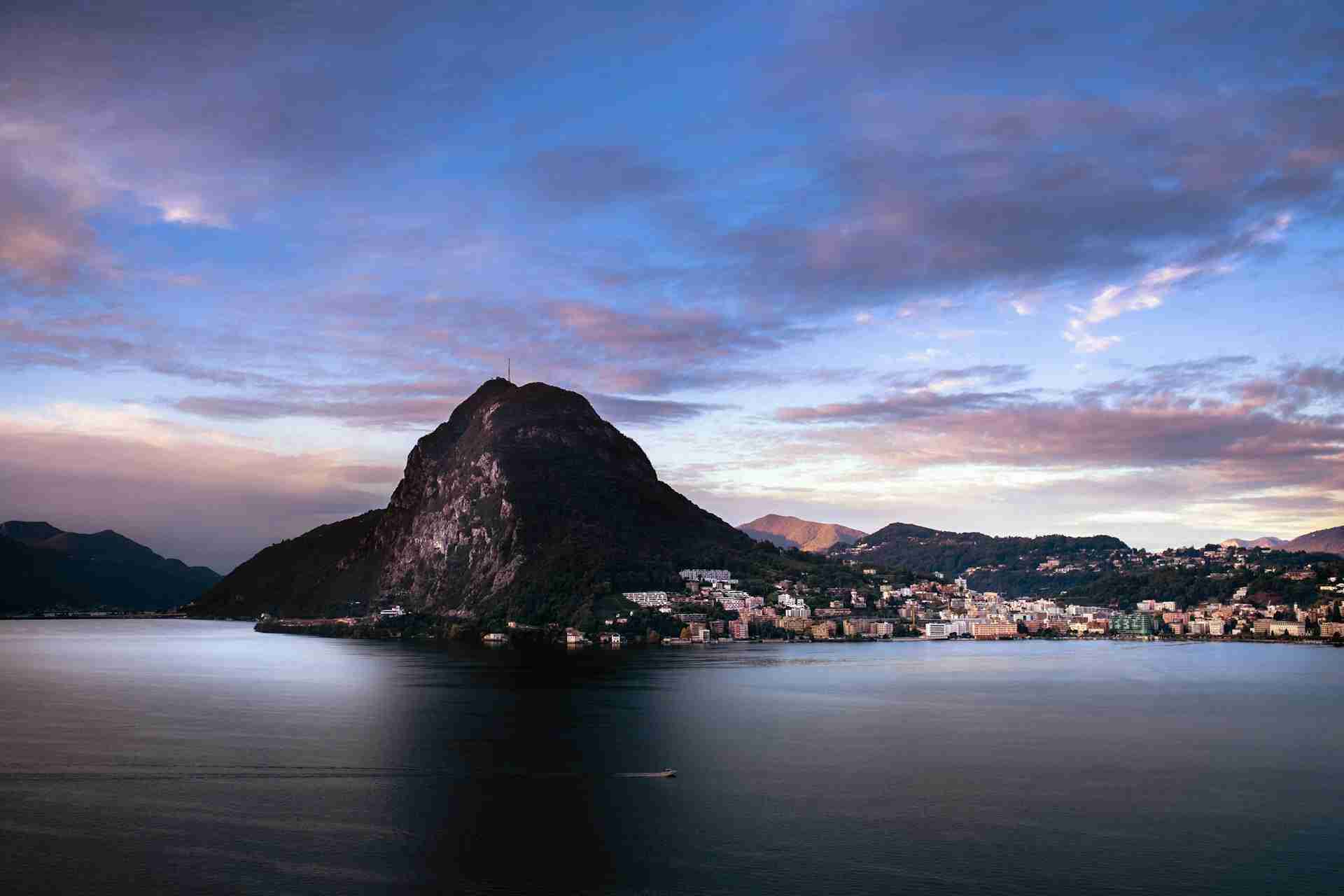
Framed by Lake Lugano on one side and the graceful architecture of the city on the other, Parco Ciani is a photographic treasure tucked into southern Switzerland's most Italianate region. This historic park in Lugano blends symmetrical landscaping, centuries-old trees, and serene waterfront views in a compact yet richly detailed space that rewards attentive and creative photographers. Whether you are chasing reflected light off the lake or searching for layered compositions among quiet stone paths and rose gardens, Parco Ciani delivers a wide range of subjects in every season.
Best Photography Opportunities
• Eastern Lakefront Promenade
The paved path that runs along the eastern edge of the park is one of its most visually balanced features. Here, rows of mature trees line the lakefront, their branches arching overhead to create a soft tunnel of light and shadow. Between them, glimpses of the lake stretch outward toward the steep ridges of Monte Brè, giving photographers multiple opportunities to frame expansive waterscapes with strong vertical and horizontal elements. Morning is the best time to work this area, when the sun rises over the mountains and casts low, golden light across the water. Use a wide-angle lens to exaggerate the scale of the promenade or step back and shoot with a longer focal length to flatten the lines and isolate shapes. The regular spacing of benches, railings, and lampposts can be used to build repeating patterns in your composition, while reflections on the lake add a second layer of interest, particularly on calm days.
• Villa Ciani and Surrounding Gardens
At the center of the park, Villa Ciani is both a photographic subject and a backdrop. The building itself is elegant in its simplicity, painted in soft pastels with gentle detailing around windows and rooflines. In front of the villa, symmetrical gardens shift with the seasons, offering colorful beds of tulips in spring and more muted plantings in autumn. The wide lawn provides space to step back and shoot architectural frames, while side angles allow for interplay between the building's walls and surrounding trees. On cloudy days, soft light enhances the villa's textures without harsh contrast. When the sun is out, consider photographing in late afternoon, when warm light hits the facade at an angle and enhances its color. A polarizing filter can help manage glare on the building's surfaces and deepen the greens of the lawn and hedges.
• Tree-Lined Pathways and Seasonal Color
Throughout the interior of the park, winding paths curve gently between carefully placed trees. These walkways are ideal for photographers who enjoy exploring scenes built on rhythm, depth, and layering. In spring, new leaves catch backlight and create soft, glowing textures that are perfect for shooting with a shallow depth of field. In autumn, the same paths are covered in fallen leaves, and side lighting emphasizes their texture and form. Try using a mid-telephoto lens to compress space and bring visual attention to the vanishing points created by converging path edges and tree trunks. Look for moments when joggers, cyclists, or dog walkers move through the scene to add a sense of scale and quiet narrative.
• Cassarate River Inlet and Water Movement
Where the Cassarate River flows into Lake Lugano, photographers find an opportunity to introduce motion and natural energy into otherwise serene compositions. The water here changes character depending on recent weather, with faster movement after rain and a more gentle current during dry spells. A tripod and neutral density filter allow you to work with long exposures that smooth the surface of the water and emphasize contrast between fluid motion and the stable geometry of riverbanks and pedestrian bridges. Framing from just above the surface lets you include nearby stones, grasses, or fallen leaves as foreground interest. This location is especially effective when light cloud cover softens the overall contrast and produces a subtle gradient in both water and sky.
• Sculptures, Monuments, and Textural Details
Parco Ciani is not just a natural space. It is also filled with small sculptural elements that add texture and historical dimension. The statue of Giuseppe Garibaldi, as well as other less prominent busts and figures, provide strong shapes to work into tighter compositions. These pieces take on different qualities depending on the light. In early morning or late evening, side lighting casts deep shadows that emphasize their contours and surfaces. Try working in black and white to accentuate the tonal range, or shoot close with a macro lens to explore the patina of bronze and stone. Benches, carved balustrades, and old stone fountains offer further opportunities to add detail and tactile interest to your visual story.
• Views Toward Monte Brè and Monte San Salvatore
One of the recurring visual themes in Parco Ciani is the relationship between near and far. Looking outward from the lakefront, the mountainous outlines of Monte Brè to the northeast and Monte San Salvatore to the southwest provide a distant frame that balances the foreground garden or lakeside compositions. These mountains change character throughout the day and across the seasons. In summer, they appear crisp and clear under bright skies, while in winter they fade into a series of soft blue layers. Using a medium zoom lens, you can isolate sections of the horizon and use negative space creatively. These views work well when layered with elements from the park itself, such as tree branches, railings, or water features that guide the eye into the frame.
Best Time to Visit
Photographic results in Parco Ciani are closely tied to the time of year and the time of day, with each combination offering different strengths. Spring is one of the most rewarding seasons to visit, especially from April through early June. During this period, flower beds bloom with structured rows of tulips and ornamental shrubs, while tree canopies begin to fill in with fresh green leaves that filter sunlight into soft, shifting patches. Morning light is particularly good in spring, as the sun rises directly across the lake and strikes the park with gentle, angled illumination that creates contrast without harsh glare.
In summer, the park becomes busier and more active. People sunbathe on the grass, boats gather near the shoreline, and the deeper greens of fully grown trees dominate the palette. Photography during mid-day can be challenging because of the high sun, but early morning and late afternoon still offer excellent light. This is a good time to focus on lake views, close-ups, or shaded garden compositions that use the dappled light beneath trees.
Autumn, from late September into November, brings a shift in tone. Leaves turn golden and brown, and the lower sun angle enhances shadows and side lighting. The park becomes quieter, and overcast days can add mood and softness to images, making them well suited for storytelling and portrait work. Winter is the least colorful season, but it has its own rewards. Fog over the lake, bare branches, and the long blue light of afternoon create a calm, cool atmosphere that supports more introspective or minimal photography. Throughout the year, early mornings consistently provide the cleanest light and the least interference from pedestrians or traffic, while golden hour in the late afternoon brings warmth and depth to most scenes.
How to Get There
Reaching Parco Ciani is easy from nearly anywhere in Lugano. If you are arriving by train, you can walk downhill from Lugano's main railway station in about fifteen minutes. The route is mostly paved, and the descent passes through scenic parts of the city. Public buses run frequently between the station and the park, with Lines 2 and 4 stopping near Piazza Indipendenza and the Cassarate area, both of which are within two minutes' walk of the main park entrance. If you are driving, several parking garages serve the area. Autosilo Motta and Autosilo Piazza Castello are the closest and provide convenient access for those carrying gear. Metered street parking is available but limited.
There are no entrance fees or photography permits required to access Parco Ciani for personal or professional use, though it is recommended to avoid large-scale equipment setups during peak tourist hours. The park is open year-round and features a network of well-maintained paths suitable for wheeled camera bags and light tripods. Restrooms, benches, and shaded areas are distributed throughout the park, making it easy to plan extended sessions without needing to leave the area.
Recommended Photography Gear
Photographers working in Parco Ciani should prepare for a wide variety of subjects and conditions. A standard zoom lens, such as a 24–70mm, is a strong starting point, offering the flexibility to move from wide environmental shots to more selective framing. For those planning to focus on architecture or portraits, a fast prime lens in the 50mm to 85mm range will deliver excellent background separation and detail, especially in the shaded garden areas. A circular polarizing filter is useful for controlling glare on the lake and deepening blue skies, particularly in summer. Those interested in long exposures or working at dawn and dusk should pack a sturdy but lightweight tripod and a set of neutral density filters. A remote shutter release can help eliminate camera shake during longer exposures.
Because the park has both open and shaded areas, it is helpful to carry a small reflector or LED light panel if you are working with people or want to lift shadows during the mid-day hours. A lens hood is also essential, especially when shooting toward the lake during the early or late hours when low sun angles can cause flare. Depending on the season, weather can change quickly, so a rain cover for your camera and a small microfiber cloth for lenses are wise additions. Finally, extra batteries and memory cards are a must, as you may find yourself exploring the park longer than expected due to the variety and quality of shooting opportunities.
Nearby Photography Locations
sits directly across Lake Lugano and is accessible via funicular from the center of town. From the summit, photographers have access to a wide panorama that includes the full sweep of the city, the lake, and the mountain ridges beyond. The top is ringed with walking paths that allow for multiple vantage points and compositions, with soft morning light offering particularly clear visibility and clean tonal separation across the valley.
• Gandria
is a hillside village a short distance east of Parco Ciani, reachable either by foot along the lakeside Olive Trail or by boat from the Lugano harbor. The town is built into the slope and filled with steep, narrow lanes, stone staircases, and weathered wooden shutters that offer rich textural detail. This location is especially productive in the late afternoon when the warm light hits the facades and small courtyards, casting strong shadows and revealing surface textures.
lies on a slope above Lugano and offers a mix of forest trails, hillside clearings, and distant lake views. This location is well suited for photographers seeking to capture layered compositions using both natural and urban elements. Because of its elevation, the park catches light at different angles than the lakeshore, creating subtle variations in color and contrast that are useful for building diverse series.
rises to the south of Lugano and is accessible by funicular from the nearby suburb of Paradiso. The summit features several trails and open rock platforms that provide sweeping views across the southern arm of the lake and into northern Italy. It is especially rewarding at sunset, when the light drops behind the mountains and bathes the distant peaks and lake surface in soft gradients of orange and blue.
offers a tranquil walk through terraced hillsides lined with centuries-old olive trees and dry stone walls. The path is narrow and often shaded, but it opens frequently to reveal long views across the water. This route is ideal for slow-paced shooting with an emphasis on natural textures, leading lines, and quiet moments. Try walking it in both directions to catch changing light angles as the sun moves through the sky.
Parco Ciani rewards those who explore it with both technical precision and creative openness. It offers moments of quiet geometry, shifting natural light, and layered spatial relationships that are satisfying to photograph again and again. Whether you are traveling with a tightly planned shot list or simply responding to what the day presents, this elegant park on the edge of Lake Lugano is a place where the camera never runs out of things to see.
Comments
Loading comments…