
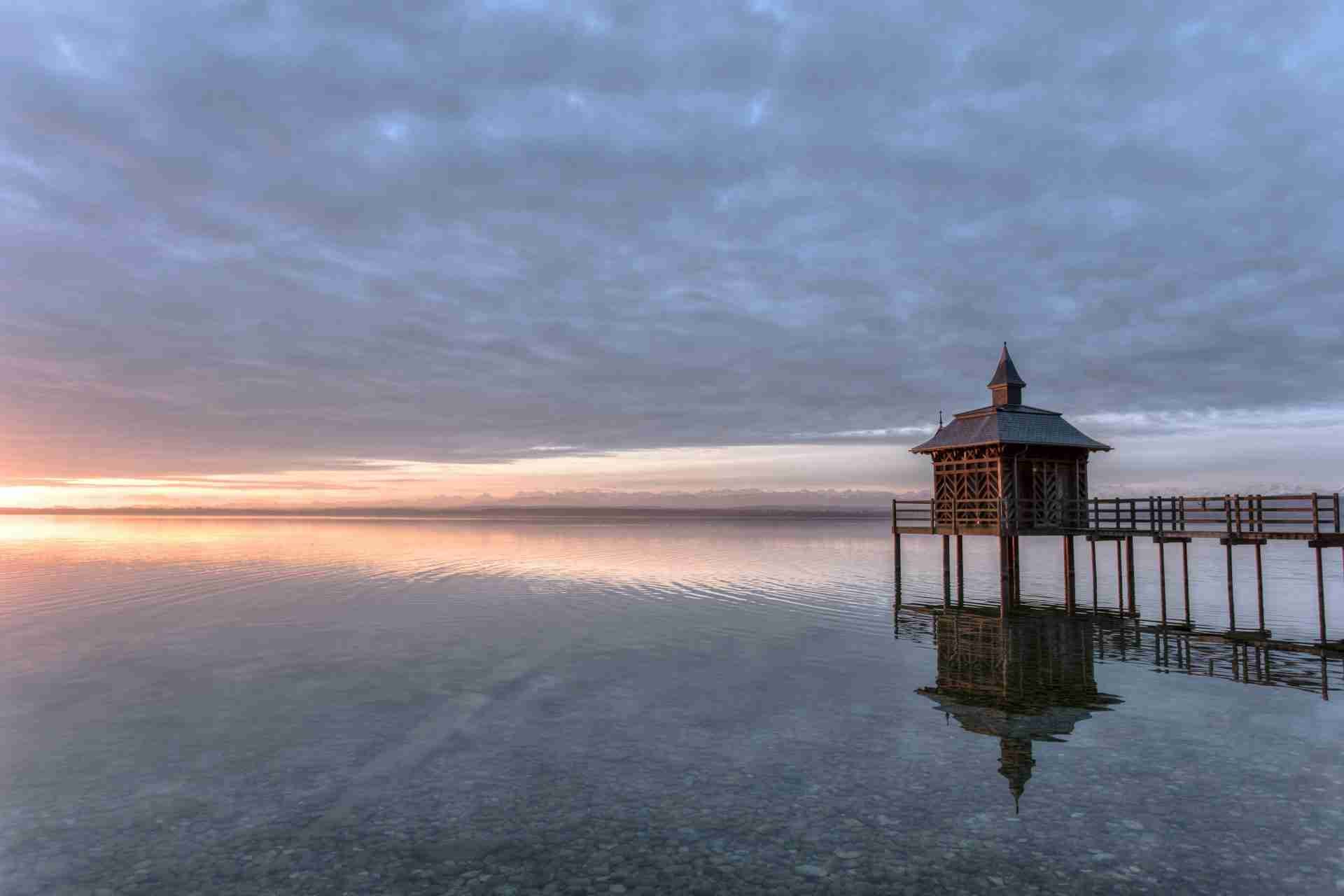
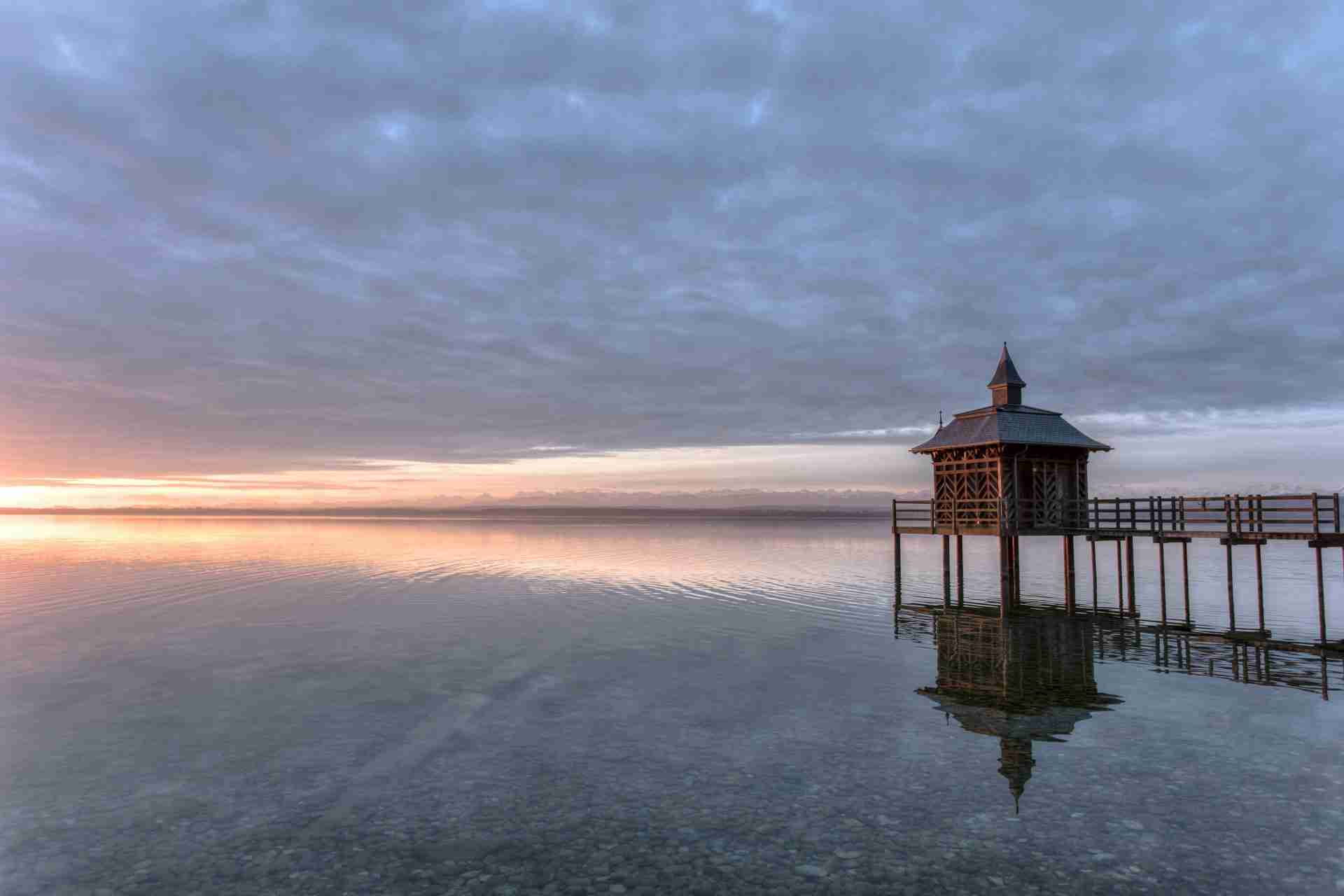
Pavillon des Bains is a small wooden bathhouse built in 1907 that stands quietly on stilts above Lake Neuchâtel. Tucked along the shore in the village of Gorgier, this charming structure is one of the most photogenic stops along the lake's northern edge. Its symmetry, scale, and setting give you a lot to work with, especially if you're drawn to simple compositions with strong lines and reflective surfaces. The surrounding landscape is open and peaceful, which makes it easier to focus on subtle changes in light, water texture, and color. Whether you're shooting close to the edge of the lake or stepping back to frame the building in context, Pavillon des Bains offers a clean, thoughtful subject that responds well to slow, careful shooting.
Best Photography Opportunities
• Reflections on Calm Water
When the lake is still, the bathhouse casts a perfect reflection that nearly doubles its presence in your frame. This is easiest to capture early in the morning when wind and boat traffic are minimal. You can shoot from the nearby path or set up close to the waterline to position the reflection directly beneath the structure. The symmetry of the building pairs naturally with the soft lines in the water, making this a strong composition for long exposures or slower shutter speeds. A tripod and polarising filter will help manage glare and keep the reflection clean.
• Side Views Framed by Reeds and Shoreline
The area surrounding the bathhouse includes patches of grass, low vegetation, and small stones that work well as a foreground layer. From a side angle, you can use these elements to frame the structure and add scale to the composition. The slight curve of the lakebank gives you options for placing the building off center while still keeping it dominant in the scene. This is a good approach during golden hour when the light moves across the sides of the structure and creates soft contrast between water and sky.
• Minimalist Compositions
Because the structure sits apart from the shoreline and is surrounded by open water, it lends itself well to minimal, balanced compositions. On overcast days, the sky and lake often blend into one another, leaving the bathhouse as the central subject with a limited color palette. These are good conditions for long exposures or high key processing if you're looking to simplify the image even further. A longer focal length helps compress the scene and isolate the subject without losing the softness in the tones.
• Close Up Details
The bathhouse may be small, but it has strong detail work in its roofline, walls, and supports. Moving in close allows you to focus on the texture of the wood, the crossbeams underneath, and the quiet lines where the structure meets the water. These shots are best done with a standard zoom lens and in soft, even light to avoid harsh shadow. Look for small elements like the edge of a window or the join where the stilts meet the lake to build quieter, more intimate frames.
• Seasonal and Weather Changes
The setting around Pavillon des Bains changes character with the seasons. In spring and summer, the greens of the shoreline and blue tones of the lake dominate the frame. In winter, snow or fog can simplify the color palette and help the structure stand out more strongly against a pale background. Cloudy weather also softens the scene and reduces reflections, which works well for more graphic, centered compositions. These seasonal changes make it a location worth visiting more than once.
Best Time to Visit
Early morning is the best time to photograph Pavillon des Bains, especially if you want to catch smooth water and clean reflections. The light at sunrise comes in low from across the lake, lighting the front of the structure and adding soft color to the sky. This is also the calmest time of day in terms of wind and human activity, which means fewer ripples in the water and fewer distractions in your frame.
Golden hour in the late afternoon works well for side lighting, particularly if you're shooting from the bank or working with surrounding vegetation as part of the foreground. Overcast days are useful for minimizing shadow and reducing glare, especially when photographing textures or tighter compositions. The bathhouse is photogenic year round, but spring and autumn tend to bring more balanced light and color without the haze or flat skies of midsummer.
How to Get There
Pavillon des Bains is located in the village of Gorgier on the north shore of Lake Neuchâtel in western Switzerland. Parking is available in the village, and the lakefront is a short walk from there along local roads or footpaths.
There is no entrance fee, and access to the shoreline is open to the public. The bathhouse itself is not open for entry, but all viewpoints for photography are available from the shore or nearby walking paths. The area is easy to navigate on foot, and you can explore different shooting angles without needing to hike or move far. It's a good idea to check the weather and lake conditions ahead of time, especially if you're hoping to photograph reflections or longer exposures.
Recommended Photography Gear
A wide angle lens will help if you want to include the shoreline, lake, and bathhouse in a single frame, especially for early morning compositions with reflection. A standard 24 to 70mm zoom works well for side views, layered scenes, and tighter framing of the building within the landscape. A longer focal length is useful for compressing the scene or isolating the structure against a distant background.
A tripod is essential for low light, long exposures, and precision framing. Bring a polarising filter to manage reflections or deepen sky tones. A neutral density filter is helpful if you're planning to shoot long exposures over water or in brighter conditions. Because you'll be close to the lake, a lens cloth or weather cover can help manage spray or mist, especially in winter or early spring.
Nearby Photography Locations
About an hour inland, this large natural amphitheatre offers dramatic cliffs, wide mountain views, and plenty of room to explore for landscape photography. Early morning or late afternoon light works well for revealing the texture and scale of the rock formations.
• Neuchâtel Old Town and Waterfront
Just east of Gorgier, Neuchâtel's historic center includes stone alleyways, colorful facades, and a clean, accessible lakefront. Great for combining architecture and landscape in the same session.
South of the lake, this limestone cave system gives you access to underground photography with dramatic light and texture. Well suited for a darker, more dramatic shift in subject if the weather turns.
• Sainte-Croix and Les Rasses Ridge Views
Up in the Jura Mountains, this area offers panoramic views across the valley and toward the Alps on clear days. It's a strong follow up location if you're looking for elevation and broad mountain light.
Comments
Loading comments…