
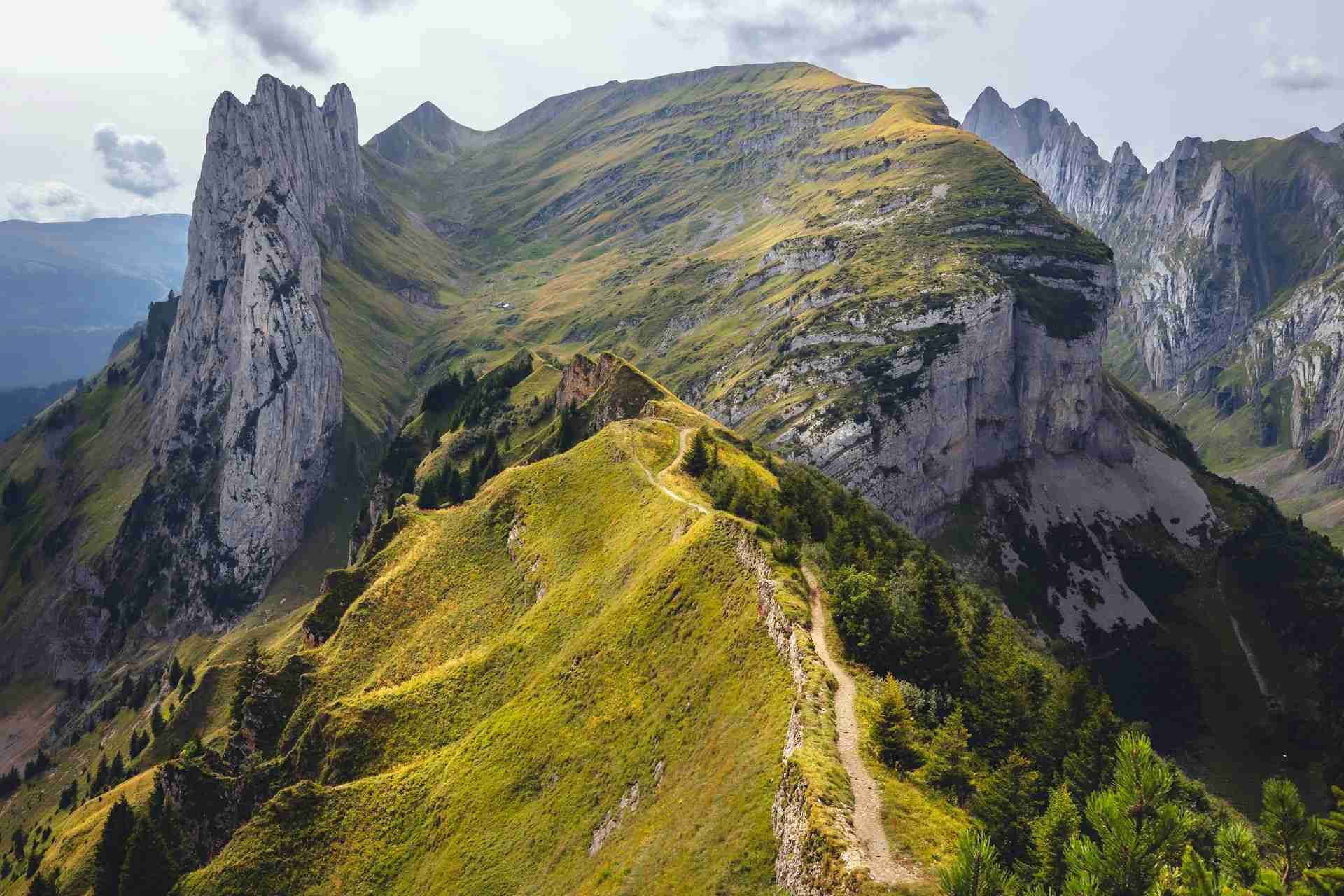
High in the Alpstein region of northeastern Switzerland, Saxer Lücke is a narrow mountain pass where sheer limestone walls frame a dramatic corridor of sky and stone. Sitting between towering peaks and the deep folds of the Rhine Valley below, this rocky ridge offers one of the most photogenic alpine views in the country. The terrain is raw and vertical, shaped by ice and erosion into jagged spines that fall sharply to grassy slopes and distant farmland. The approach is part of the experience—photographers can either commit to a longer, physically demanding hike or opt for a more accessible route that still delivers a rewarding scene. Saxer Lücke is a place where patience and positioning pay off, with cloud layers, golden light, and the ever-changing shadow play of the mountains providing an evolving canvas throughout the day.
Best Photography Opportunities
• Golden Light Across the Saxer Lücke Ridge
The best compositions at Saxer Lücke often come just after sunrise or in the last hour before sunset when the low-angle sun pours across the rock faces. The ridge becomes a natural divider between warm light and cool shadow, and side light exaggerates the shape and texture of the limestone. Shooting toward the valley during these times adds atmospheric depth, especially when layers of haze or cloud stretch across the Rhine below. Framing the scene with a wide lens lets you capture the dramatic drop from the ridge and the contrasting softness of the grassy slopes leading away from it. Golden hour also brings color to the rocks themselves, as subtle reds and oranges emerge from the otherwise pale stone.
• Vertical Compositions of the Jagged Rock Face
One of the defining features of Saxer Lücke is the jagged fin of stone that rises steeply to the east. This makes for powerful vertical compositions that emphasize scale and isolation, especially when shot from below with a telephoto lens. Positioning yourself along the trail with a clear sightline to the spire allows you to play with compression, pulling the background mountains closer while letting the peak dominate the frame. Mist or low clouds often roll in from the valley, clinging to the rock and enhancing the sense of drama and height. On days with clear skies, this angle still works well for graphic, high-contrast images where the rock becomes a silhouette against deep blue.
• Wide-Angle Landscapes Facing the Rhine Valley
Looking west from Saxer Lücke, the land opens up into the wide expanse of the Rhine Valley. From this position, you can work with sweeping horizontal frames that place the ridge in the foreground and the distant landscape below. This is an excellent setting for environmental shots where hikers on the trail give a sense of scale, or where leading lines in the terrain draw the eye toward the horizon. Early morning fog often pools in the valley, creating soft layers that contrast with the sharpness of the ridge. These scenes benefit from patience, as light moves quickly through the gaps in the mountains and changes the balance of highlight and shadow from one minute to the next.
• Drone Photography Along the Ridge Line
Saxer Lücke is well-suited to drone photography, as the unique shape of the ridge and its position above the valley allow for dramatic aerial angles. Flying parallel to the ridge reveals its knife-edge form, while vertical shots from above show how it slices through the surrounding terrain. Late afternoon is ideal for aerial work, when the sun casts long shadows from the rock face onto the grassy slopes below. Be mindful of wind and elevation changes, which can affect flight stability. Always check local flight regulations, and avoid flying close to hikers or protected wildlife zones in the area.
• Changing Weather and Cloud Drama
Like many high-alpine environments, Saxer Lücke is constantly shifting under the influence of passing weather systems. On days with fast-moving clouds or mist rolling up from the valley, the mood of the landscape changes every few minutes. The narrowness of the pass amplifies the impact of light and shadow, often isolating the rock formation in a shaft of sunlight while the background disappears into fog. These moments are ideal for more interpretive, moody images that focus on contrast, texture, and atmosphere. Keep a telephoto lens ready, as light often breaks through small gaps in the clouds and reveals micro-landscapes worth isolating.
Best Time to Visit
Saxer Lücke is most accessible between late May and early October, depending on snow conditions at higher elevations. In late spring, the surrounding slopes are dotted with alpine wildflowers and melting snow patches, which add color and contrast to compositions. June and July offer the most reliable weather, with long days and dry trails, though midday light can become harsh quickly. For serious landscape photography, early morning and late evening remain the best windows. These times provide softer light, stronger directionality, and a better chance of catching clouds or fog in the valley below. Autumn brings rich color to the grass and lower forests, while higher elevations remain bare and stark, creating a layered palette of browns, greys, and golds. Winter access is limited due to snow, and hiking can be dangerous without alpine experience and gear, though aerial photographers or those willing to snowshoe in may find striking contrasts between snow-covered rock and clear blue skies. Wind is frequent along the ridge, especially in the late afternoon, so stability is a concern both for camera gear and drone operations. Always check the weather forecast before planning a trip, as conditions can change quickly and visibility can drop without warning.
How to Get There
Saxer Lücke is located in the canton of Appenzell Innerrhoden, Switzerland, near the small town of Rüte and the village of Brülisau. The most accessible route begins with a cable car ride from Brülisau to Hoher Kasten, followed by a roughly 3-kilometer hike along the crest of the mountains. This trail is well-maintained and suitable for most fitness levels, though sections near the ridge can feel exposed and narrow. For more experienced hikers, longer approaches are available from Staubern, Frümsen, or Wildhaus, with routes ranging from 12 to 16 kilometers round trip and involving steeper elevation changes. All approaches require a good pair of hiking boots, sufficient water, and protection from sun and wind. During high season, the trail can be moderately busy, especially around midday, so photographers hoping to avoid crowds should plan to arrive early or stay late. There are no fees to access the trail itself, but cable car tickets and parking may require payment. Photography permits are not needed for casual use, though drone operators should review current Swiss aviation rules and local ordinances related to drone flights near populated trails and wildlife zones.
Recommended Photography Gear
A successful shoot at Saxer Lücke depends on being mobile, weather-aware, and prepared for long stretches without shelter or services. A lightweight but sturdy tripod is essential for capturing sharp images in windy conditions and during low light at sunrise or sunset. For lenses, a combination of wide-angle (such as 14 to 24 millimeters), mid-range zoom (24 to 70 millimeters), and telephoto (70 to 200 millimeters or longer) will give you flexibility across different compositions. Wide lenses work best for capturing the full scale of the ridge and the surrounding landscape, while longer focal lengths are valuable for compressing the valley or isolating rock formations. Bring a full set of neutral density filters for long exposures and graduated filters for handling high-contrast skies. A circular polarizer will enhance definition in cloud-filled skies and reduce glare from rock surfaces. A drone is especially effective here, but extra batteries are a must due to elevation and wind strain. Pack a rain cover or weather-sealed camera bag, as weather shifts frequently in alpine zones. Footwear should be sturdy and broken in, and trekking poles may help with balance on the steeper sections of the trail. Finally, carry a headlamp or compact flashlight if you plan to hike in early morning or return after sunset, and always bring a physical trail map as a backup to GPS.
Nearby Photography Locations
Nestled in a basin below Saxer Lücke, Fälensee offers a mirror-like alpine lake surrounded by steep cliffs and green meadows. The lake reflects surrounding peaks beautifully at sunrise, especially on still mornings. It's accessible by trail and pairs well with an early session at the ridge, giving you two entirely different landscape types within a few hours.
Just above the Saxer Lücke trailhead, the summit of Hoher Kasten provides sweeping 360-degree views of the Rhine Valley, the Alpstein range, and the Appenzell countryside. The summit platform is an excellent location for drone work and wide panoramas. Morning visits often benefit from inversion layers in the valley below, creating sea-of-clouds scenes under clear alpine peaks.
• Staubern Ridge and Restaurant
The trail to Staubern runs parallel to the Saxer Lücke route but provides its own unique rock formations and cliffside views. This area is particularly good during golden hour when sunlight rakes across the face of the ridge and throws long shadows into the valleys below. The nearby mountain restaurant also offers a convenient place to rest and refuel between shoots.
Located in the same Alpstein region but accessible via a separate trail system, Seealpsee is a turquoise mountain lake surrounded by forest and cliffs. It is ideal for midday shooting when light reaches the lake's surface, and the surrounding area offers multiple points of view from different elevations. Reflections and close-up shoreline textures make this location popular for both wide landscapes and tighter detail shots.
• Ebenalp and the Aescher Cliff House
Known for its dramatic setting against a sheer cliff, the Aescher mountain inn is one of the most recognizable alpine structures in Switzerland. While it draws tourists, early morning visits allow for uninterrupted shooting. The surrounding terrain, including nearby caves and jagged ridgelines, offers several options for varied compositions beyond the building itself.
Saxer Lücke is not just a single viewpoint, but a journey through some of the most striking terrain the Swiss Alps have to offer. With every turn in the trail, the landscape reshapes itself, offering moments of bold contrast, subtle detail, and shifting weather that challenge and reward photographers in equal measure. Whether you reach it by a steep trail or a shorter hike after a lift ride, the ridge is a place where preparation meets inspiration, and where the landscape always has something new to show.
Comments
Loading comments…