
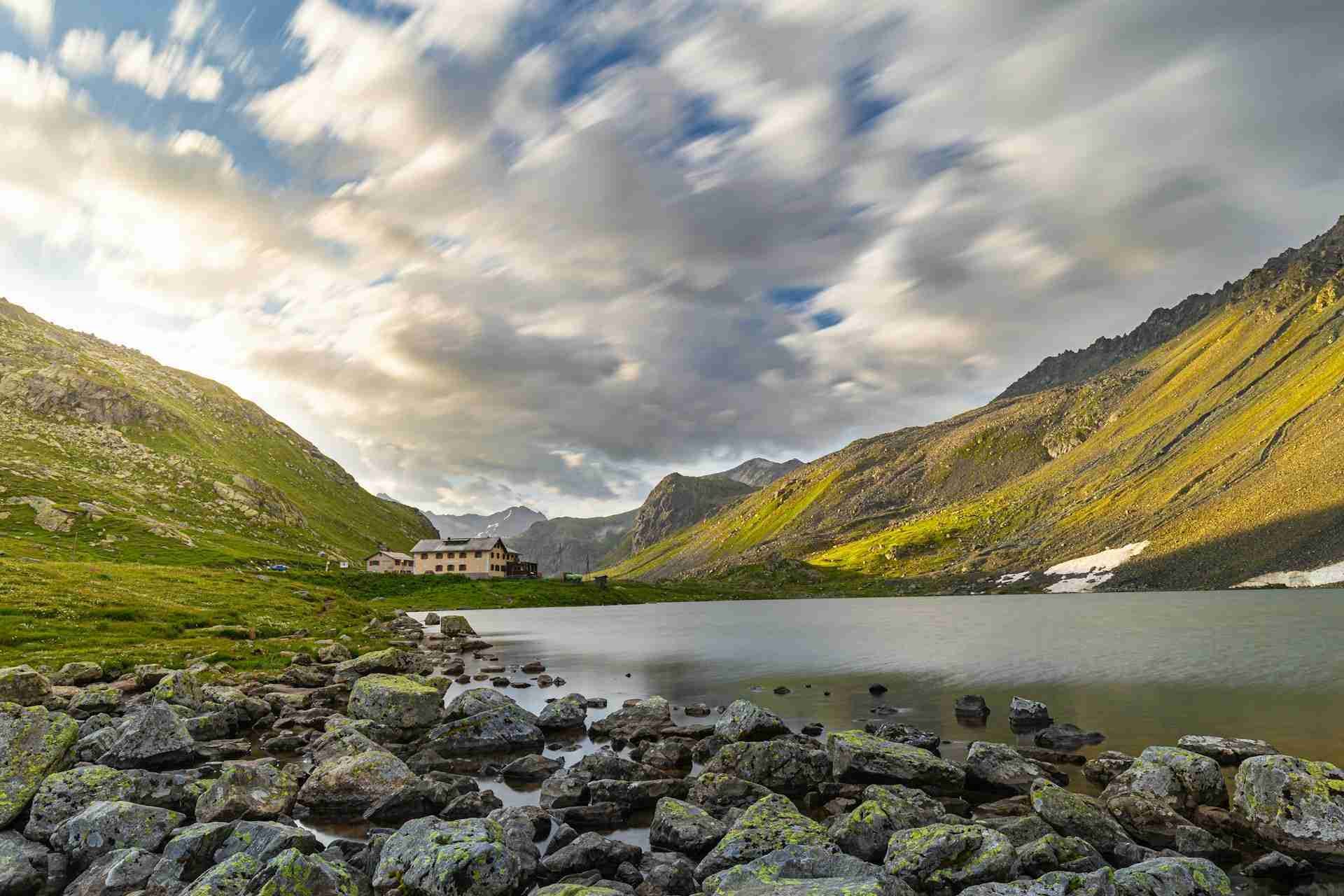
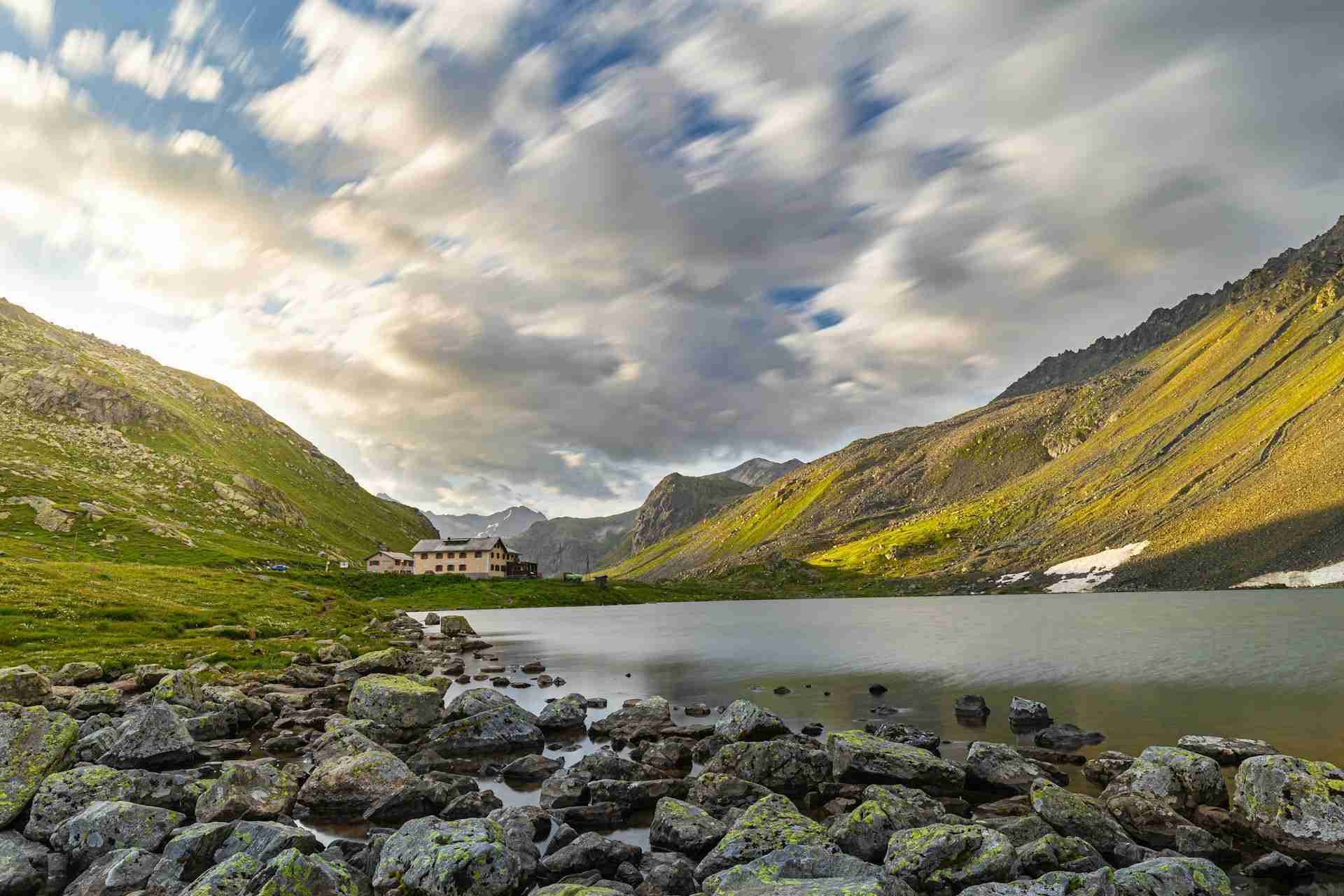
Perched high in the Flüela Pass above Davos, Schottensee is a crystalline alpine lake that sits amid a landscape shaped by ice, stone, and time. At over 2,200 meters above sea level, it offers a stark, elemental beauty that appeals to photographers seeking minimalist compositions, moody reflections, and dramatic high-mountain light. The lake's still surface reflects the jagged peaks and lichen-covered boulders that surround it, while patches of snow often linger well into summer, lending the scene a timeless quality. In the right conditions, Schottensee becomes a mirror to the sky—perfect for capturing symmetry, atmosphere, and the raw solitude of the Swiss Alps.
Best Photography Opportunities
• Alpenglow Reflections Across the Lake
The most sought-after image at Schottensee comes during sunrise or sunset when the surrounding peaks catch the alpenglow. With no trees or obstructions at this elevation, the light spreads cleanly across the ridgelines, often turning them soft pink or gold. The lake's stillness in the early morning hours makes it ideal for symmetrical compositions that pair the luminous sky with its reflection. Use a tripod and a wide-angle lens in the 16–24mm range to frame both water and sky, but don't neglect a mid-range focal length (35–50mm) if you want to compress background peaks for more abstract mirror effects. Consider bracketing exposures if the dynamic range is extreme, especially when the sun is just cresting the ridgeline.
• Leading Lines with Rocky Foregrounds
The terrain around the lake is rich with natural compositional aids—fractured rock shelves, lichen-coated boulders, and gently descending trails. Use these elements as leading lines to draw the eye into the frame, guiding it from foreground texture toward the lake and the distant mountains. Shooting at a low angle with a wide lens can help exaggerate depth and add scale. Foregrounds can be especially dramatic after rainfall when the rocks glisten, adding subtle contrast and detail that elevate even muted light.
• Storm Light and Atmospheric Drama
Schottensee's high-altitude location places it directly in the path of shifting alpine weather systems. As storm clouds roll over the pass, light can break through in isolated shafts, illuminating parts of the lake or nearby peaks with cinematic effect. This fleeting interplay of shadow and light is ideal for creating mood-driven compositions. Use a polarizer to enhance contrast in the clouds and deepen the reflective surface of the lake. In these moments, resist over-editing—much of the power lies in the subtle transitions and soft drama of the light.
• Intimate Textures and Minimalist Studies
When conditions are too harsh for wide landscapes—think midday glare or low-contrast overcast skies—shift your focus to the micro-worlds around the lake. Isolated stones breaking the surface of the water, patterns in the submerged lakebed, or frost patterns on nearby vegetation all offer compelling studies in tone, form, and simplicity. A 50–100mm lens works well for these intimate scenes, especially when paired with a polarizer to cut glare on the water and reveal underwater textures. These quiet images often capture the emotional tone of the alpine environment more effectively than grand vistas.
• Drone Perspectives of the Lake Basin
Drone photography opens up a geometric reading of Schottensee. From the air, the lake's curved shoreline, surrounding scree fields, and trail networks become compositional tools. Aim for overhead shots just after sunrise when the shadows are long but not overpowering. Fly high enough to contextualize the lake within the wider pass, but be aware of wind conditions—gusts can be unpredictable at this altitude. Shooting vertically allows for clean, poster-like compositions that emphasize symmetry, while lower-angle passes reveal topographical texture and scale.
Best Time to Visit
The best window for photographing Schottensee spans from late June through early October, when the Flüela Pass is open to vehicle traffic and the snow has largely receded from the trail and shoreline. July and August are prime for accessibility and weather, with clear skies and early sunrises that bathe the peaks in warm light while the lake remains glassy and undisturbed. The air is often still in the morning, crucial for reflection shots, and hikers don't tend to arrive until mid-morning—giving you time to work uninterrupted.
September offers perhaps the best balance of color and solitude. Grasses along the pass begin to turn gold, while the first snow dustings return to the highest ridges. The lower sun angles cast richer light across the basin throughout the day, reducing the contrast and harshness typical of midday summer sun. Early autumn storms can produce dramatic clouds and shifting conditions that lend atmosphere to every frame.
Winter access is severely limited—Flüela Pass is closed from roughly November to May—but if you are experienced in alpine touring and willing to snowshoe or ski in, the rewards can be enormous. A frozen Schottensee surrounded by snow-covered boulders and pastel winter skies offers rare and stark imagery. In these months, expect temperatures well below freezing, complete solitude, and the need for self-sufficiency.
Photographically, the best times of day are early morning and late evening. Sunrise typically offers better wind conditions for reflections, while sunset can create high-contrast silhouettes as the sun drops behind the western peaks. If you're planning a long shoot, bring a headlamp—twilight lingers at this elevation, but darkness arrives quickly once the sun slips behind the mountains.
How to Get There
Schottensee is located near the crest of the Flüela Pass, roughly 12 kilometers east of Davos along Route 28. In the warmer months, you can drive directly to the pass via car or PostAuto bus, which stops at Flüela Hospiz, a short walk from the lake. Parking is available in several gravel pullouts near the lake area, particularly just west of the pass summit. From the nearest parking area, it's a brief 5–10 minute walk to the lake along informal footpaths that circle the basin. The route is non-technical, but good footwear is essential—alpine terrain here includes loose scree, uneven rock shelves, and water runoff in spring.
During winter and early spring, the road is closed, and access is only possible on foot or skis via the lower valley trailheads near Tschuggen or Susch. These approaches require mountaineering experience and full safety gear. Always check current weather conditions and local avalanche reports if visiting outside of the main travel season.
Recommended Photography Gear
Given the alpine environment and quickly changing conditions at Schottensee, your gear should balance durability, flexibility, and compactness. A weather-sealed DSLR or mirrorless body is essential, ideally with dual card slots and strong battery life for long mornings in the cold. A wide-angle lens (14–30mm) is crucial for landscape and reflection shots, while a mid-telephoto (70–200mm) gives you reach and compression for detail work across the basin. If you plan to do aerial work, bring a lightweight drone like the DJI Air 3 with batteries kept warm and ready in your bag.
Tripods are indispensable here—whether for long exposures, bracketing, or stable drone launching. Choose a carbon-fiber model to minimize weight without sacrificing stability on uneven ground. Filters are especially helpful at this location; carry a circular polarizer to cut glare on the lake and boost contrast in the sky, and consider a set of graduated NDs to manage the often high dynamic range between sky and rock.
Also recommended: extra batteries (cold conditions drain them fast), microfiber cloths for wiping condensation or spray, and a remote shutter release or intervalometer for time-lapses and long exposures. If hiking in, a well-fitting technical backpack will keep your gear accessible and protected while navigating rocky terrain. Pack layers, water, and food—weather at this elevation can change without warning, and you'll want to stay comfortable enough to keep shooting as conditions shift.
Nearby Photography Locations
• Lai da la Scotta
A short hike southeast from Schottensee brings you to this lesser-known alpine tarn, which offers a more secluded shooting experience. Surrounded by raw rock formations and accessible only on foot, Lai da la Scotta is ideal for early morning shoots when you're looking for undisturbed reflections and wild textures. Its smaller size makes it ideal for drone work and symmetrical compositions.
Starting from the Flüela Pass parking area, the trail toward Flüela Wisshorn offers jaw-dropping views back toward the Schottensee basin. As you gain elevation, you can shoot layered images that include the lake, the pass road, and the surrounding peaks. This high perspective works beautifully at sunrise when the valley begins to glow with color while the lake below remains in blue-hour shadow.
A longer hike from the Flüela Pass leads to the stunning Jöriseen—a network of glacier-fed lakes with turquoise hues and surreal alpine backdrops. It's a more strenuous journey, but for photographers willing to commit a full day or overnight, it offers some of the most unique alpine color palettes in Graubünden. Late summer is best, when the snowmelt pools are vibrant and skies are clear.
Descending eastward, the road to Zernez opens up views of the Lower Engadin Valley and leads into the Swiss National Park. This area offers a more forested alpine environment, complete with wildlife viewing opportunities and tightly composed scenes along the Ofenpass road. The variety of subject matter makes it an excellent contrast to the stark, high-elevation terrain of Schottensee.
West of the Flüela Pass, the calm waters of Lake Davos offer a completely different mood—reflections of tree-covered hills, boat docks, and morning mist instead of stone and snow. It's a great location to catch your breath after a day of shooting at high altitude, and the surrounding trails provide elevated views back toward the pass from a distance.
Schottensee offers an extraordinary combination of elemental geometry, shifting alpine light, and tranquil solitude. Whether you're seeking the soft poetry of sunrise reflections, the austere beauty of a frozen basin, or the sculptural interplay of rock and sky, this lake rewards thoughtful observation and careful composition. With minimal walking and maximum visual impact, it remains one of the most accessible yet evocative locations for landscape photography in the high Alps of Graubünden.
Comments
Loading comments…