
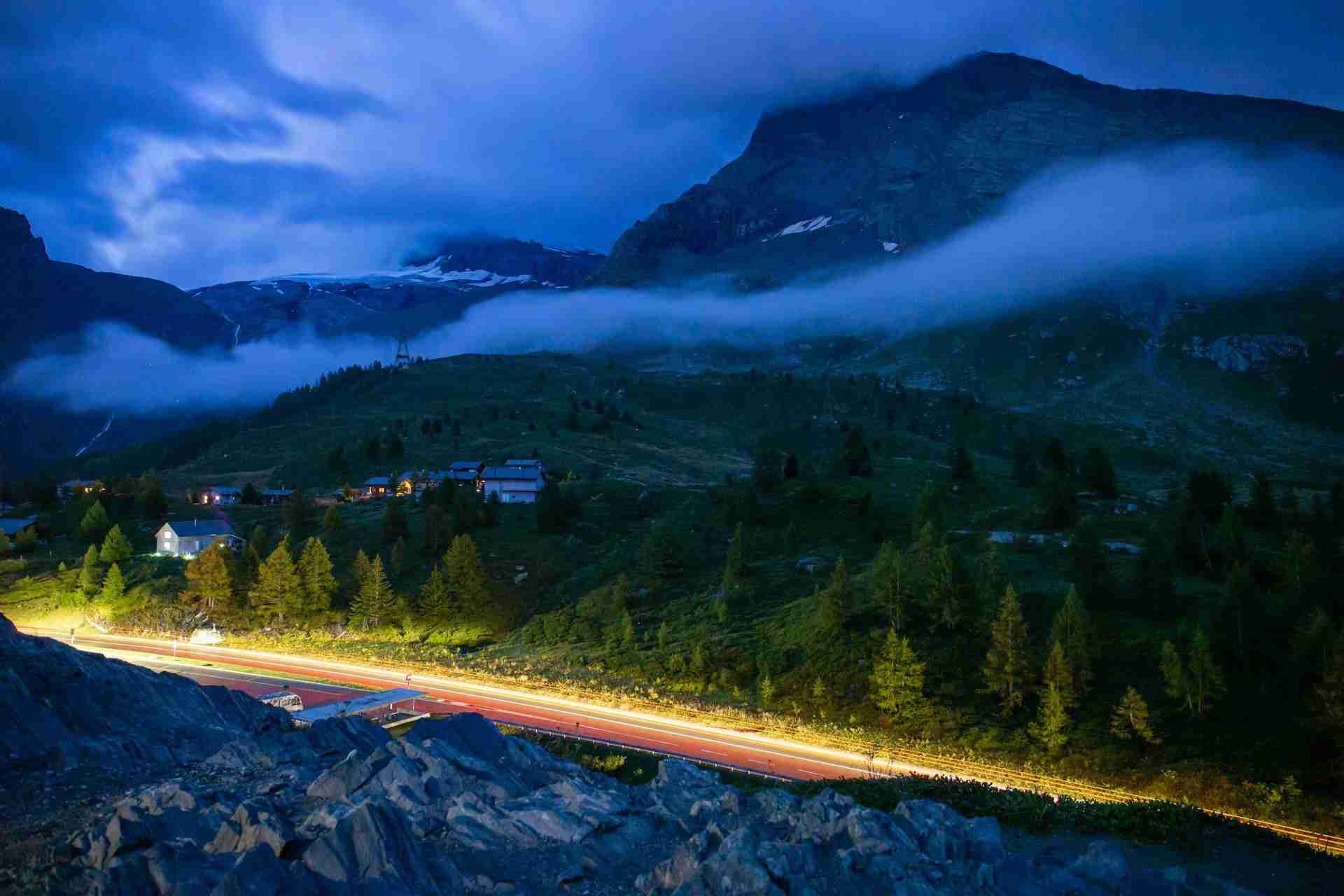
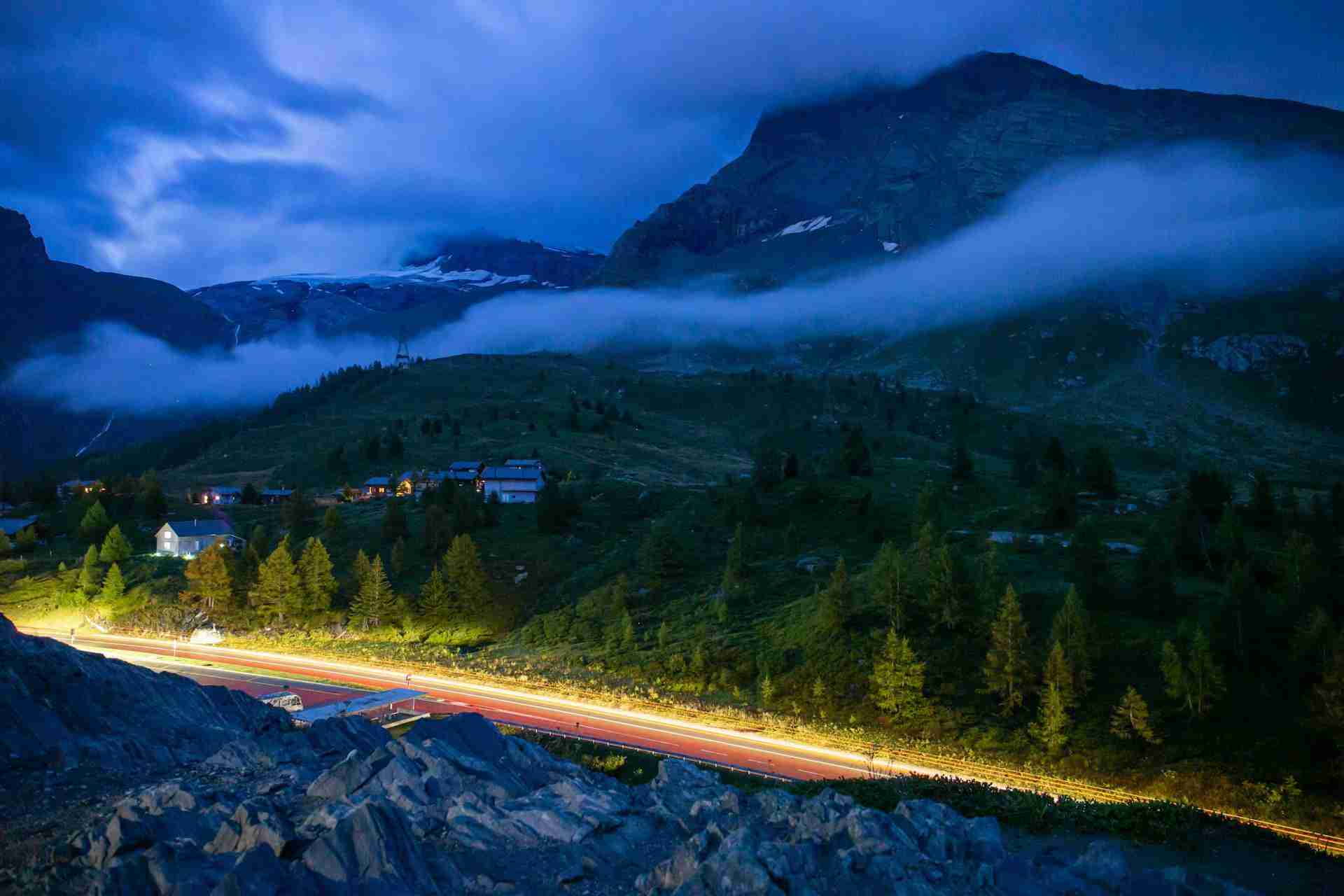
Perched along the high mountain road at the Simplon Pass, the Simplon Adler (Simplon Eagle) stands as a monumental granite sculpture watching silently over the Swiss-Italian border. Commissioned in 1944 to honor the border guards of World War II, this 9-meter-tall stone eagle commands one of the most dramatic alpine backdrops in southern Switzerland. Surrounded by panoramic views of the Pennine Alps and near the route of Napoleon's famed Alpine crossing, the eagle offers both a powerful symbolic subject and an opportunity to compose against wide, rugged landscapes. With harsh light, sudden weather shifts, and sweeping skies, the location challenges and rewards photographers seeking dynamic mountain imagery with a sculptural focal point.
Best Photography Opportunities
• Frontal Composition with Mountain Backdrop
: Standing directly in front of the eagle, you can frame it with the snow-capped Pennine Alps unfolding behind. This classic view positions the eagle centrally within the frame, commanding attention while the backdrop provides a sweeping, natural grandeur. Early morning and late afternoon light from the southeast and northwest, respectively, cast long shadows across the eagle's deeply carved features, emphasizing the geometric stonework. A wide-angle lens (16–24mm) allows you to include low-growing alpine flora and rocky outcrops in the foreground for additional scale. This composition also works well in dramatic weather when cloud shadows move quickly across the valley, creating momentary spotlights on the eagle or distant peaks.
• Silhouette at Sunrise or Sunset
: The bold contours of the Simplon Adler make it a striking silhouette against a glowing sky. Set up with the eagle between you and the low sun to reduce the sculpture to a powerful shape—its arched wings, curved beak, and upright posture become graphic elements that dominate the skyline. At sunrise, position yourself slightly south of the eagle to catch the full disc of the sun rising behind the adjacent peaks. At sunset, the warm glow fades westward across the Simplon Pass and reflects beautifully off snow or golden vegetation. Use a longer lens to compress the mountain range and sky or a tripod-mounted wide shot to balance the monument with ambient colors fading in the background.
• Close-Up Texture and Abstraction
: Move in close to focus on the eagle's chiseled granite—this is where form becomes texture. Isolate sections like the wing, claws, or sharply angular beak, using a mid-range zoom (24–70mm) or fast prime to create shallow depth of field. When side light hits the granite, it reveals not just surface roughness but the subtle gradations of tone in the natural stone. On cloudy days, the soft, diffuse light minimizes harsh contrast and brings out tonal detail—perfect for black-and-white or high-contrast editing. These shots are ideal for creating a study of craftsmanship and abstraction within a monumental context.
• Wide Alpine Landscape with Eagle in Foreground
: For sweeping drama, compose from a lower position or slight offset to the northeast, placing the eagle in the immediate foreground while letting the valley and peaks roll outward behind it. This setup creates layers—monument, mid-ground slopes, and distant ranges—which can be accentuated with a wide-angle lens and small aperture (f/8–f/11) for maximum depth. Ideal in midday or late morning when light spills from above and fills the whole frame evenly. For added interest, include seasonal elements—wildflowers in June, low-lying snow in early November, or golden larch trees in autumn—that offer color contrast against the muted gray of the stone.
• Winter Minimalism and Snow Isolation
: In winter, the eagle takes on a solemn, monolithic presence. Surrounded by snow, its dark surface contrasts sharply with the surrounding white expanse, especially in overcast or flat light. This scene benefits from negative space—shoot from a distance using a 70–200mm lens and let the eagle sit off-center in a minimalist frame. Footprints in the snow can act as subtle leading lines, or you can position natural elements like a windblown tree or drift to balance the composition. During sunrise, golden light reflects off snow and wraps around the statue's edges, highlighting its form while preserving the calm stillness of the scene.
Best Time to Visit
The Simplon Adler is accessible and visually rewarding year-round, but different seasons offer distinct photographic challenges and opportunities. From late spring to early autumn (May to October), the pass is fully open and accessible by road, with clear skies and wild alpine vegetation offering rich color and sharp contrast. Morning and late afternoon light produce the best shadow definition on the eagle itself, especially from the east or southeast viewpoints.
Summer afternoons often see dramatic cumulus buildup over the peaks, lending depth and drama to wide-angle compositions. Early mornings tend to be calm and clear, ideal for detail studies or low-angle shots with soft directional light. Autumn introduces warmer tones and clearer air, with the bonus of occasional low fog in the valleys below, which can create unique layering behind the eagle.
Winter (December to March) transforms the setting into a high-alpine snowscape. The pass may still be open depending on conditions, but icy roads and extreme cold require caution. This season offers strong contrast and minimalist scenes that work particularly well in black-and-white. Sunrises and sunsets arrive quickly and low in the sky, which gives you extended periods of golden side light for sculptural emphasis.
Weather can shift rapidly at high elevation. Carry protective gear and be prepared for sudden cloud banks or snow flurries, even in summer. Wind and low temperatures are common, but these conditions often bring crystal-clear light and cloud drama that enhance the monument's stark presence.
How to Get There
The Simplon Adler is located just south of the summit of the Simplon Pass on Simplonstrasse (Route 9), which connects Brig in Switzerland to Domodossola in Italy. The sculpture is clearly visible from the roadside and has a small parking area and turnout nearby for safe access.
If traveling from Brig, follow signs toward the Simplon Pass. The eagle stands approximately 2 kilometers south of the hospice area at the crest of the pass. From the pull-off, a short gravel path leads directly to the monument. The walk is easy, though care should be taken in winter if snow or ice is present.
The location is free to access and does not have formal opening hours, making it ideal for dawn, twilight, and blue hour shoots. There are no facilities at the site itself, so prepare for mountain conditions, and check seasonal road closures before visiting—especially between late autumn and early spring.
Recommended Photography Gear
A wide-angle lens (16–35mm) is indispensable for framing the eagle within its alpine context. Use it to include both foreground texture and distant peaks in landscape compositions. This lens also allows for creative use of negative space and sky when isolating the monument against moving cloud layers.
A mid-range zoom (24–70mm) provides flexibility for both close-up texture shots and tighter compositions that include the surrounding terrain. It's excellent for portrait-style work of the eagle or detail-driven architectural studies.
A telephoto lens (70–200mm) can isolate the monument against the mountains, compressing foreground and background for moody atmosphere or abstract scenes. It also helps when shooting distant weather elements or dramatic lighting transitions over the ridge lines.
A tripod is essential for twilight, long exposure, and sunrise/sunset work, especially in winter when light fades fast. A polarizing filter can deepen sky tones and enhance contrast between the eagle and clouds, while a graduated ND filter is helpful for balancing bright skies against darker foregrounds. Be sure to carry lens cloths and weather protection—windblown grit and moisture are common at this elevation.
Nearby Photography Locations
: Just a few minutes north of the eagle, this 17th-century stone hospice offers timeless alpine architecture and is framed beautifully by peaks in all directions. Best photographed at dawn or under snowfall for quiet, monastic atmosphere.
: Near the approach to the pass from Brig, this striking modern bridge spans a deep alpine valley with clean lines and bold engineering. It makes for strong contrast with the older elements of the region and is best captured from roadside pull-offs or trails nearby.
• Rotelsee
: A small alpine lake slightly to the west of the pass summit, Rotelsee reflects peaks and skies when winds are calm. It's ideal for symmetry-focused sunrise or golden hour landscape photography.
: Historic military structures perched just off the pass route offer rugged stone walls and weathered details, perfect for atmospheric black-and-white photography, especially in snow or fog.
: For those willing to hike, this nearby trail leads to panoramic views over the Val Divedro and Monte Leone range. It offers expansive vistas and opportunities for high-altitude landscape compositions with trail elements as leading lines.
The Simplon Adler stands not only as a tribute to Swiss vigilance, but as a sentinel of stone offering endless compositional potential. In its solitude and strength, it anchors the high pass with timeless gravitas—waiting for the photographer ready to meet it on its own monumental terms.
Comments
Loading comments…