
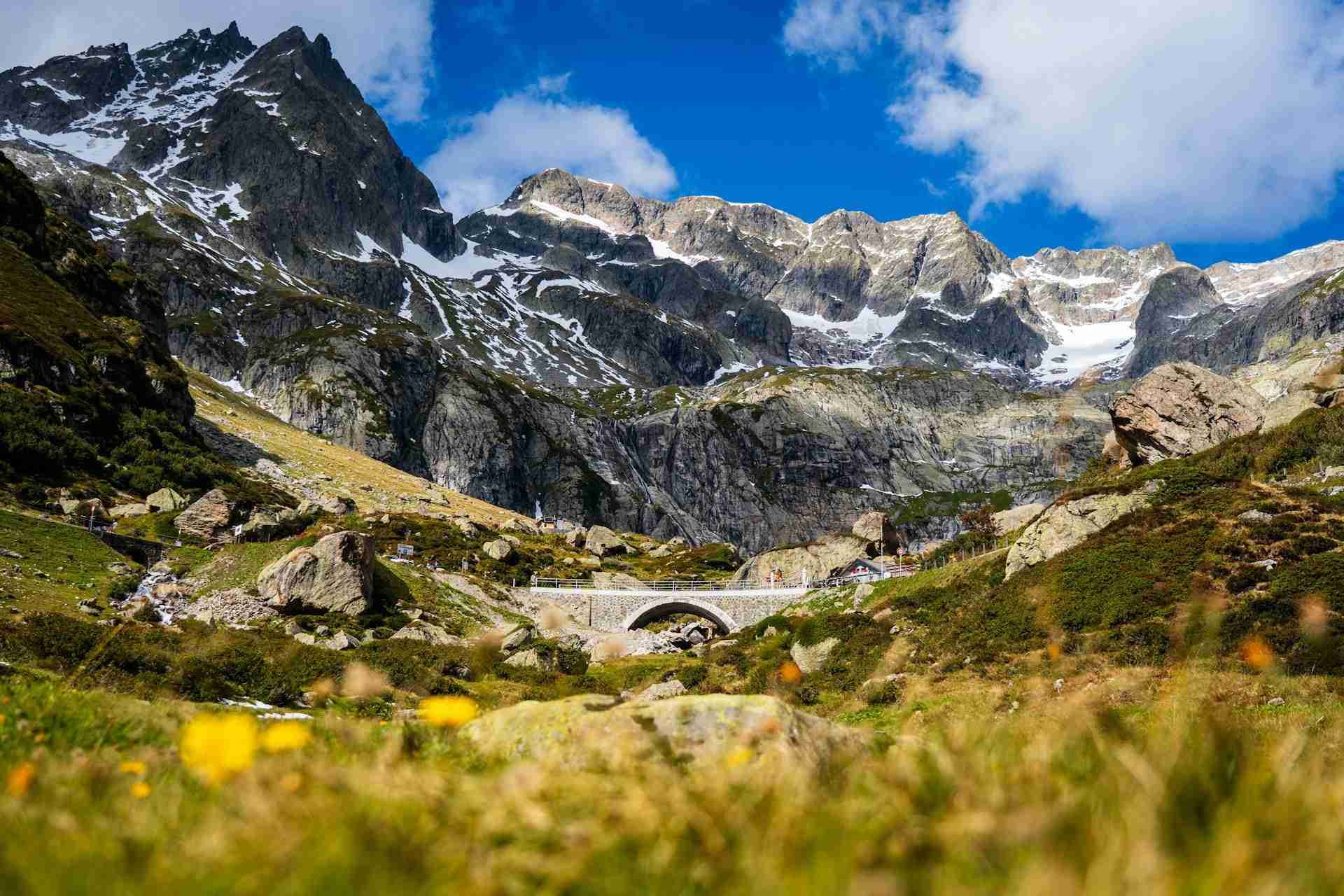
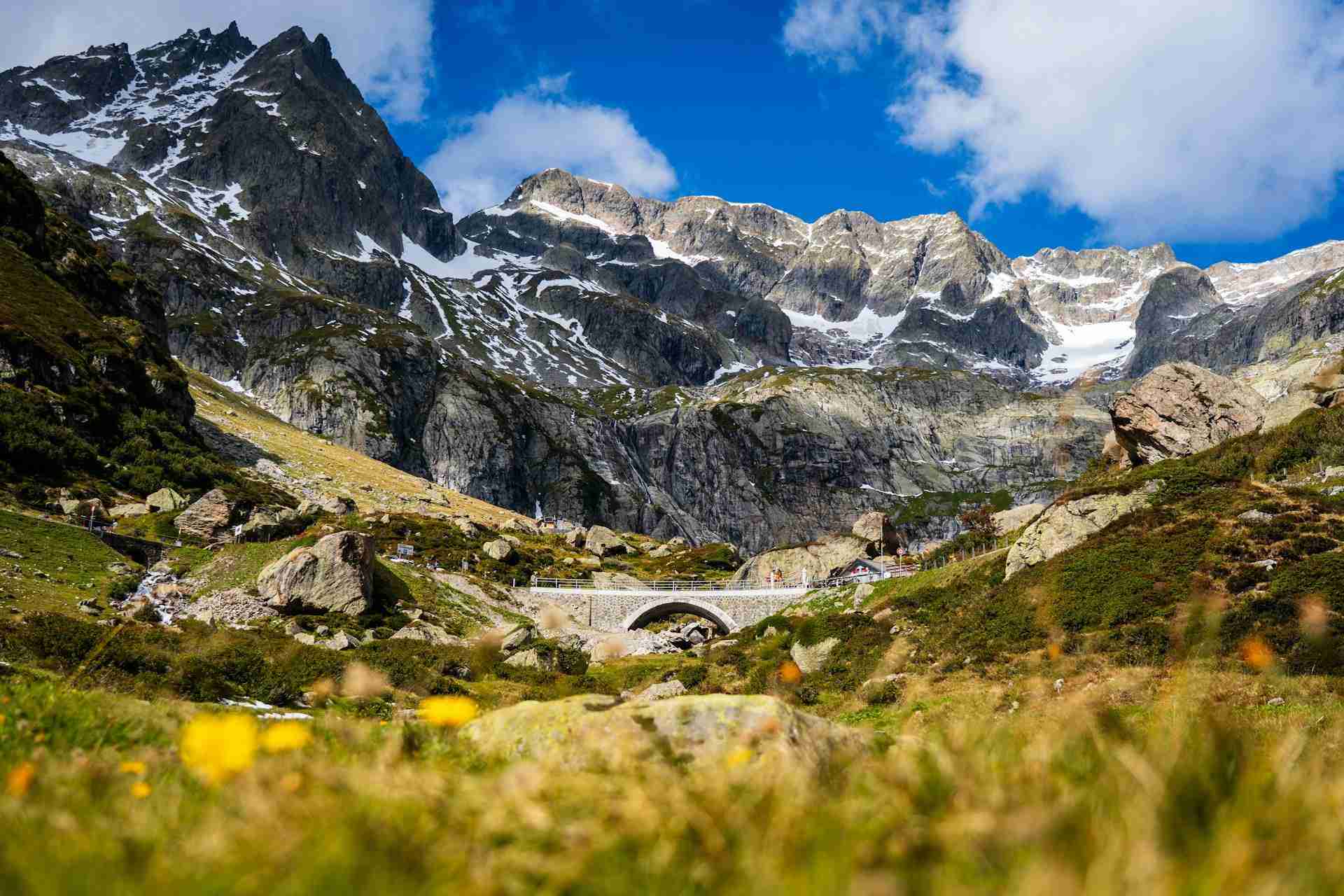
Susten Pass winds through the heart of the Swiss Alps, connecting the cantons of Uri and Bern with a road that climbs high above the valleys into a landscape shaped by glaciers, cliffs, and alpine meadows. At 2,260 meters above sea level, this high mountain pass offers panoramic views of jagged peaks, glacial ice, winding roads, and distant waterfalls. The star of the show is the Stein Glacier, which dominates the eastern side of the pass and provides a dramatic, ever-changing foreground for both wide and telephoto compositions. Photographers come to Susten not just for single vantage points, but for the unfolding sequence of scenes that reveal themselves with every switchback. This is a location where the weather is part of the subject, and where the interplay of light, ice, and terrain delivers images with scale and intensity.
Best Photography Opportunities
• The Stein Glacier from the Parking Area
One of the most dramatic views at Susten Pass requires almost no hiking. Near the top of the pass, a large parking area offers direct views over the Stein Glacier and the surrounding basin. From here, you can frame the glacier as it slides down between two steep ridges, with seasonal meltwater feeding a turquoise glacial lake below. The scene changes with the light; during golden hour, the ridgelines catch warm tones while the glacier stays cool and textured. A wide-angle lens allows you to include the lake, ice, and sky in one balanced composition, while a telephoto lens can isolate crevasses, meltwater channels, or patches of exposed blue ice. This location is best in the early morning when light hits the glacier head-on or in the late afternoon when shadows lengthen across the ice.
• Switchback Roads with Mountain Backdrops
The western approach to the pass features some of the most photogenic alpine switchbacks in Switzerland. These winding roads curve tightly against steep cliffs and descend into a backdrop of towering peaks. From several roadside pullouts, you can capture sweeping views of the road as it weaves through the mountains, especially effective with a mid-range to telephoto zoom. This is a perfect setup for long exposure work during twilight when passing vehicles leave trails of light. Try different angles—either looking down on the road from a higher turnout or shooting across the valley to layer curves against a jagged ridgeline.
• Aerial Views Over the Pass and Glacier
Susten Pass is a strong location for drone photography, offering clear elevation changes, complex terrain, and layered light. From the air, the glacier's scale becomes even more impressive, and the road's shape takes on graphic qualities as it traces the contours of the valley. The glacial lake appears more vividly from above, with shifting color and reflected sky. Use drone altitudes to explore both top-down and low-angle perspectives, depending on cloud cover and lighting. Early morning or late afternoon flights often reward you with directional light that brings out texture in the ice and relief in the surrounding rock. Watch for fast-changing wind and low cloud banks that can interfere with line of sight and battery performance.
• High-Elevation Streams and Waterfalls
Throughout the pass, snowmelt and glacial runoff form seasonal waterfalls and fast-moving alpine streams that cut across meadows and descend along cliffs. These elements make ideal foregrounds for landscape compositions, especially when paired with distant peaks or the glacier. Use a tripod and neutral density filter to blur the motion of the water, or shoot handheld at higher shutter speeds to freeze droplets in midday light. These streams are most active in summer, and their positions change yearly depending on melt patterns. Many are located just a few minutes' walk from roadside pullouts, making them easy to access during a longer shoot.
• Cloudscapes and Passing Weather
Due to its elevation, Susten Pass often sits just at or above the cloud line. This makes for a constantly shifting atmosphere, with clouds wrapping around peaks, clearing suddenly to reveal blue skies, or dropping mist into the valleys. These conditions are excellent for dramatic black and white photography, as contrast builds naturally between light and dark elements. Patience is essential here—wait for breaks in the cloud to add depth, or use fast shutter speeds to capture dynamic skies in motion. These passing weather systems often deliver some of the most memorable images of the area, particularly when sunlight slips through to light up a single peak or section of glacier.
Best Time to Visit
Susten Pass is open seasonally from around late May to early November, depending on snow conditions. The road is fully closed in winter due to heavy snowfall, and even in spring, high banks of snow may linger along the roadside. June and July are peak months for wildflowers, meltwater streams, and fast-moving clouds, offering a wide range of compositions. August brings more stable weather and clearer skies, which are helpful for drone and night photography. September is one of the best times to visit if you want fewer tourists and stronger directional light throughout the day. The glacier and lake remain visible, but shadows grow longer and the color of the grasslands begins to shift to deeper greens and golds. Sunrise and sunset are ideal shooting times, though direct views of the horizon are limited by surrounding peaks. Early morning tends to offer calmer air and clearer skies, while late afternoon can bring dramatic color and atmosphere, especially during changing weather. High elevation means UV light is strong, so use lens hoods and protective filters to avoid flare and ghosting.
How to Get There
Susten Pass is located in central Switzerland, accessible by car from either the west via Innertkirchen or from the east via Wassen. The road is known as Route 11, and while it's paved and well-maintained, it features steep gradients and tight curves, especially on the western side. From Zurich or Lucerne, it takes approximately two and a half hours to reach the pass by car. Public transportation options are limited, especially outside of summer, so driving remains the best way to explore the area fully. There are multiple designated parking areas near key viewpoints, including a large lot near the glacier overlook. Access is free, and there are no permits required for casual photography. However, always check road conditions before departing, as closures can occur suddenly due to rockfall or early snow. Most photography locations are directly accessible from the roadside or require short hikes on well-worn trails. Restroom facilities and mountain restaurants are available in the summer months, but hours may be limited during shoulder seasons.
Recommended Photography Gear
Susten Pass demands a kit that can handle high-contrast light, moisture, and elevation-related exposure challenges. A wide-angle lens in the 14 to 24 millimeter range is essential for glacier scenes, dramatic skies, and road switchbacks. A mid-range zoom like a 24 to 70 millimeter lens provides flexibility for handheld shooting, while a 70 to 200 millimeter telephoto or longer is useful for isolating details in the glacier, distant peaks, or layers of clouds. Bring a full-size tripod with a low center of gravity to remain stable in gusty wind, especially for long exposure shots of moving clouds or waterfalls. A complete set of ND filters, including a 10-stop, is highly recommended for smoothing glacial runoff or extending shutter times under bright skies. Graduated ND filters or bracketing can help manage the exposure differences between sky and terrain. A circular polarizer will reduce glare from wet rocks and enhance the color of glacial lakes. For drone operators, multiple batteries, ND filters, and a signal booster are useful, as elevation and wind can reduce flight time and connectivity. Always carry microfiber cloths and protective wraps for your lenses, as condensation and airborne moisture from waterfalls or shifting weather can collect quickly. Weatherproof boots, extra layers, and sun protection are essential for shooting comfortably at high elevation over long periods.
Nearby Photography Locations
Just a short drive southwest, Furka Pass offers more winding roads and distant views of the Rhône Glacier. It's one of the few locations where you can photograph a glacier from above, with tight switchbacks and high cliffs making for intense compositions. Early morning light moves quickly here, creating bold shadow lines on the terrain.
• Grimsel Pass and Totensee
Often combined with a drive through Susten, Grimsel Pass features stark granite landscapes and the mirror-like Totensee Lake. The surrounding boulders and open sky make it excellent for minimalist wide shots or moody long exposures under changing light. The granite reflects warm light beautifully during sunset.
• Trift Bridge and Trift Glacier
Accessible by cable car and a moderate hike, this suspension bridge spans a deep glacial valley with views toward the retreating Trift Glacier. The bridge itself is an excellent subject for both wide and compressed shots, especially when surrounded by mist or late afternoon light.
This reservoir sits in a high valley north of Andermatt, surrounded by rugged cliffs and alpine forests. The lake is a deep blue-green color, best photographed in mid to late afternoon when shadows begin to stretch across the water. Several trails lead up to higher viewpoints with strong foreground options.
• Gadmen Valley Waterfalls
On the way up to Susten from Innertkirchen, the Gadmen Valley hosts several waterfalls that can be photographed close to the road or via short walks. These are ideal for soft light conditions or cloudy days, and they make excellent detail studies when the light isn't strong enough for wider landscapes.
Photographing the Susten Pass is about embracing variety and adapting to the mountains as they change by the hour. Whether you're drawn to ice and rock or cloud and color, this high alpine corridor offers a wealth of scenes that reward patience, curiosity, and preparation. It is one of those rare locations where each stop along the road feels like a new shoot entirely, and where the mountains never quite look the same twice.
Comments
Loading comments…