
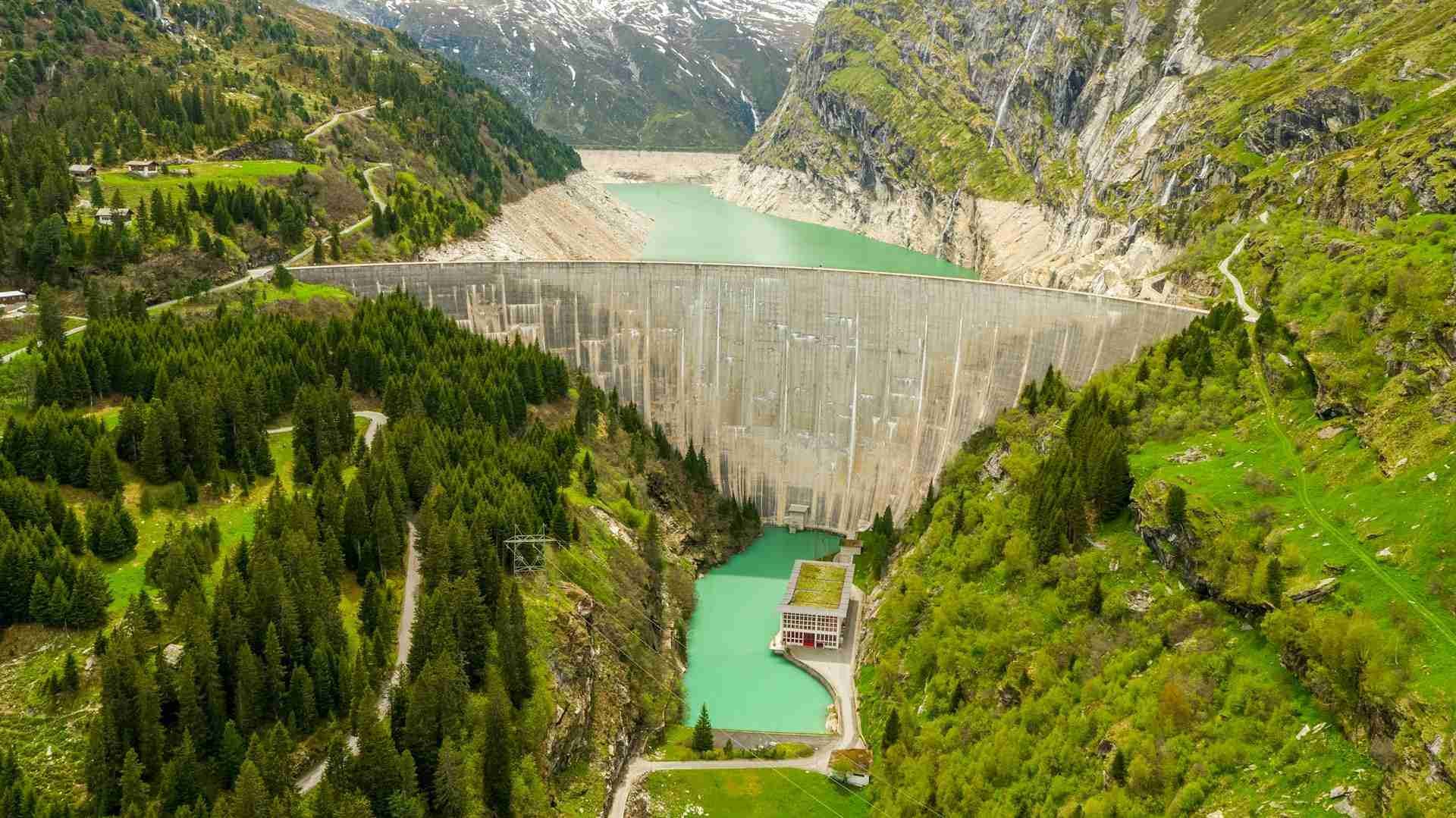
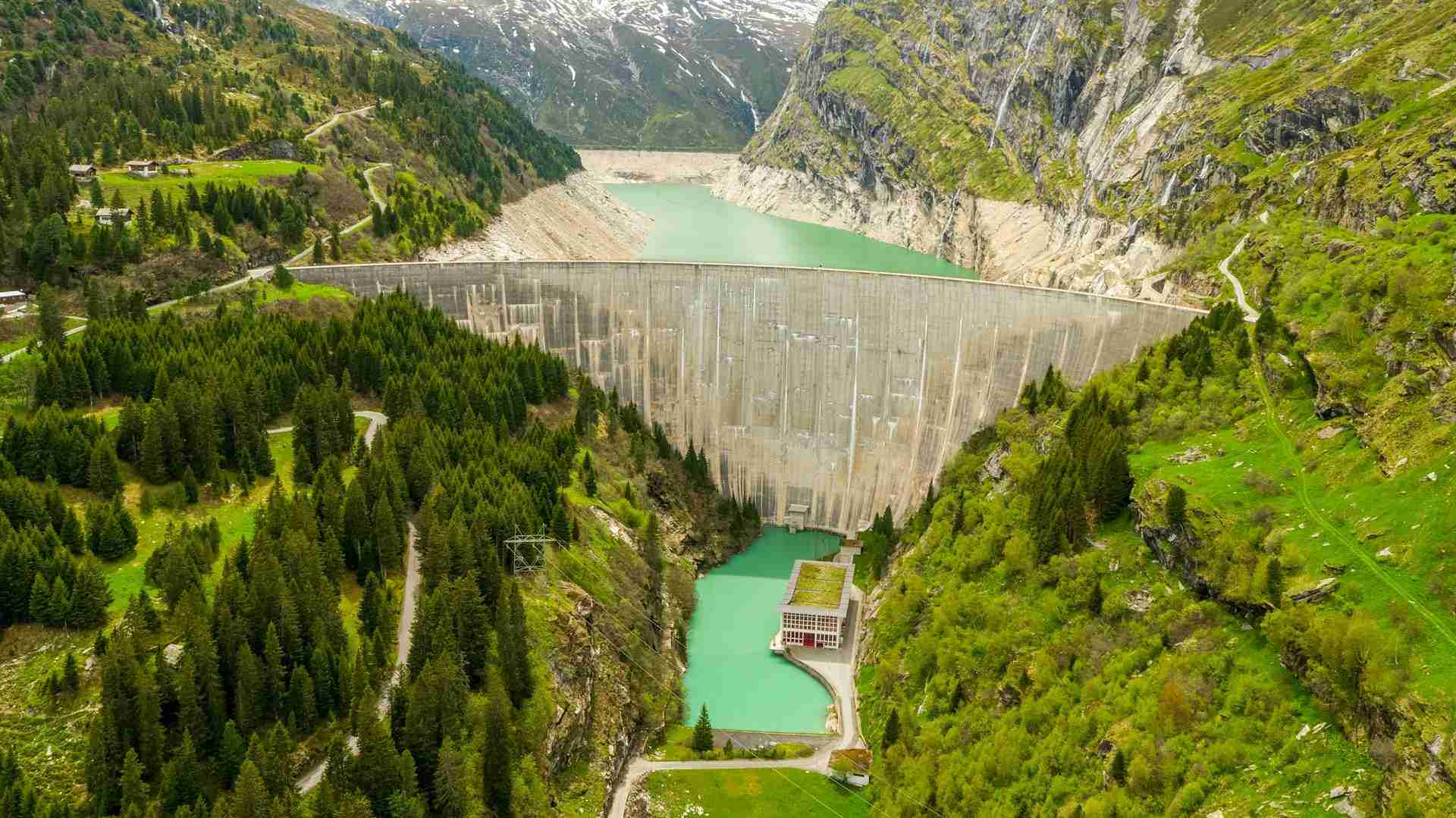
Zervreilasee is a striking reservoir tucked into the upper reaches of the Vals valley in the canton of Graubünden, Switzerland. Enclosed by steep alpine slopes and fed by mountain streams, the lake is anchored by the massive Zervreila Dam, a 151m concrete arch dam that curves dramatically across the mouth of the valley. This location offers a rare mix of industrial structure and wild landscape, with high altitude light, shifting clouds, and cold blue water creating rich photographic possibilities throughout the day. The surrounding peaks reflect in the lake when the water is still, while the dam itself serves as both a focal point and a vantage for sweeping views. It's an area that rewards slow, deliberate photography; whether you're focused on the geometry of the dam or the ever-changing alpine light moving across rock and water.
Best Photography Opportunities
• Wide views of the dam and lake from above
One of the best perspectives of the area is found by walking up the trails that lead to elevated viewpoints just above the southern edge of the dam. From these spots, you can frame the full arc of the dam with the deep blue water of the reservoir stretching out into the mountain valley. Morning light from the east brings warm tones to the rocky slopes, while cloud shadows across the lake surface add texture and contrast. A wide angle lens works well here to take in the full sweep of the landscape, though a longer lens can also help compress the space between the foreground ridge and distant mountains.
• Symmetrical compositions from the center of the dam
Standing on the walkway that runs across the top of the Zervreila Dam gives a direct view into the curve of the structure and the lake beyond. This spot is ideal for symmetrical compositions where the dam walls, lake, and sky align cleanly along the central axis of your frame. Early morning offers soft, even light, while late afternoon sun brings deeper shadows along the dam's interior walls. Using a tripod helps when you want precise framing or longer exposures to soften movement in the water below. Overcast days create moody, low contrast scenes that work well in monochrome.
• Reflections and light on the water surface
When the wind is low, Zervreilasee can act like a mirror, especially in the early morning or just after sunset. The high peaks on either side of the lake reflect clearly in the water, adding symmetry and subtle shifts in color. These reflections are strongest when light is even and the sky is still bright. To make the most of these conditions, a polarizer can help control glare and deepen the tones of the sky. Shooting from the lakeshore or a low ridge allows you to include both the reflection and surrounding textures such as stone paths or alpine grass.
• Minimalist compositions using dam geometry
The Zervreila Dam is a strong subject for graphic, minimalist photography. Its smooth concrete surface curves across the valley with sharp precision, and the repeating lines of the safety railings, access stairs, and structure seams make for clean, detail-oriented frames. A longer lens is useful here to isolate these elements, especially when working with strong side light. The contrast between the man-made structure and natural rock walls can be played up in both color and black and white, depending on conditions. Look for small features like access doors, anchors, or shadows falling across the arc to build tightly composed, abstract images.
• Twilight and early night light across the valley
As the sun drops behind the peaks, the light in the valley fades quickly, and the lake surface darkens to deep blue or slate gray. This is an ideal time for long exposures from the dam walkway or nearby slopes. The surrounding peaks may still catch the last light of day, adding a soft rim of color along the skyline. Use this time to work with slower shutter speeds and clean compositions that highlight shape and contrast rather than color. A tripod and remote release are necessary here, and a wide aperture can help keep the mountain edges sharp against a fading sky.
Best Time to Visit
Zervreilasee and the Zervreila Dam are accessible from late spring through autumn, depending on snow conditions and road access. Late June through early October offers the most reliable conditions for photography, with clear skies, open trails, and steady water levels in the reservoir. Summer brings long daylight hours, strong alpine light, and warm afternoons, though mornings and evenings are still cool. Early morning is best for calm water and soft side light on the dam and surrounding peaks. Afternoon brings more contrast, with stronger shadows on the slopes and dam face.
Autumn offers cooler air and more dramatic skies, with potential for low clouds settling in the valley or moving across the peaks. This season is especially good for moodier images with stronger contrast and quieter scenes. The lake may reflect more muted tones, and the lower angle of the sun creates longer shadows and more texture on the dam surface. Midday is usually too harsh for balanced exposures unless clouds soften the light.
Winter access is limited and often closed entirely, as snow covers the road and trail systems. The reservoir may partially freeze, and while aerial photography may be possible with a drone, on foot photography is not recommended during this time due to safety and access restrictions.
How to Get There
Zervreilasee and the Zervreila Dam are located near the alpine village of Vals in the canton of Graubünden, Switzerland. From Vals, the dam is reached by a paved mountain road that follows the valley west for approximately ten kilometers. This road is narrow and winding, but it remains open during the snow free season and is drivable. There is a small parking area just before the dam where you can leave your vehicle and continue on foot.
From the parking area, trails lead to various viewpoints above the dam, along the lakeshore, and into the surrounding hills. The dam itself can be walked across on foot, offering views both into the valley and across the water. There is no entrance fee to access the dam or trails, and the area is open during daylight hours. Photography is allowed throughout the site, including the dam walkway and surrounding terrain. Make sure to check local weather conditions and trail updates before visiting, especially in shoulder seasons when conditions can change quickly.
Recommended Photography Gear
Given the variety of subjects and distances at Zervreilasee, a standard zoom lens such as a 24 to 70 millimeter is useful for wide views and general landscape work. A wide angle lens helps capture the full scale of the dam and its curve across the valley, particularly from close-up or elevated positions. For tighter compositions of architectural details or compressed mountain layers, a 70 to 200 millimeter lens adds reach and allows you to isolate patterns or layers across the lake.
A sturdy tripod is essential for long exposures, especially when shooting reflections, twilight, or minimalist scenes from the dam. A polarizing filter helps manage glare off the water and adds contrast to skies and clouds. A neutral density filter is helpful for lengthening exposures during brighter times of day, particularly if you want to smooth water or highlight movement in passing clouds.
Bring warm clothing, even in summer, as temperatures can drop quickly, especially in the evening. A lens cloth is useful in case of wind-blown dust or mist from weather changes. Since trail distances are short and manageable, carrying a full camera kit is practical, and the paved access makes it possible to work without heavy hiking gear.
Nearby Photography Locations
Known for its thermal baths and traditional alpine architecture, Vals offers strong opportunities for photographing wooden chalets, narrow streets, and the surrounding hills. Early morning light here adds warmth to the valley buildings, and fog often settles in during the colder months, creating soft layering between peaks.
This high alpine lake, accessible via trails beyond Zervreilasee, provides a more remote setting with open views across wild meadows and surrounding ridgelines. Best visited in summer, it's a strong location for golden hour photography with soft reflections and deep mountain color.
• Lämmerspiel and Ampervreila trails
These alpine hiking routes branch off from the lake area and offer elevated views back down toward the dam and reservoir. They are especially productive in late afternoon when light sweeps across the upper ridges and trails. The trails also feature high pastures and small stone shelters that add texture to landscape frames.
• Vals Thermal Baths (Therme Vals)
While interior photography is restricted, the exterior of this stone-and-concrete spa is a notable subject for architectural photography. Designed by Peter Zumthor, the structure blends clean geometry with local stone and works well for minimalist detail studies in soft overcast light.
• Peaks above Zervreila, such as Fanellhorn
For experienced hikers or those interested in more adventurous landscape work, summits like Fanellhorn offer expansive views over the Vals valley and Zervreilasee below. These locations require early starts and careful planning but reward with sunrise and sunset light over a wide alpine horizon.
Photographing Zervreilasee and the Zervreila Dam is a chance to explore both the sharp precision of engineered structure and the open beauty of high alpine light. Whether you're working with bold lines, soft reflections, or distant ridgelines, this setting offers clarity, space, and a sense of scale that's rare even in Switzerland's mountain regions. With good light and time to explore the area on foot, you'll find more than enough to build a meaningful series in a single visit.
Comments
Loading comments…