
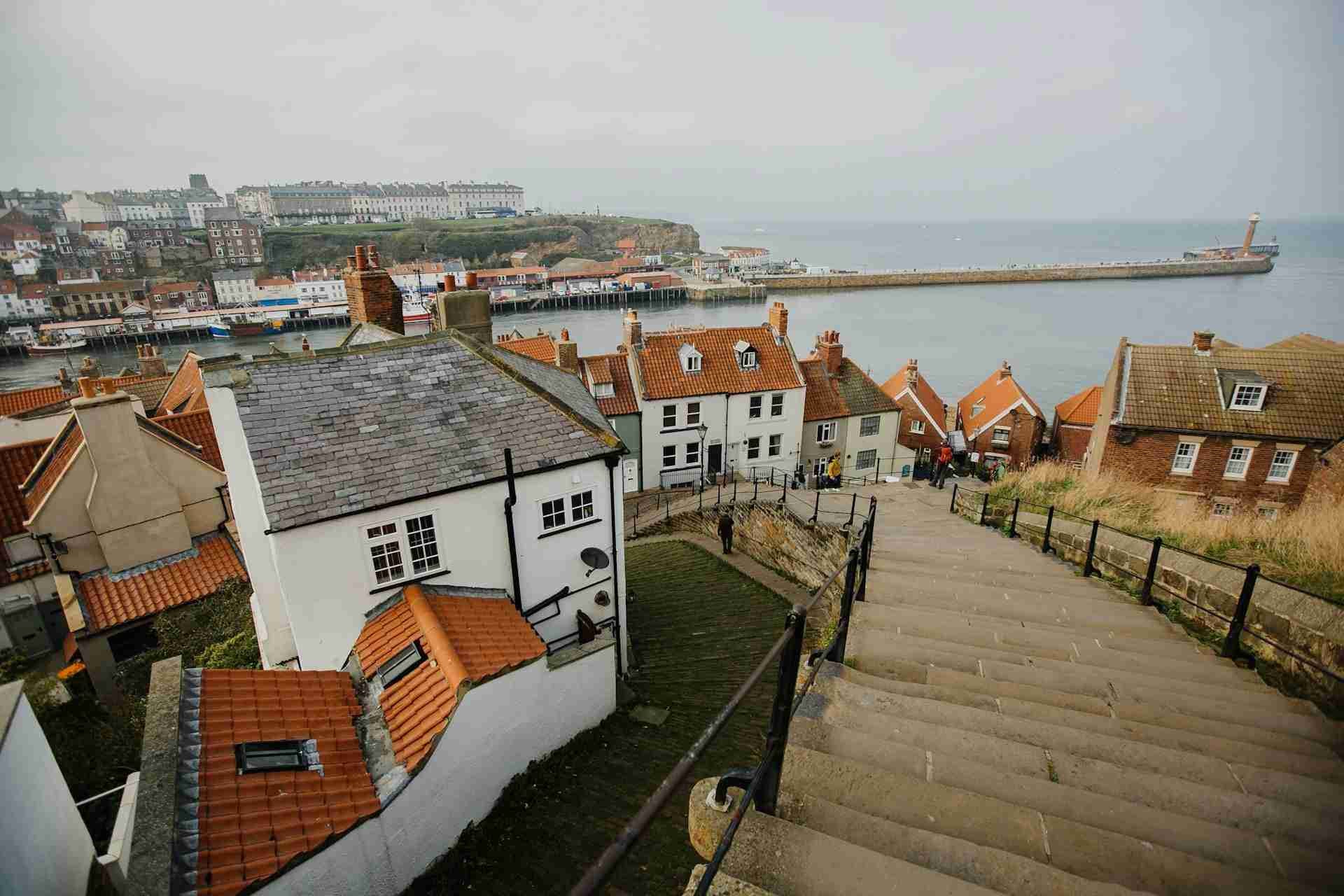
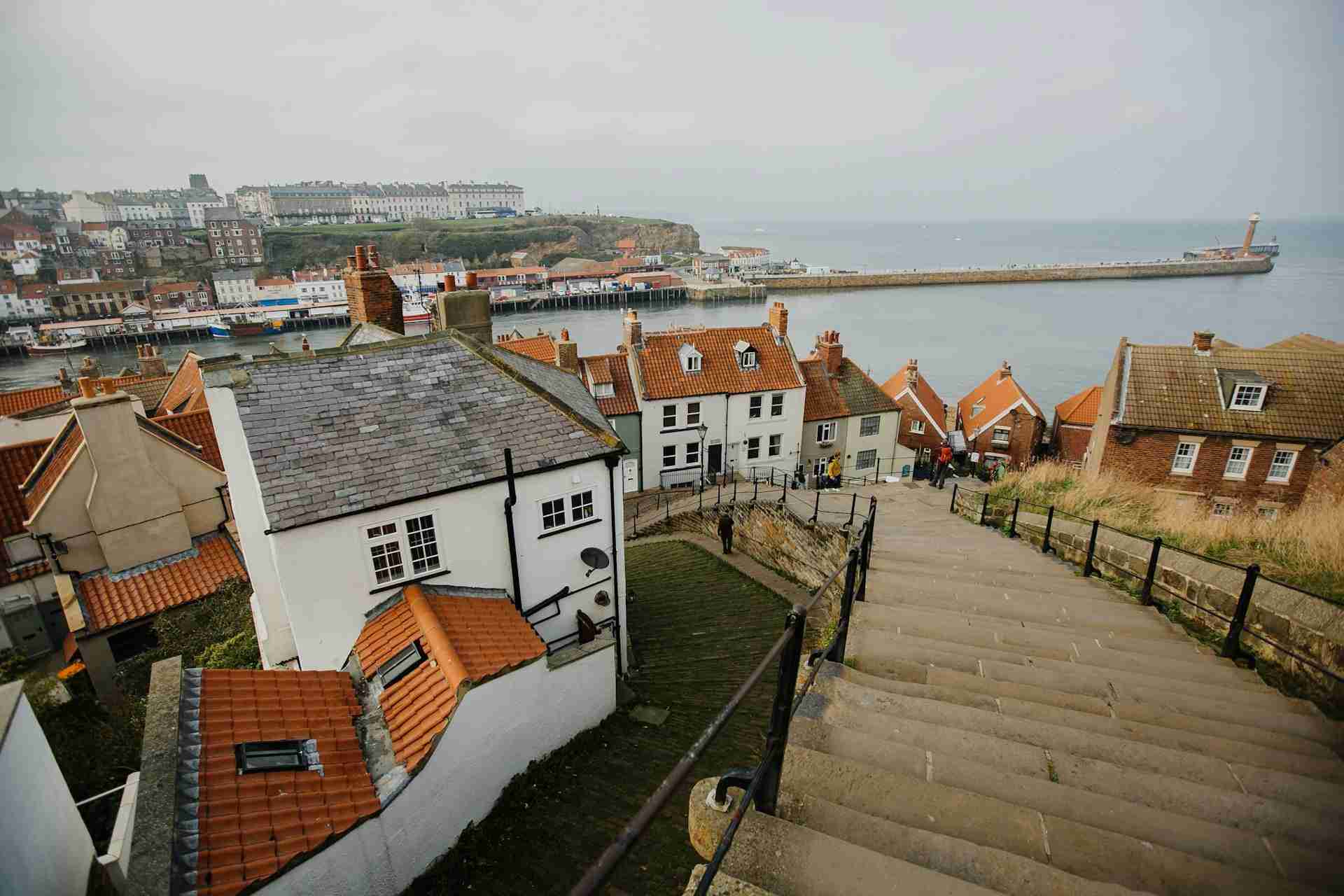
Carved into the steep incline of Whitby's East Cliff, the 199 Steps form one of the town's most photogenic and historically rich features. Rising from the narrow streets of the old town to the windswept plateau of Whitby Abbey, this iconic staircase offers photographers a visual journey through shifting perspectives, layered rooftops, and dramatic seascapes. With each step, new compositions unfold—cobbled lanes below, the spire of St Mary's Church, and the North Sea horizon above—all framed by the wrought-iron railings that snake their way up the hill. Whether lit by the golden hour, veiled in sea mist, or illuminated by gaslamp-style lighting after dark, the 199 Steps provide a dynamic and cinematic location steeped in maritime and Gothic atmosphere.
Best Photography Opportunities
• Looking Down the Steps Toward the Harbour
: One of the most compelling views begins at the upper landings, where the staircase flows downward in a graceful curve toward Whitby's red rooftops and the harbor. This vantage point offers excellent depth, with the vertical descent of steps, antique gaslamps, and old stone houses leading the eye toward the river and marina beyond. Shooting in the early morning rewards you with soft light catching on the rooftops and minimal crowds. At golden hour, warm sunlight bathes the upper facades and creates shadow-play across the steps. A wide-angle lens lets you include the path, townscape, and horizon in a single immersive frame, while a mid-zoom helps you compress and isolate chimney stacks and other architectural details.
• Twilight and Blue Hour with Gaslamp Illumination
: As dusk falls, the 199 Steps transform into a corridor of glowing lamps and deep shadows. During blue hour, the warm light from the iron gaslamps contrasts beautifully with the fading cobalt tones of the sky and sea. Photographers can use this natural contrast to create cinematic street scenes with strong atmosphere. A tripod is essential here for long exposures, allowing for starburst effects around the lamps and subtle motion in any clouds overhead. Including passing figures, either in silhouette or with slight motion blur, adds life and narrative to your shot. Wet cobblestones after rain enhance reflections and double the visual drama of the lighting.
• Low-Angle Shots from the Base Looking Up
: Shooting from the base of the staircase creates a dramatic, upward composition that highlights the full height and curvature of the 199 Steps. From this position, the stairs rise steeply and appear to ascend into the sky, flanked by lantern posts and handrails that create strong leading lines. This perspective emphasizes the structure's verticality and the effort required to climb it, which adds a symbolic layer to your imagery. Early morning fog or backlight streaming from the top can create an ethereal glow at the summit, while nighttime compositions taken from this angle showcase the warm glow of lamplight receding into the distance. Use a wide aperture or shallow depth of field to focus on rail textures or single steps for intimate detail shots.
• Portraiture and Environmental Storytelling on the Steps
: The historic texture and gentle curve of the 199 Steps make them an ideal location for environmental portraits and storytelling compositions. Including human figures in your frame adds narrative and scale—whether it's a lone traveler ascending into fog or a local walking a dog through puddles after rain. The stone landings between sections provide excellent spots for posed or candid portraits, while the surrounding architecture—aged brick, wrought iron, and old signage—creates an evocative backdrop. Shoot with a mid-range prime or zoom to maintain contextual sharpness while highlighting expressions, clothing, or movement. Autumn coats and winter scarves complement the moody, period feel of the setting.
• Foggy Mornings and Sea Mist Atmosphere
: Some of the most atmospheric images are created when a low marine layer drapes Whitby in sea mist. On such mornings, the 199 Steps disappear into haze, and the abbey and harbor dissolve into shapes and outlines. This creates a sense of mystery that enhances the historic and literary character of the town. Using a longer focal length, you can compress the scene and isolate lone figures or lampposts emerging from the fog. Focus on detail—wet stone steps, drifting mist over the rooftops, and seagulls circling above—to build rich mood-driven frames. Mist also softens highlights and reduces contrast, allowing for more delicate color grading in post-production.
Best Time to Visit
The 199 Steps are photographically rewarding throughout the year, but your experience will vary dramatically depending on season and time of day. Spring and autumn are widely regarded as the most visually balanced seasons, offering a mix of vibrant skies, soft light, and atmospheric variety. Early mornings during these months often bring low mist over the River Esk and soft, diffuse lighting across the rooftops. Golden hour arrives gradually and bathes the town in rich tones without harsh contrast, perfect for both wide and close compositions.
Summer brings longer daylight hours and extended golden hours in the evening, which align beautifully with the west-facing harbor and clifftop sky. The 199 Steps are busiest during this time, but late evening sessions after 9 p.m. still offer solitude. The clear weather and high sun allow for sharp architectural studies, and the sunset often casts golden light across the steps themselves, particularly when shooting downhill from above.
Winter offers quieter scenes, stark light, and minimal foot traffic. Short days mean you can capture sunrise and sunset without early wakeups or late evenings. After snow or frost, the steps glisten in pale light, creating striking black-and-white opportunities or high-contrast images with a Gothic feel. Mist is common in winter and creates layered visual depth between the abbey, town, and sea. Blue hour arrives quickly, and streetlamps ignite early—perfect for low-light photography sessions with minimal interruption.
Rainy days also deserve attention. The steps and surrounding stones darken and become more reflective, turning the entire path into a canvas of glimmering surfaces and subtle color. Clouds often break post-rain, letting shafts of light stream down the cliffs or across the rooftops—a fleeting but powerful reward for those who stay patient through unsettled weather.
How to Get There
The 199 Steps are located on the east side of Whitby, linking Church Street in the historic old town to the abbey plateau and St Mary's Church above. From the harbor, cross the swing bridge and head south along Church Street until you reach the narrow entryway that begins the climb. The staircase rises directly from the street and is well signposted.
There is no entrance fee, and the steps are accessible at all times. Photographers visiting early in the morning or late in the evening will find the area quieter and more conducive to uninterrupted shooting. For those arriving by car, parking is available either at the Abbey Headland car park above or in the harbor area below, with a moderate walk from either direction.
Wear footwear with good grip—especially in winter or after rain—as the stone can be slick. A scouting walk both up and down is worthwhile; the visual rewards change dramatically depending on elevation and light direction.
Recommended Photography Gear
A wide-angle lens (16–35mm) is ideal for capturing the sweeping curve of the staircase, the town below, and architectural context at either end. This focal range works particularly well when shooting from the upper landings or lower base.
A mid-range zoom (24–70mm) is the most flexible tool for varied compositions, from mid-stair portraits to compressed views of chimneys, harbor masts, or crowds during events. It's also perfect for capturing passing light across textured stone or narrowing in on architectural accents.
A telephoto lens (70–200mm) helps isolate lampposts in fog, compress layers of the town, and frame rooftop details without distortion. Use it in moody weather to flatten perspective and heighten atmosphere.
A tripod is essential for long exposure work during twilight or at night, particularly if you're working with gaslamp light or motion blur. A polarizer can help reduce glare off wet stones or emphasize sky structure. Don't forget weather protection for both you and your gear—Whitby's coastal weather is rarely predictable.
Nearby Photography Locations
: Just beyond the top of the 199 Steps, this Gothic ruin is one of Yorkshire's most dramatic silhouettes. Best captured at sunrise or under moody skies, the abbey offers strong compositions from both outside and within the grounds.
: A winding, medieval street filled with shopfronts, pub signs, and cobblestones. Great for low-light storytelling photography and candid street scenes, especially in the evening when lights spill from doorways and windows.
: A rich source of maritime imagery, with boat reflections, tidal textures, and long leading lines from the piers. Excellent for sunrise, sunset, and night photography, particularly near the swing bridge.
: Across the river, the West Cliff viewpoint offers expansive seascapes and a natural frame of the abbey through the iconic Whalebone Arch. Ideal for golden hour and stormy skies.
: A rugged stretch of coast just southeast of Whitby, perfect for low tide explorations, sea stack silhouettes, and long exposure compositions. Best visited early in the day when the light strikes the cliffs at an angle.
Photographing the 199 Steps is less about arriving at a single image and more about following the light up and down its winding course. With every climb, descent, and shifting condition, new angles reveal themselves—quiet corners, fleeting silhouettes, and the interplay of history and weather that defines Whitby's enduring visual character.
Comments
Loading comments…