
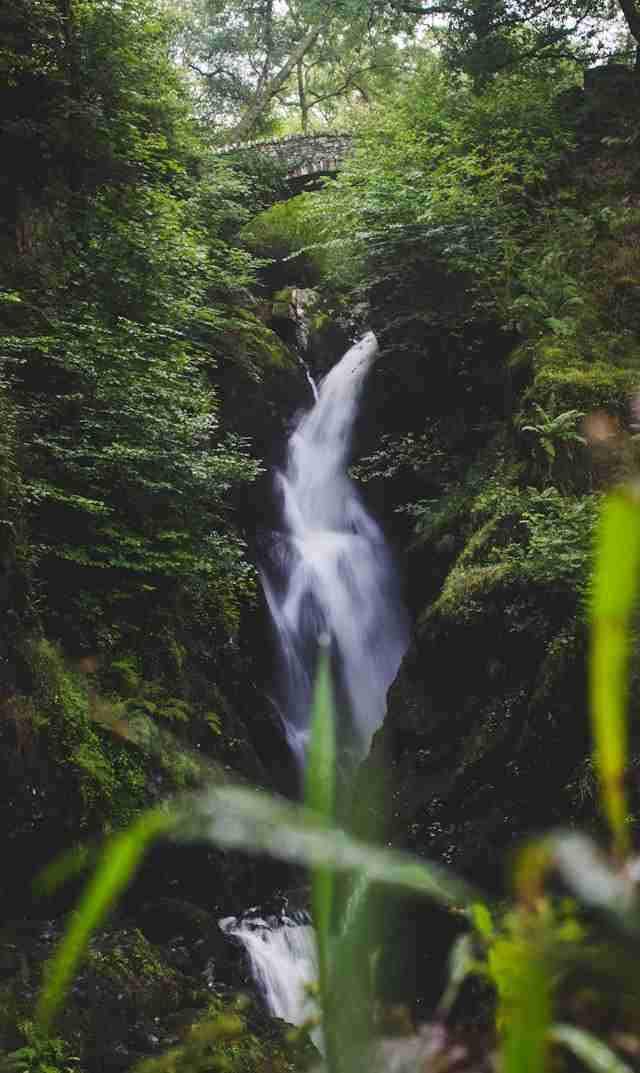
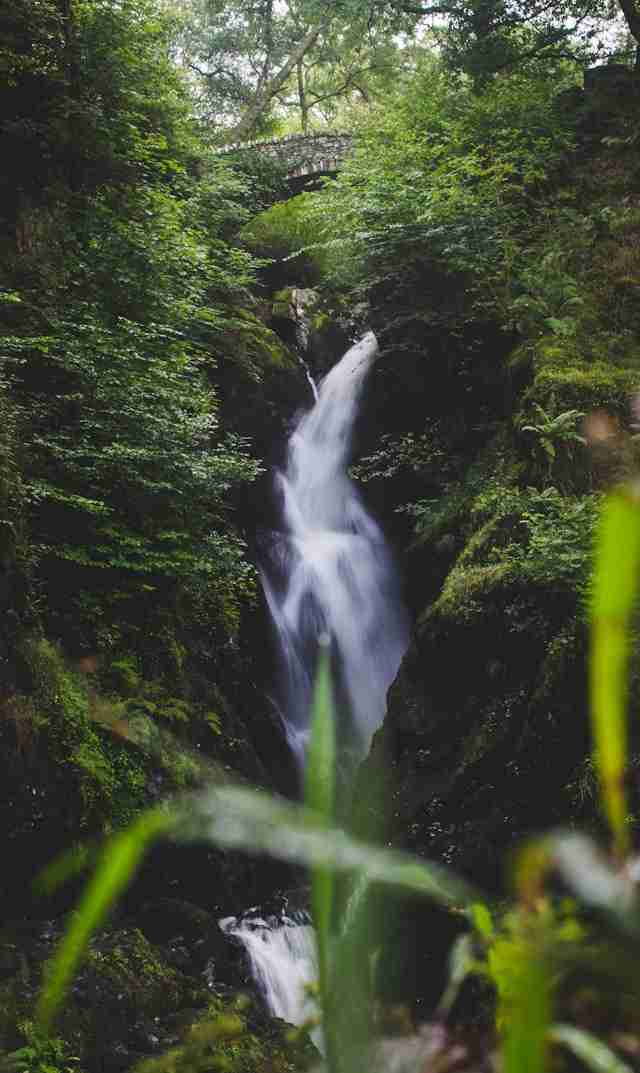
Hidden within a steep-sided ravine cloaked in ancient woodland, Aira Force is one of the Lake District's most atmospheric waterfalls. Fed by Aira Beck as it tumbles from Gowbarrow Fell, the falls plunge over a 20-meter drop into a rocky pool framed by moss-laden trees, arched stone bridges, and fern-covered banks. Located just off the shores of Ullswater, Aira Force is more than a single waterfall—it's a layered woodland experience that changes dramatically with light, season, and water flow. For photographers, this location offers moody forest compositions, dynamic water motion studies, and rich detail in texture and tone. Aira Force rewards patient, deliberate work and is especially compelling in conditions most locations shy away from—fog, rain, and soft overcast light.
Best Photography Opportunities
• Main Waterfall from the Lower Viewing Platform
The most popular and photographically rewarding angle is from the lower viewing point near the plunge pool. From here, Aira Force cascades directly into the frame, framed tightly by a semi-circular curtain of mossy rock and foliage. A wide-angle lens (16–35mm) allows for immersive vertical compositions that include the falls, foreground boulders, and tree canopy above. Long exposures of 1 to 4 seconds soften the flow into a white ribbon, while faster shutter speeds (1/60s and above) capture texture and detail in high water. The light here is consistently soft due to the canopy—ideal for retaining detail in both water and surrounding greens without harsh shadows.
• The Upper Bridge View
Aira Force is crowned by a small arched stone footbridge, which provides a unique overhead perspective of the water as it plunges through the gorge. Shooting from the bridge with a wide or standard lens allows you to place the stream centrally while incorporating moss-covered rocks and upstream woodland in the frame. Compositions here are strongest in early morning or twilight, when few people are crossing and low ambient light allows for natural exposure lengthening. In autumn, fallen leaves swirl in the water below, creating circular motion trails when captured with exposures of 2–6 seconds.
• Side Trail to Upstream Rapids
Just upstream of the main falls, Aira Beck flows over a series of smaller cascades and rapids. These are ideal for mid-frame compositions using telephoto or standard focal lengths (50–85mm). Unlike the main plunge, this section is more intimate and responsive to compositional changes—rocks, ferns, and water interplay with shifting light and shadow. The side trail that parallels this section provides multiple shooting spots. Fog or light rain elevates the mood and enhances tonal separation, especially in monochrome conversions. Reflective pools between cascades can also be used creatively to frame leaf litter or the canopy above.
• Mossy Bridges and Woodland Paths
Beyond the falls themselves, the surrounding forest is a subject in its own right. The stone bridges, worn footpaths, and gnarled trees offer excellent leading lines for wide-angle storytelling images. In winter, frost transforms the forest floor into a textural patchwork; in spring, wild garlic and fresh ferns bring vibrant life. Golden hour light rarely penetrates deeply into the gorge, but dappled sunlight filtering through breaks in the canopy can create pockets of brilliance, especially on leaf edges or moss-covered stones. These are ideal for detail studies or shallow depth-of-field compositions with cinematic mood.
• Autumn Color and Leaf Motion Studies
Aira Force is one of the finest places in the Lakes to capture autumn foliage in close harmony with moving water. From late October through early November, the canopy turns vibrant gold, rust, and crimson. Fallen leaves collect in pools and eddies, where they can be captured swirling through the frame using multi-second exposures. Composing these shots requires timing, as the motion is irregular and often brief—watching the patterns before setting your exposure pays off. Use a polarizer to control glare and intensify wet leaf color without oversaturating.
Best Time to Visit
Aira Force is compelling year-round, but the best time for photography hinges on water flow, foliage, and light. Spring (April to early June) brings high water volumes from snowmelt and seasonal rain, as well as fresh growth along the beck. The forest is rich in deep greens, and wild garlic lines the paths with both visual and aromatic impact. Misty mornings are common in the spring and create ideal conditions for subdued, detailed shots.
Summer offers access to all parts of the site, and water levels may drop slightly, making upstream cascades more accessible. Early morning or late evening visits are best to avoid crowds, and dense leaf cover provides consistent diffused light throughout the day. This season is optimal for handheld work and faster shooting, especially in dynamic, dappled light.
Autumn (late September through November) is arguably the best photographic season at Aira Force. The woodland erupts in color, and leaf litter enriches the scene with visual complexity. Water flow remains strong from seasonal rains, and overcast skies provide soft, even lighting that enhances saturation. Visiting just after rainfall ensures rich color and fast-moving water for motion blur studies.
Winter is the quietest season and can yield breathtaking results for those willing to face the cold. Frost clings to the stonework, and occasional snow turns the gorge into a high-contrast environment perfect for black-and-white work. The absence of foliage opens up more of the rock face and structural lines, and low sun angles all day offer usable light conditions from mid-morning to early afternoon. Be aware of ice on the footpaths and slippery rocks, particularly near the viewing platforms.
How to Get There
Aira Force lies just off the A592 on the western shore of Ullswater, roughly 15 minutes south of Penrith. The main car park is clearly signposted and operated by the National Trust, with ample space even during busy seasons. From the car park, a network of well-maintained gravel paths leads uphill toward the waterfall, crossing the beck multiple times. The main loop takes 30–45 minutes, but photographers will want to allow at least 2–3 hours for full exploration of the main fall, side cascades, and forest compositions.
The lower and upper viewing areas are accessible with moderate fitness, though the stone steps and damp conditions require caution. Early morning visits (before 9 a.m.) provide the quietest experience and most control over compositions without interruptions. The site is open year-round, and entry to the falls and surrounding woodland is free. Public toilets and a seasonal tearoom are available near the parking area. While mobile reception is limited in the gorge, GPS typically functions at the trailhead.
Recommended Photography Gear
Aira Force is a location best approached with a compact, versatile kit built for low light, long exposures, and wet conditions. A weather-sealed camera body with good high ISO performance is essential, especially under heavy canopy or in misty weather. A wide-angle zoom (16–35mm or equivalent) is critical for capturing the entire height of the falls from the plunge pool and incorporating surrounding stonework and forest in the frame. A mid-range prime (35mm or 50mm) excels for handheld shots along the path, as well as for detail studies of foliage and rock texture.
A sturdy tripod is essential for long exposure work—choose one with rubber feet for grip on stone and spiked feet for forest floor stability. A 3-stop or 6-stop neutral density filter will help control shutter speeds in brighter conditions, and a circular polarizer is highly recommended for reducing water glare and enhancing the saturation of moss and foliage. A lens cloth or chamois is critical; mist and spray from the falls can quickly coat front elements, especially when working close to the water.
Pack a compact backpack with rain protection, microfiber cloths, and sealable bags for filter storage. Extra batteries are also important, as longer exposure work drains power quickly in cold or damp weather. For photographers shooting motion studies or timelapse, a wired or wireless remote release is helpful, especially when working with exposures of 2 seconds or more. Don't forget waterproof boots—sections of the riverbank and trail often flood after heavy rainfall, and getting the best angle sometimes requires stepping off the gravel path.
Nearby Photography Locations
Rising directly above Aira Force, Gowbarrow Fell provides wide views over Ullswater and the surrounding fells. It's accessible via a continuation of the same trail network and offers contrasting compositions to the close-up detail of the falls—expansive sky, lake reflections, and dramatic ridgelines under shifting weather. In particular, late afternoon light creates stunning backlit bracken and tree silhouettes.
• Dockray Village and Watermillock Common
Just west of Aira Force, the uplands near Dockray offer moorland photography with stone walls, wind-blown trees, and an open-sky aesthetic. The area is often blanketed in morning mist that lifts to reveal isolated barns and dry stone lines—ideal for minimalist compositions and moody atmospheres.
A short drive south along the A592, Glenridding Dodd provides panoramic views across Ullswater and toward the Helvellyn range. The elevation is modest, but the perspectives are layered and dynamic. It's an excellent complement to the forested intimacy of Aira Force, offering broad light and elevation without a long ascent.
• Pooley Bridge and the Ullswater Shoreline
At the northern end of the lake, Pooley Bridge provides access to calm lakefront scenes perfect for early morning reflection shots. The area offers open views across Ullswater's narrower stretch, with classic Lakeland cottages and hills mirrored in still water. Excellent in foggy or pastel dawn conditions.
Photographing Aira Force is as much about listening and sensing as it is about exposure and framing. The sound of water, the hush of forest, and the constant drift of mist through the trees create a multisensory setting that encourages slower, more mindful photography. It's a location where the small details matter as much as the grand cascade—and where patient observation often leads to the most compelling frames.
Comments
Loading comments…