
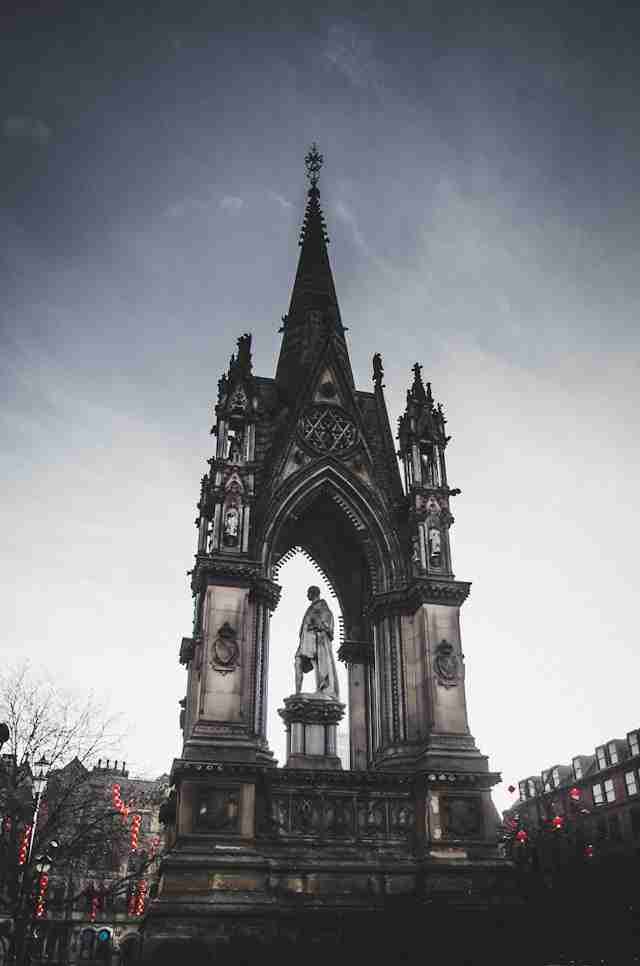
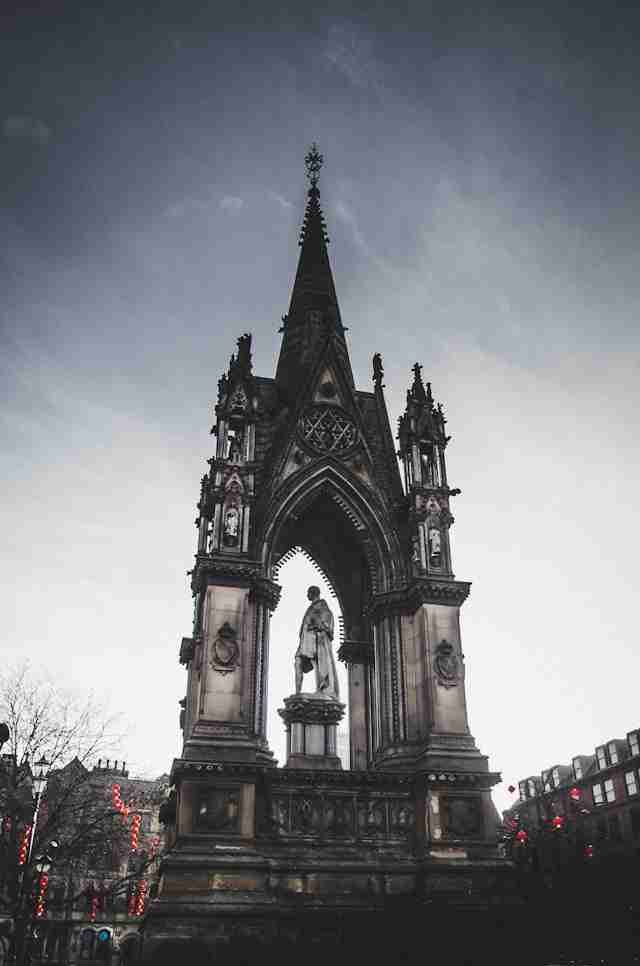
Right in the center of Manchester's Albert Square stands the Albert Memorial, a tall, Gothic-style monument dedicated to Prince Albert. Designed by George Gilbert Scott and completed in 1867, it features detailed stonework, pointed arches, and a statue of Albert seated beneath an elaborate canopy. Surrounded by the impressive Manchester Town Hall and a mix of older and modern buildings, the memorial feels like a quiet anchor in the middle of the busy city. For photographers, it offers strong lines, sculptural texture, and plenty of opportunities to play with light and urban context. Whether you're shooting wide city scenes or close-up architectural details, the Albert Memorial gives you a rich subject in the heart of Manchester's civic space.
Best Photography Opportunities
• Straight-On Shot with Town Hall Backdrop
: One of the most effective and balanced views comes from standing directly in front of the memorial, facing toward the Town Hall. This angle shows the full structure from base to spire, with Prince Albert clearly visible inside the canopy. The background adds depth and historical context, especially in the early morning when soft light highlights the stonework. A wide or standard lens works well here, depending on how much of the surrounding square you want to include. Early hours are best for avoiding foot traffic and capturing calm, clean compositions.
• Detail Shots from the Southeast Corner
: From this side of the square, warm light in the late afternoon or golden hour hits the memorial at an angle, making shadows and carvings stand out. This view also lets you photograph the spire against the open sky, which helps separate it from nearby buildings. A short telephoto or prime lens around 85mm is ideal for picking up detail without crowding the frame. If you're after texture or close-ups of figures and inscriptions, this side offers some of the best lighting.
• Wider Environmental Views
: Step back and take in more of Albert Square to show how the memorial fits into the city. Framing it with trams, passing people, or nearby architecture adds a modern layer to the scene. This is especially effective in late afternoon when long shadows start to stretch across the square. Using a 35mm or 24–70mm zoom lens helps you switch between wider shots and more focused compositions without missing a moment. These types of images tell more of the story of Manchester as it is today.
• Moody Weather and Overcast Skies
: The memorial photographs surprisingly well in flat or cloudy light. Overcast days reduce harsh shadows and bring out subtle texture in the stone. This is also a good time for black-and-white photography, especially if you're drawn to detail and contrast. Reflections on wet pavement after rain can add interest, and the generally quiet mood suits the memorial's tone. Bring a tripod if you plan to work with slower shutter speeds in dim light.
• Night Photography with Light Trails
: Once the sun sets, the memorial takes on a different feel. Streetlights cast warm glows on the stone, and long exposures can capture traffic trails or moving people around the base. From the east side of the square, you can frame both the memorial and the Town Hall lit up after dark. A tripod is essential here, along with a remote shutter release or timer. Shoot at lower ISO settings to keep detail and use a narrow aperture to maintain sharpness across the frame.
Best Time to Visit
The Albert Memorial can be photographed at any time of year, but the conditions around it change with the seasons. Spring and summer bring longer daylight hours and softer morning light, which works well for highlighting detail and keeping contrast low. Early mornings also offer the best chance for uninterrupted shots without people walking through the square. In summer, trees and flower planters around the memorial add some natural color to wider shots.
Autumn adds a layer of interest with golden leaves and cooler, moodier skies. This is a strong season for texture, especially in low, directional light. Winter offers long blue hours and early sunsets, making it easier to photograph the memorial with the city's evening lights. There are also fewer people in the square at this time, especially in early morning or late evening.
If you plan to shoot at sunrise, aim to arrive 30 to 45 minutes before the sun breaks the horizon. The light during this time is soft and evenly spread. Sunset also works well, but shadows can be deep, especially in winter. Overcast days, common in Manchester, are great for even lighting and tonal balance. They make it easier to expose both the bright sky and dark stone without heavy editing.
How to Get There
The Albert Memorial is located in Albert Square, right in the center of Manchester next to the Town Hall. If you're arriving by train, it's about a 15-minute walk from Manchester Piccadilly station or just a few minutes from Manchester Oxford Road or Deansgate stations. The nearest tram stop is St Peter's Square, which is only two minutes away on foot. Several buses also stop near Princess Street and Deansgate.
If you're driving, there are several public car parks nearby, such as the King Street West or Manchester Central car parks. Parking is often busy and can be expensive, especially during weekdays, so public transport is usually a better option. Cyclists will find places to lock bikes near the square, but it's best not to leave camera gear unattended.
The square is open all day and night. There are no fees or permits required to photograph the memorial from any public space. You can use a tripod without issue, but try to stay off busy walkways, especially during lunchtime or rush hour. The area is well lit after dark and generally safe, though photographing with a friend is always a good idea at night. Be aware that the square is sometimes used for markets and events, which may affect access and views.
Recommended Photography Gear
This location is best approached with a kit that's flexible and lightweight, since you'll likely be walking and repositioning often. A full-frame or APS-C camera with good low-light performance is a solid choice for both daytime and night shooting. A 24–70mm zoom lens gives you a lot of flexibility for both wide views and mid-range detail, making it an excellent all-purpose option.
If you want to capture more dramatic perspectives or include the surrounding buildings, a wide-angle lens in the 16–35mm range is useful. For close-up details or shooting from across the square, a prime or zoom in the 85–200mm range will help isolate parts of the monument without needing to get too close. A small, sturdy tripod is important for blue hour or nighttime exposures. Try to bring one that folds down easily so you can move between spots quickly.
A circular polarizer is helpful during the day to reduce reflections on wet pavement or darken the sky slightly. A microfiber cloth is a must in case of drizzle or after rain. If you're planning to shoot in the evening, carry a headlamp or phone light to see your settings. Extra batteries are useful if you're out for long sessions, and a weather-resistant camera bag will protect your gear from the occasional Manchester shower.
Nearby Photography Locations
: Standing directly behind the memorial, this building is one of the best examples of Victorian Gothic architecture in the city. Photograph it from ground level, or from across the square to show how it pairs with the memorial. The stonework and clock tower look best in early or late light.
: A five-minute walk from Albert Square, this historic building offers a rich mix of architectural detail and moody interiors. Photography is allowed inside most public spaces, and the stained glass and vaulted ceilings are especially striking in soft afternoon light.
: Just around the corner, this large open space combines modern and historic buildings with tram lines running through the middle. It's a strong place to capture Manchester's urban rhythm, especially with a wide-angle lens at sunset or after dark.
: About ten minutes on foot, Castlefield offers peaceful waterside scenes with old bridges, stonework, and reflections in the canals. It's a good change of pace if you want to include water in your city photography.
: If you want a more urban, street-style subject, the Northern Quarter is a short walk away and packed with murals, alleys, and characterful shopfronts. It's best explored mid-morning or late afternoon when the light brings out color and shadow in the narrow streets.
Photographing the Albert Memorial is a chance to slow down and focus on detail, texture, and structure in the middle of a busy city. Whether you're shooting it on its own or as part of a wider look at Manchester's architecture and public spaces, it offers plenty of visual interest and strong compositions throughout the day.
Comments
Loading comments…