
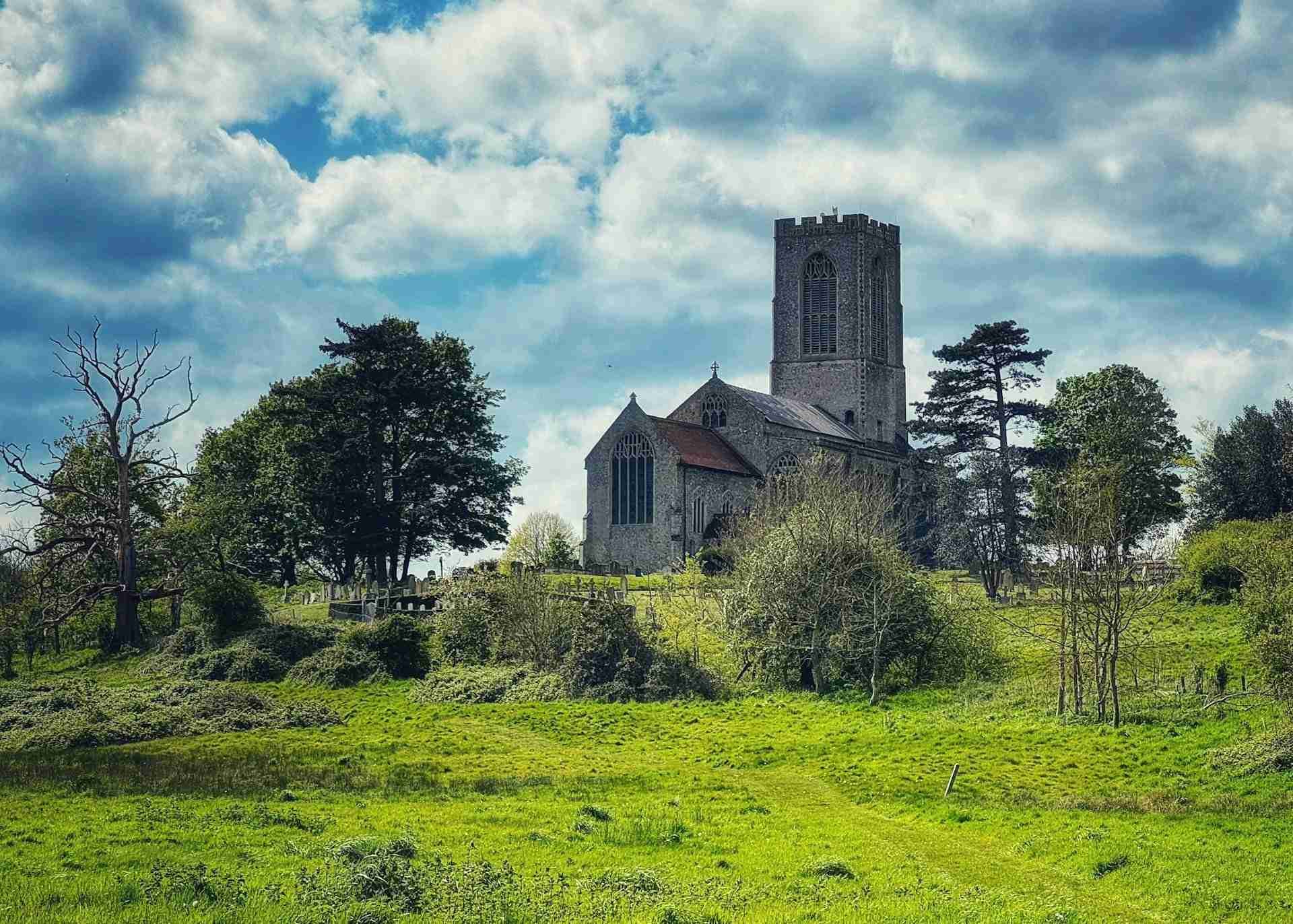
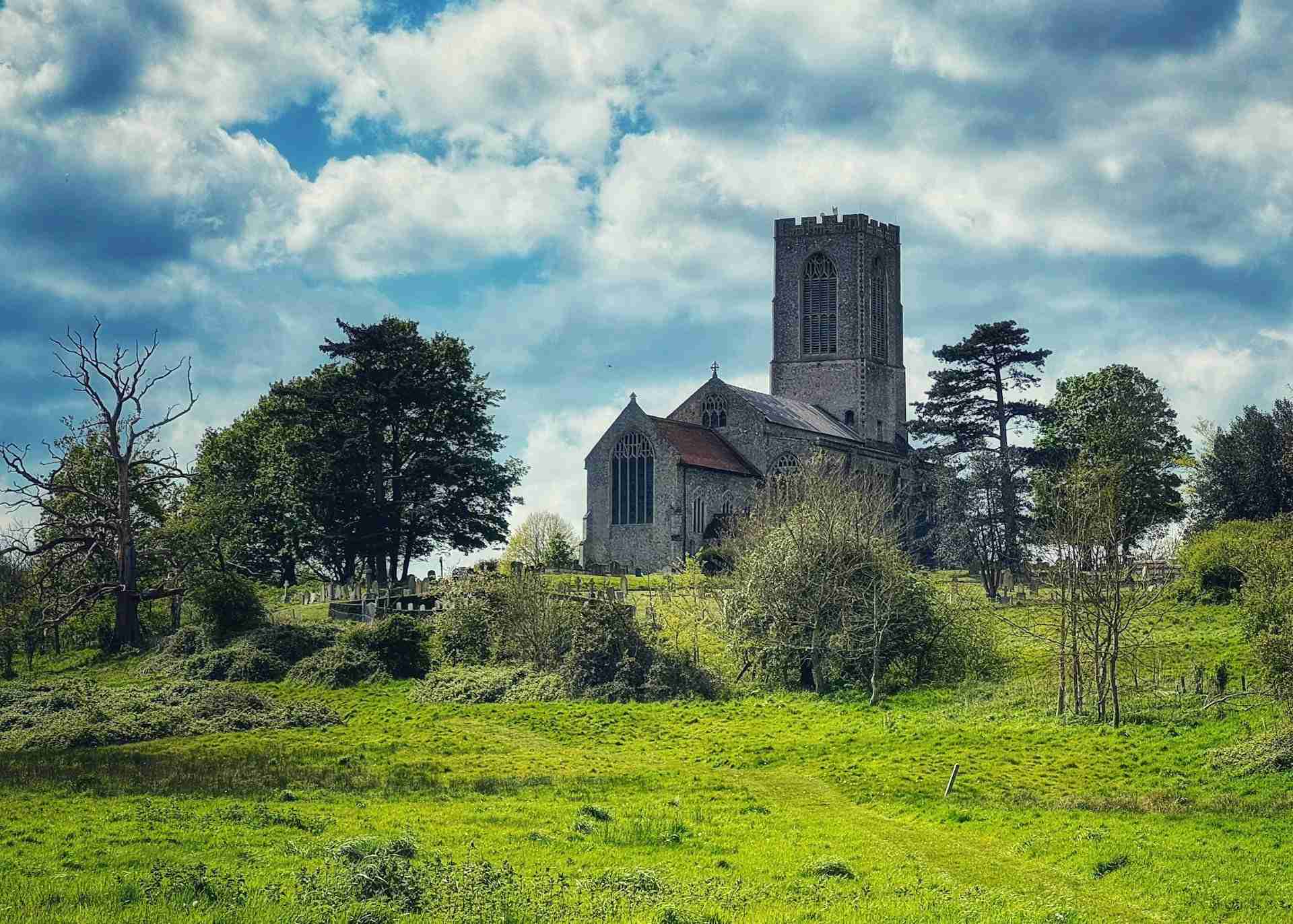
Set amid the gently undulating countryside of mid-Norfolk, All Saints' Church in Swanton Morley is a striking example of late medieval English church architecture. Built primarily in the 14th and 15th centuries, this Grade I-listed building is one of the finest Perpendicular Gothic churches in the county. With its tall west tower, flushwork flint walls, and expansive churchyard, it offers a wealth of photographic opportunities—whether you're drawn to moody rural ecclesiastical scenes, intricate masonry, or the serene atmosphere of a Norfolk village setting. As light drifts through arched windows and clouds roll over the flint-knapped exterior, the church presents itself as both timeless and deeply rooted in its landscape.
Best Photography Opportunities
• West Tower and South Aisle Composition
: The west tower is a dominant feature of All Saints', rising above the surrounding trees and offering a classic focal point for wide-angle compositions. Photographing the tower from the southwest corner of the churchyard allows you to capture the full height of the tower alongside the long, buttressed nave. In golden hour light, the flint and stonework take on warm tones, while angled shadows add definition to the architecture. A foreground of gravestones or long grass adds depth and texture.
• Flushwork and Carved Detail Close-Ups
: Norfolk churches are famous for their flint flushwork, and All Saints' is no exception. The intricate checkerboard and patterned stonework is best photographed in raking side light, which brings out its depth and craftsmanship. Mid-telephoto lenses help isolate these textures, while close-up studies of carved doorways, window tracery, and gargoyles lend themselves to abstract or architectural fine art photography.
• Interior Light and Medieval Proportions
: Inside, the church offers a high, airy nave with clerestory windows and arcades supported by slender columns. Morning light filtering through the stained glass windows casts delicate colors onto the stone floors and pews. A tripod is useful here for low-light shooting, allowing for long exposures that preserve shadow detail and ambient atmosphere. The chancel arch and altar can be beautifully framed through the central aisle for a timeless, reverent composition.
• Churchyard Atmosphere and Seasonal Variations
: The surrounding graveyard, with its lichen-covered stones and tall grass in summer or bare trees in winter, provides an evocative frame for the church. Early spring snowdrops and autumn leaves add seasonal storytelling to your imagery. Overcast skies suit the location especially well, enhancing the somber, timeless quality of the setting. Including leaning headstones or an overgrown path in the foreground evokes themes of passage, memory, and continuity.
• Twilight and Night Photography
: The relatively isolated setting of the church makes it suitable for blue hour or night photography with minimal light pollution. Shooting from the churchyard with a long exposure, especially if the interior lights are on during an event, creates an ethereal glow through the windows. In clear weather, the tower can be framed beneath stars or moving clouds to emphasize solitude and scale.
Best Time to Visit
All Saints' Church is photogenic year-round, but spring and autumn offer the most dynamic environmental conditions. In spring, fresh grass and early blooms soften the lines of the churchyard and bring warmth to the scene. Autumn's golden foliage and misty mornings provide atmospheric light and complementary tones for the flint and limestone exterior. Winter adds drama with bare trees and low, slanting light that enhances shadows on the tower and stonework.
Golden hour—especially in the early morning when the village is quiet—is ideal for exterior shots, casting warm light across the southern façade and churchyard. Overcast days are best for flushwork and interior detail, reducing contrast and letting the textures and tones of the building speak for themselves. For interior work, mid-morning to midday offers the best natural light through the clerestory windows, illuminating the nave and chancel without requiring artificial lighting.
How to Get There
All Saints' Church is located in the village of Swanton Morley, just northeast of Dereham in Norfolk. From Norwich, it's a 40-minute drive via the A47, turning north at Dereham toward the B1147. Once in Swanton Morley, the church is signposted and easily reached from the village center, set on elevated ground near the village green.
Limited parking is available near the church gate, with additional roadside options within the village. The site is open daily to visitors, though access to the interior may vary depending on services or events—checking in advance with the parish is recommended if interior photography is a priority. The churchyard is always accessible, and as with all heritage sites, respectful, non-intrusive photography is encouraged.
Exploring the Surrounding Area
The area around All Saints' retains much of its rural charm, with quiet lanes, hedgerows, and gently rolling farmland. Just beyond the churchyard, footpaths lead out into fields and wooded areas that offer opportunities for pastoral landscape shots—ideal for placing the church in its broader environmental context. Walking the perimeter of the village allows for different sightlines of the church tower rising above rooftops or between trees.
Swanton Morley itself includes several listed buildings and traditional cottages that make for engaging documentary-style village photography. The nearby River Wensum valley, with its mills and river paths, provides a scenic change in pace and visual tone for photographers looking to expand their session into a full day of rural exploration.
Nearby Photography Locations
: Just a short drive south, this restored 19th-century tower mill sits on open ground with dramatic sky backdrops—excellent for minimalist compositions and sunset silhouette work.
: These ruins of an early Norman chapel and earlier Saxon cathedral provide a rich historical setting for moody compositions, especially when shot in low light or fog.
: A mix of heritage buildings, farm scenes, and Victorian institutional architecture, this museum complex allows for varied storytelling and portraiture with a historical lens.
• Bawdeswell Heath and Foxley Wood
: Expansive heathland and ancient woodland with seasonal interest—bluebells in spring, dense ferns in summer, and golden canopies in autumn. Ideal for landscape work or soft-focus nature photography.
• Hoe Common and Wensum Valley Trail
: Quiet, lesser-known areas with walking trails, streams, and occasional wildlife. These provide peaceful backdrops for nature-focused or contemplative environmental shots.
All Saints' Church in Swanton Morley is a place where architectural grace meets rural stillness, offering a wealth of visual material for both the contemplative and the curious photographer. Whether you're capturing late light across a medieval tower, exploring the textures of centuries-old flintwork, or framing the church within its sleepy Norfolk setting, this location delivers a timeless narrative of place, faith, and enduring craftsmanship.
Comments
Loading comments…