
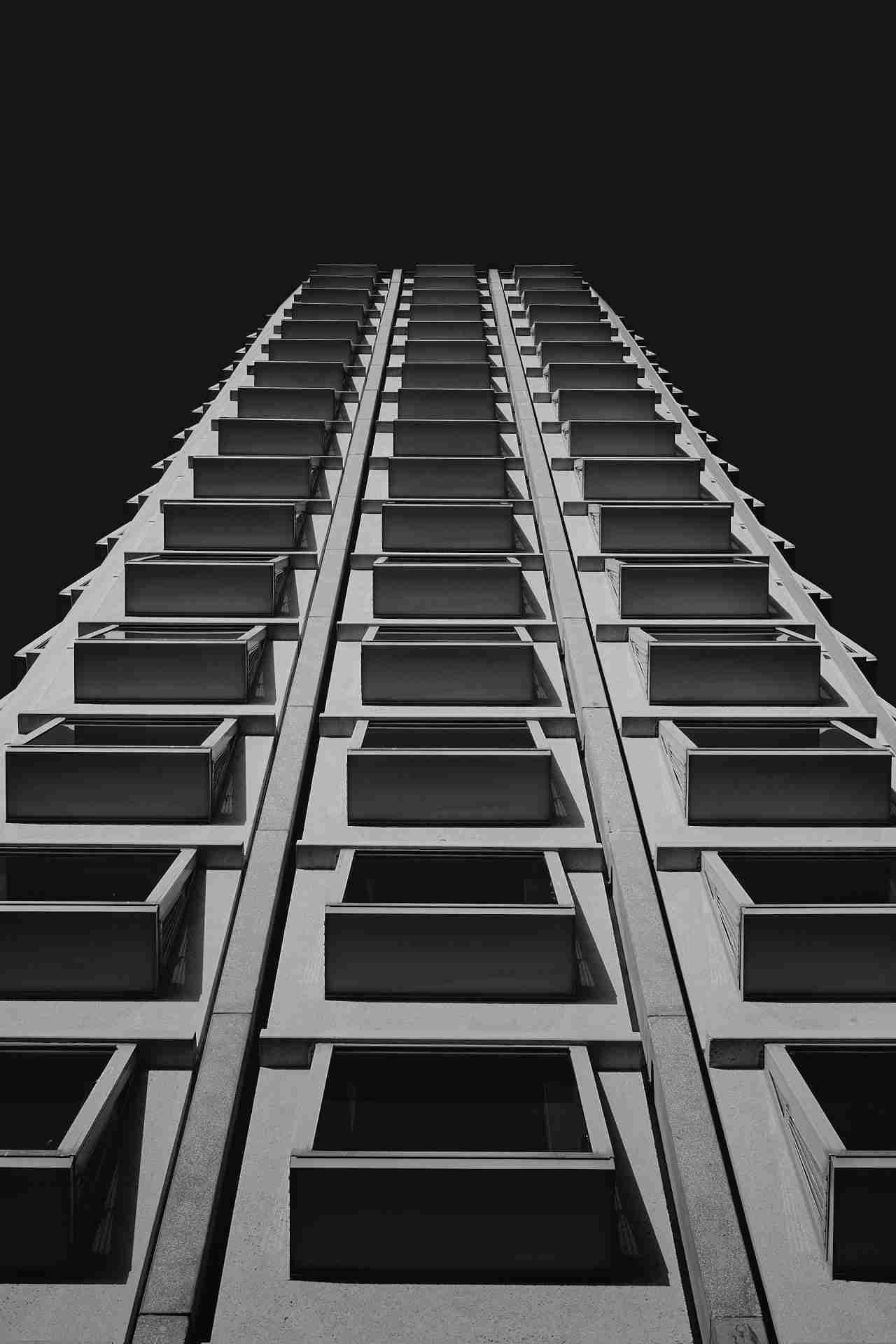
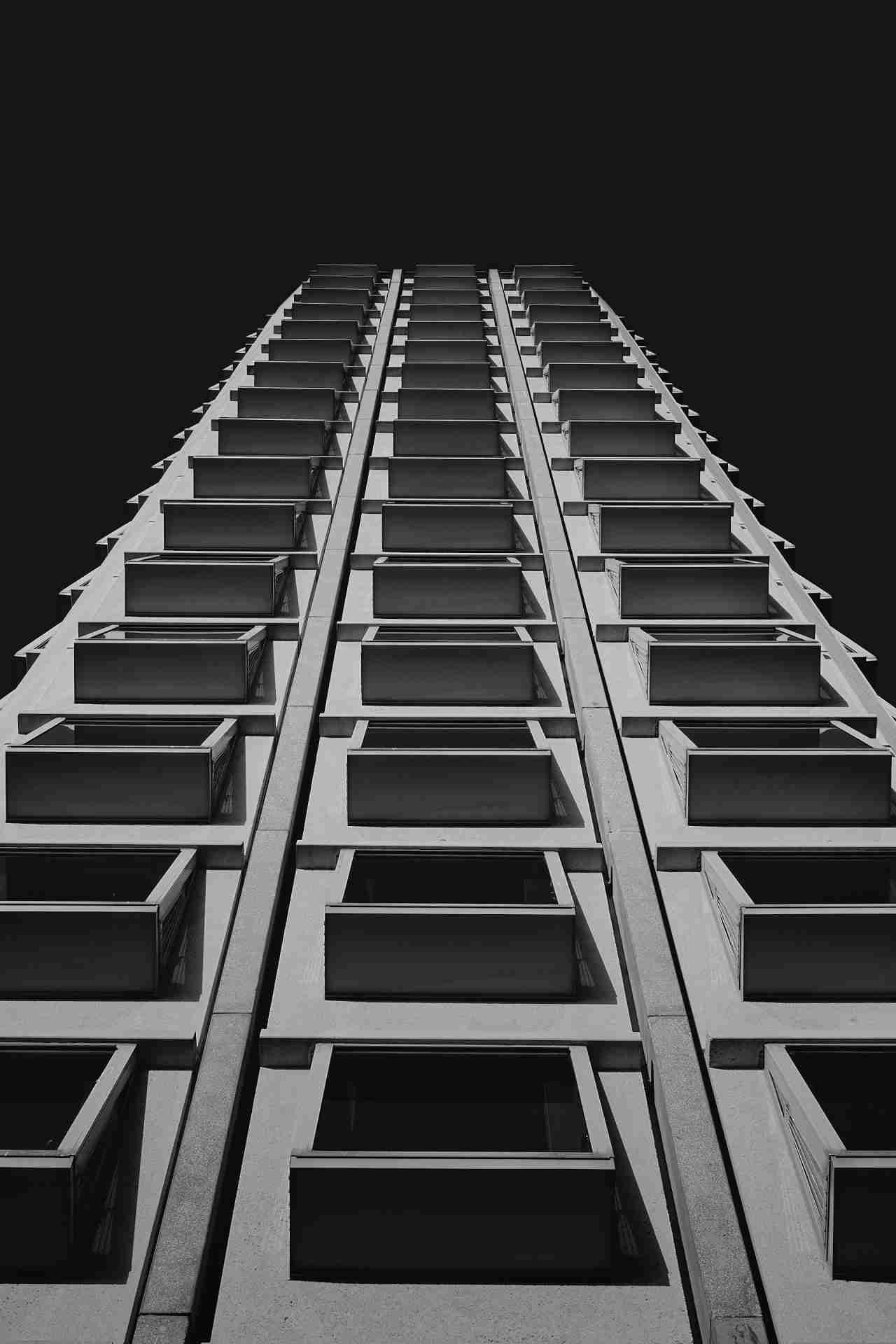
The Attenborough Building stands on the campus of the University of Leicester as a clear example of post war brutalist design. Designed by Denys Lasdun, the building is defined by exposed concrete, strong horizontal and vertical lines, and deep recesses that create shadow throughout the day. Its layout steps and angles outward rather than forming a simple block, which gives photographers multiple ways to approach it. From certain angles it feels compact and layered, while from others it stretches outward with a strong sense of structure. For photography, the appeal lies in shape, repetition, and how light interacts with textured concrete. This is a location that rewards careful framing and attention to timing rather than quick snapshots.
Best Photography Opportunities
• Angular Corners and Overlapping Planes
One of the strongest ways to photograph the Attenborough Building is by focusing on its projecting corners and stepped forms. From offset angles, the concrete planes overlap in a way that creates depth without needing a wide scene. Light hitting the edges brings out texture and emphasizes the weight of the material. Moving slightly left or right can dramatically change how those lines intersect. These compositions work well when you simplify the background and let the structure fill most of the frame.
• Elevated Sections and Underpasses
The building includes raised portions and open space beneath parts of the structure, which create interesting shadowed areas. Shooting into or through these spaces allows you to frame light against dark in a controlled way. Midday sun can produce sharp contrast here, while overcast conditions create softer tonal transitions. Careful exposure helps retain detail in the concrete texture. This approach works especially well for abstract architectural images.
• Repetition in Windows and Concrete Panels
The repeating window bands and panel divisions provide strong graphic potential. From a moderate distance, these elements form a clear grid that can be composed cleanly. Longer focal lengths help isolate these patterns and remove surrounding campus distractions. Paying attention to vertical alignment is important to maintain the building's structural feel. These compositions are strongest when the light grazes the surface and defines subtle relief.
• Low Angles Emphasizing Scale
Photographing from a lower position gives the building more presence and exaggerates its geometric structure. This approach works particularly well with a moderate wide lens, provided perspective distortion is managed carefully. Including a small section of sky can help separate the concrete forms from the background. Timing is important, as heavy cloud cover can flatten the image while directional light adds needed depth. These images highlight the building's mass and form.
• Detail Studies of Concrete Texture
Closer views of joints, seams, and surface imperfections reveal the character of the material. These tighter compositions move away from documenting the building as a whole and instead focus on pattern and texture. Overcast light is especially useful here, preventing harsh shadow from obscuring detail. This type of work pairs well with wider architectural views and adds variety to a series. It encourages a slower, more deliberate approach to the structure.
Best Time to Visit
Early morning and late afternoon offer the most dynamic light for photographing the Attenborough Building. Lower sun angles create shadow across recesses and emphasize the depth of the concrete forms. Morning can be quieter on campus, making it easier to work uninterrupted. Midday produces stronger contrast, which can be useful for bold shadow driven compositions but may require careful exposure. Overcast days are excellent for detail studies and graphic work, as they reduce glare and even out tonal range. Seasonal differences affect surrounding foliage, which can either frame the building or distract from its clean lines. Planning around light direction is more important here than planning around color.
How to Get There
The Attenborough Building is located on the University of Leicester campus, a short distance from Leicester city centre. It is accessible on foot from nearby bus stops and city streets. Open green spaces around the structure provide multiple vantage points without restricted access. There is no fee to view or photograph the exterior from public campus areas. Parking options are available in designated university or city locations, though availability may vary. Visiting outside peak campus hours allows for more freedom when composing architectural shots.
Recommended Photography Gear
A standard zoom lens covers most compositional needs, from wider architectural studies to tighter detail work. A short telephoto lens is useful for isolating patterns in windows and concrete panels. A tripod can be helpful in lower light or when working precisely with symmetry and vertical alignment. A polarizer may reduce glare on windows but has limited impact on concrete surfaces. Keeping the camera level is important to maintain accurate perspective, and minor corrections can be made later if needed. Since the building is easily accessible, a compact setup allows for flexibility in moving between angles.
Nearby Photography Locations
This large open park near the campus offers expansive green space and seasonal color. It provides a softer contrast to the strong geometry of the Attenborough Building.
The cathedral introduces historic stone architecture and vertical forms. It works well as a counterpoint to brutalist concrete.
With its modern glass frontage and curved design, Curve offers a very different architectural subject within the city centre.
This park combines landscaped grounds with remnants of historical structures. It adds variety to a Leicester focused shoot.
The museum building provides additional architectural interest and detail work opportunities in the city centre.
Comments
Loading comments…