
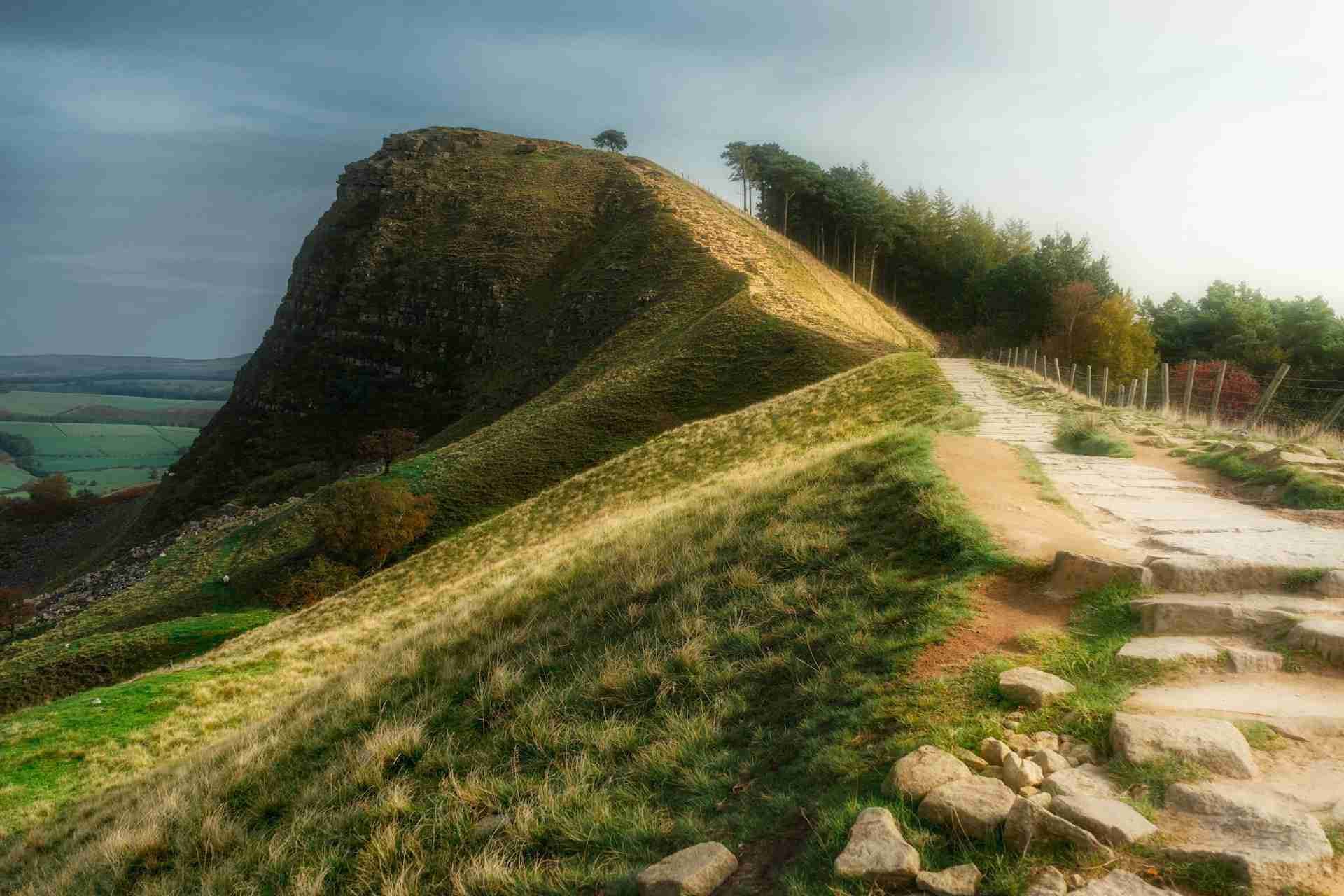
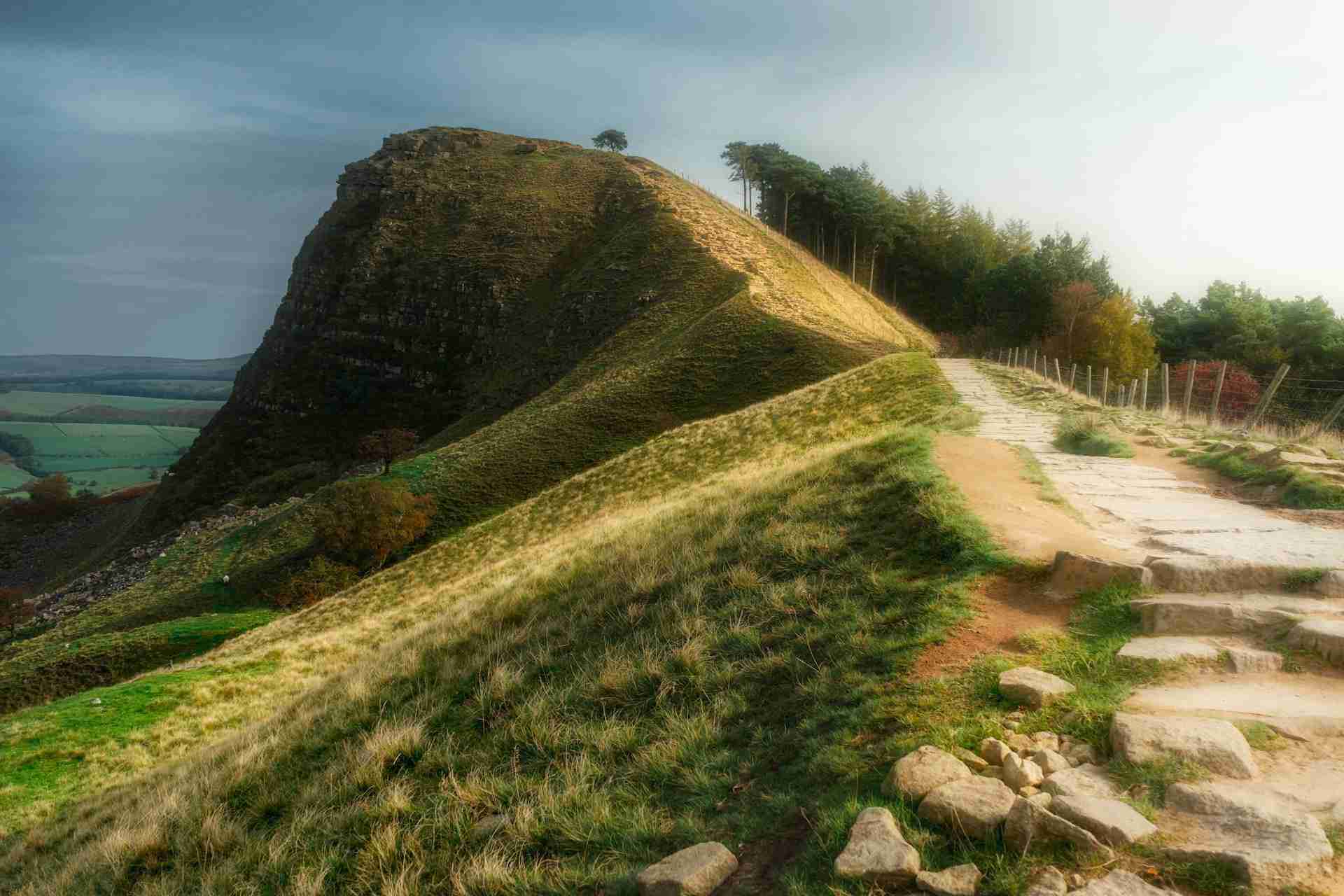
Back Tor stands proudly at the northern end of Derwent Edge above Hope Valley in the Peak District National Park. This dramatic gritstone tor rises from undulating hillside terrain that stretches toward Mam Tor and Kinder Scout. Its weathered surface and solitary character create a sense of timelessness and elemental drama. Photographers are drawn here to capture its striking textures, panoramic views, moody skies, rushing ridges, and starlit nights. Because fewer visitors make the climb compared to more popular peaks, photographic exploration remains intimate. Every frame—from close‑ups of rock lichen to broad valley scenes—echoes the raw beauty of this upland landscape.
Best Photography Opportunities
• Summit of Back Tor
: The summit is a weathered stack of gritstone that rises like a sculpture from the surrounding ridge. These stones are split, tilted, and stacked in a way that seems intentional, and they offer a wealth of compositional possibilities. Up close, you can focus on the texture of lichen-covered rock, contrasting beautifully with the sky behind it. From a distance, the summit becomes a jagged silhouette against the moorland horizon. When the sun is low, shadows pour through the crevices in the rocks, revealing depth and form. On overcast days, the structure lends itself well to monochrome photography, emphasizing the tonal subtleties of stone against sky. Whether you're shooting for grand landscapes or tight abstract details, the summit holds visual interest in every condition.
• The Ridge Walk to Lose Hill
: The ridge that connects Back Tor with Lose Hill is one of the most visually compelling walks in the Dark Peak. It undulates along the top of the valley like a spine, with one side often in light while the other rests in shadow, especially during the golden hours. As you move along this elevated path, you're treated to shifting views of the Hope Valley, Edale, and even the Great Ridge beyond. The path itself can serve as a powerful compositional tool, a leading line that draws the eye from the foreground deep into the scene. During early morning, the entire ridge is bathed in a soft, warm light that can transform the relatively barren moorland into a glowing tapestry. Including human elements like lone hikers adds scale and narrative, especially effective when using a telephoto lens to compress the layers of terrain and mist.
• Late Summer Heather Bloom
: In August, the moorland comes alive with the bloom of bell heather and ling, carpeting the slopes in purples that seem almost unreal in their vibrancy. The bloom typically peaks in the first two weeks of August, and when paired with a dramatic sky or low light, it can make for some of the most visually rich scenes in the Peak District. Shooting during golden hour helps enhance the hue of the heather, especially when the sun hits it from a low angle. Try getting down low with a wide-angle lens to use the heather as a detailed, immersive foreground. Even simple compositions (stone path, blooming heather, distant peak) become painterly during this fleeting season. Bringing out the contrast between the gritty stone of Back Tor and the delicate floral spread below it tells a compelling visual story.
• Fog and Atmospheric Light Conditions
: Back Tor excels under atmospheric conditions, especially when temperature inversions trap fog in the valleys below. On these mornings, the ridge floats above the mist like an island, and compositions take on a surreal quality that's difficult to replicate anywhere else in the region. These scenes demand early arrival, often before sunrise, and careful planning with weather forecasts. As the sun rises and the light shifts, the fog becomes a dynamic subject, forming and dispersing in ways that change by the minute. Long lenses help isolate layers of hilltops protruding from the fog, while wider angles capture the full sweep of the moorland adrift in cloud. When backlit, the mist glows with a soft golden hue, casting long shadows that define the land's contours in elegant simplicity. A tripod is essential here, as longer exposures in low light help capture both mood and detail.
• Night Sky and Milky Way Photography
: Far from city lights and perched high on the ridge, Back Tor is an exceptional site for night photography. On a clear evening, stars blanket the sky from horizon to horizon, and the Milky Way arcs directly above the ridge from late spring through early autumn. Positioning the gritstone tor in the foreground offers a dramatic contrast against the cosmos. To capture this effectively, arrive during twilight and scout your composition while there's still ambient light. Use a fast, wide-angle lens (something in the 14mm to 24mm range at f/2.8 or faster) and plan for exposures between 15 and 30 seconds. Light painting the tor with a dim, warm light can help lift it slightly from the darkness without overpowering the sky. Winter months bring cleaner air and crisp stars, but summer offers the advantage of Milky Way alignment and warmer conditions for long hours of shooting.
Best Time to Visit
Back Tor reveals a different side of itself in each season, and understanding these seasonal changes is key to planning your photography. In spring, the moors wake slowly, with fresh greens pushing up through weather-beaten turf. Rain is frequent, but the moisture gives the rocks and plants a polished, saturated appearance that photographs well under moody skies. Occasional clear mornings deliver beautiful sunrises, and there's a sense of rebirth in the landscape that lends itself to intimate, detail-rich compositions.
Summer brings long days, high sun, and the arrival of the heather bloom in August. While midday light can be harsh and flatten the landscape, early morning and late evening remain superb for capturing depth and contrast. This is also the best time for Milky Way photography due to the length of astronomical twilight and the position of the galactic core. Be aware, however, that this is also the most popular time for walkers, so sunrise and sunset sessions offer the best chance of having the ridge to yourself.
Autumn transforms the landscape with golden hues and brings the highest likelihood of fog-filled valleys. Light during this season tends to be softer and lower in contrast, perfect for long exposures and capturing the quiet grandeur of the ridge. The air becomes clearer as the year winds down, often producing high-contrast skies and long, defined shadows that help carve out the rugged shapes of the landscape.
Winter can be harsh but visually dramatic. The gritstone summit looks particularly arresting under snow or rimed in frost. Short daylight hours mean you're rarely far from golden hour, and the low sun angles can stretch shadows across the snow-covered ridge in beautiful ways. However, trails can be treacherous, and gear must be winter-proof to handle the elements. If you're after stark, minimalist landscapes or dramatic weather, winter at Back Tor can be deeply rewarding.
How to Get There
Back Tor is best accessed from the village of Hope in the Hope Valley, which is easily reached by both car and train. If driving, you'll find several lay-bys along Edale Road or you can use the public car parks in Hope, all of which are within walking distance of the trailhead. The most popular approach is to ascend Lose Hill via a steep but well-maintained path and then continue along the ridge to Back Tor; a distance of roughly two miles each way with moderate elevation gain. This route offers continuous photographic interest and allows you to shoot the ridge in sequence as you approach the tor.
An alternative but longer route begins in Castleton. From there, follow the path to Hollins Cross and head north along the Great Ridge. This path is broader, slightly less steep, and offers dramatic views across both Edale and Hope valleys. Expect the round-trip from Castleton to take between three and five hours depending on your pace and shooting time. There is no charge to access the trails or summit, but some car parks in Hope and Castleton may require payment. The area is popular year-round, though it's noticeably quieter in winter and during early mornings.
Paths are generally well-maintained but can become muddy or icy depending on the season. Because weather changes rapidly along the ridge, it's essential to carry proper footwear, waterproof clothing, and a physical map or GPS unit. Mobile signal is spotty in places, so offline navigation tools are recommended for first-time visitors.
Field Gear That Makes the Shot
Shooting Back Tor effectively requires gear that can adapt to changing conditions and maximize the dramatic character of the landscape. A full-frame DSLR or mirrorless camera with high dynamic range will allow you to recover both highlights and shadows, especially during backlit or high-contrast conditions. Your lens kit should begin with a wide-angle (something in the 14–24mm or 16–35mm range) to emphasize foreground rock structures and expansive skies. This is critical when working with the summit's tight spaces and grand vistas. A mid-range zoom (24–70mm) is ideal for capturing context and balancing people or wildlife in the scene. A 70–200mm telephoto is equally important for isolating distant hills or layering the ridge during misty conditions.
A carbon fiber tripod with a solid ball head is essential, not just for long exposures, but also for shooting in strong wind. Look for one with a hook for ballast, Back Tor's exposed summit can produce surprise gusts. A remote shutter release helps reduce vibration during long-exposure work and is especially handy for night sky photography. Circular polarizers cut glare from wet rock and enhance sky contrast, while graduated neutral density filters help balance the often bright sky with darker foregrounds. An ND filter (6 or 10-stop) can also help you smooth clouds or fog during longer exposures.
For night shoots, a headlamp with both white and red LEDs ensures safety without compromising night vision. Keep lens cloths and weather protection gear handy—Back Tor's climate changes fast. Finally, carry spare batteries in a warm pocket during winter; the cold can deplete them faster than expected. For those planning to shoot sunrise or sunset, a compact bivy sack or sitting mat makes the wait much more comfortable during the golden hour.
Nearby Photography Locations
• Winnats Pass
: Just west of Castleton, Winnats Pass offers one of the most dramatic road views in the Peak District. This narrow limestone gorge slices through steep, grass-covered hills that rise like fortress walls on either side. Early morning is particularly magical when mist gathers in the valley, and the winding road glows under the first rays of sunlight. From high vantage points, the pass becomes a perfect S-curve composition, ideal for both landscape and storytelling imagery.
: Known for its sheer gritstone cliffs and sweeping views, Stanage Edge is a powerful location for capturing the vast openness of the Dark Peak. The edge stretches for several miles, offering ample opportunity to work with leading lines, textured stone, and dramatic skies. It's especially photogenic in the late afternoon when the western light casts long shadows and warms the stone into a rich amber hue. Scattered millstones and distant views toward the Hope Valley add historic and spatial context.
• Ladybower Reservoir
: Situated to the north, Ladybower is a favorite for reflection photography, particularly when the water is still and the surrounding hills glow in autumn color. The twin plughole overflows provide unique circular patterns that draw the eye, especially when captured from above. Misty mornings offer soft, diffused light that flattens contrast and creates an ethereal mood across the still water.
• Castleton and Peveril Castle
: Castleton's old stone buildings and narrow lanes make it an engaging location for street and architectural photography. High above, the ruins of Peveril Castle offer panoramic views over the valley and toward Mam Tor. The juxtaposition of medieval architecture with sweeping natural forms gives your images a sense of time and scale, especially when shot during the warm tones of sunrise or the deep shadows of late afternoon.
: This lesser-traveled edge above Ladybower offers commanding views of the Derwent Valley and its reservoirs. The gritstone ledges here are varied and irregular, providing excellent framing opportunities for foreground interest. In autumn, the woods below explode with color, and sunset from the edge can be a deeply atmospheric experience as the sun dips behind distant hills.
Back Tor is one of those rare locations that reveals more each time you visit. Whether you're chasing moody skies, crisp winter light, the soft hues of a summer bloom, or a clear night filled with stars, the ridge offers endless variety. It's a place where patience is rewarded and where the changing light sculpts the land in ways that never feel the same twice. For the landscape photographer willing to make the climb, Back Tor offers not just a viewpoint, but a stage for creativity that's as wild as the Peak District itself.
Comments
Loading comments…