
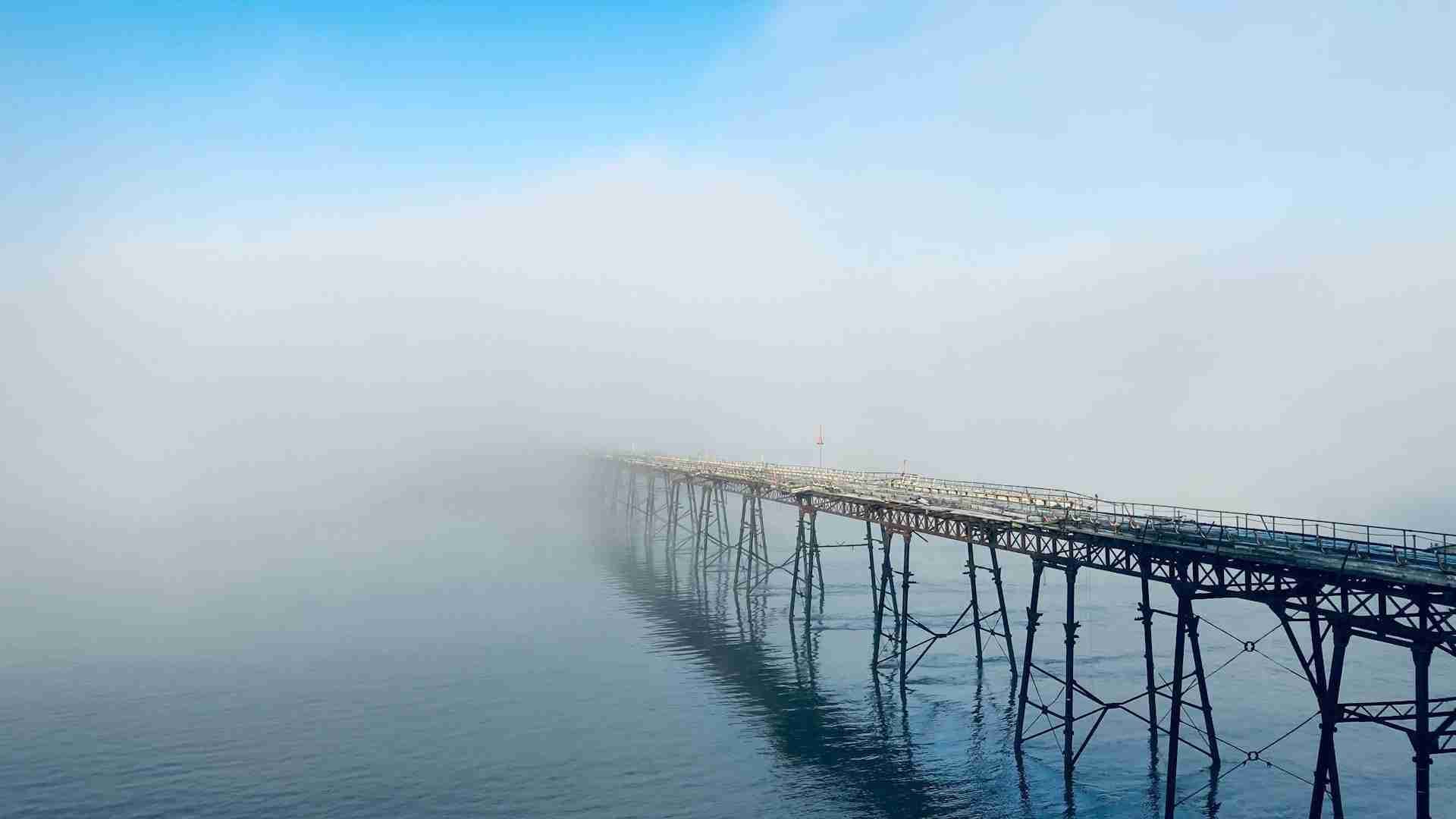
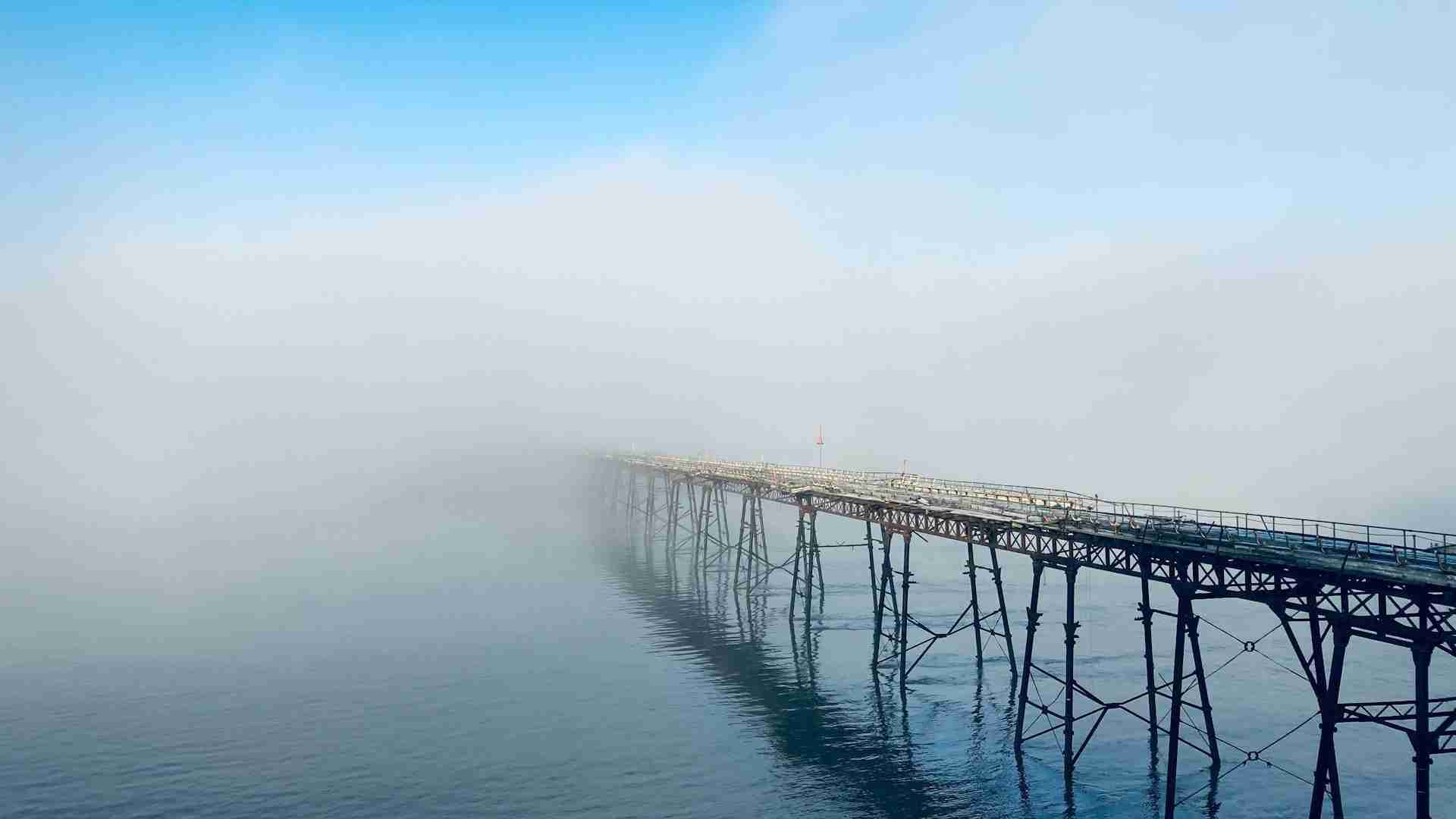
Jutting out into the Bristol Channel from the rocky shoreline of Weston-super-Mare, Birnbeck Pier is a rare opportunity to photograph coastal decay on a dramatic scale. The only pier in the UK that links the mainland to an island, it has been closed to the public for decades, its once-bustling lifeboat station and Victorian structures now weathered and broken by time and tide. From the mainland, photographers can still access multiple vantage points that reveal the skeletal remains of the walkway stretching across the tidal flats, framed by shifting light and some of the fastest-moving waters in the country. Birnbeck's ruin is what makes it powerful. It is not a clean postcard scene but a layered, changing structure where line, contrast, and time all play an active role in every composition.
Best Photography Opportunities
• Wide-Angle Compositions from the Northern Promenade
From the path that wraps along the coast north of the pier, a wide-angle lens lets you frame the full sweep of Birnbeck's iron spine stretching across to the island. In low tide, the muddy flats beneath reveal scattered supports and the full height of the decaying structure. High tide compresses the scene and reflects light back up into the frame, softening the harshness of the metalwork. This is a strong location for both sunrise and overcast sky work, as the directional light from the east or diffuse cloud cover enhances detail in the worn surfaces. Including nearby rocks or railing in the foreground helps establish scale and adds a visual anchor.
• Long Exposures of the Pier over Moving Water
The Bristol Channel has one of the highest tidal ranges in the world, and the constant movement of water around Birnbeck creates ideal conditions for long exposure work. Using a neutral density filter and a tripod, you can smooth out the choppy water while letting the jagged lines of the pier remain sharp. This technique emphasizes the sense of decay suspended in time. The best results come when tide levels are mid to high and the water reflects the sky above, especially under moody or transitional lighting. Bracketing exposures can also help manage the high contrast between the dark structure and brighter water.
• Detail Work on Rusted Supports and Structural Decay
From the rocks and paths along the lower edge of the mainland, it is possible to photograph the pier's underside and supports from unique, low angles. A midrange zoom or a short telephoto lens allows you to isolate sections of rusted metal, broken boards, and sagging beams with minimal background distraction. These images work well on overcast days, when the lack of direct sun reduces harsh shadow and brings out color in the rust and weathered wood. Focus on textures, patterns, and symmetry, or highlight the chaos where structure has collapsed.
• Sunset with Silhouetted Structures
The position of the pier makes it ideal for sunset photography during much of the year. As the sun drops toward the horizon beyond the island, the remains of the pier turn to silhouette, creating graphic compositions with strong contrast. Use a wide or standard lens to capture the structure as part of the landscape or zoom in to isolate the crisscrossing lines of iron against the sky. Late twilight often brings out pastel tones that contrast with the dark frame of the pier, especially on clear or partly cloudy evenings. This is a good time for layered exposures or subtle HDR to retain detail in both water and sky.
• Stormy Weather and High Drama
Birnbeck Pier is a prime subject during heavy weather, with its broken form standing in tension against wind, rain, and tide. On stormy days, fast shutter speeds allow you to freeze crashing waves against the supports, while longer exposures exaggerate cloud movement behind the structure. Use a waterproof cover and protect your gear, especially when working close to the waterline. Dramatic skies, especially when the wind clears just enough for light to break through, provide some of the most compelling conditions for photographing the pier.
Best Time to Visit
The best time to photograph Birnbeck Pier depends on your creative goals, as both tidal movement and seasonal light have a strong effect on the site's character. For wide-angle and full-structure shots, low to mid tide offers the clearest view of the supports and underlying terrain. High tide creates a cleaner, more minimal scene, especially useful for reflection or long exposure work. Tide charts should be checked in advance, as the change is fast and can affect access points along the coast path.
Spring and autumn bring the most balanced light, with lower sun angles and frequent dramatic skies that suit the pier's rugged character. Winter offers strong contrast and stormy conditions that are ideal for black-and-white work or moody long exposures, but weather can be rough and unpredictable. In summer, longer evenings give more time to set up sunset shots, though clear skies can flatten the mood and reduce the structure's drama. For morning work, light from the east will illuminate the mainland and eastern side of the pier, while sunset places the structure in silhouette with soft skies behind it.
How to Get There
Birnbeck Pier is located on the northwestern edge of Weston-super-Mare, Somerset. The pier itself is closed to public access and fenced off due to structural safety concerns, but excellent views are available from surrounding public areas. From Weston's town centre, follow the coastal road toward Birnbeck Road and park near Marine Parade or one of the adjacent streets. The coastal path leads north toward the rocky outcrop that provides clear sightlines to the pier from multiple angles.
There are no access fees to visit the surrounding area, and walking paths are free to use year-round. The ground near the shoreline can be uneven and slippery, especially after rain, so proper footwear is important. Some of the best views are from the path that climbs slightly to the northeast of the pier, offering elevation and a broader perspective over the island. Drone photography is restricted in the area due to nearby airspace regulations and the site's deteriorating condition. A long lens or elevated angle will provide safer and legally compliant results without needing aerial footage.
Recommended Photography Gear
Given the range of lighting and subject conditions around Birnbeck Pier, a flexible kit that covers wide landscapes and tight structural detail is ideal. A wide-angle lens in the 16 to 35 millimeter range will help you capture the full span of the pier and its relationship to the sea and sky. A midrange zoom such as a 24 to 70 millimeter is useful for working from path-level vantage points and composing with surrounding context. For tighter frames or isolating details, a 70 to 200 millimeter lens is helpful, especially when shooting from a distance.
A tripod is essential for long exposures, especially when using a 6 to 10 stop neutral density filter. A circular polarizer can reduce glare on the water and deepen contrast in the sky during bright daylight, though it may not be necessary on overcast days. A weather-sealed camera and lens setup is useful given the coastal environment, and a rain cover or waterproof bag will protect gear when working in stormy or high spray conditions. A microfiber cloth is a must, especially if you're shooting near salt water or in damp air. Sturdy footwear and a lightweight backpack will make navigating rocky or uneven ground more manageable.
Nearby Photography Locations
To the south of Birnbeck, the Grand Pier provides a sharp contrast with its lively, modern structure and wide sandy beach. During low tide, the expanse of sand offers minimalist compositions, and the pier itself becomes a strong subject under sidelight. Sunrise and early morning fog along the beach create soft, subtle moods that pair well with higher-contrast work at Birnbeck.
Just inland from the coast, these elevated woods provide a quiet escape with views back toward Weston and across the water. The remains of the Iron Age hillfort offer texture and structure for woodland photography, while breaks in the trees reveal clean lines toward the sea. This is a good option for layered telephoto compositions with environmental context.
A short drive north, this stretch of coast offers open beach, dramatic cliffs, and rock formations that suit wide-angle seascapes and minimalist long exposures. It is a quieter alternative to Weston's main beach and provides views looking back toward the town and Birnbeck from a different angle.
To the south of Weston, Uphill Hill rises above the estuary with wide views of the River Axe, Brean Down, and the surrounding lowlands. The ruined church at the summit adds a focal point for compositions and is especially photogenic in late afternoon light or moody weather. The mix of open sky, marshland, and stone makes it a strong complement to the industrial decay of Birnbeck.
This tidal pool and walkway area just south of the Grand Pier is ideal for controlled water reflections and long exposure work at blue hour. The causeway provides a solid leading line, while the calm waters often mirror pastel skies. It is especially productive after sunset when lights begin to reflect across the still surface.
Birnbeck Pier is not a location that offers polished beauty. Its strength lies in its broken structure, shifting surroundings, and the way light interacts with time-worn materials. For photographers who appreciate form over perfection and want to work with a subject that changes with every tide and storm, this is a location that rewards repeat visits and close attention to detail.
Comments
Loading comments…