
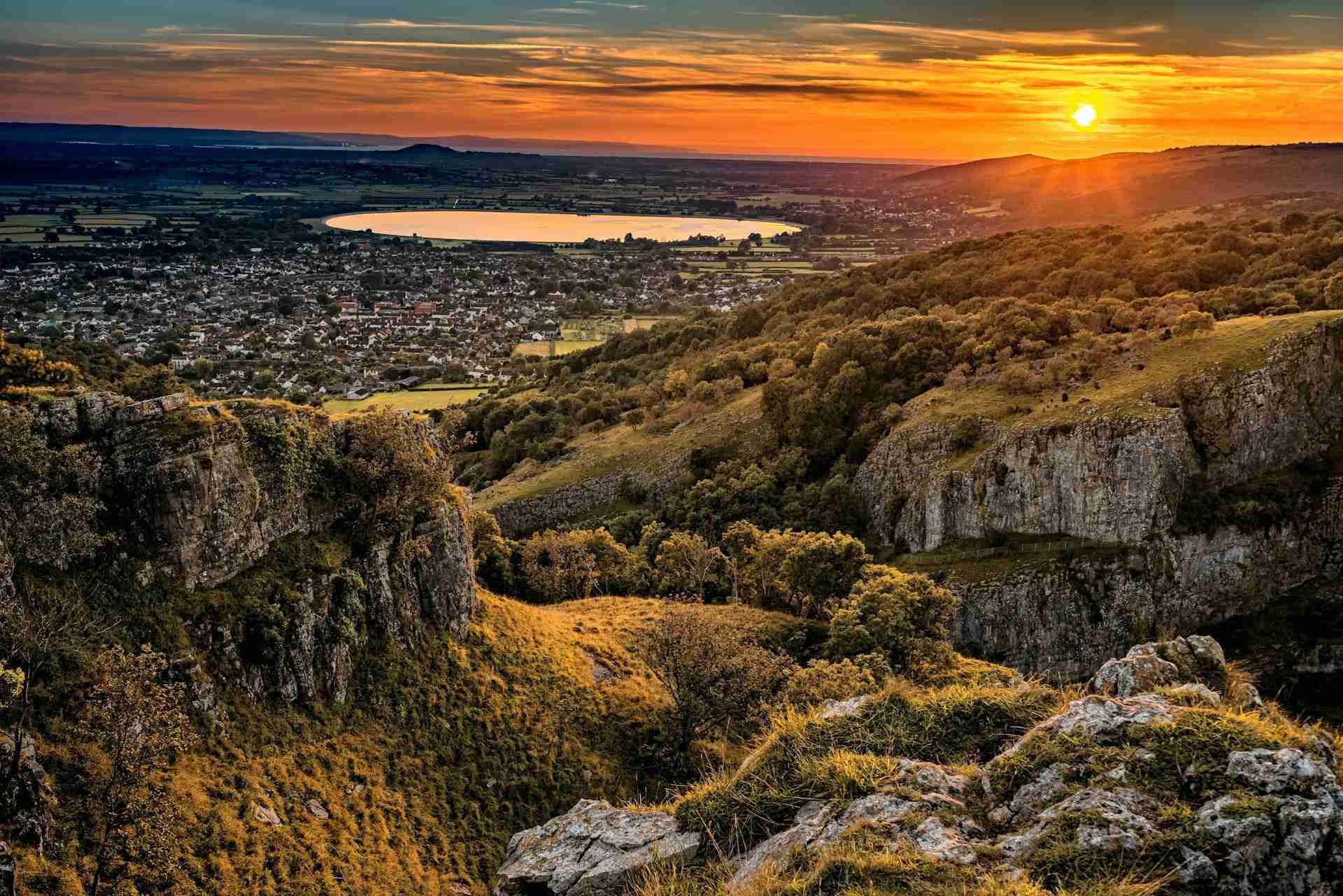
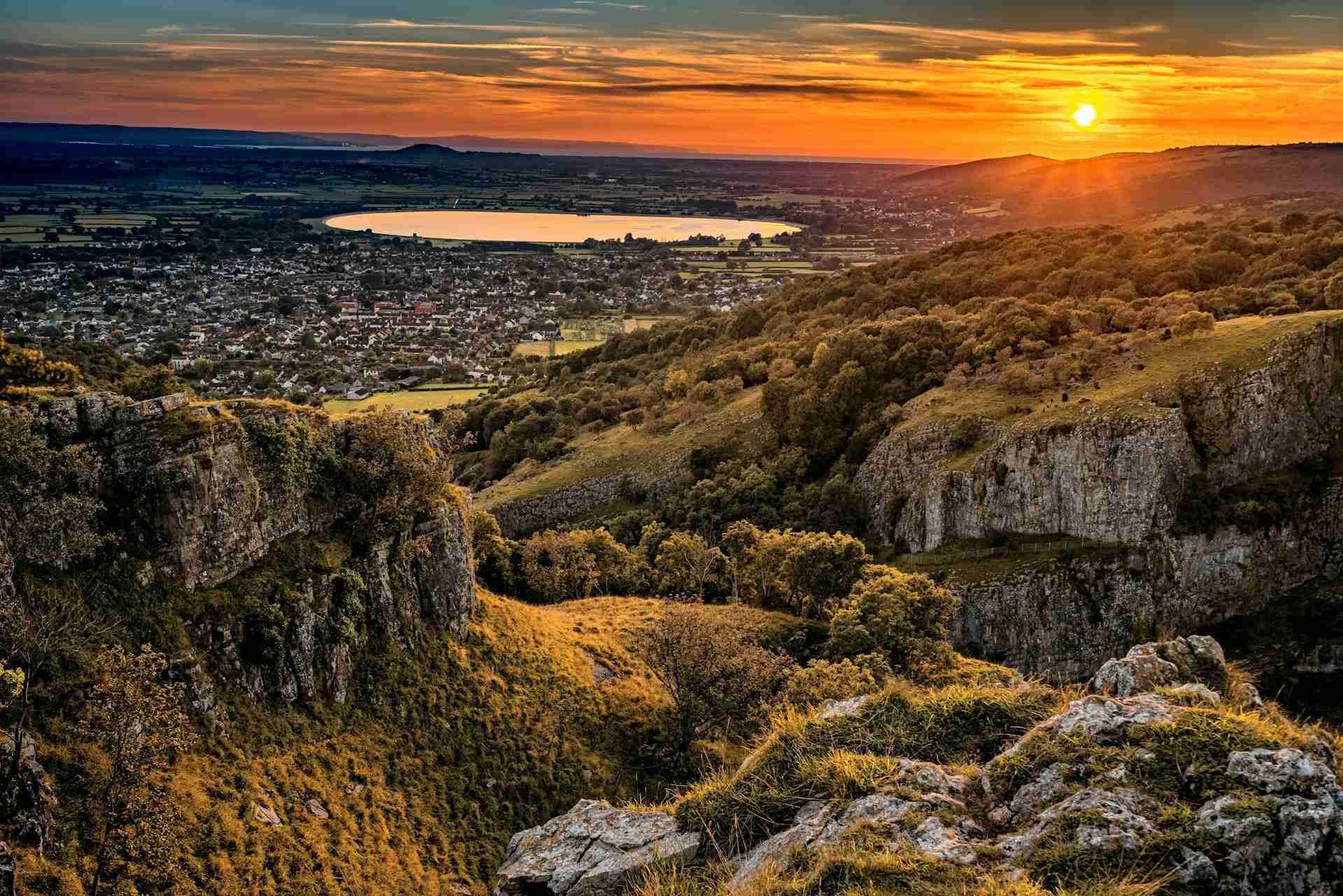
Carved by glacial meltwater over thousands of years, Cheddar Gorge is one of the most striking natural features in the British landscape. Towering limestone cliffs rise dramatically from either side of the winding B3135 road, creating a steep-walled canyon that is both geologically significant and visually compelling. Located in the Mendip Hills Area of Outstanding Natural Beauty, this iconic gorge is a playground for landscape photographers interested in texture, scale, and atmospheric light. From sheer cliff edges to lush valley views, Cheddar Gorge offers a wealth of dynamic compositions—from sweeping panoramas at golden hour to moody, high-contrast scenes under brooding skies.
Best Photography Opportunities
• High vantage points from the north rim footpath
One of the most powerful compositions in the gorge is found by ascending to the north rim trail. From these cliff-top viewpoints, you gain an expansive perspective down into the winding road, the sheer vertical faces of the southern cliffs, and the rolling Somerset countryside beyond. These shots benefit from early morning or late afternoon light, when shadows stretch across the gorge and define the topography with dramatic contrast. A wide-angle lens exaggerates the foreground drop-off and allows for dynamic use of leading lines as the road curls through the base. Use caution at the edge—compositions can be dramatic without venturing dangerously close.
• Midday shadow studies from the valley floor
While midday light is often avoided in landscape photography, Cheddar Gorge's steep walls transform harsh sunlight into sharp contrast opportunities. From the valley floor, especially where the road runs tight between limestone walls, you can study the play of light and shadow on textured rock surfaces. These images work well in black and white, emphasizing tonal separation and vertical structure. A telephoto lens allows you to isolate interesting cliff patterns or abstract shadows. Look for fissures, vegetation clinging to rock, or climbers for scale. Late spring and early summer provide added visual contrast as fresh greenery softens the hard stone.
• Golden hour from Jacob's Ladder viewpoint
For a more accessible high view, climb Jacob's Ladder on the southern side of the gorge. From the top, a panoramic view unfolds westward, especially rewarding at sunset when the sun drops low over the Somerset Levels. The cliffs take on warm tones and long shadows form across the valley. Use a tripod and wide lens to include the natural bowl of the gorge and the surrounding hills. In autumn, color in the sparse woodland adds an extra layer of depth. This is also an excellent location for shooting stitched panoramas at longer focal lengths for maximum detail.
• Misty mornings and inversion from above
On cool, still mornings, mist often collects in the base of the gorge while the upper cliffs remain clear. From high points along the northern rim or near the Pavey's Lookout Tower area, you can capture this inversion effect with the gorge emerging from a sea of cloud. These conditions are rare but unforgettable. Use a telephoto lens to compress layers of fog and rock, isolating tree silhouettes or cliff ridges rising above the mist. Shooting during blue hour or just after sunrise creates pastel skies and soft gradients that complement the stark verticality of the cliffs.
• Long exposures of road curves and night photography
The serpentine road that winds through the gorge offers unique opportunities for nighttime photography. From elevated roadside pull-offs or the lower trail near the Cheddar Caves entrance, you can capture car light trails as they weave between the cliffs. A stable tripod, long exposure (10–30 seconds), and a low ISO help preserve detail while capturing movement. Twilight is best for balancing headlight streaks with residual ambient light on the rocks. For darker conditions, bracket exposures to retain detail in the limestone. Be mindful of safety—these shots are best taken with an assistant or in low-traffic periods.
Best Time to Visit
Cheddar Gorge is accessible year-round, but photographic conditions shift significantly with the seasons and weather.
Spring offers fresh vegetation and high atmospheric clarity. The contrast between soft new growth and hard stone is visually striking, especially after rain when the cliffs darken and glisten. Morning mist is common in April and May, and wildflowers along the trails add foreground texture.
Summer provides reliable access and longer golden hours. While the gorge can be busy, early mornings and late evenings remain quiet. This season offers the best light for long exposure and reflection work, particularly after evening storms that add drama to the skies.
Autumn is perhaps the most photogenic season. The sparse trees along the cliff faces turn yellow and orange, creating strong color contrast with the cool-toned limestone. The low sun angle throughout the day enhances textures, and morning fog becomes more frequent. It's also the best time for shooting deep into the gorge without foliage obscuring the rock formations.
Winter transforms the gorge into a minimal, often stark environment. Snow is rare but impactful, coating ledges and cracks with white, creating high-contrast scenes. Overcast skies enhance texture and work well for moody black-and-white compositions. Cliff edges may become slippery, so approach summit views with caution during frosty conditions.
How to Get There
Cheddar Gorge is located in Somerset, just outside the village of Cheddar. The B3135 road runs directly through the gorge and is the primary access route for both motorists and cyclists. From Wells, the drive takes around 20 minutes, while Bristol is reachable within 45 minutes.
Parking is available along the base of the gorge and within the village. The main car park near the visitor center offers access to the lower trails, Jacob's Ladder, and the shops. Additional pull-offs along the B3135 provide direct roadside views, but be cautious—spaces are limited and traffic can be fast-moving.
For those arriving by public transport, the nearest train station is in Weston-super-Mare, followed by a bus ride to Cheddar village. Alternatively, Castle Cary station connects with local taxi services. Hiking trails link the base with both rims, but are steep and rugged in places. Good footwear is essential for any photographic excursion beyond the road.
Entrance to the gorge itself is free, though admission fees apply to specific attractions such as the caves, Jacob's Ladder, and lookout tower. The trails are public rights of way, and no photography permit is needed for personal use, including tripods.
Recommended Photography Gear
Cheddar Gorge's steep elevation changes and mixed terrain call for a kit that balances reach, resolution, and portability. A wide-angle zoom (16–35mm) is essential for cliff-top views, road curves, and immersive valley shots. Use it to capture dramatic skies and exaggerated foregrounds from the rim trails.
A mid-range zoom (24–70mm) is ideal for compositions from road level or side trails, particularly when working with strong light and shadow on the gorge walls. This lens is also excellent for handheld twilight shooting.
A telephoto lens (70–200mm or longer) is invaluable for compression effects from the rim or when isolating climbers, trees, or geological patterns across the cliffs. This is the go-to lens for mist and inversion scenes where layering is key.
A tripod is crucial for dawn, dusk, and long exposure work, particularly for traffic trails or inversion scenes. A remote shutter release and extra batteries are recommended for colder conditions or night shoots. A polarizing filter can help enhance foliage and reduce glare off wet rock, but use carefully with wide lenses to avoid uneven sky gradients.
Wear hiking boots with grip, pack layers for changing weather, and bring gloves for winter or early morning climbs. A weather-sealed camera bag with a waterproof cover will keep gear protected on muddy trails and during sudden downpours.
Nearby Photography Locations
A quieter and more wooded limestone gorge near Wookey Hole. Offers moss-covered rock walls, twisting trails, and filtered light—ideal for close compositions and abstract forest work.
Located just 25 minutes away, this Gothic cathedral provides a rich counterpoint to the natural landscape of Cheddar. Best for interior symmetry, stained-glass light play, and early morning architectural studies.
A lesser-known gorge nearby with similar geological features. Offers tighter canyon spaces, moody woodland edge compositions, and excellent conditions for misty weather work.
A peaceful reservoir nestled in the Mendips. Best for sunrise reflections, birdlife photography, and wide compositions with moody clouds rolling off the hills.
Easily reached in under an hour, this mythic hilltop location is ideal for sunrise silhouettes, fog inversions, and storytelling compositions that blend landscape and legend.
Cheddar Gorge is a landscape that commands attention and respect. Its towering forms, moody atmosphere, and ever-shifting light make it a place where precision and intuition come together. Whether you're chasing golden light across the rim or isolating weathered stone in monochrome, it's a location that elevates every frame into something elemental.
Comments
Loading comments…