
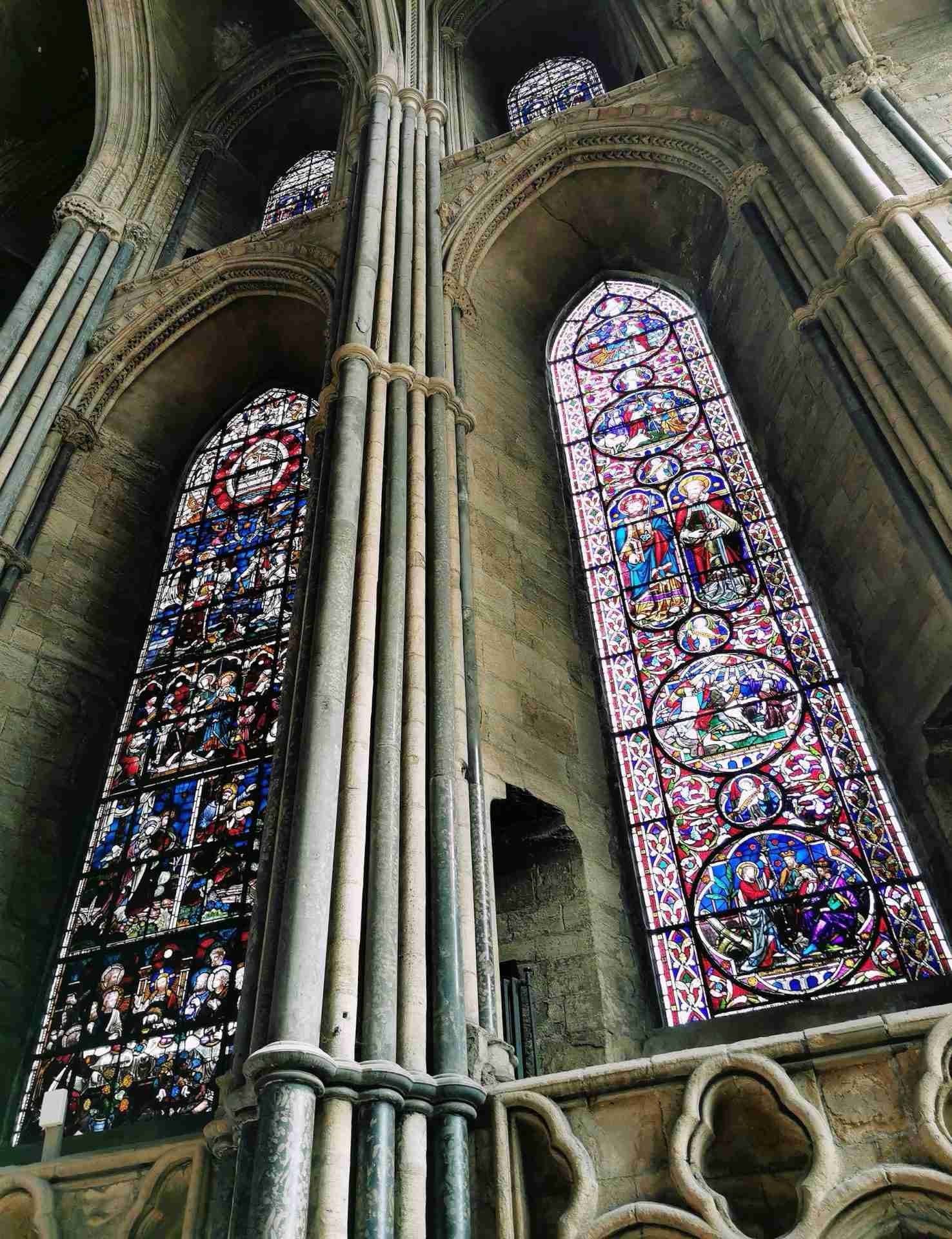
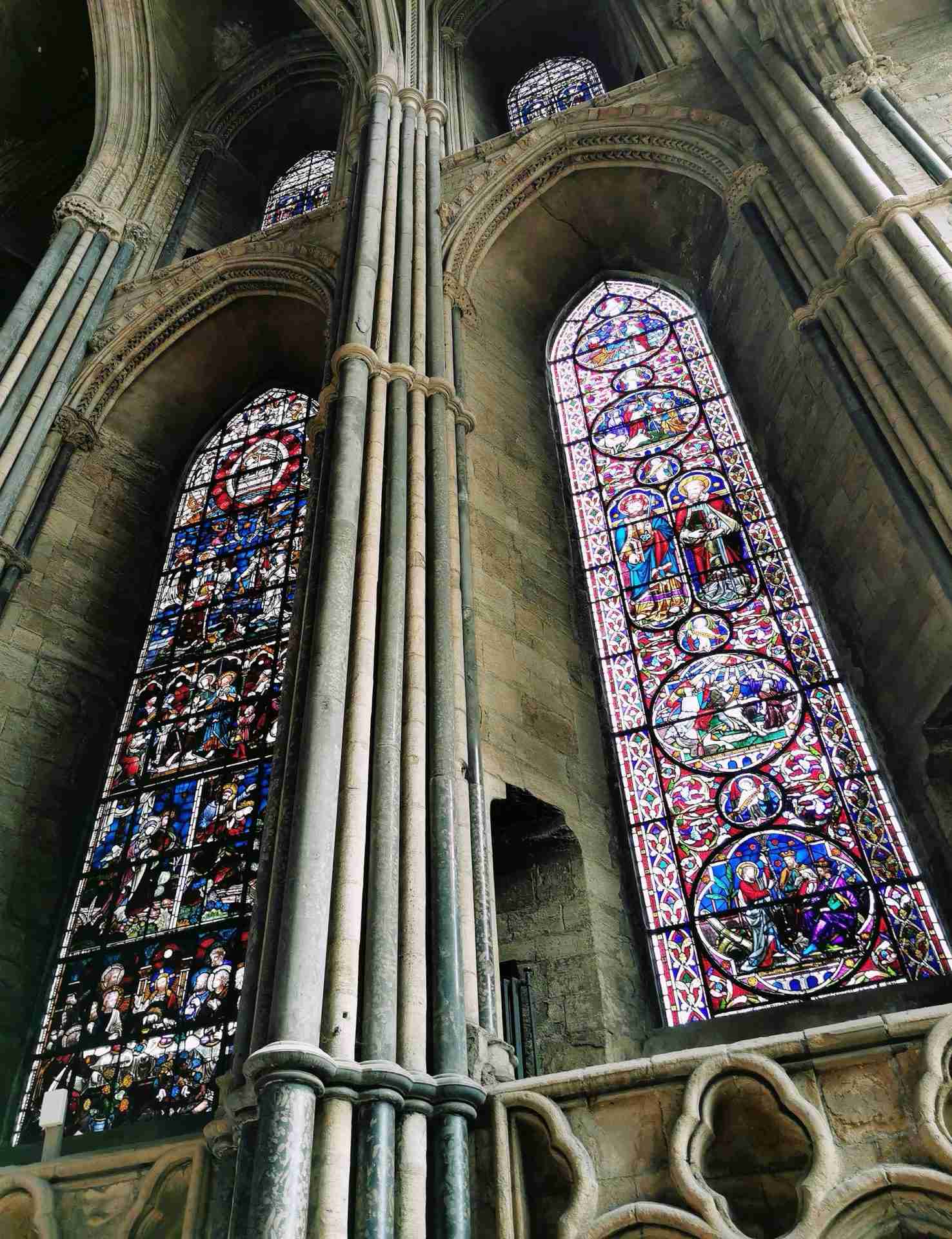
Durham Cathedral rises above the River Wear with a presence that anchors both the skyline and the landscape around it. Constructed during the Norman and early Gothic periods, its massive stone walls, repeating arches, and towering spires give photographers countless opportunities to work with form, shadow, and symmetry. Set on a wooded peninsula wrapped by the river, the cathedral blends into its environment without losing any of its power. Whether approached from the surrounding trails or explored from within its vaulted interior, this is a space shaped by light, texture, and careful proportion. For photographers drawn to both scale and subtlety, Durham Cathedral offers a full range of compositions across changing seasons and conditions.
Best Photography Opportunities
• Cathedral Towers from the River Path
One of the strongest views of the cathedral is from the riverside path near Prebends' Bridge. From this angle, the western towers rise above the forest canopy, framed by trees and reflected in the river below. A lens in the 35 to 70mm range allows you to compress the composition slightly and emphasize vertical structure. Soft early morning light lights the towers cleanly, while late afternoon brings warmer tones across the stone exterior. In autumn, the surrounding woodland offers rich color contrast, and mist along the river can add atmosphere without overwhelming the frame.
• The Nave and Columns
Inside the cathedral, the nave is defined by massive stone columns carved in geometric patterns. These repeating forms create a strong visual rhythm that pulls the viewer's eye toward the altar. Use a wide angle lens between 14 and 24mm to capture the full scale of the interior. Natural light enters through high clerestory windows, so early or late in the day offers soft direction without harsh contrast. Tripods may not be permitted, so handheld shooting at higher ISO is often necessary. Diagonal compositions using the rows of columns and alternating shadow can add motion and depth to the frame.
• Cloisters and Enclosed Light
The cloisters surrounding the cathedral's courtyard offer a more intimate setting, with arched corridors and soft, reflected light. Overcast days work best here, evenly illuminating the stone and preventing harsh shadows. A 35mm or 50mm lens gives flexibility to frame both wide symmetry or tighter shots of carved detail. Look for repeating arches, light spilling through stone tracery, and seasonal details like ivy or fallen leaves to add subtle contrast. These areas often feel quiet and balanced, ideal for slow, careful compositions.
• View from Palace Green
From the open lawn at Palace Green, you can shoot a wider exterior view of the cathedral's eastern side. This composition benefits from early morning or golden hour light, which grazes the stone and casts long shadows across the grass. Including parts of the surrounding walls or historic buildings helps to root the image in its setting. A standard zoom lens provides enough reach to isolate towers or work with broader views, depending on the light and activity on the green.
• Detail Studies of Carving, Stone, and Shadow
Throughout the cathedral, subtle carvings and worn surfaces provide excellent material for close up studies. Use a 50mm or short telephoto lens to isolate sections of patterned stone, weathered corners, or small sculptural elements. These images are best made in soft natural light to preserve tonal range and avoid harsh highlights. Window frames, staircases, and decorative ironwork can all be used to build quiet, structured compositions with depth and texture.
Best Time to Visit
Durham Cathedral is open all year and each season offers something different. Spring and summer bring fresh greens around the river paths and light filled interiors. Autumn is the most colorful time to shoot from outside, especially from the riverside trails where foliage surrounds the towers. Winter light tends to be softer and lower, casting long shadows and revealing subtle texture in the stone. Early morning is best for quiet access to the grounds and clean light on both interior and exterior surfaces. Overcast days work especially well for detail and interior compositions. Check ahead for service times, as access to certain areas may be limited during events or religious observances.
How to Get There
Durham Cathedral is located in the center of Durham, England, on a wooded peninsula above the River Wear. It is easily reached on foot from the city's main streets, with well marked paths leading up through Palace Green. The city is accessible by train and bus, and parking is available at designated lots outside the central area. A park and ride system operates to reduce traffic in the historic core. Entry to the cathedral is free, though donations are welcome, and photography is permitted for personal use. Tripods are generally not allowed inside without prior permission, so plan accordingly. The surrounding grounds and riverside paths are open year round and provide multiple approach angles for exterior shots.
Recommended Photography Gear
Bring a wide angle lens to capture the full height and width of the nave and exterior towers. A standard zoom is useful for flexible framing in tighter courtyards and transitional spaces like the cloisters. A fast prime lens, such as a 50mm, is helpful for low light interior shots and detail work. A lightweight tripod can be used outdoors, especially for early morning river views or low light conditions. A polarizing filter may help reduce glare when shooting from the riverside or on overcast days with water in the frame. Spare batteries and a cloth for cleaning your lens are recommended, especially if shooting in humid or changing conditions.
Nearby Photography Locations
This nearby stone bridge offers one of the best river level views of the cathedral rising through the trees. Reflections in the water and soft morning mist add atmosphere and structure. The bridge itself also makes a strong subject when viewed from either bank.
Located directly across Palace Green, the castle presents a strong architectural contrast with the cathedral and offers views over the city from its upper levels. When lit from the side, its stonework and turrets form strong lines and layered compositions.
• River Wear Riverside Trail
Circling the cathedral peninsula, this trail provides changing angles, seasonal foliage, and the opportunity to frame the cathedral through openings in the trees. Early morning and late afternoon provide the most interesting light.
Further down the river, this modern concrete bridge offers a clean geometric contrast to the medieval architecture nearby. Reflections in the river and sharp angles make it ideal for minimalist compositions, especially in low light or fog.
Set on a hill above the railway station, Wharton Park offers wide views across Durham, including the cathedral, castle, and city rooftops. Best visited at sunrise or sunset when the light falls across the skyline from the west or east.
Comments
Loading comments…