
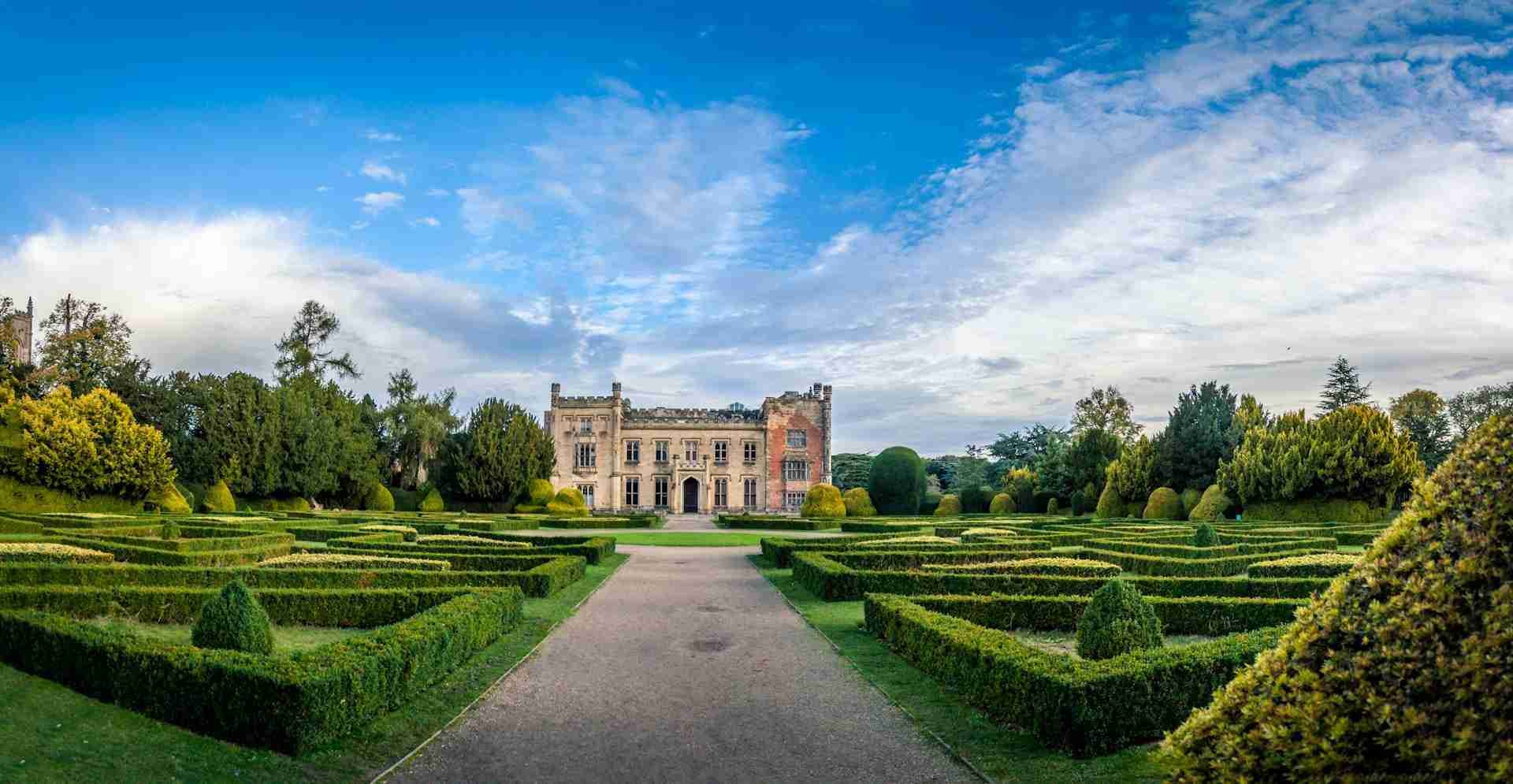
Tucked between quiet farmland and ancient woodland in Derbyshire, Elvaston Castle offers photographers a rare mix of Gothic Revival architecture, formal gardens, and natural parkland. Though no longer a private residence, the castle still stands with its tall, pointed windows, ornate stone detailing, and ivy-covered walls, all set within over 300 acres of managed estate. A short walk reveals sudden shifts in scenery: manicured hedgerows give way to wild meadows, tree-lined paths open onto quiet lakes, and ruined structures appear tucked beneath the canopy. For photographers, the location balances structure and softness—architecture that feels aged but still strong, framed by shifting light and the textures of the landscape. It is a setting that works in any season, especially for those drawn to storytelling through place, contrast, and quiet detail.
Best Photography Opportunities
Main Castle Facade through the South Lawn Trees
The southern approach to the castle is one of the most complete views, offering a straight-on composition that captures the structure's symmetry and Gothic stonework. Shooting through the trees that line the open lawn adds natural framing and softens the edge of the image, making the castle feel more embedded in the landscape. A standard zoom lens works well here, allowing for adjustments to include both the lawn and the turrets without stepping too far back. Light is best mid-morning or mid-afternoon when shadows stretch gently across the grass, creating depth and texture without hiding detail. Including a few leaves or branches in the corners of the frame adds shape to the composition without crowding it.
Close Details of Gothic Stonework and Ivy
Elvaston Castle is full of architectural detail that rewards close-up work: carved window frames, decorative arches, and ornate chimneys all make excellent subjects, especially when combined with climbing ivy or weathered textures. These shots benefit from soft, overcast light or early morning shadows, which highlight surface contrast without strong reflections. A 50mm prime lens or a short telephoto zoom allows for tight framing without distortion. These images are particularly strong in black and white or subdued color grading, drawing attention to form and wear. These details also make excellent additions to a broader photo set that includes wider environmental scenes.
Reflective Water Scenes from the Lake Path
The small lake just south of the castle is one of the best places on the estate to photograph reflections, especially in the early morning when the surface is calm. From the west bank, the trees along the opposite shore are mirrored cleanly, and in autumn, the foliage adds a layer of soft gold and red to the water. A wide-angle lens allows for placement of the path or lake edge in the foreground, leading the viewer's eye across the frame. When clouds are present, the reflection often includes layered skies that add interest without overpowering the composition. This is a quiet part of the estate, making it ideal for long exposures or low-light work.
Woodland Paths and the Old Coach Road
Elvaston Castle's woodland walks offer more than just shade—they are full of textured trees, filtered light, and occasional breaks that reveal ruined garden features or overgrown statues. The old coach road in particular is a long, slightly sunken path lined with leaning trees that arch overhead, creating a natural tunnel that works well in soft, side lighting. A 35mm or 24–70mm lens allows you to frame the path with natural symmetry while keeping the composition tight enough to feel immersive. These areas photograph best in early morning when the light hits at an angle and the forest still holds moisture, softening the air and adding glow to leaves and surfaces.
Winter Garden Ruins and Hidden Garden Arches
Behind the castle, several small architectural elements from past garden layouts still remain: stone arches, low walls, and sculpted gates partially hidden by undergrowth or framed by hedges. These smaller scenes lend themselves to intimate, narrative-style photography. Using a shallow depth of field and shooting from low angles can help create a sense of discovery and scale. These subjects work well in all weather conditions but are especially effective on misty or frosty mornings when the contrast between stone and vegetation is most noticeable. Including small natural elements like fallen leaves, puddles, or tangled branches in the foreground adds texture and variety to these quiet compositions.
Best Time to Visit
Elvaston Castle offers year-round photography opportunities, but certain seasons and times of day bring out specific strengths in the landscape and architecture. Spring, from late March into May, brings new life to the estate with blooming trees, fresh greens, and soft morning light. This season is best for capturing contrast between the hard lines of the castle and the gentle colors of nature coming back to life. Late April often sees ornamental trees in bloom near the gardens, adding soft focus layers to foregrounds and leading paths.
Summer provides longer hours of good light and lush growth in the parkland and woods. Early morning is the best time to shoot during this season, as the rising sun backlights the trees along the coach road and filters through the canopy around the lake. This time of year also gives the most flexibility for exploring the outer paths and shooting architectural details with balanced lighting.
Autumn is one of the most rewarding times to visit. From late September into early November, the leaves begin to shift into reds, golds, and deep browns, giving color contrast to the castle walls and garden structures. Morning fog is more common during this season, adding softness and atmosphere to wider views and woodland shots. Sunset can be especially effective when shooting westward across the fields or using the last light to highlight stone textures on the castle facade.
Winter transforms Elvaston Castle into a simpler, more muted environment. Bare trees open new sightlines through the estate, and early morning frost gives a silvery texture to grass, stone, and water. The castle's grey stone reflects low-angle light particularly well during this season, and the leafless branches help frame the building in a way that is harder to achieve in summer. Shorter days require good timing, but the light remains soft throughout much of the day, making it an excellent season for photographers who enjoy a quieter, less crowded visit.
How to Get There
Elvaston Castle is located in Derbyshire, just a short distance southeast of Derby city center. The estate is easily accessible by car, with a main entrance off Borrowash Road (B5010). On-site parking is available near the main visitor area, with a short walk leading directly to the castle, gardens, and surrounding trails. Parking fees apply and can vary seasonally, so it's helpful to check in advance.
For visitors arriving by public transport, regular bus services from Derby stop near the Borrowash entrance, with a short walk into the grounds. The estate is open to the public year-round during daylight hours. While the castle interior is currently closed to visitors, all exterior areas, including gardens, woodland, and lakeside paths, are accessible and well maintained. Tripods are allowed throughout the grounds, and there are no restrictions on photography for personal use. Drones are not permitted without special permission due to the presence of wildlife and the proximity to residential areas.
Recommended Photography Gear
Photographing Elvaston Castle and its surrounding parkland calls for a small but flexible kit. A standard zoom lens (24–70mm) is well suited for wide views of the castle, mid-range garden compositions, and woodland framing. A wide-angle lens (16–35mm) is useful when shooting from tighter positions near the building or along tree-lined paths, where you want to include more of the sky or foreground in the frame. For detail work, a 50mm or 85mm prime lens offers sharpness and depth of field control when isolating textures in stone, ivy, or garden elements.
A lightweight tripod is helpful for shooting in low light under tree cover or during blue hour sessions near the lake or castle facade. A circular polarizer is useful when working near water or in bright conditions to reduce reflections and improve sky contrast. Graduated ND filters can be helpful for balancing the exposure between sky and foreground, especially when shooting wide views across the lawn or toward the sun. A lens cloth and basic rain cover are good additions, as the estate is often damp in the morning or after rain. Comfortable walking shoes and a weather-resistant bag will help you move easily across the varied terrain and access the more remote areas of the grounds.
Nearby Photography Locations
Located to the south near Ticknall, Calke Abbey is a large country house surrounded by walled gardens, parkland, and ancient oak trees. The estate includes weathered stone outbuildings and interior scenes preserved in a state of gentle decay. It's excellent for atmospheric interior and exterior shots, especially in soft light.
Just a few miles to the east, Shardlow is a historic inland port filled with brick warehouses, narrowboats, and stone bridges. The calm canal waters reflect the surrounding structures, making it a great location for early morning or golden hour compositions.
Located northeast of Elvaston, this wetland area includes lakes, reedbeds, and wildlife habitats, all framed by distant trees and sky. It's a quiet place for long lens work and water-based landscape photography, especially at sunrise when birds and light begin to move.
A large public park just north of Derby city, Darley Park includes terraced gardens, wide lawns, and river views framed by mature trees. It works well for wide compositions and lifestyle photography, especially during spring blossom or autumn color.
Set on a wooded slope just outside Derby, Allestree Park includes a stately hall, rolling meadows, and hidden footpaths that lead to hilltop views. The mix of open space and dense woodland provides strong contrast and changing light throughout the day.
Photographing Elvaston Castle offers more than just a beautiful building—it gives you access to a landscape full of history, texture, and quiet variety. Whether you're working with wide scenes of stone and sky or small details tucked into shaded paths, this location rewards patience and curiosity. It is a place where the edges of nature and architecture blend easily, and every walk through the grounds brings something different into view.
Comments
Loading comments…