
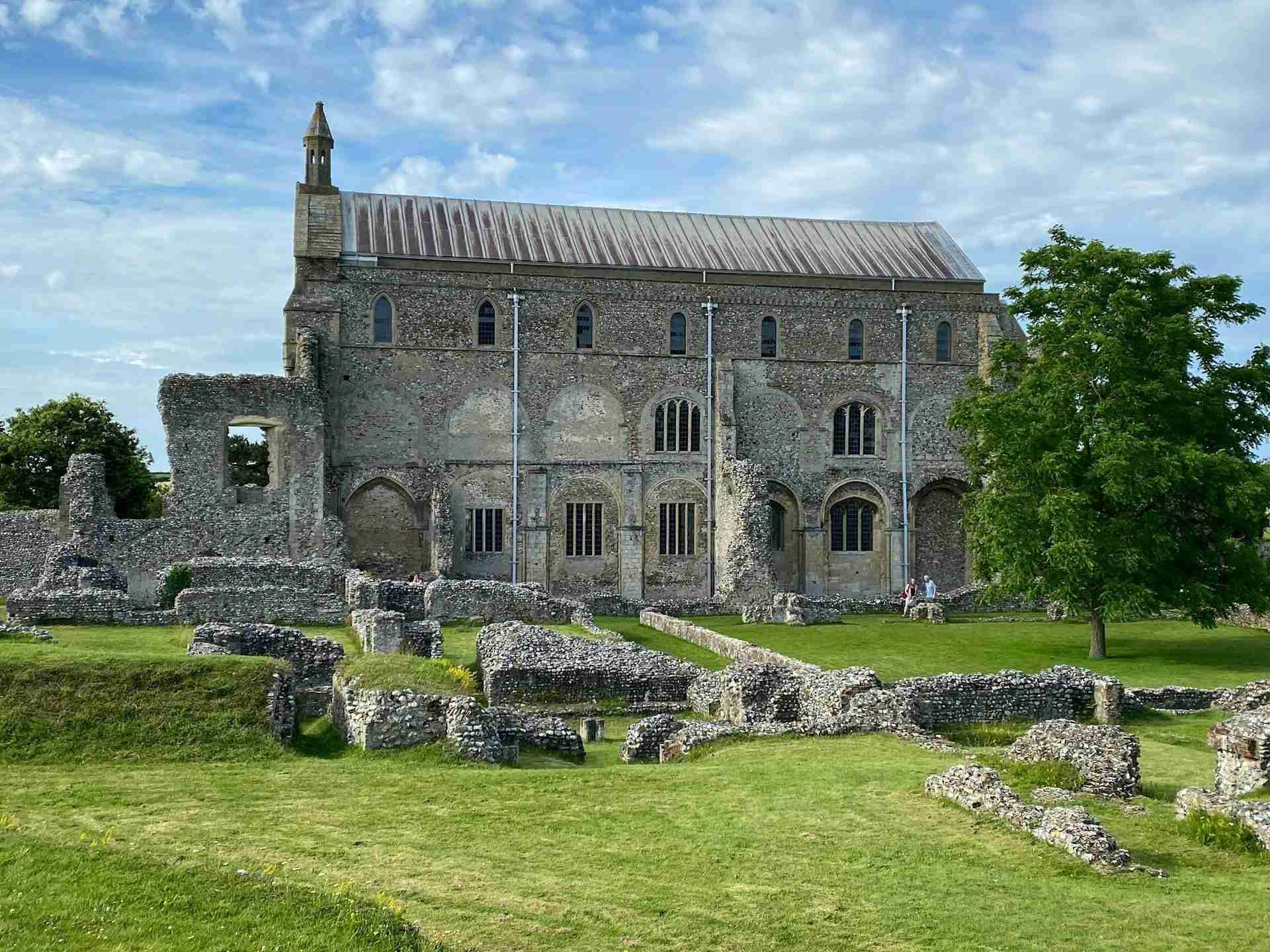
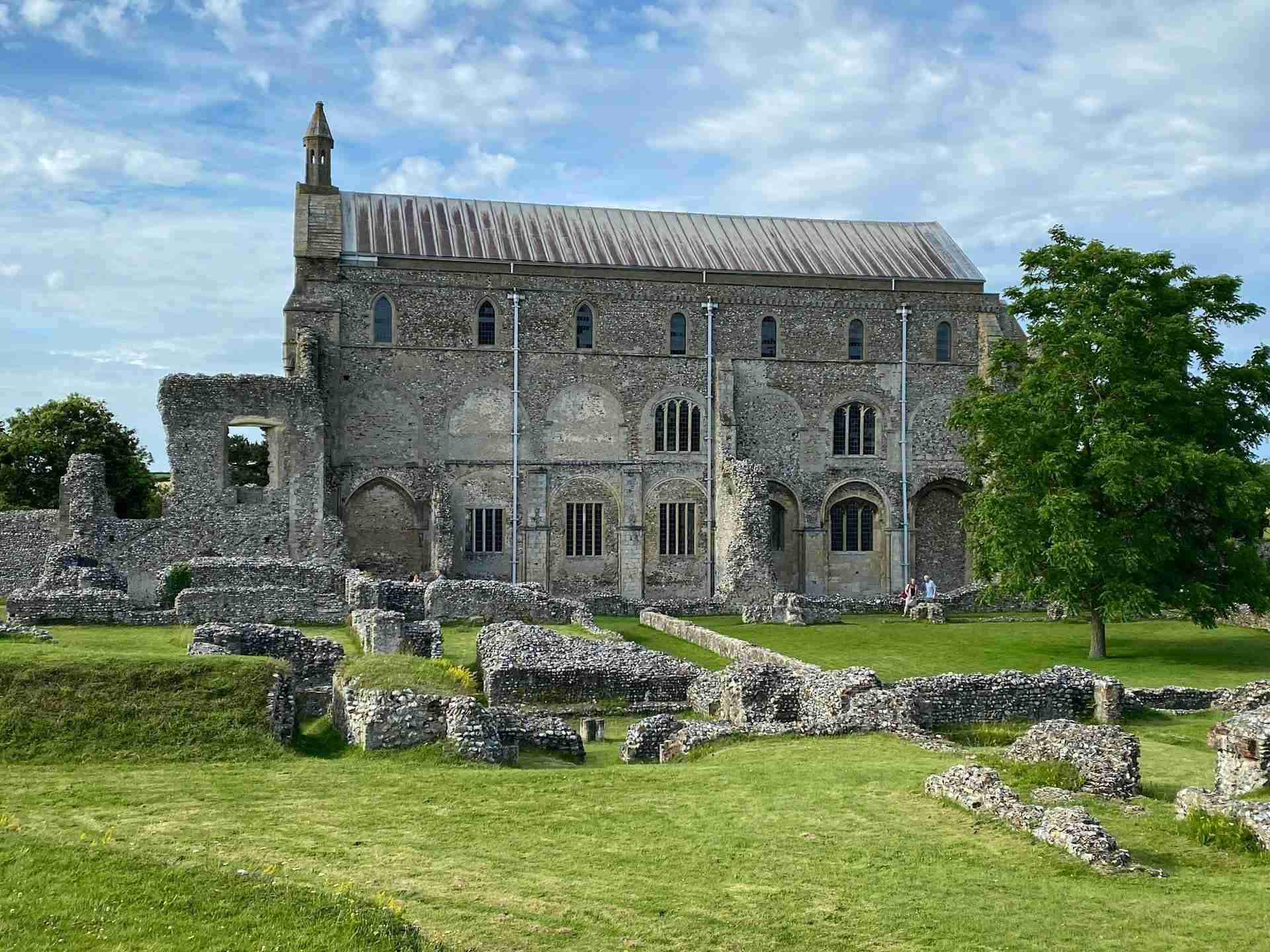
Tucked into the gentle fields of north Norfolk, Binham Priory is one of the most atmospheric ecclesiastical ruins in eastern England. Officially known as the Priory Church of St Mary and the Holy Cross, the site was founded in 1091 as a Benedictine monastery and operated for over 400 years before the Dissolution of the Monasteries. What remains today is a captivating blend of intact nave, crumbling arcades, and gothic fragments framed by big skies and open farmland. Managed by English Heritage, Binham Priory is free to visit and exudes a sense of quiet permanence that makes it a treasure for photographers seeking medieval textures, symmetry, and the poetic decay of sacred architecture.
Best Photography Opportunities
• West Front and Intact Nave
: The priory's west front is still standing strong, forming the entrance to the active parish church that continues to serve the local community. This façade, with its Norman arch and lancet window, is best photographed in warm, directional light—particularly late afternoon when the stone glows golden against the surrounding greenery. A wide-angle lens allows you to take in both the structure and the churchyard setting, while longer lenses compress the detail of the masonry and windows into tight, symmetrical frames.
• Ruined Arcades and Transept Walls
: Behind the main church lies the heart of the priory ruins—weathered columns and the skeletal outlines of what once formed the transepts and choir. These fragments are beautifully spaced for composition, with the open arches inviting the sky into the shot. Use strong sidelight or low sun to bring out texture in the stonework. On overcast days, the soft ambient light makes for excellent black-and-white studies of form and rhythm.
• Cloister Footprint and Grassy Foreground
: The grass-covered outline of the priory's cloisters provides a natural grid that works well for environmental compositions and aerial shots. Shooting from a low angle with wide depth of field allows the grassy texture to frame the vertical ruins rising behind. In summer, the area becomes vibrant with wildflowers and bees, adding small bursts of color and movement to contrast with the stillness of the stone.
• Sky Framing and Negative Space
: The ruins' openness to the sky allows for creative use of negative space. Frame your shots upward through arches, doorways, or between walls to place clouds or evening light at the center of the composition. Twilight and blue hour shots from within the ruins, especially when the moon or a planet is visible, lend a haunting, spiritual tone to the scene.
• Details in Decay
: There is a wealth of close-up material here—flint-studded walls, carved stone, lichen-covered capitals, and the remnants of medieval gravestones. These work especially well in low-contrast light and can be approached in either monochrome or soft color palettes. Bring a macro lens or zoom for isolating small stories within the larger ruin.
Best Time to Visit
Binham Priory is photogenic in all seasons, but its open-air ruins are particularly rewarding during golden hour in spring and autumn. The slanting light of early morning or late afternoon adds depth and softness to the ruins and helps to shape the three-dimensional space of the arches and pillars.
In summer, the long daylight hours give ample time to explore multiple lighting angles, and the surrounding churchyard is rich with wildflowers and texture. Autumn often brings misty mornings that sit low in the fields and create beautiful atmospheric separation between the stone structures and the backdrop. Winter skies tend to be more dramatic, with fewer leaves on nearby trees to obstruct sightlines, making it a great season for moody compositions in stark light.
Overcast days are excellent for even exposure and detail-rich photography, especially when working with the priory's interior ruins or planning to process in black and white. The site is quiet year-round, but early mornings and weekdays offer the most peaceful conditions for uninterrupted shooting.
How to Get There
Binham Priory is located in the village of Binham, roughly 15 minutes from Wells-next-the-Sea and about 45 minutes from King's Lynn by car. From the A148, follow signs for Binham via Walsingham or Hindringham. The priory is clearly marked and easily found in the heart of the village.
There is free on-site parking adjacent to the church and ruins, and the grounds are open during daylight hours throughout the year. Entry is free and managed by English Heritage. Photography is permitted throughout the site, though drone use should follow UK Civil Aviation Authority guidelines and remain respectful of the church and neighboring properties.
Exploring the Surrounding Area
The village of Binham itself offers a few additional frames of interest—flint cottages, stone walls, and narrow lanes typical of rural Norfolk. Just beyond the priory, quiet footpaths lead into open countryside and farmland with expansive skies, hedgerows, and seasonal crops, ideal for rural landscapes and documentary-style shots that place the priory in its pastoral context.
Nearby, the ruins of other religious houses like Walsingham Abbey and Creake Abbey offer a full day's exploration of sacred spaces—each with its own character, foliage, and surviving architecture. The proximity of the North Norfolk coast means that in under 20 minutes, you can switch from medieval ruins to wide beaches and salt marshes for coastal compositions at sunset.
Nearby Photography Locations
: Just 10 minutes from Binham, these peaceful, wooded ruins lie within landscaped gardens that bloom with snowdrops in late winter and wildflowers through spring. The contrast between structured ruin and soft flora creates delicate compositions full of layered texture.
: A more fragmented but equally photogenic monastic ruin, Creake Abbey offers Gothic arches, broken columns, and grassy surroundings. Visit in late afternoon for directional side lighting or in mist for quiet, ethereal scenes.
: Along the North Norfolk coast, this vast expanse of tidal channels and grasses is ideal for minimal landscape compositions, long exposures, and silhouette work at sunset. Look for old boats and moorings to anchor your frames.
: A classic Norfolk coastal scene with colorful beach huts, working fishing boats, and distant dunes. Excellent for both wide landscapes and detail-rich shots of maritime textures and harbor life.
: A stately home with a mix of open parkland, managed woodland, and lakes. Deer herds and historic architecture make it a versatile location for wildlife, portrait, and environmental photography.
Binham Priory is a space of quiet resonance—where open sky, weathered stone, and the long memory of sacred history meet in peaceful harmony. For photographers, it offers a rare balance of structure and openness, detail and grandeur. Whether you're composing through arches, tracing light across worn carvings, or capturing the ruins framed by nothing but sky, this site invites you to slow down and observe with intention. In the soft stillness of Norfolk, Binham remains one of the most quietly powerful places to photograph.
Comments
Loading comments…