
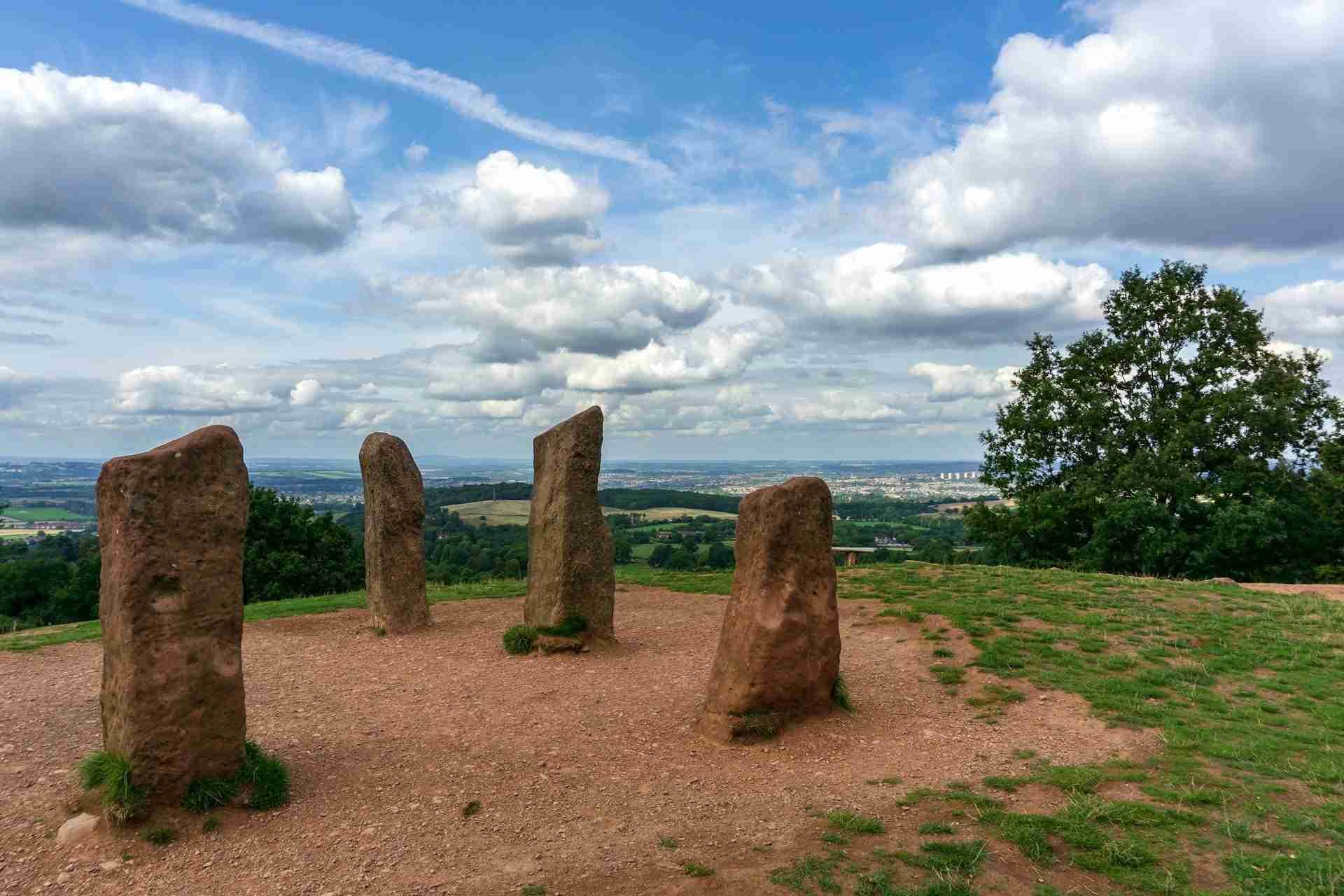
Set atop the windswept ridge of Clent Hill in Worcestershire, the Four Stones are a mysterious group of upright standing stones that offer a compelling focal point for landscape and minimalist photographers alike. Though not ancient in origin—believed to be a Victorian folly installed in the 1800s—the stones have taken on a mythic presence, silhouetted against expansive skies and surrounded by the gently undulating countryside of the Clent Hills. This high vantage point near Birmingham rewards those who rise early or stay late with sweeping views, dramatic cloudscapes, and rich seasonal colors that roll across the landscape in every direction.
Best Photography Opportunities
• Silhouettes of the stones at sunrise or sunset
: The open ridge of Clent Hill allows unobstructed views of the horizon, making the Four Stones an ideal foreground subject for golden hour photography. A wide-angle or standard lens works well to frame the stones against the rising or setting sun. Arrive early enough to scout compositions where the sun aligns just behind one of the stones or slips between two of them for a natural focal point. Cloud movement during long exposures adds a cinematic touch, especially in winter when the bare landscape enhances the drama of the scene.
• Minimalist compositions under overcast skies
: Foggy mornings and low cloud cover often cloak the Clent Hills in soft light, creating a quiet, otherworldly atmosphere around the stones. Using a mid-range lens, isolate one or two of the stones against a pale sky for simple, moody compositions. The absence of strong color or contrast can be used to your advantage here—black and white conversions are particularly effective, emphasizing form and space over texture.
• Expansive views over the Worcestershire countryside
: The area around the Four Stones offers some of the best high-ground views in the West Midlands. Step back from the monument and use a telephoto lens to compress the distant patchwork of fields, hedgerows, and villages into layered compositions. Autumn and spring are especially photogenic, when morning mist drapes over the landscape and warm light glows across the valley below.
• Environmental portraits and human scale
: The simplicity of the Four Stones makes them an excellent setting for contemplative portraits or environmental figure studies. A single person seated or walking among the stones adds a sense of narrative and emphasizes the size and placement of each pillar. Soft golden light or backlighting creates a timeless, painterly quality. Use a shallow depth of field to subtly blur the background hills while keeping the subject in crisp focus.
• Night photography and star trails
: With relatively low levels of light pollution compared to urban centers, Clent Hill offers opportunities for night sky work. On clear evenings, the stones become striking silhouettes beneath star fields or milky way arcs. A sturdy tripod and wide-angle lens are essential here, along with longer exposure settings or interval shooting for star trail stacks. Including the stones in the foreground grounds the image and offers a fixed point of interest beneath the moving sky.
Best Time to Visit
The Clent Hills are accessible year-round, with each season bringing unique photographic qualities. Spring provides lush greenery and wildflowers throughout the hills, while summer offers extended daylight and clear skies for sunset and blue hour work. Autumn is particularly atmospheric, with morning fog, golden light, and turning foliage enriching the surrounding countryside. Winter, especially with frost or snow, adds stark contrast and visual drama, turning the stones into lonely sentinels on the hill.
For lighting conditions, sunrise and sunset are the most visually rewarding, especially when the sky carries a bit of texture or color variation. Overcast and foggy mornings work well for moody, minimalistic compositions, while crisp post-storm light can be ideal for high-contrast black and white imagery. Avoid mid-day unless you're focusing on detail or scouting; the light tends to be flat and harsh with little shadow play.
How to Get There
The Four Stones are located on the summit of Clent Hill, part of the Clent Hills range, roughly 10 miles southwest of Birmingham. The easiest access point is the Nimmings Wood car park off Hagley Wood Lane, managed by the National Trust.
From the car park, follow well-marked trails for a short 10-15 minute uphill walk to the Four Stones. The route is gently sloped and passes through woodland before opening up to the grassy ridge. The entire area is crisscrossed with trails, so take time to explore alternative vantage points for different compositions.
There is no entrance fee, and the area is open year-round. Sunrise and sunset visits require planning around daylight hours, especially in winter, when trails can be muddy and slippery. Check local weather forecasts, and wear appropriate footwear for uneven ground.
Recommended Gear and Shooting Tips
A wide-angle lens is essential for framing the stones against the expansive sky, especially during sunrise and sunset. A mid-range zoom (24–70mm) is useful for more contextual shots, portraits, or tighter landscape compositions that include the surrounding hills. A telephoto lens allows for distant countryside compression and mist-filled valley scenes from the ridge.
A tripod is critical for golden hour, twilight, and night photography. Neutral density filters are helpful for long exposures during bright conditions, particularly when you're trying to blur fast-moving clouds or soften the appearance of windswept grasses. A polarizing filter can enhance contrast in blue skies and help separate clouds for a more dynamic effect.
Consider returning in different seasons to capture the evolving textures and tones of the landscape. The monument's static geometry offers a visual anchor in any weather or light, allowing for endless reinterpretation through subtle changes in the environment.
Nearby Photography Locations
: Just a short drive away, this wooded summit features a neoclassical obelisk and distant views toward Birmingham. The obelisk makes an intriguing subject for sunrise silhouettes and detail studies of stone texture.
: This sandstone ridge nearby offers sweeping countryside views and includes the Kinver Rock Houses—historic dwellings carved into the cliffs. It's excellent for photographing unusual architecture and dramatic escarpment views under golden light.
: Northeast of Clent, the Lickey Hills feature forested trails, high viewpoints, and panoramic vistas back toward Birmingham. The changing light over the woodlands makes this a rewarding location for layered, atmospheric landscapes.
: South of Clent, Hagley Hall offers manicured gardens, classical architecture, and a Palladian-style stately home. Ideal for more formal landscape compositions and symmetry-focused architectural shots.
: Farther west, the Malverns provide elevated ridgelines with dramatic profiles and extensive visibility across Herefordshire and Worcestershire. These hills are ideal for hikers and photographers alike seeking wild, windswept scenes.
The Four Stones on Clent Hill may not carry the ancient weight of Stonehenge or Avebury, but in the right light, they take on a mythic character all their own. Set against rolling English hills and under endlessly changing skies, they offer photographers a minimalist and meditative subject that stands in quiet contrast to the bustle of the nearby city.
Comments
Loading comments…