

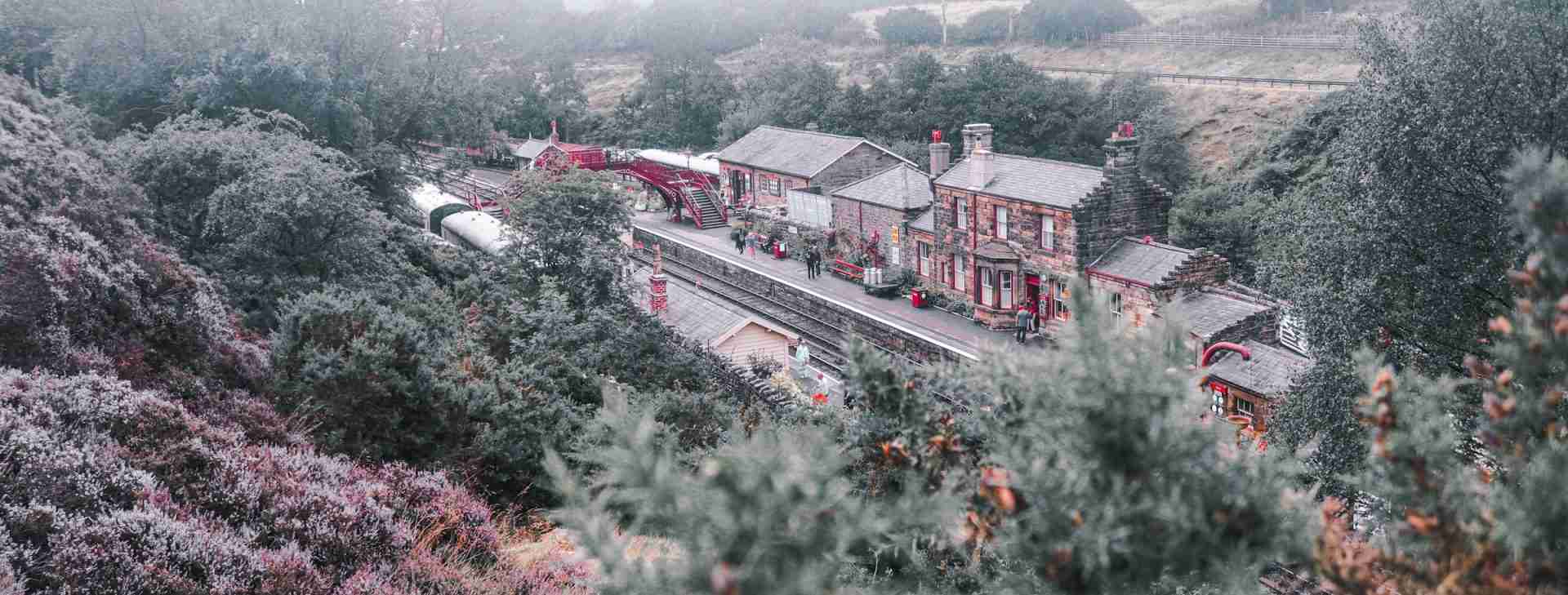
Goathland Station sits along the North Yorkshire Moors Railway and is one of the most atmospheric heritage railway locations in England. The station lies within the North York Moors National Park and retains the character of an early twentieth century rural railway stop. Traditional platform lamps, wooden benches, signal boxes, and period signage create a setting that feels largely unchanged from the days when steam trains regularly crossed the moorland. The station is well known beyond railway enthusiasts because it served as the filming location for Hogsmeade Station in the early Harry Potter films, though its appeal goes far beyond that connection. Surrounded by open countryside and rolling moorland, Goathland offers photographers a chance to capture historic railway architecture, working steam locomotives, and quiet rural landscapes in the same location.
The North Yorkshire Moors Railway itself runs heritage steam and diesel trains between Pickering and Whitby, passing through several historic stations along the route. Goathland remains one of the most photogenic stops along the line thanks to its preserved platform buildings and scenic surroundings. When steam locomotives arrive, clouds of steam drift across the station platforms and into the surrounding fields, creating a classic railway atmosphere. Even when trains are not present, the station still provides strong compositions through its vintage details and simple rural setting.
Best Photography Opportunities
• Steam Trains Arriving at the Platform
One of the most rewarding photographic moments at Goathland Station comes when a steam locomotive arrives or departs from the platform. As the train pulls into the station, steam often rises around the locomotive and drifts across the tracks. This movement adds energy and atmosphere to the scene while the station buildings provide a historic backdrop. Positioning yourself near the end of the platform allows the train to enter the frame gradually, creating depth within the composition. The combination of steam, vintage carriages, and traditional station architecture makes these moments feel timeless.
• Classic Platform Scene with Vintage Details
The platforms at Goathland contain many preserved elements that help recreate the feel of an early railway station. Traditional lamp posts, wooden waiting rooms, and painted station signs all contribute to the historic setting. Photographers can capture these details together by standing along the platform and looking down the tracks. The rails naturally guide the viewer's eye through the image while the station structures frame the sides of the composition. Including a stationary train or a few visitors in period clothing during special events can add extra character to the photograph.
• Signal Box and Railway Infrastructure
The signal box near the station provides another strong subject for photography. Its raised windows and wooden structure reflect traditional railway engineering and operations. Photographers can frame the building with the tracks leading toward it, which creates strong lines within the composition. These elements show the operational side of the heritage railway rather than focusing only on the trains themselves. The surrounding moorland landscape often appears behind the signal box, adding context to the scene.
• Footbridge View Across the Station
The station footbridge provides an elevated perspective across the platforms and tracks. From this position photographers can capture the layout of the station with trains arriving or waiting below. Looking down the line from the bridge often produces strong leading lines where the tracks stretch into the distance. When a steam locomotive is present, the rising steam can spread across the platforms and create dramatic layers within the photograph. This viewpoint also helps reveal the surrounding countryside beyond the station.
• Station Exterior and Rural Surroundings
Outside the station building, the landscape quickly transitions into open moorland and quiet country roads. Photographing the station entrance or nearby cottages can show how the railway fits into the rural village setting. The surrounding hills and fields provide a natural backdrop that complements the historic architecture. These wider scenes help capture the relationship between the railway and the North Yorkshire countryside. When trains pass through the valley, they often add movement to the landscape.
Best Time to Visit
Days when steam trains are scheduled provide the most interesting photographic opportunities. The presence of working locomotives transforms the station environment and adds movement, sound, and atmosphere. Checking the North Yorkshire Moors Railway timetable before visiting helps photographers plan their arrival around train movements.
Morning and late afternoon often provide the most appealing lighting conditions across the station platforms. Soft light during these times highlights the textures of the station buildings and the steam rising from locomotives. Spring and autumn can be particularly attractive seasons when the surrounding countryside appears green or filled with seasonal colors. Winter visits can also produce atmospheric scenes when cold air causes steam to linger longer around the trains.
How to Get There
Goathland Station is located within the village of Goathland in North Yorkshire, England. The station sits along the North Yorkshire Moors Railway between Pickering and Whitby.
Visitors can reach Goathland by car via rural roads from towns such as Whitby, Pickering, or Sleights. Parking areas are available near the village and station. The station can also be reached by traveling on the North Yorkshire Moors Railway itself, which allows visitors to arrive by heritage train.
Access to the station platforms may require a small ticket fee depending on railway policies at the time of your visit. The surrounding village and public viewpoints around the station can generally be explored freely.
Recommended Photography Gear
A moderate zoom lens works well for railway photography because it allows photographers to adjust framing quickly as trains approach or move through the station. This flexibility helps capture both wide station scenes and tighter compositions of locomotives and carriages.
A wide lens can also be useful for photographing the station environment, especially when including platforms, buildings, and surrounding countryside in the same frame. A tripod may be helpful in lower light conditions, particularly when photographing steam drifting through the station during early morning or late afternoon. Because trains move quickly during arrival and departure, cameras with fast auto focus and continuous shooting modes can also be beneficial.
Nearby Photography Locations
• Goathland Village and Waterfall
The village itself contains stone cottages, narrow roads, and a small waterfall along the Beck Hole path just outside the village center. Photographers can capture quiet rural scenes that reflect the character of the North York Moors. The waterfall provides a natural contrast to the railway subjects nearby.
Located within a short walk of Goathland, Mallyan Spout is one of the tallest waterfalls in North Yorkshire. The water drops over a cliff surrounded by woodland and rocky terrain. Photographers visiting after rainfall often find the waterfall at its most impressive.
• North York Moors Landscape
The wider North York Moors National Park offers sweeping views of open moorland, stone walls, and winding country roads. Photographers can capture wide landscape scenes where the railway occasionally crosses the countryside. The rolling hills provide dramatic views during sunrise and sunset.
• Whitby Harbor
The coastal town of Whitby lies at the northern end of the railway line and offers a completely different photographic setting. The harbor, fishing boats, and historic abbey ruins provide strong coastal compositions. The town also contains narrow streets and historic buildings that reflect its maritime past.
Pickering marks the southern end of the North Yorkshire Moors Railway and contains another beautifully preserved heritage station. The platforms, vintage signage, and restored buildings create additional opportunities for railway photography. Steam locomotives often begin or end their journeys here, making it another excellent location for capturing trains in action.
Comments
Loading comments…