
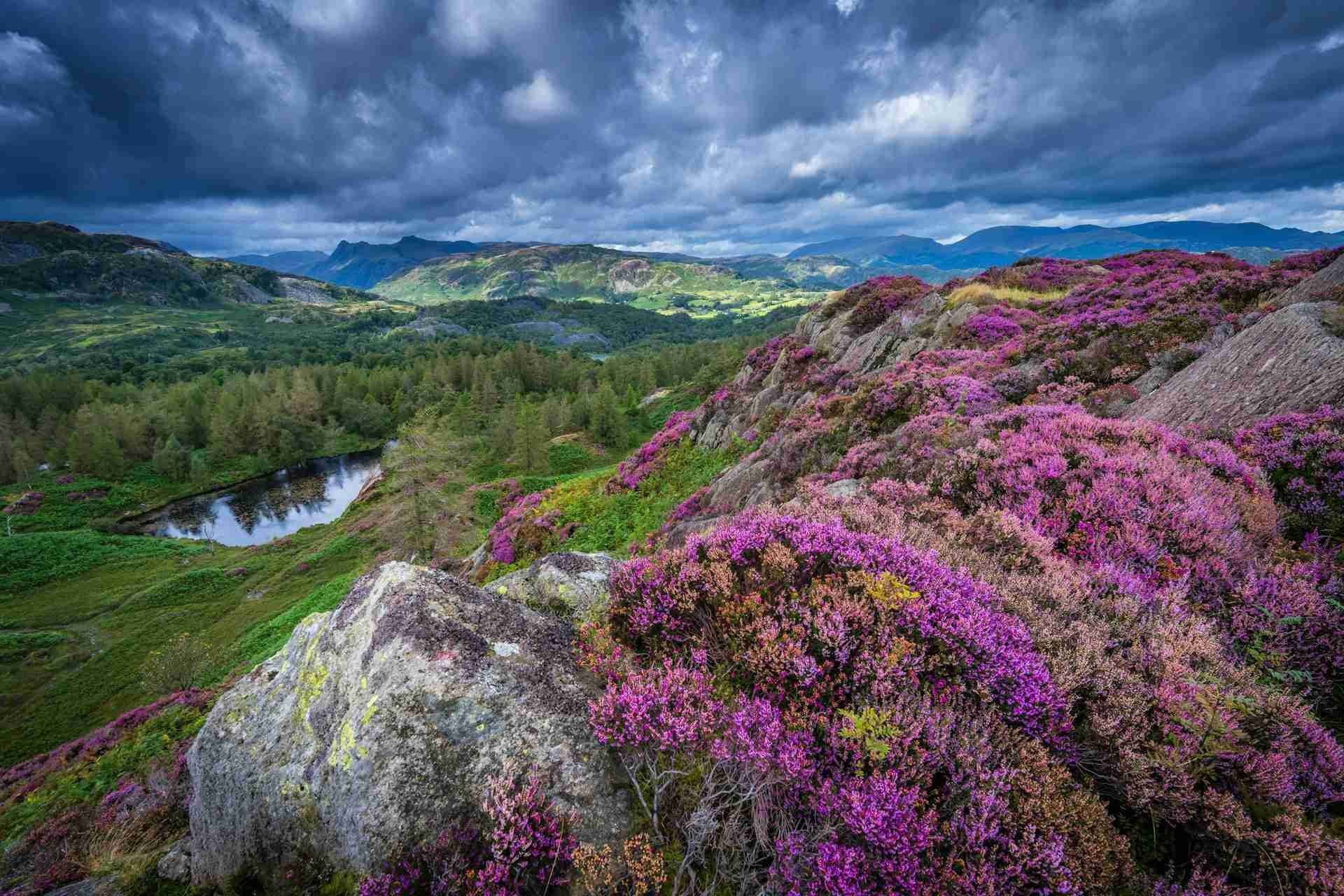
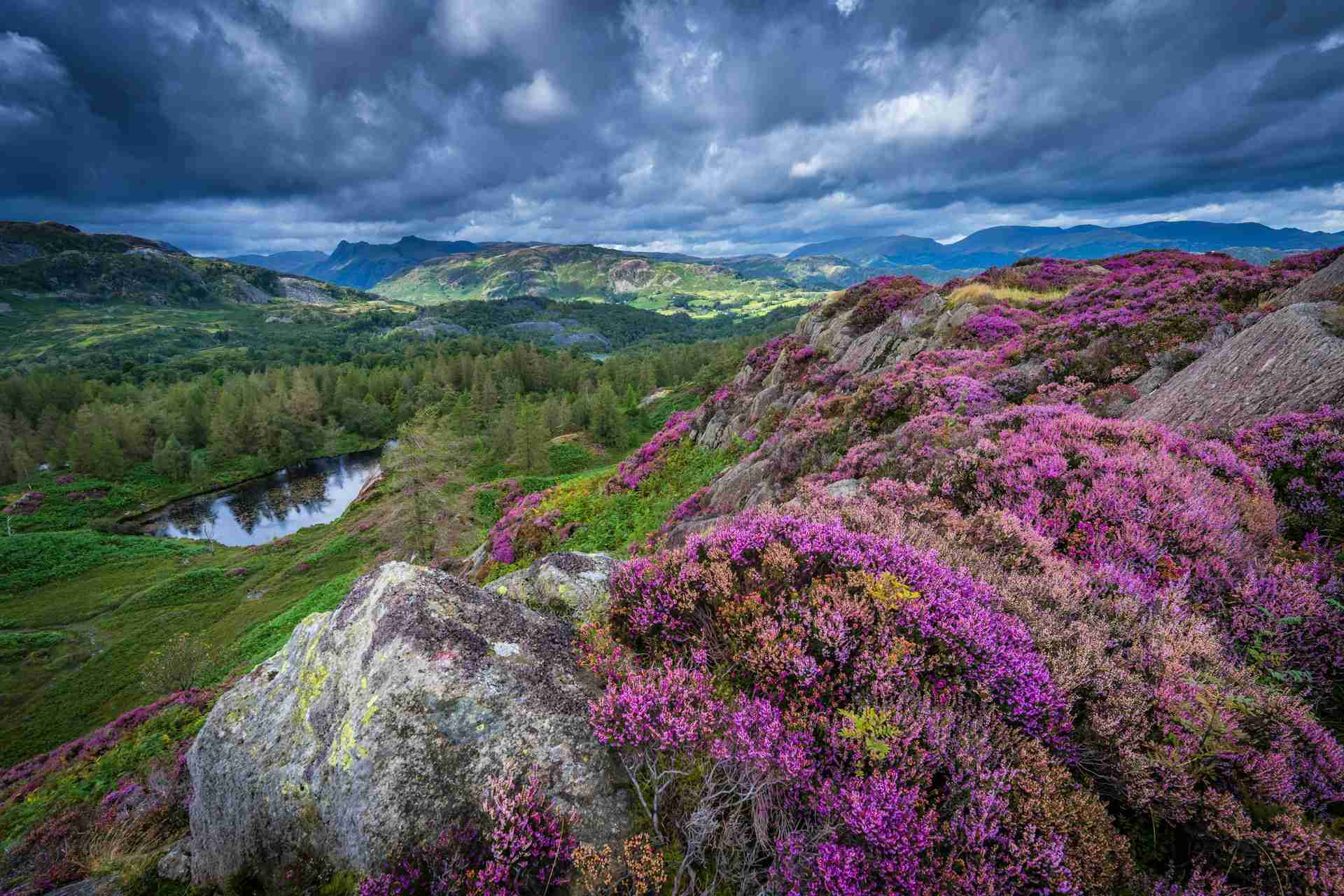
Rising modestly above the village of Coniston in the southern Lake District, Holme Fell offers one of the most rewarding viewpoints for photographers seeking a mix of wooded slopes, tarn reflections, and long views across the fells. Though lower in elevation than many of its surrounding peaks, Holme Fell makes up for its height with varied terrain, interesting foregrounds, and expansive views toward the Langdale Pikes and Wetherlam. The walk up is relatively short but scenic, passing through mossy woodlands, open heather, and a scattering of ruined quarry buildings. From its summit and flanks, photographers are treated to layered compositions with shifting light, weather patterns, and texture that change by the hour. This is a location that works as well for moody cloudscapes as it does for clear golden light, making it ideal for both spontaneous visits and planned golden hour shoots.
Best Photography Opportunities
View Toward Wetherlam from the Southern Summit
One of the best views from Holme Fell is found just south of the summit cairn, where the land opens up and looks directly toward Wetherlam and the Coniston fells. The undulating ridge lines and distant slopes make for a naturally layered composition, especially in early morning or late afternoon when light moves across the contours. A 70–200mm telephoto lens works well here to compress the peaks and draw out the shape of the land, especially if cloud shadows are moving through the valley. On clear days, you can include dramatic sky and fell contrast, while on misty mornings, the softened background layers create a more muted, atmospheric image. Shooting from a slightly lower elevation allows you to include foreground rocks or heather for added depth.
Reflections at Yew Tree Tarn
At the foot of Holme Fell along the A593 lies Yew Tree Tarn, a peaceful body of water surrounded by trees and reeds. In calm conditions, the reflections here are some of the most photogenic in the area, especially in early morning when the air is still and the light is just touching the treetops. Composing with a wide-angle lens allows you to place the tarn in the foreground while capturing Holme Fell rising behind it. This location works particularly well in autumn when the trees turn and create color contrast against the dark water and stone. Mist often sits just above the water in the first hour after sunrise, adding a soft glow to the scene and helping to isolate details in the reflections.
Heather and Birch on the Eastern Flanks
The eastern side of Holme Fell is dotted with young birch trees, heather-covered outcrops, and mossy ground that glows in the right light. Late summer into early autumn brings out rich purples and greens that photograph best in side light or soft cloud cover. A standard zoom lens such as 24–70mm gives you flexibility to isolate small tree groupings or include rolling ground that leads up toward the ridgeline. Overcast light is ideal for capturing the full range of natural tones without harsh contrast, while golden hour introduces longer shadows and depth across the terrain. This side of the fell feels quieter and more intimate, well suited for slow-paced exploration and focused compositions.
Ruined Quarry Buildings and Copper Trails
Along the western approach to Holme Fell, old quarry buildings and abandoned mine shafts add human texture to the natural setting. These weathered stone structures are surrounded by low walls, rusted metal, and lichen-covered rock, all of which offer strong subjects for detail or storytelling shots. A 35mm or 50mm prime lens is ideal for these scenes, capturing texture in the stone while isolating specific features like doorways, wall corners, or collapsed beams. Shooting in the afternoon when the light is soft and warm helps reveal the age and shape of the materials, and the low angle of light highlights the contrast between ruin and regrowth. Including these elements in your broader landscape frames gives added narrative to the walk up the fell.
Sunset Over Coniston Water from the Upper Slopes
Though not the highest viewpoint in the area, Holme Fell still offers a fine sunset view westward toward Coniston Water. From several points near the summit, you can look out over the treetops toward the lake, framed by low ridges and scattered trees. Sunset light reflects off the water and filters through the distant valley, creating a layered composition that balances warm tones in the sky with cooler shadows across the land. A tripod is useful here for longer exposures after sunset, and a graduated ND filter helps hold detail in the sky. Including foreground elements like a cairn or dry stone wall can ground the image and guide the eye through the frame.
Best Time to Visit
Holme Fell can be photographed throughout the year, but the character of the landscape shifts significantly with the seasons. Spring brings bright greens to the lower woodland and heather slopes, while the air is often crisp and the light clean. Late April into May is ideal for catching new foliage, especially in the birch stands along the eastern side. Morning light tends to be softer and cooler in spring, with mist occasionally forming in the valleys and adding atmosphere to distant views.
Summer offers longer days and stronger light, which can be used to highlight the textures of the quarry ruins and heather-covered ridges. Early morning and late evening are the best times to shoot during this season, as midday sun is often too harsh and flattens the landscape. Wildflowers and full tree canopies add color, but also make some views more enclosed. This is a good time to explore detail work or shoot in broken cloud conditions, which bring drama to wide compositions.
Autumn is one of the most photogenic seasons on Holme Fell, especially from late September through October. The birch and rowan trees turn golden, the heather fades to rust, and the light takes on a warmer, lower quality. Reflections in Yew Tree Tarn improve during this season due to cooler air and stiller mornings, and sunset across Coniston Water is often more colorful due to shifting weather systems. Afternoon light works particularly well on the southern flanks, and low sun across the ridges brings out the texture in rock and tree cover.
Winter visits can be equally rewarding, though access may be more difficult if snow or ice is present. The fells become stripped back, revealing more of the stone and structure, and the light stays low for much of the day. Short daylight hours mean timing is important, but frost, snow, and bare trees bring clarity and contrast that flatter both wide scenes and close textures. Morning light works best for east-facing slopes, while sunset creates long shadows across the ridges.
How to Get There
Holme Fell is located just north of Coniston and east of the A593 road that runs between Coniston and Ambleside. There are several access points depending on your approach. One of the most straightforward starts is from the parking area near Hodge Close, a disused quarry site. From there, well-used paths lead onto the fell through woodland and eventually rise up to the summit area. Another popular route begins near Yew Tree Farm on the A593, with a small parking area available near the roadside.
The hike to the summit is short but involves some steep, rocky sections and uneven ground. It typically takes around 30 to 45 minutes to reach the top depending on your starting point and pace. The trails are not always marked, so having a map or GPS device is helpful, especially in poor weather or low visibility. There is no entry fee or restricted access, and the fell is open year-round. Tripods and photography gear are allowed throughout, but be prepared for changeable conditions, especially if you plan to shoot near dawn or dusk.
Recommended Photography Gear
A well-rounded setup will give you the flexibility to photograph Holme Fell's variety of scenes, from wide views at the summit to textured detail work in the woods and quarry. A wide-angle zoom lens, such as a 16–35mm, is useful for landscape compositions that include sky, ridges, and foreground features like stone walls or heather. A standard zoom, like a 24–70mm, is a strong all-purpose option and ideal for handheld shooting while exploring the woodland trails or quarry structures.
A lightweight telephoto lens, such as a 70–200mm, is helpful for compressing layers of distant peaks or isolating scenes across Coniston Water. It also works well for shooting the mountain backdrop from Yew Tree Tarn. A fast prime lens like a 35mm or 50mm can be used for detail shots in the quarry or on the forest floor, especially in low light. A sturdy tripod is important for long exposures, particularly if you are photographing water reflections or shooting at sunset.
A circular polarizer can help control glare on water and improve sky contrast, while a graduated ND filter is useful for balancing exposure when shooting into bright skies. A lens cloth is essential for misty or rainy conditions, which are common even on fair-weather days in the Lake District. A waterproof camera bag and weather protection for your gear are strongly recommended. Good walking shoes or hiking boots with ankle support are necessary for uneven paths, and packing extra layers is wise if you plan to be out for sunrise or sunset when temperatures drop quickly.
Nearby Photography Locations
Located west of Derwent Water, Catbells offers panoramic views in every direction with a relatively easy climb. The ridge is especially photogenic at sunrise, with layered light over the lake and the central fells, and works well with wide or telephoto lenses.
A short drive north of Holme Fell, Tarn Hows is a popular location with smooth trails, reflective water, and framed views of distant peaks. Early morning light brings calm reflections and balanced compositions, while autumn color adds strong visual contrast.
Easily reached from Holme Fell, Coniston Water offers open lake views, historic boathouses, and dramatic backdrops with minimal walking. It is ideal for long exposure photography during low light or colorful skies, especially from the eastern shore.
Elterwater and the Langdale Pikes
North of Holme Fell, the Elterwater valley offers sweeping meadows, stone bridges, and views toward the Langdale Pikes. The combination of open space and strong mountain shapes creates classic Lake District compositions throughout the day.
Just below Holme Fell, this abandoned quarry offers vertical rock walls, still water, and moss-covered paths. It is best photographed in soft light or during overcast conditions, and the reflections and structural textures are excellent for detail and pattern-based work.
Holme Fell may not be one of the tallest peaks in the Lake District, but its range of views and variety of terrain make it a valuable spot for photographers. It is a place where forest, water, and ridge all come together, and where the light changes quickly enough to keep you looking for the next shot. Whether you spend a quiet hour at Yew Tree Tarn or wait for sunset on the summit, Holme Fell delivers the kind of layered, natural scenes that reward patience and simple, thoughtful compositions.
Comments
Loading comments…