
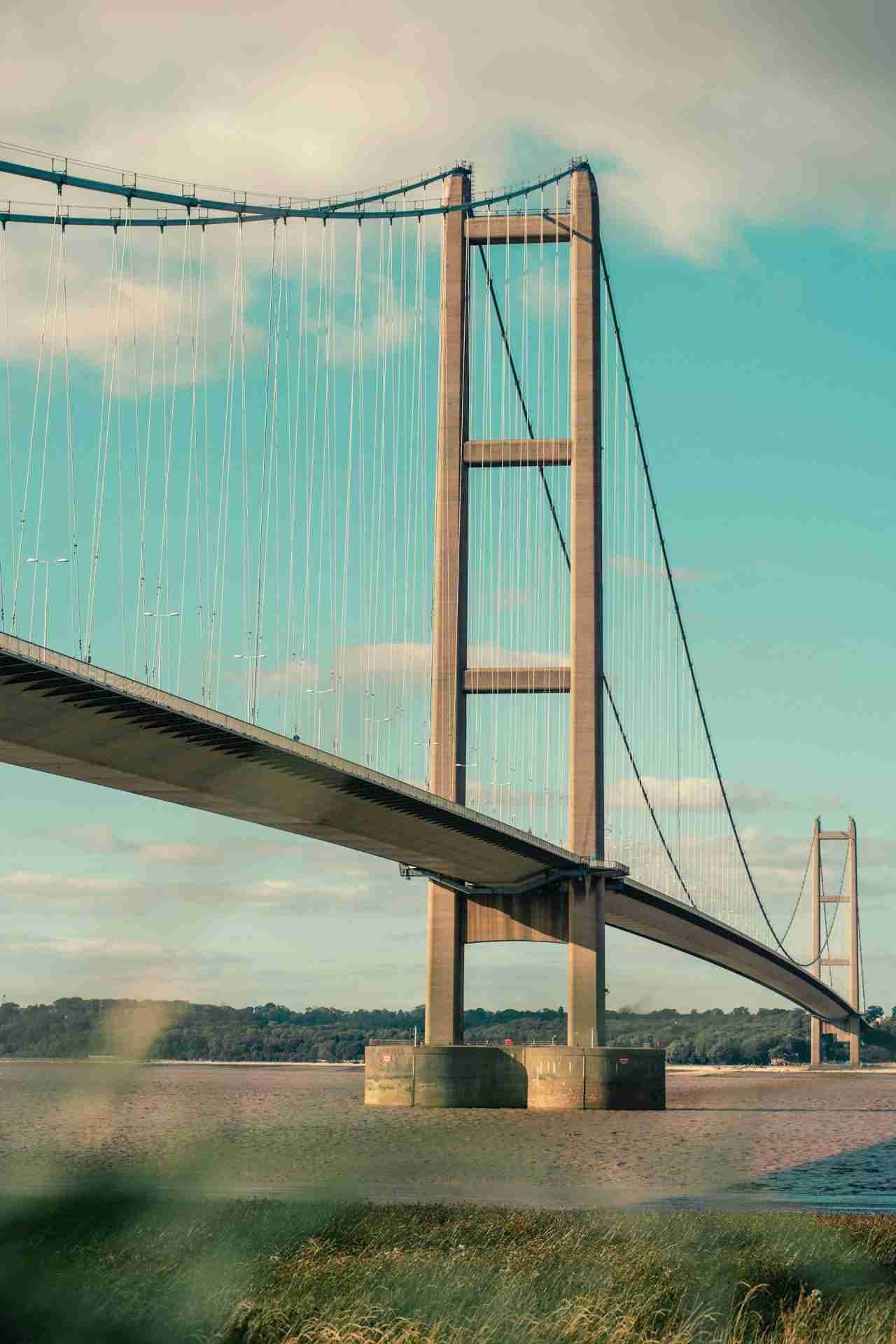
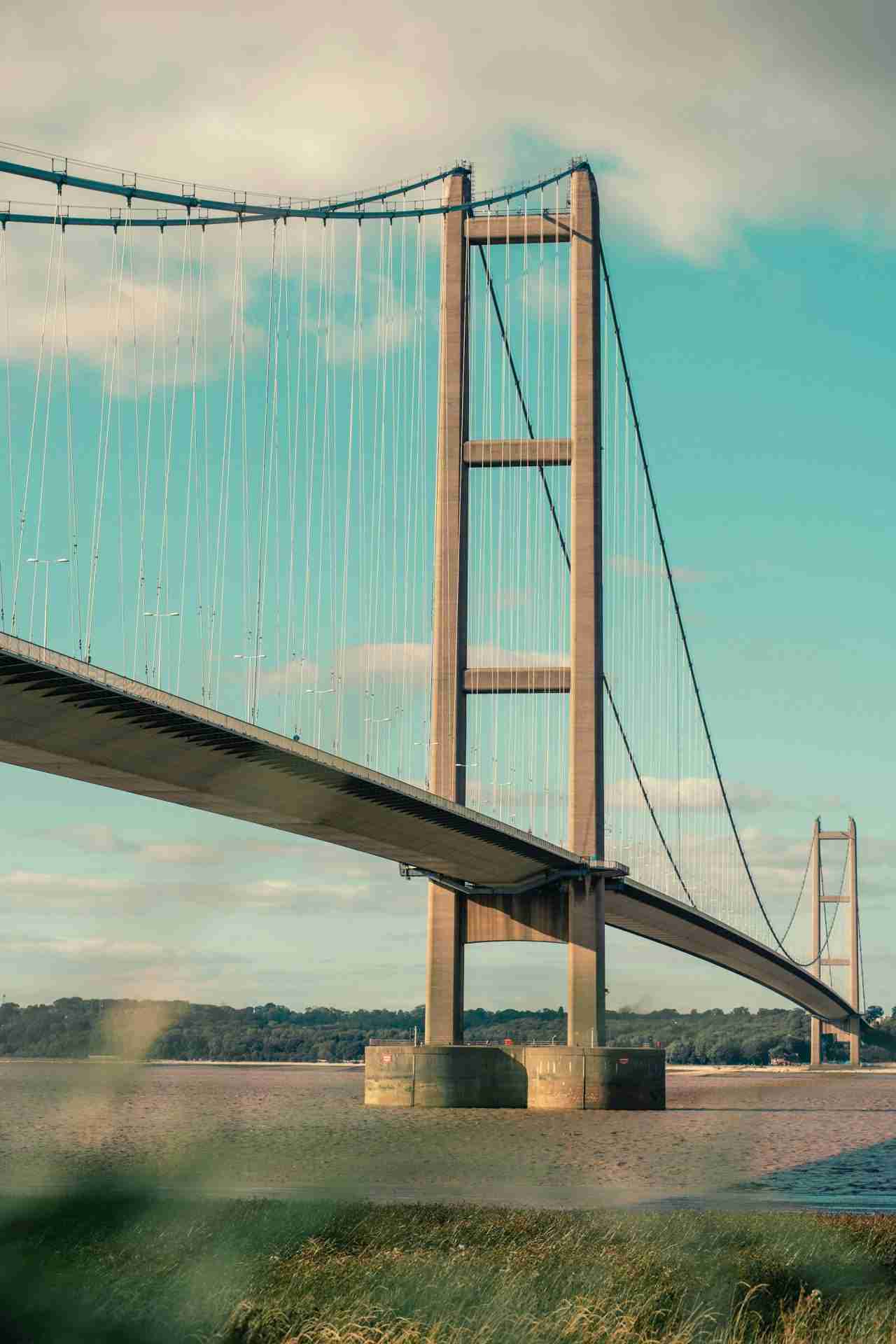
Spanning the vast tidal sweep of the Humber Estuary, the Humber Bridge remains one of Britain's most visually commanding man-made landmarks. Stretching 2,220 meters from Hessle on the north bank to Barton-upon-Humber in Lincolnshire, it was once the longest single-span suspension bridge in the world. More than just an engineering marvel, the Humber Bridge is a dynamic photographic subject—massive in scale, minimalist in form, and constantly reinterpreted by shifting weather, tidal movement, and changing light. Whether shot from riverbank mudflats, distant headlands, or directly beneath its steel cables, the bridge offers endless variation in mood and composition, from stark industrial grandeur to poetic silhouettes at dusk.
Best Photography Opportunities
• Symmetrical Compositions from Hessle Foreshore
: One of the most iconic vantage points lies just west of the north tower at Hessle Foreshore. From here, the bridge stretches out into the estuary in an elegant, symmetrical line that narrows to a vanishing point on the southern horizon. A wide-angle lens (16–24mm) allows you to exaggerate the foreground—whether that's exposed river stones, marsh grass, or a line of weathered timber—while still capturing the full breadth of the suspension structure. The north tower rises just meters from shore, allowing for dramatic low-angle compositions that emphasize scale. On clear mornings, the bridge reflects in the calm high tide, offering near-perfect symmetry; on overcast days, fog wraps around the cables and turns the bridge into a study in vanishing lines.
• Minimalist Shots from the Mudflats at Low Tide
: At low tide, the estuary's wide mudflats stretch out beneath the bridge like a minimalist canvas. Shooting from a lower elevation near the water's edge—especially east of the bridge—lets you isolate its silhouette against a vast sky and layered estuarine textures. This is an ideal setting for long exposures using a 10-stop ND filter. The flowing movement of the receding tide or drifting clouds can turn the background into a smooth tonal wash, while the bridge remains crisp and immovable. Black-and-white conversions work beautifully here, emphasizing contrast between the geometric cables and the soft gradients of water and sky. Take care on the mudflats; they can be dangerously soft, so keep to firm ground and shoot with a telephoto lens if needed.
• Underneath the Deck from the Barton Side
: For sheer drama and visual power, walk along the pedestrian path from the Barton-upon-Humber approach and stand directly beneath the bridge's steel deck. The underside is a study in symmetry—steel girders and cable anchorages converging above in rhythmic patterns. Shooting vertically with a wide-angle lens emphasizes depth and draws the viewer's eye into the vanishing point created by the receding support structure. In late afternoon light, strong shadows form across the supports, giving the image added dimension. You can also photograph passing cyclists or pedestrians to introduce scale and human context. A fisheye lens creates intriguing distortions here, curving the lines of the deck into abstract shapes without losing the architectural identity of the bridge.
• Twilight and Blue Hour from Waterside Promenade
: As daylight fades, the Humber Bridge transforms into a glowing strand of lights suspended in the dark. From the riverside path near Hessle's promenade or the adjacent country park, position yourself to capture the full sweep of the lit bridge against the deepening blue sky. The combination of steel structure, reflections in the water, and the faint orange glow of distant industry creates a color palette that's both moody and modern. Use a tripod and a low ISO to preserve dynamic range, and try stopping down to f/11–f/16 to produce clean starbursts from the bridge's lights. Long exposures smooth the water and let light trails from passing ships or planes streak through the frame, adding energy to static compositions.
• Distant Views from Elevated Ground in Barton
: To gain a more expansive perspective, head into the hills west of Barton for elevated views looking east toward the bridge. This is where you can shoot wide landscape compositions that include the curve of the Humber Estuary, the full arc of the suspension cables, and dramatic skies rolling in from the North Sea. In winter, you may even catch early morning fog blanketing the river while the bridge towers rise above, creating surreal, otherworldly imagery. A telephoto lens (100–400mm) lets you compress the distance between cables, towers, and horizon, while a wide-angle lens captures the setting in context—rolling fields, wind-swept grasses, and distant clouds.
Best Time to Visit
The Humber Bridge offers photogenic possibilities year-round, but each season brings its own light and mood. Spring and autumn are perhaps the most productive, with softer angles of light, shifting cloud formations, and longer golden hours. Mornings in spring often bring mist or fog that clings to the river and softens the distant shorelines, while autumn evenings offer rich color in both foliage and sky.
In summer, long days give ample opportunity for shooting from multiple perspectives, though midday light can be harsh. Early morning and late afternoon remain the best times to capture the bridge's contours with texture and depth. Sunrises from the Barton side often silhouette the bridge beautifully against the estuary sky.
Winter adds drama to the scene. Low sun casts strong lateral shadows along the bridge's deck and towers, while frost or snow can subtly highlight railings and ground textures. Blue hour lingers longer, giving you more time to work with low light and reflections. Just be mindful of wind chill on the estuary—it can be intense, even when conditions seem calm inland.
How to Get There
The Humber Bridge is easily accessed from either side of the estuary. From the north, head to Hessle via the A63, where clear signage leads to Humber Bridge Country Park and Hessle Foreshore. Free and paid parking options are available, including the large car park at the base of the north tower. Pedestrian and cyclist access is straightforward, and there are multiple entry points to the riverside trails that run both east and west of the bridge.
From the south, approach via Barton-upon-Humber and follow signs for Waterside Road or Far Ings Nature Reserve. A small car park exists near the south tower, and footpaths lead directly beneath the bridge and up onto the pedestrian deck. There is no toll for crossing the bridge on foot or by bike, and the walkway is open year-round, though wind conditions may occasionally lead to temporary closures.
There are no photography restrictions in public areas, and tripods are generally allowed on paths and foreshore areas. Drone use should be approached with caution—this is a major transport structure and located near both populated zones and ecological reserves. Always consult current CAA guidelines before flying.
Gear to Elevate Your Bridge Work
Shooting a structure as immense and exposed as the Humber Bridge calls for a nimble but versatile kit. A wide-angle zoom (16–35mm or equivalent) is essential for capturing the full sweep of the bridge from close quarters, especially when working beneath or beside the towers. A standard zoom (24–70mm) bridges the gap between wide scenic shots and tighter architectural detail.
A medium-to-long telephoto (70–200mm or longer) is ideal for compressing the cables, isolating structural patterns, or capturing light and color along the deck at distance—especially from elevated viewpoints. For long exposures over water, pack a sturdy tripod and neutral density filters (6- and 10-stop). Polarizers help cut haze across the estuary and manage reflection in wet ground or low tide flats.
Weather resistance is important here. Wind and estuary spray can be unpredictable, even on calm days. Keep a lens cloth and rain sleeve in your kit. For night photography, fast primes (f/1.4 or f/2.8) offer clarity and low-light precision, particularly if shooting handheld in cold conditions when setup time matters. For aerial shots, drone use requires strict adherence to aviation laws—but the top-down view of the bridge's graceful curves can be stunning if conditions allow.
Nearby Photography Locations
: Just steps from the bridge, this natural shoreline area offers expansive estuary views, rich textural foregrounds, and wooded trails that create frame-within-frame compositions. It's a peaceful place to catch dawn light and reflections.
: On the south bank, this wetlands reserve sits just beneath the bridge and offers a mix of wildlife photography and landscape opportunities. The viewing platforms and open water areas are ideal for telephoto work, particularly during sunrise.
: These post-industrial wetlands offer moody, minimalist compositions of reeds, still ponds, and skeletal trees. Look back toward the bridge from the trails for layered views of nature reclaiming space beneath the looming modern structure.
: About ten minutes east of the bridge by car or bike, this riverside walk provides open views across the estuary back toward the Humber Bridge. Sunset silhouettes and twilight reflections are especially strong here.
• The Deep and Hull Marina
: For those combining bridge photography with urban scenes, head back into Hull for contemporary architecture, moored boats, and lit walkways—offering excellent contrast with the industrial majesty of the bridge.
The Humber Bridge is more than a feat of civil engineering—it's a dynamic canvas for photographers. Whether you're capturing the soft morning mist lifting from the river, the golden hour glowing along the suspension cables, or the stark contrast of steel against a stormy sky, the bridge rewards experimentation, patience, and a keen eye for light and line. Few locations combine human scale and epic scope so seamlessly.
Comments
Loading comments…