
Hunstanton South Beach, situated along the Norfolk coast of eastern England, is one of the most visually distinctive seaside landscapes in the UK. Known for its dramatic tri-colored cliffs, expansive sand flats, and famous west-facing orientation—a rarity along England's east coast—this beach provides a rich variety of compositional elements for photographers throughout the year. The sandstone and chalk cliffs, with vivid bands of red, orange, and white, reflect changing light in striking ways, while the beach's flat profile invites long exposures and wide, open perspectives.
Best Photography Opportunities
• Cliffside Compositions with Layered Color
The cliffs at Hunstanton are the visual signature of the location. Their bold stratification of orange carrstone, white chalk, and a red oxidized layer provides a powerful vertical backdrop to horizontal beach scenes. Photographers can shoot wide from the sand to emphasize the scale and symmetry of the cliffs, or frame tighter studies that highlight cracks, erosion patterns, and vegetation creeping along ledges. Side lighting at golden hour reveals the full texture and enhances color contrast.
• Sunset Silhouettes and Long Exposures Facing West
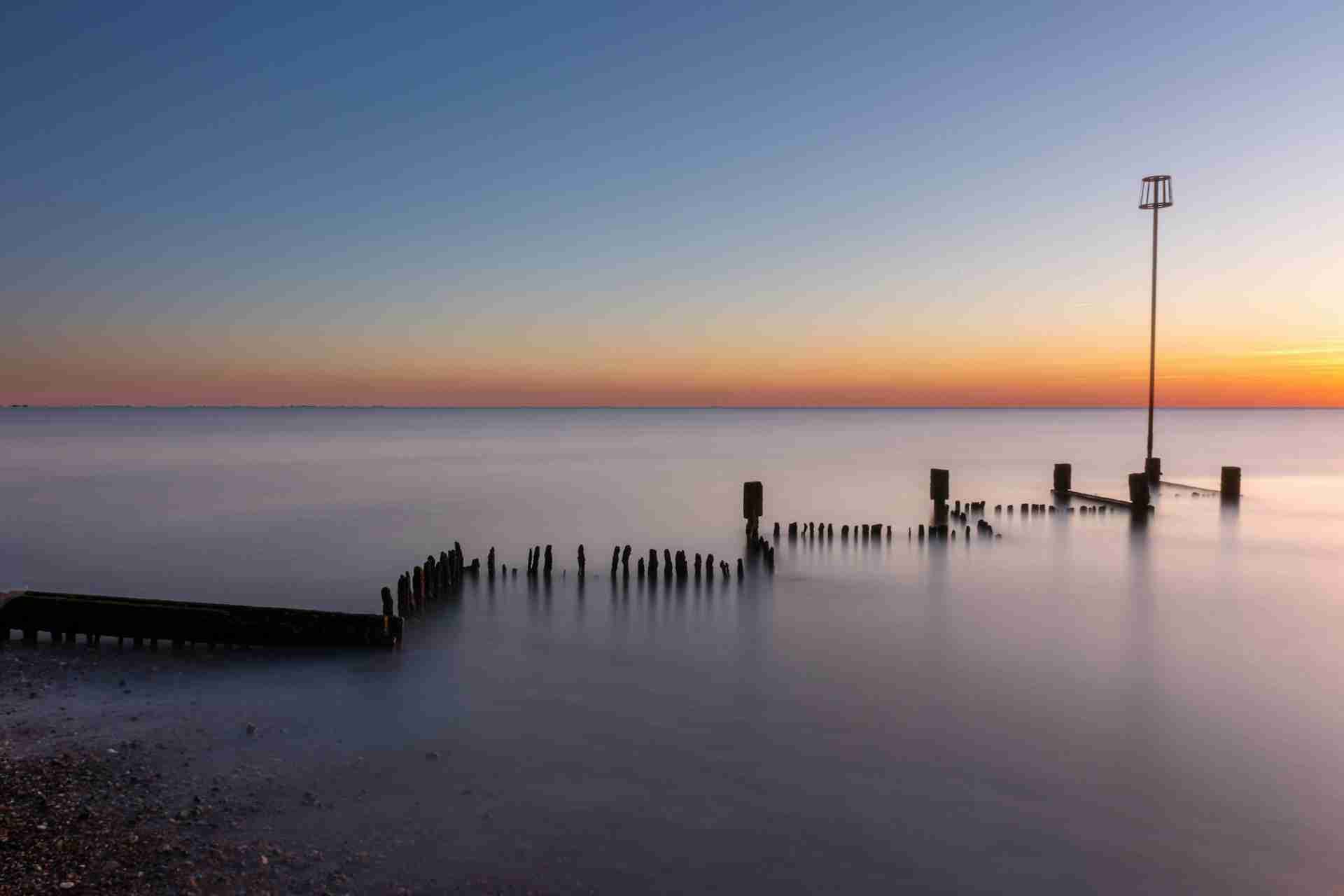
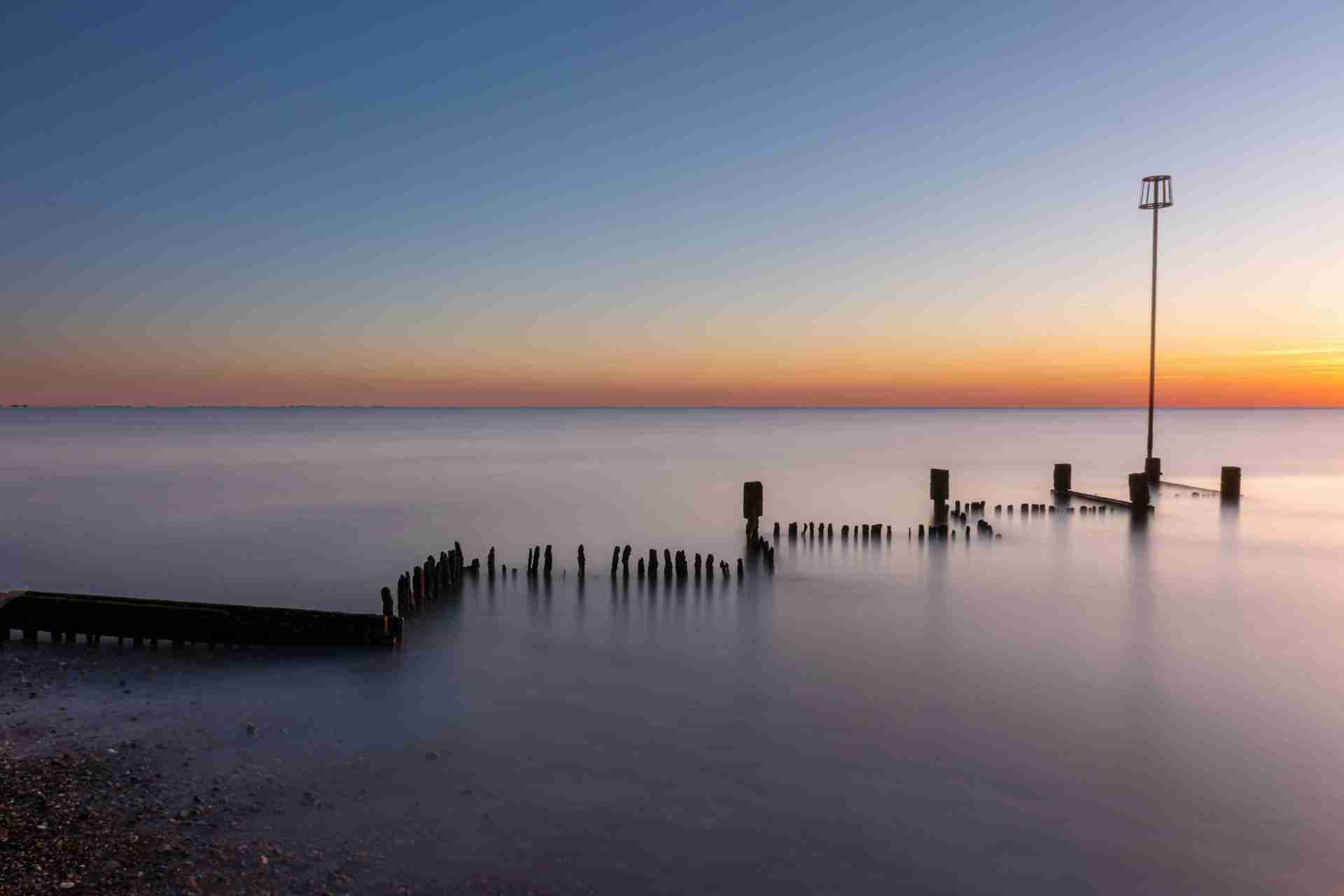
One of Hunstanton's most distinctive features is its westward orientation, making it one of the only places on England's east coast to offer open sea sunsets. During late spring and summer, the sun sets directly over the horizon. Use long exposures here to smooth the sea surface and catch reflected light on wet sand, especially at low tide. Silhouettes of walkers, dogs, or the cliffs themselves can create strong focal elements in minimalist compositions.
• Tidal Pools and Foreground Texture at Low Tide
As the tide retreats, Hunstanton's intertidal zone reveals a wealth of compositional opportunities. Shallow pools form among the rocks and seaweed beds, catching reflections of the cliffs or sky above. These can be framed low and close with a wide-angle lens, using natural leading lines to draw the eye back toward the horizon. Small shells, rippled sand, and foam trails all offer opportunities for macro and detail work in the hour before the tide turns.
• Abstract Studies of Sea Defenses and Weathered Structures
Wooden groynes, iron rings, and decaying breakwaters provide human-built contrast to the beach's organic textures. Use a mid-range or telephoto lens to isolate repeating forms, weathered textures, or juxtapositions between natural and artificial materials. Rust, peeling paint, and barnacle-covered timbers can be approached as abstract subjects or framed within wider scenes to add narrative complexity.
• Storm Light and Big Skies Over The Wash
Hunstanton's coastal weather is highly changeable, and this creates powerful skies over the flat seascape of The Wash. Storm clouds, sunbursts through rain curtains, and offshore rain bands all deliver mood and movement. A telephoto lens can compress cloud layers over the water, while wide shots with careful horizon placement emphasize negative space and dramatic scale. Shooting into the weather can result in bold, high-contrast scenes with deep visual impact.
Best Time to Visit
The best seasons for photography at Hunstanton South Beach are spring and autumn, when the light is soft, the sunsets are well-placed, and the beach is quieter. During these months, the combination of tidal variation, dynamic skies, and warm tones on the cliffs provides a strong visual mix for both wide-angle landscapes and more detailed shoreline studies.
Low tide is particularly important to maximize the range of foreground interest, including tidal pools, seaweed formations, and sand ripples. Consult local tide charts to plan your visit for the two-hour window around low tide—especially if you're aiming to use the rock platforms or photograph reflections. Sunset is best from April to September, when the sun dips directly over the water and casts warm light across the entire scene.
Stormy or transitional weather systems often provide the most dramatic results, particularly when shooting sky-focused compositions or high-contrast scenes of sun breaking through clouds. Fog and mist in early morning can also create soft, pastel-toned atmospheres that lend themselves to minimal, meditative images.
How to Get There
Hunstanton South Beach is located at the western end of the seaside town of Hunstanton in Norfolk. From the town center, follow signs to the promenade and continue south toward the end of Charles Road, which leads directly to the beachfront. The beach is fully accessible by car, with public parking available along the South Promenade and adjacent streets. There are no access fees to use the beach.
Photographers arriving before sunrise or staying through sunset will find several well-maintained footpaths and staircases that provide quick access from the upper promenade down to the sand. During the summer, visitor numbers increase, but the southern stretch of the beach remains quieter than the town's main central promenade. The area is flat and walkable, making it easy to scout and reposition throughout the day.
Be aware that the tide comes in quickly and can cut off certain rock formations and sandbanks, so keep an eye on the waterline during long shooting sessions. There are no restrictions on tripod use, and the location is ideal for both handheld and long-exposure setups.
Recommended Photography Gear
For maximum versatility along Hunstanton South Beach, a wide-angle lens is essential to capture the vast skies, cliff faces, and sweeping tidal flats. Focal lengths in the 16–35mm range allow for immersive compositions that lead the viewer from the foreground texture to the distant sky. A mid-range zoom (24–70mm) is useful for tighter studies of cliffs, structures, and human figures within the beachscape.
A telephoto lens (70–200mm) enables isolation of weather details, storm clouds, or abstract textures in both natural and built elements. This is especially useful when shooting during changing conditions, or when focusing on color contrast between sky and sea. A macro lens or extension tubes can add creative flexibility when working with shells, seaweed, and rock textures in the intertidal zone.
A sturdy tripod is vital for low-light and long-exposure work, especially when capturing sunset over the water. ND filters are recommended for smoothing wave movement and controlling shutter speed during bright hours, while a polarizer can help deepen sky contrast and reduce glare on wet surfaces. Weatherproof covers and a lens cloth are essential given the salt spray and wind common to this exposed coast.
Nearby Photography Locations
Just north of South Beach, Old Hunstanton offers a more elevated viewpoint with chalk cliffs, grassy dunes, and the historic lighthouse. The area is ideal for sunset silhouettes and layered coastal landscapes that combine architectural elements with natural forms.
A quieter, more natural beach located just east of Hunstanton, Holme is known for its birdlife, salt marshes, and long views across The Wash. The changing tides and open horizons make it well-suited for minimalist and wildlife-inclusive compositions.
An old fishing harbour set inland from the coast, Thornham offers weathered boats, wooden posts, and wide salt flats. At low tide, the exposed mudflats create strong textural images, while the open skies allow for striking silhouette work during golden hour.
Further along the Norfolk coast, Brancaster offers sweeping sand dunes and open shoreline. Ideal for atmospheric beach scenes, the area provides opportunities for dune-framed compositions, soft light studies, and candid images of walkers or wildlife in a minimalist setting.
Operated by the RSPB, this wetland reserve is a magnet for bird photographers. Elevated walkways and hides provide access to marshland, reedbeds, and coastal pools with reflections and seasonal bird migrations that add dynamic interest to wildlife and landscape frames.
Comments
Loading comments…