
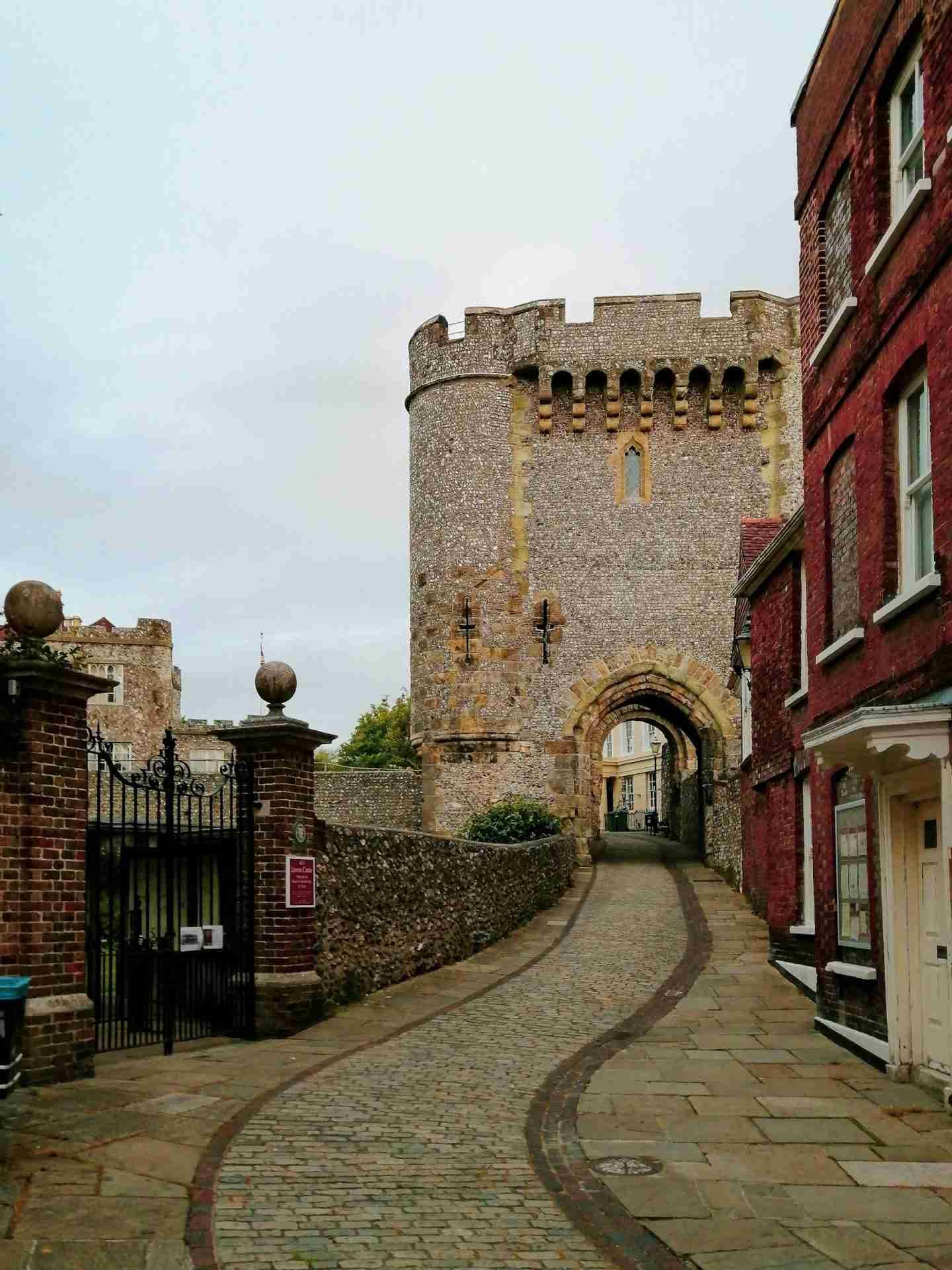
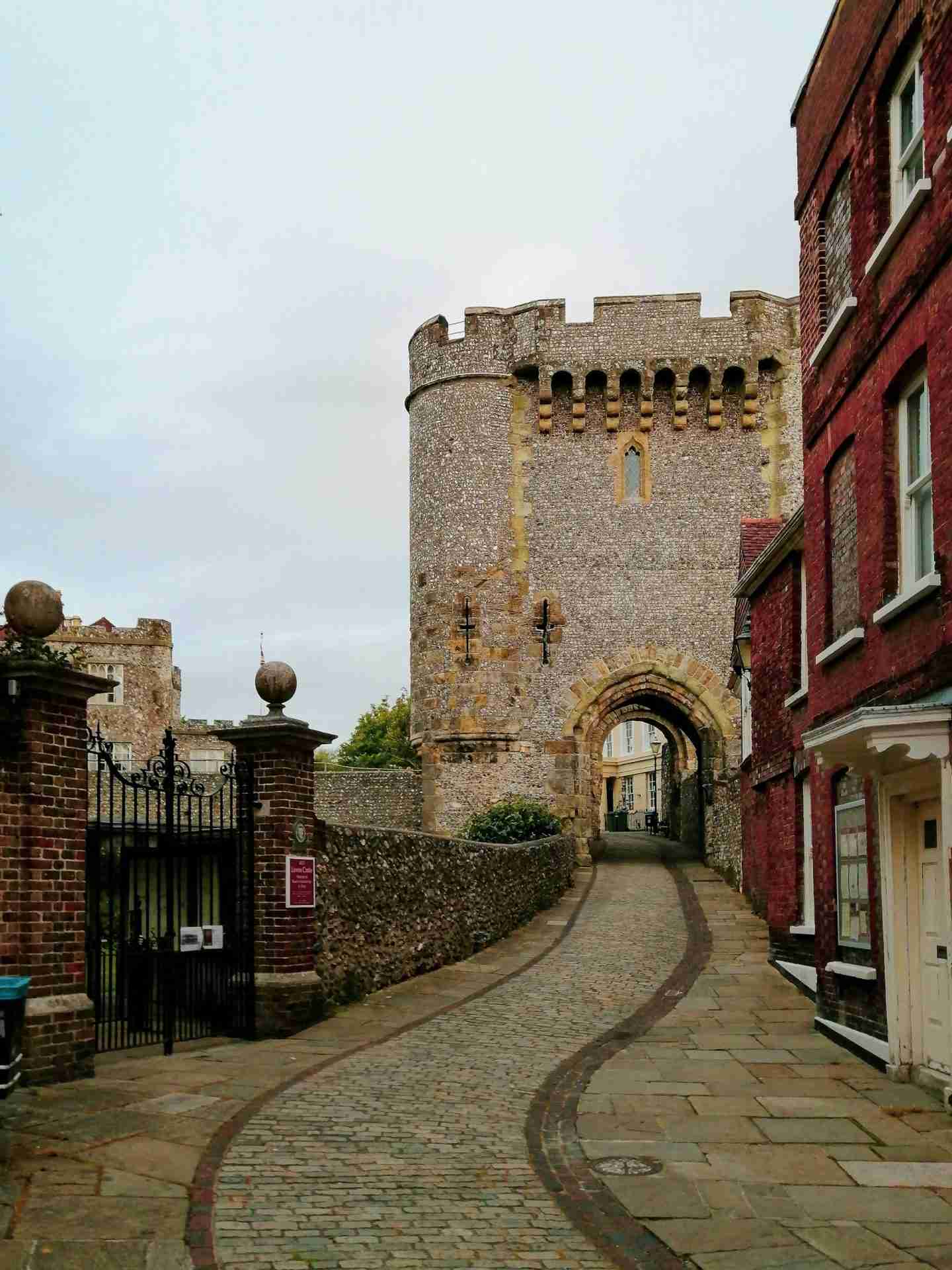
Lewes Castle rises above the historic town of Lewes in East Sussex, its twin mottes and stone keep standing prominently against the skyline. Built shortly after the Norman Conquest, the castle sits on elevated ground with commanding views across the South Downs and the River Ouse valley. The structure is compact but layered, with steep grassy banks, flint and stone walls, narrow stairways, and a well preserved keep that forms the focal point. From below, the castle feels solid and defensive. From above, it becomes a panoramic viewpoint over rolling countryside and clustered rooftops. For photographers, Lewes Castle offers both architectural detail and elevated landscape perspectives in one manageable location.
Best Photography Opportunities
• Views from the Town Below –
One of the strongest compositions is from the streets and gardens below the castle, where both mottes rise distinctly above the town. This angle shows the unusual twin mound structure that sets Lewes apart from many other Norman castles. A moderate telephoto lens works well to compress the slopes and bring the keep into clearer prominence. Early morning light often strikes the eastern side of the castle, creating contrast between sunlit grass and shaded stone. Including rooftops in the lower frame adds scale and context without overwhelming the structure. Small shifts in position can help separate the towers cleanly from surrounding buildings.
• Stone Keep Details –
Up close, the flint and stone construction provides strong textural opportunities. The keep's walls show subtle variation in tone and material that respond well to angled light. A mid range zoom allows you to isolate sections of wall, arrow slits, and staircases without clutter. Side lighting enhances depth in mortar lines and weathered surfaces. Even overcast days can work well for detail studies, as diffused light keeps tones balanced. These tighter compositions add variety beyond standard wide castle views.
• View from the Top of the Keep –
Climbing to the top of the keep gives you sweeping views across Lewes and the surrounding South Downs. From this elevated position, you can photograph rolling hills, the River Ouse, and clusters of historic rooftops. A wide lens captures the breadth of the landscape, while a longer focal length can isolate church spires or distant ridgelines. Late afternoon light is especially strong, as it adds shape to the hills and separates foreground from background. This vantage point transforms the session from purely architectural to landscape focused.
• Framing the Keep Through Historic Town Streets –
One of the most engaging ways to photograph Lewes Castle is from within the narrow streets below, using buildings to frame the keep above. From certain points along Castle Ditch Lane and nearby streets, the tower rises tightly between rows of houses, creating depth and a layered composition. A mid range to short telephoto lens works well to compress the scene slightly and emphasize the castle's dominance over the town. Early morning is especially strong here, as angled light hits the upper stonework while the street remains in softer shadow. This contrast naturally draws the eye upward toward the keep. These compositions feel grounded and contextual rather than isolated, showing how the castle sits directly within the fabric of Lewes instead of apart from it.
• Sunset –
Facing west from the castle grounds, you can capture sunset light over the South Downs. The hills soften into layered silhouettes as the sun lowers. Including part of the castle wall in the foreground anchors the composition. A tripod helps as light fades, especially if you want to preserve color in the sky while maintaining detail in the land. Clear evenings offer gentle gradients, while partly cloudy skies can produce more dramatic color shifts.
Best Time to Visit
Spring and summer offer greener slopes and longer daylight hours, which are helpful for sunset photography from the castle grounds. Early morning is ideal for photographing the structure from town level, as light hits the eastern side of the mottes and crowds are minimal.
Late afternoon into sunset is strongest for views toward the South Downs. Autumn can add warm tones to surrounding trees and fields, enhancing landscape compositions. Winter offers clearer air and stronger visibility across the valley, though grass may appear muted. Because the castle grounds are exposed, wind can be noticeable at any time of year.
How to Get There
Lewes Castle is located in the town of Lewes in East Sussex, England. Lewes is accessible by train from London and other major towns in the region. From Lewes railway station, the castle is within walking distance through the historic town center.
Parking is available in town car parks, followed by a short uphill walk to the entrance. Entry to the castle grounds and keep requires a ticket. The climb to the top involves narrow staircases, so stable footwear is recommended. Exterior views from surrounding streets and public paths are freely accessible.
Recommended Photography Gear
A wide lens is useful for capturing the full structure and elevated landscape views. A mid range zoom provides flexibility for architectural detail and street level compositions. A telephoto lens is helpful for compressing distant hills and isolating features within the town below.
A tripod is recommended for sunset and low light photography, particularly from the top of the keep. A polarizer can deepen sky tones and manage glare during bright conditions. Because access involves climbing steep paths and narrow steps, keeping your gear compact makes movement easier.
Nearby Photography Locations
offer rolling hills and open countryside views. Sunrise and sunset provide strong directional light across the ridgelines. It pairs naturally with castle photography for broader landscape coverage.
is a historic timber framed house that offers architectural contrast to the Norman stone of the castle. Its courtyard and exterior details work well for intimate compositions. Morning light enhances texture in the timber and plaster.
provides stone arches and historic atmosphere in a quieter setting. It offers opportunities for structural detail and layered compositions. Overcast light works particularly well here.
• River Ouse
runs through Lewes and offers reflections of surrounding buildings and countryside. Early morning calm can produce smooth water surfaces. It adds a softer landscape element to complement the castle's height.
• Ditchling Beacon
provides elevated views across Sussex. It is ideal for wide landscape photography and dramatic sky compositions. Late afternoon light enhances terrain depth.
Comments
Loading comments…