
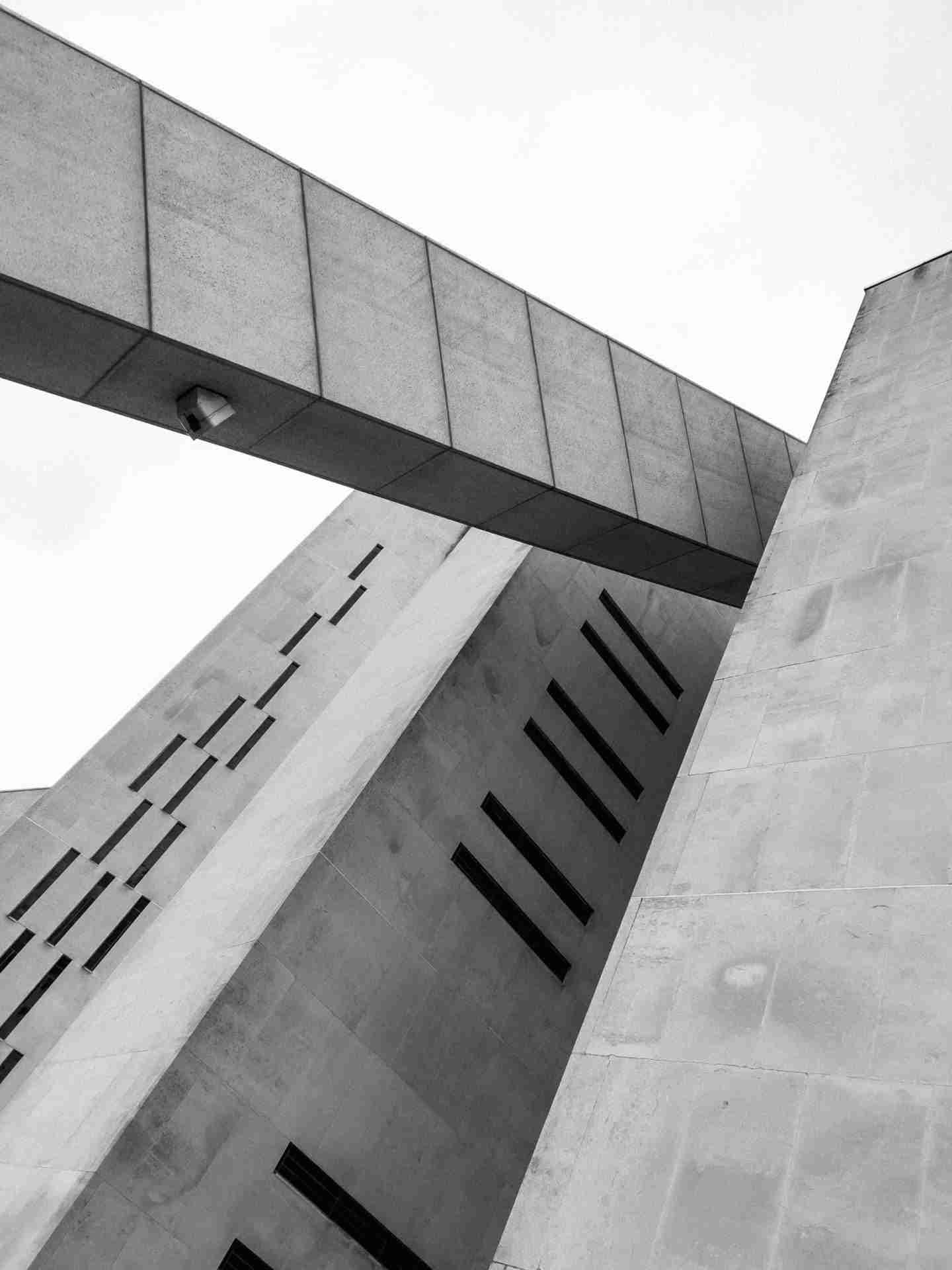
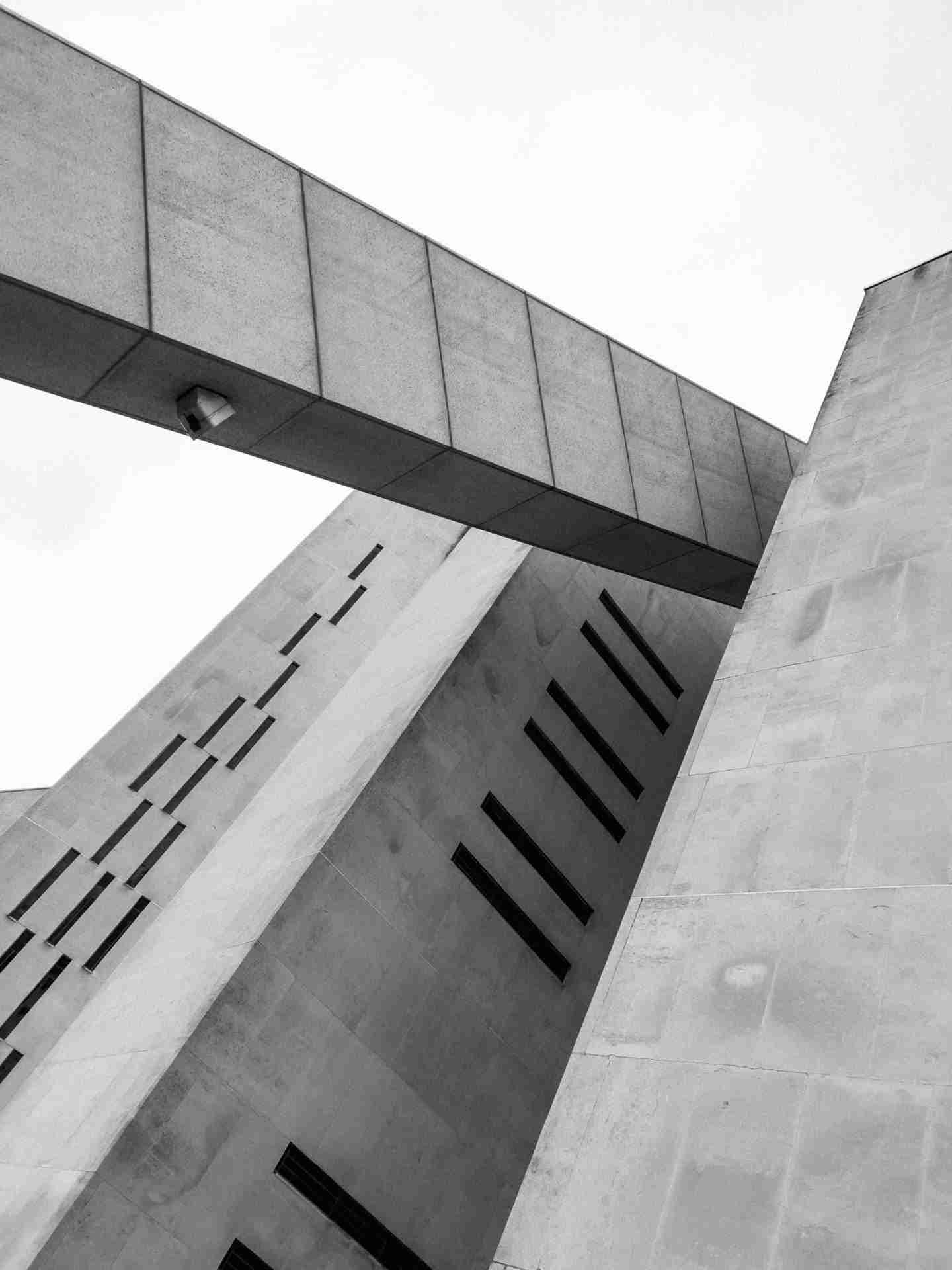
Liverpool Metropolitan Cathedral stands apart from traditional religious architecture with its circular structure, sharp vertical accents, and bold modernist design. The building is instantly recognizable with its crown-like lantern tower, angular concrete ribs, and stained glass windows that glow in the changing light. Unlike its more traditional Anglican counterpart at the other end of Hope Street, this cathedral offers a completely different photographic experience. It is defined by minimalism, contrast, and geometry. For photographers, it presents a chance to shoot strong lines, abstract forms, and thoughtful symmetry all within a compact urban setting.
Best Photography Opportunities
• Frontal View Up the Steps Toward the Tower
From the base of the plaza, a straight-on composition looking up the main steps creates a centered, symmetrical frame with the tower rising sharply behind the facade. This is one of the most balanced angles available, especially early in the morning or late in the afternoon when light casts long shadows across the concrete. A wide-angle lens works well here to exaggerate the height and include foreground elements like the steps or plaza tiles. Composing tightly around the entrance allows the stained glass and vertical concrete fins to take on a graphic quality. This shot is especially clean during dry, overcast conditions when shadows are soft and color in the glass can come through more clearly.
• Side Views that Highlight Angular Symmetry
Moving around to either side of the cathedral reveals how the circular form and the vertical ribs interact with the open sky. These side compositions can show the building's structure as a rising pattern of repeated angles, particularly effective under shifting cloud cover or directional light. Use a standard zoom or wide prime to frame the ribs against sky or nearby buildings. In overcast weather, the building's pale tones and rough textures become the focus, allowing for minimalistic black and white work. On clear days, the contrast between sky and stone offers strong silhouettes in late light.
• Close-Up Abstracts of Glass and Concrete
The stained glass and raw surfaces of the cathedral provide opportunities for abstract, detail-driven photography. The tower windows, with their rich color and framing, can be isolated with a short telephoto lens to highlight the contrast between modern glasswork and raw structural concrete. Use soft side light to catch the texture in the stone without overwhelming the color in the glass. Look for intersections where shapes meet—such as where the radial windows connect to the main support pillars—for natural geometric framing. These detail shots work well on cloudy days when light is diffused and color saturation is easier to manage.
• Interior Stained Glass and Ceiling Geometry
Inside the cathedral, the ceiling structure and lantern tower offer stunning symmetry from nearly any point in the nave. Shooting straight up from the center beneath the tower reveals concentric rings of stained glass that radiate outward and draw the viewer's eye toward the top. A wide or ultra-wide lens is useful here, especially if you're working handheld and want to keep distortion under control. Use a higher ISO to handle the lower light conditions inside without blur. Be respectful of quiet times or services, and take advantage of the natural light filtering through the colored glass to build compositions from light and shadow rather than structure alone.
• Twilight and Nighttime Urban Context
In the hour after sunset, the cathedral is softly lit from within, casting a gentle glow through its stained glass while remaining silhouetted against the sky. Blue hour creates strong contrast between the warm interior light and the cooler cityscape. Use a tripod to work slower exposures from the plaza or surrounding sidewalks. Including foreground elements such as wet pavement, bike racks, or silhouetted figures adds urban character to an otherwise clean architectural frame. This is also a good time to isolate the lantern tower with a long lens as it glows against the darkening sky.
Best Time to Visit
The cathedral is photographable year-round, but light quality and crowd levels vary with time of day and season. Early mornings offer clean light across the front steps and minimal foot traffic, giving photographers time to work slower compositions and explore different framing. The soft shadow angles in the morning help emphasize the vertical ribs and the tower structure without washing out the concrete's texture. Late afternoons offer stronger contrast and warm light on the west-facing parts of the building, particularly in spring and autumn when sun angles are lower.
In overcast weather, which is common in Liverpool, the building's textures and minimalist design become more pronounced. These conditions work well for black and white shooting or abstract architectural studies. Interior photography is best during mid-morning or early afternoon when light enters through the stained glass at stronger angles, bringing color into the nave and tower. Night shooting is most effective in winter months when blue hour comes earlier and you can capture interior light through the windows without staying out too late. The site is active and often visited, so aim for off-peak hours if you want clean shots without people.
How to Get There
Liverpool Metropolitan Cathedral is located on Mount Pleasant, near the heart of the city, and easily reached on foot from central transport hubs. Liverpool Lime Street Station is about a ten-minute walk away, with multiple bus lines running nearby along Brownlow Hill and Hope Street. For drivers, limited public parking is available in the surrounding streets or nearby pay lots. The area is very walkable and surrounded by other cultural and architectural points of interest, making it easy to combine visits.
There are no restrictions on exterior photography, and tripods are permitted in public spaces around the building. Interior photography is allowed during open hours, though tripods may be restricted inside. As always, avoid shooting during services or events, and check for any temporary closures before visiting. The building and plaza are accessible daily, with wide walkways and clear sight lines available from multiple elevations.
Recommended Photography Gear
A wide-angle lens in the 16–35mm range is essential for both the exterior and interior of the cathedral. It allows you to work the plaza steps into your frame or shoot upward to capture the full ceiling geometry from the nave. A 24–70mm standard zoom is useful for tighter compositions, side views, or shooting from across the street where more layering is available. A short telephoto lens in the 85–135mm range is helpful for isolating window details, lines in the structure, or framing the tower against the sky without crowding your composition.
Tripods are useful in the early morning or at blue hour when longer exposures become necessary, especially for balancing exposure between sky and lit structure. A circular polarizer helps control reflections on the building's glass and deepens contrast in the sky when conditions allow. For indoor shooting, a fast lens with good low-light performance will make it easier to capture the stained glass without a tripod. Bring a weather-resistant camera bag, as the plaza is exposed and conditions can shift quickly. Lens wipes are helpful for managing mist or rain on glass, particularly in colder months.
Nearby Photography Locations
Just down Hope Street, this massive neo-Gothic structure contrasts sharply with the Metropolitan Cathedral's modernism. Its tower and arches are best photographed at golden hour or in evening light when the building casts deep shadows and glows from within.
A few blocks away, this roofless church preserved as a war memorial offers unique compositions with exposed stone, sky, and interior garden elements. Great for dramatic contrast or abstract framing.
The historic streets surrounding the cathedral are filled with well-preserved terraced houses, wrought iron railings, and classic stone steps. Perfect for detail shots or environmental portrait backdrops.
Directly adjacent to the cathedral, the university buildings offer a mix of redbrick historic structures and modern architecture. Works well for mixing academic and urban elements in a single shoot.
• Philharmonic Hall and Hope Street
This stretch connects the two cathedrals and is lined with cultural venues, statues, and well-maintained facades. Best explored on foot with a standard zoom or prime lens for street-level photography.
Liverpool Metropolitan Cathedral offers photographers something different from the usual church shoot. With its clean shapes, bold textures, and geometric interior, it becomes a place to focus on light, balance, and form. It's a strong subject in all conditions, and even a short visit can deliver multiple styles of imagery, from modern architectural studies to quiet, color-driven abstracts.
Comments
Loading comments…