
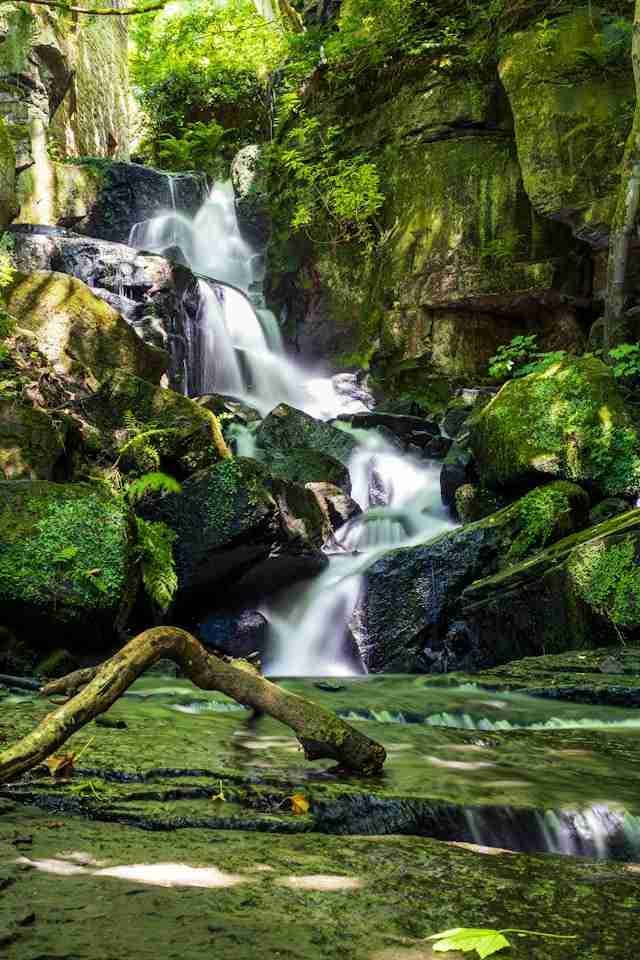
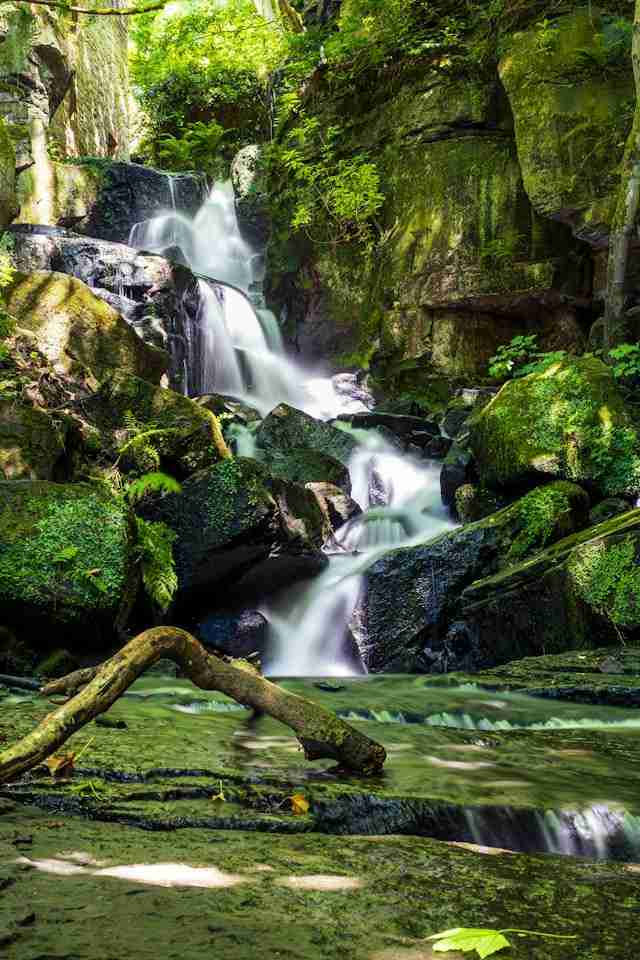
Tucked into a steep wooded valley on the edge of Matlock, Lumsdale Waterfall is one of the most atmospheric locations for photographing moving water in the Peak District region. Surrounded by the moss-covered ruins of 18th- and 19th-century mill buildings, the waterfall forms part of a short but very photogenic cascade system that runs through the Lumsdale Valley. Rather than a single dramatic drop, Lumsdale Waterfall unfolds in layers, where stone walls, narrow channels, and old foundations frame the flowing stream at every turn. The enclosed character of the gorge creates ideal conditions for long exposures, allowing photographers to work in filtered light with strong compositional control. It is a place where industrial history and natural elements have merged over time, creating a textured, weathered setting perfect for close studies and moody frames.
Best Photography Opportunities
• The main cascade below the upper footpath
is the most recognizable feature of the site. Water flows across a wide rock ledge and drops in a steady sheet, framed by mossy stone and ivy-draped walls. From the slope below, photographers can find stable footing to set up low-angle compositions that incorporate foreground texture. A shutter speed of two to four seconds usually delivers a soft, flowing effect without losing structure in the water. The surrounding tree cover filters light beautifully, creating ideal conditions on overcast days or early mornings.
• Smaller upper falls along the stream bed
offer a more intimate and detailed shooting experience. These are found along the narrow trail that ascends the valley and are surrounded by layered stone and vegetation. Using a 70 to 200 millimeter lens allows you to isolate miniature cascades and fallen leaves that collect in eddies. These sections respond especially well to soft light and benefit from slow shutter speeds that highlight delicate motion. Framing with natural elements such as roots or broken stone helps build a more immersive image.
• Old mill ruins beside the stream
allow for visual storytelling by combining water with remnants of industrial architecture. Weathered archways, rusted iron fittings, and collapsed walls can be integrated into your frame for contrast between natural movement and manmade decay. These elements add depth and scale to wide shots and provide strong vertical anchors in the composition. Light often grazes these surfaces from the side, especially in the afternoon, emphasizing the textures in stone and brick. Black-and-white conversions work well here, especially when the light is flat or the mood is subdued.
• Reflections and motion in the quieter pools
just below the main cascade create opportunities for more abstract work. When leaves collect on the water or rotate in place, long exposures can turn these patterns into spirals of color and form. Composing low to the waterline helps emphasize the stillness or direction of flow. A polarizer will reduce glare and enhance the clarity of submerged rocks and texture. These scenes reward patience and observation, as the flow and light constantly shift.
• Monochrome and texture-focused compositions
are well suited to the dark, enclosed nature of the valley. The site's layered rock, decaying walls, and fast water create strong contrast that translates cleanly in black-and-white. Misty mornings or light rain enhance this effect, adding tonal variety without distracting color. Using a tripod and working at low ISO preserves the fine detail in stone and moss. These images can stand alone or complement wider shots with a focus on form and material.
Best Time to Visit
Lumsdale Waterfall is at its most photogenic in the cooler, wetter months from late autumn through early spring. This period brings stronger water flow and rich, damp textures to the rocks and surrounding forest. Overcast days are ideal for shooting, as the valley is shaded and benefits from even, diffused light that reduces harsh highlights and allows for longer exposures without high contrast.
Spring introduces new green growth along the valley floor and offers bright detail in the moss and ferns. Early mornings during this season are particularly good for capturing filtered light through the canopy without interference from foot traffic. Summer brings denser vegetation and lighter stream flow, which can flatten some of the visual drama but still works well for intimate, close-up scenes.
Autumn is the best season for overall variety. Fallen leaves add color to the stream and stonework, and the light tends to stay low and golden throughout the day. Winter, while often muddy, can bring unique opportunities with frost, snow dusting, or heavy flow after rain. Lumsdale rarely freezes, so water movement remains visible even in cold conditions.
How to Get There
Lumsdale Waterfall is located just east of Matlock in Derbyshire. From the town centre, it is a ten-minute drive or a pleasant uphill walk of around thirty minutes. The site is reached via Lumsdale Road, which narrows as it climbs into the valley. There is no dedicated parking at the waterfall itself, but small lay-bys exist along the road. Visitors should take care not to block driveways or restrict access, as the area is residential and narrow.
Access to the valley is via marked footpaths descending into the gorge. The terrain is uneven and can be slippery in wet weather, with steep sections and limited handrails. Tripods can be carried easily, but large wheeled cases are impractical. There are no entrance fees or gates, and the site is open at all times. However, certain areas of the ruins are fenced off to prevent damage, and care should be taken not to disturb or cross into restricted zones.
Public transport is available from Matlock town centre, with buses stopping within a short walk of the access trail. While less convenient than driving, this option avoids parking issues and is a viable alternative during peak times or weekends.
Recommended Photography Gear
A tripod is essential at Lumsdale, particularly for long exposure work and low-light shooting under the tree canopy. A ball head allows flexibility in tight or awkward setups along the stream bed, where level ground is limited. A remote shutter release or timer helps avoid camera shake during multi-second exposures.
A 16 to 35 millimeter wide-angle lens is the workhorse here for capturing full cascades and placing the waterfall in its immediate context. A 24 to 70 millimeter zoom is useful for tighter framing of smaller features, as well as combining water and structural elements. A longer telephoto lens can isolate distant architectural details or shoot through the trees for layered compositions.
Bring a selection of filters. A six-stop neutral density filter extends shutter time for smoothing water without overexposing in overcast light. A circular polarizer is critical for cutting glare off the stream and wet stone surfaces. Lens cloths and rain covers help manage moisture, and waterproof boots are recommended due to the slick and muddy paths.
Keep gear light and mobile, as repositioning frequently is key to exploring the stream and ruins fully. A backpack with weather resistance and padded compartments will make it easier to navigate the terrain while keeping equipment safe.
Nearby Photography Locations
, perched on a hill above Matlock, offers a dramatic silhouette view and sweeping panoramas of the surrounding valley. It is best photographed from a distance during golden hour, when the structure glows against the sky. Though privately owned and not open to the public, it remains a strong subject from several nearby vantage points.
provide striking views over Matlock Dale and the River Derwent. The limestone cliffs and ridge trail offer opportunities for wide landscapes and vertical rock faces in early morning side light. Autumn color and valley mist enhance compositions from this elevated perspective.
, just south of Matlock, is ideal for peaceful water reflections and long, leading-line compositions along the towpath. The canal is lined with trees and stonework that catch golden light beautifully at either end of the day, especially in spring and autumn.
, located between Matlock and Cromford, provides a rugged moorland and woodland contrast. The short climb to the top yields open views across the valley, and the stone formations at the summit make strong subjects in both color and monochrome.
, with its riverside walk, Victorian architecture, and cliffside setting, offers opportunities for layered urban-rural compositions. Blue hour and nighttime are especially good for capturing the town's illuminated riverside in combination with surrounding rock faces and the reflection off the water.
Lumsdale Waterfall is one of those places where subtlety and mood carry the strongest images. It may not shout with scale, but the layered interplay of water, stone, and forgotten industry creates a quiet visual depth. For photographers who appreciate movement, shadow, and the history written into ruined walls, this narrow valley offers a day's worth of concentrated material in less than a mile of trail.
Comments
Loading comments…