
Stretching along the border of Herefordshire and Worcestershire, the Malvern Hills National Landscape is one of England's most compelling upland photography destinations. These ancient hills rise abruptly from the lowlands, forming a distinctive spine of rugged terrain that offers far-reaching views across the Severn Valley to the east and the Welsh borderlands to the west. Known for their steep ridgelines, exposed geology, and atmospheric conditions, the Malverns provide photographers with rich opportunities for dramatic landscape compositions, layered vistas, and moody light—especially during the golden hours and changeable weather that defines the English countryside.
Best Photography Opportunities
• Ridge path views from Worcestershire Beacon and North Hill
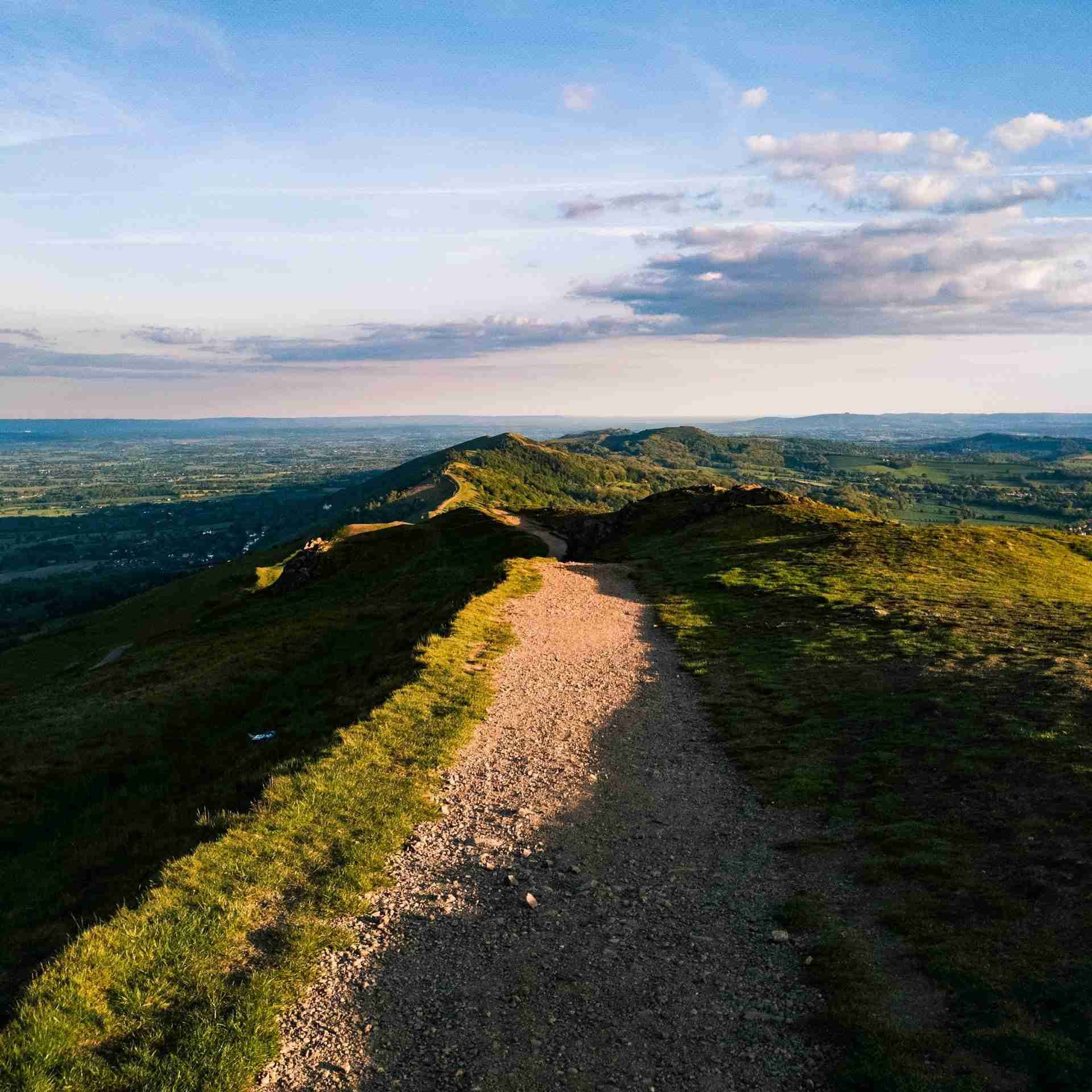
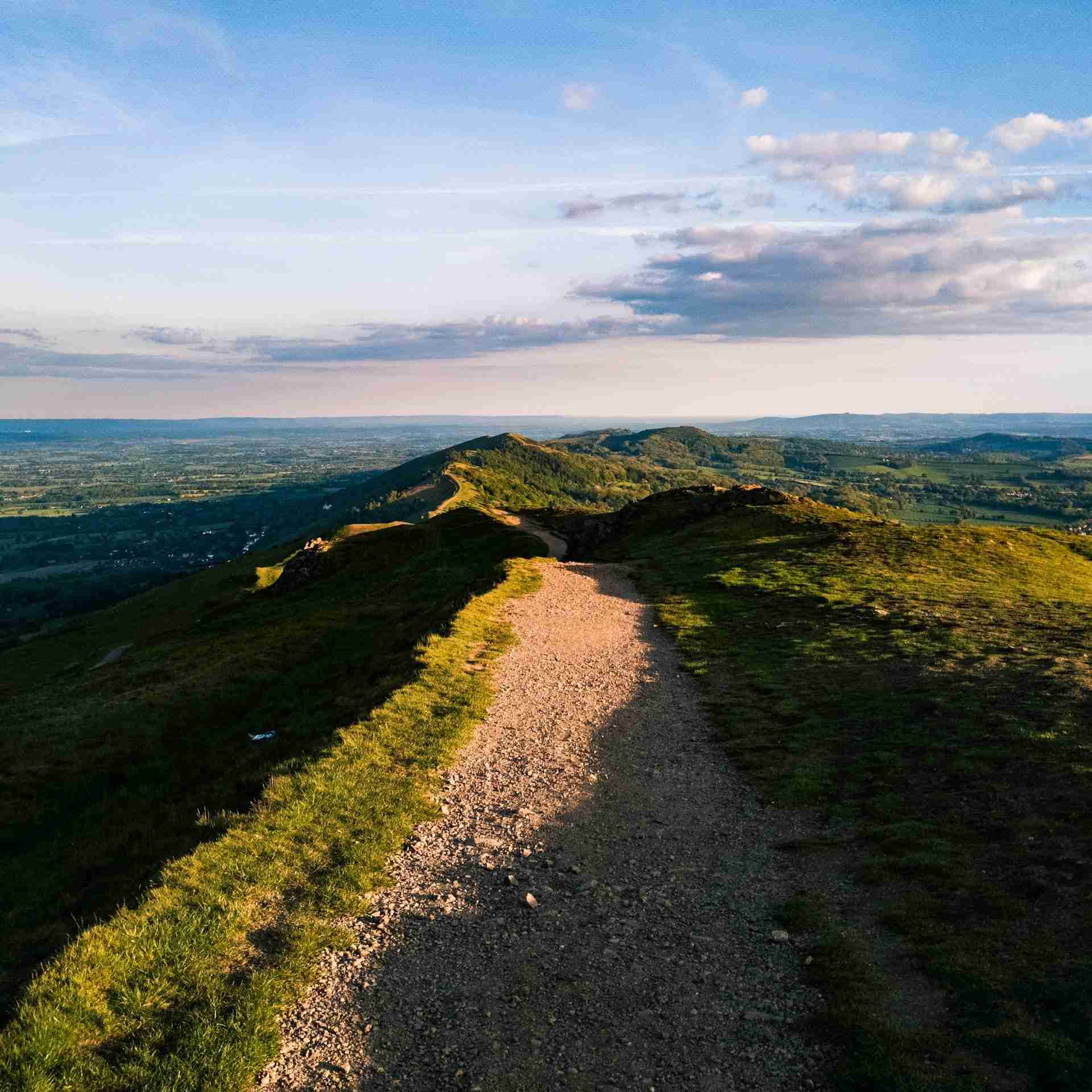
: The high ground along the central ridge delivers expansive views in every direction, with Worcestershire Beacon (the highest point) and North Hill offering the most iconic compositions. A wide-angle lens captures the undulating hills in the foreground as they fall away into hazy farmland below. On clear days, you can see as far as the Cotswolds and the Black Mountains. Sunset and sunrise are ideal for capturing the warm side-light that defines the ridges and creates depth across the landscape. Including hikers or the winding trail adds scale and a dynamic human element to your frame.
• Mist and atmospheric layering from British Camp
: Located on the southern end of the ridge, British Camp is a prominent Iron Age hillfort with steep terracing that forms bold leading lines. In autumn and spring, early morning mist often gathers in the valleys below, creating dreamy, layered compositions. Use a telephoto lens to compress the ridges and capture bands of soft light drifting across the terrain. This location is particularly effective during sunrise, when the low angle of light casts long shadows and the ancient earthworks stand out in sharp relief.
• Golden hour light over Herefordshire farmland
: From almost any elevated point, the western slopes of the Malverns overlook the rich agricultural patterns of Herefordshire. In the late afternoon, golden light washes across the fields, hedgerows, and scattered farms, enhancing the texture and warm tones of the landscape. A mid-range zoom lens helps isolate interesting patterns in the patchwork of fields, particularly when paired with dramatic skies or breaks in the cloud cover.
• Minimalist compositions with lone trees and ridgelines
: The exposed spine of the hills is sparsely vegetated, with occasional trees clinging to rocky slopes. These natural features are excellent subjects for minimalist compositions—particularly under moody skies or in soft, diffuse light. Frame a lone tree against the backdrop of distant mist or use a wide aperture to isolate a foreground boulder or plant in context with the receding hills. These scenes are especially effective in black and white, emphasizing form and tonal contrast over color.
• Dramatic weather and fast-moving light
: One of the most rewarding challenges of photographing the Malverns is working with their rapidly changing weather. Light and shadow move quickly across the hillsides, often creating fleeting pockets of illumination or dramatic skies behind the ridges. Staying mobile along the ridge and being ready to adapt is essential—some of the best images happen within a few seconds of a break in the cloud or a sudden shift in light direction.
Best Time to Visit
The Malvern Hills are photographable year-round, but the best seasons for landscape photography are spring through autumn. Spring brings fresh greens, blooming wildflowers, and crisp air, while autumn transforms the lower woodlands into rich golden and copper tones. Summer provides long evenings and ideal conditions for sunset hikes, while winter offers stark, minimalist compositions with snow-dusted peaks and clear skies.
Sunrise and sunset are the ideal times for dramatic light. Morning mist is common in spring and autumn, especially in low-lying valleys like Welland and Colwall. After rainstorms, clearing skies often produce vivid light and fast-moving clouds, adding texture and interest to wide landscapes.
Avoid midday unless working in black and white or detail-focused studies, as the light can be harsh and flatten the topography. Overcast days are well-suited for intimate landscape scenes, forest trails, and moody minimalism.
How to Get There
The Malvern Hills can be accessed from several points, with the most common starting locations being Great Malvern (to the north), the British Camp car park (central ridge), and Hollybush (southern end). The area is well signposted and managed by the Malvern Hills Trust, with clearly marked trails throughout the ridge.
Parking is available at key trailheads, including Beacon Road for the Worcestershire Beacon, Gardiner's Quarry for central access, and the British Camp car park along the A449. All parking areas provide direct trail access with well-maintained paths of varying difficulty.
Great Malvern Station is served by rail from Worcester and Birmingham, making it a convenient option for visitors without a car. From there, it's a short uphill walk to reach the lower ridge.
No entrance fee is required to explore the hills, though donations to the Malvern Hills Trust are encouraged to support maintenance and conservation.
Recommended Gear and Shooting Tips
A wide-angle lens is crucial for expansive ridge views and capturing the depth of foreground textures against the distant horizon. A mid-range zoom lens is useful for balanced landscapes, agricultural patterns, and environmental portraits of walkers or lone trees. A telephoto lens (70–200mm or more) is ideal for compressing layered hills and picking out atmospheric conditions like distant rain or shafts of sunlight.
A tripod is recommended for early morning and twilight photography, particularly when working with long exposures or bracketing for HDR landscapes. A circular polarizer enhances sky contrast and cuts glare on dewy grass or rock surfaces. Neutral density filters can help blur fast-moving clouds during stormy or transitional light conditions.
Be prepared for quick changes in weather, and bring protective gear for your equipment. Layered clothing and proper hiking boots are essential, especially in autumn and winter when trail conditions can be slick or muddy.
Plan your shoot around both light direction and topography. Because the ridge runs north–south, the position of the sun at golden hour dramatically changes the way shadows fall across the landscape, revealing or flattening certain features. Return to the same spot in different light to capture the full range of moods the hills can offer.
Nearby Photography Locations
: Just west of the hills near British Camp, this estate offers wooded trails, a reflective lake, and distant views back toward the Malverns. Early morning light often creates mist across the water, ideal for quiet pastoral compositions.
: In the town itself, this impressive medieval church offers rich architectural details, Gothic interiors, and interesting shadow patterns during low-light conditions. It's a beautiful location for interior and exterior architectural work.
• Castlemorton Common
: Just south of the hills, this open expanse of heathland is ideal for photographing grazing animals, moody skies, and wildflower scenes. The open nature of the land contrasts beautifully with the steep Malvern ridges in the background.
: This Iron Age hillfort is a strong photographic subject on its own, with dramatic ringed earthworks that cast concentric shadows at sunrise and sunset. The summit offers one of the most complete panoramic views in the region.
• Colwall Stone and Upper Colwall
: These quiet hillside villages offer classic English rural scenery—cottages, hedgerows, and rolling farmland. They make excellent foreground subjects for compositions looking up toward the hills from below.
The Malvern Hills offer photographers not just a landscape, but a shifting canvas of mood, movement, and memory. Whether capturing the clean light of dawn breaking over a misty valley or waiting on the ridge as the wind pulls clouds across the sunlit slope, this timeless landscape challenges and rewards at every turn.
Comments
Loading comments…