
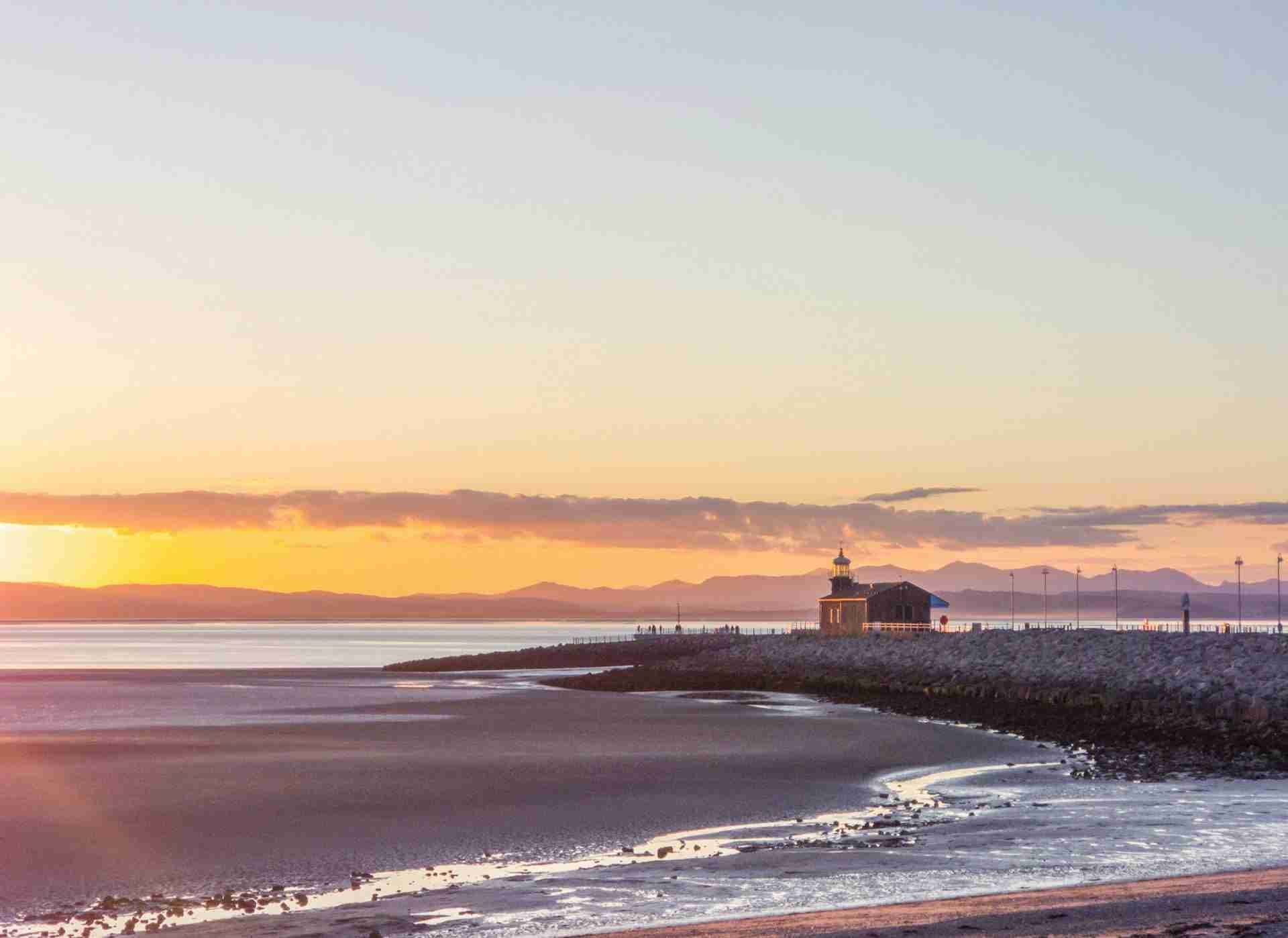
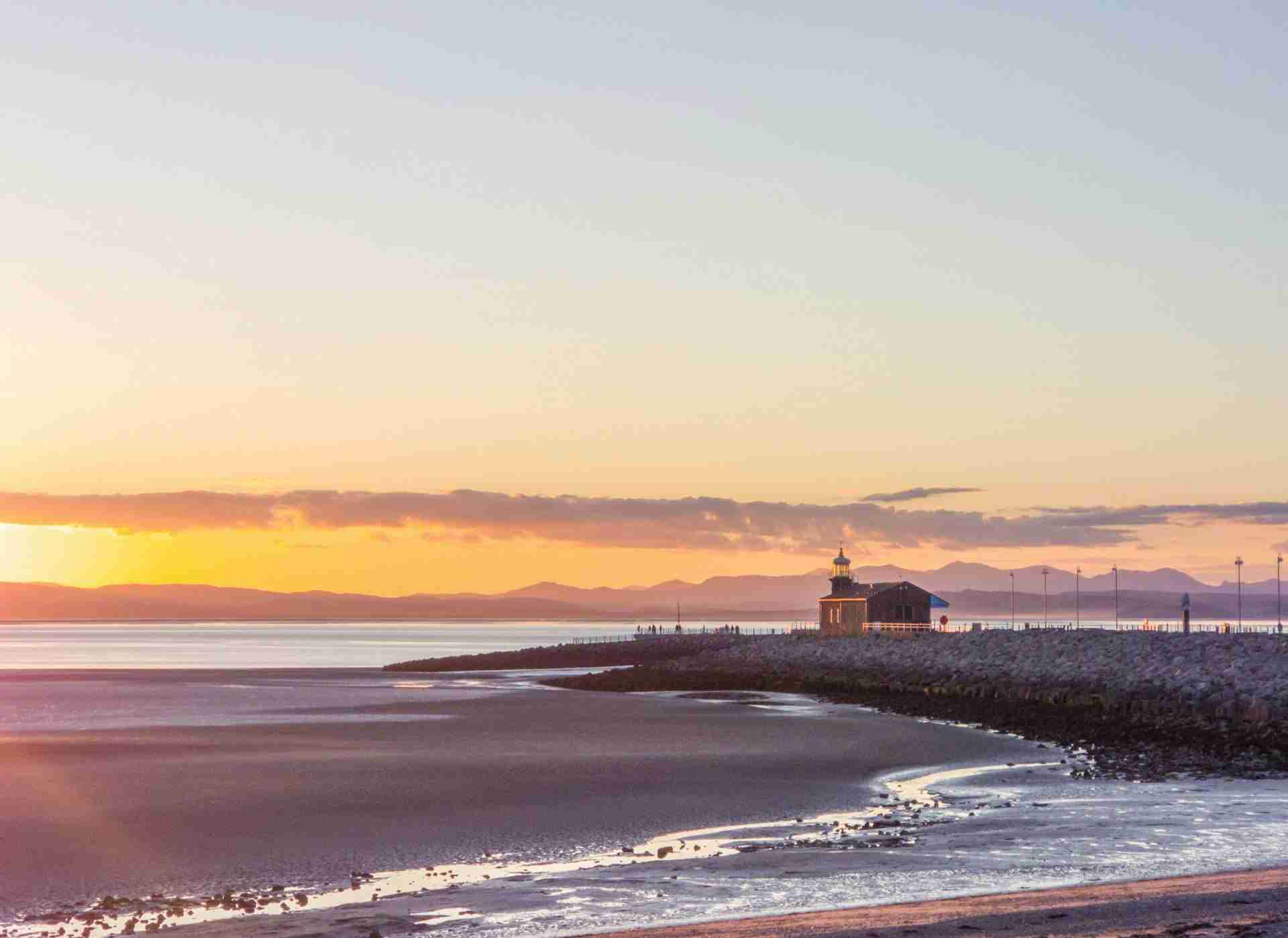
At the far end of Morecambe's Stone Jetty sits a small stone lighthouse that once served as part of the old harbour. Unlike the tall, freestanding towers found elsewhere on the coast, this lighthouse is compact and integrated into a long building that now houses a café. It sits quietly along the waterfront, facing the expanse of Morecambe Bay where the tide rolls in slowly and the skies feel endless. This isn't a dramatic coastal landmark, but that's exactly what makes it rewarding. The simplicity of the building, the clean lines of the jetty, and the changing textures of sky and sea give photographers a lot to work with if they take their time. Whether you're framing it against a painted sunset or using the paving stones and lampposts as leading lines, this location lends itself to patient, well planned compositions that reward repeat visits.
Best Photography Opportunities
• The Stone Building
The structure itself is unusual, which makes it visually interesting. Built from dark local stone with small windows and a white lantern perched on one end, it works well in both wide and tight compositions. You can shoot it straight on from the jetty to highlight its symmetry, or frame it from an angle to include foreground railings, benches, or tide washed rocks. Morning light comes in from behind the town, illuminating the front of the building, while late afternoon light grazes across the stone and helps pull out texture. This is also a good place for black and white work, especially under heavy clouds or in stormy conditions.
• Jetty Lines and Foreground Elements
The Stone Jetty itself is a strong compositional feature. With its curved pathway, decorative paving, and regularly spaced lampposts, it gives you a clean set of lines to build your frame around. These lines naturally lead the eye toward the lighthouse and building at the end, especially when shot with a wide angle lens from a low angle. This works well during golden hour when shadows stretch across the path and highlight the structure's form. The stonework and railings hold up well in close ups, especially after rain when everything takes on a darker, more saturated tone.
• Sunsets Over the Bay
This is one of the best places in Morecambe to photograph the sun setting over the bay. As the light fades, the sky often lights up in tones of orange, pink, and purple, while the water reflects the sky and picks up texture from the sandbanks below. The lighthouse building becomes a silhouette or a softly lit subject, depending on where you stand. Try including people or birds in the frame for added motion or scale. A tripod is useful here if you want to stretch your exposure time as the light drops.
• Reflections and Wet Surface Patterns
After high tide or a recent rain, parts of the jetty surface hold water in shallow pools, which can create reflections of the sky or lighthouse structure. These patterns change quickly with wind and movement, but they can add an extra layer to your composition, especially when working at ground level. This is a good opportunity for experimenting with abstraction or layering foreground details against a clean background. Soft light works best for this kind of scene, especially during overcast days or blue hour.
• People and Movement on the Promenade
Because the area is open to the public and well-trafficked during the day, you'll often find walkers, cyclists, and families moving through your frame. Instead of avoiding them, you can incorporate them into your shots to add life and scale. A longer lens can help compress space and pull movement toward the lighthouse structure, while a slower shutter can blur motion for a sense of passing time. These kinds of shots work especially well in the late afternoon when the light starts to soften and the air clears over the bay.
Best Time to Visit
Morecambe Pier Lighthouse is accessible and photogenic all year. Spring and autumn offer the best conditions overall, with lower sun angles and more variety in the sky. In spring, light tends to be softer and the air cleaner, especially in the mornings. Autumn skies are often more dramatic and sunsets can last longer, with warm tones stretching across the bay. These seasons also bring more cloud variation, which can add structure and contrast to wide compositions.
Summer provides longer shooting windows and more predictable light, though midday sun can flatten textures and increase foot traffic along the jetty. Early mornings are quietest and offer the best conditions for slow work and long exposure shooting. Winter brings colder color tones, strong winds, and heavy skies, which can all be used creatively, especially for black and white work. Because the tide changes the look of the bay dramatically, it's worth checking tide charts before each visit. Low tide reveals sand patterns and pools, while high tide fills the bay and changes the horizon line.
How to Get There
The lighthouse sits at the seaward end of the Stone Jetty in Morecambe, Lancashire, UK. The jetty begins directly off Marine Road Central, across from the Midland Hotel. There are multiple nearby parking options including on street spaces and small public car parks within walking distance. The walk to the lighthouse is flat and paved, with railings and open views the entire way. It is an easy walk with a full camera kit, whether you are on foot or rolling a small gear case.
There are no entrance fees, photography restrictions, or access limitations for tripods or handheld equipment. Drone use is not prohibited but should follow CAA regulations, and you should be mindful of other visitors, especially on weekends. The lighthouse is adjacent to the Stone Jetty Café, which is typically open during the day, providing access to refreshments and restrooms. Cell signal is strong throughout the area, and you can easily scout conditions in advance or plan your visit around tides and light.
Recommended Photography Gear
A wide angle lens is useful for working along the jetty and placing the lighthouse within the environment. A focal range between 14 and 24 millimeters will give you room to include foreground lines, sky, and the structure in one clean frame. A 24 to 70 millimeter zoom helps cover walk up shots, people passing through the space, or general street photography opportunities along the seafront. If you want to isolate details like the lantern room or compress elements of the jetty, a telephoto lens between 70 and 200 millimeters will be helpful.
Bring a tripod for long exposures or shooting at blue hour, especially when working with reflections. A circular polarizer can help reduce glare on wet surfaces and deepen sky color, though it may be less useful at wide angles. A small set of neutral density filters is recommended if you plan to blur people or clouds. Sea spray and light rain are common here, so bring a lens cloth, rain cover, and a weather resistant bag or case.
Nearby Photography Locations
• Morecambe Promenade
Running along the waterfront in both directions from the jetty, the promenade offers wide views across the bay with benches, sculptures, and open sky. It is ideal for minimal compositions, long exposure work, or photographing people in open space. The light shifts constantly and can be especially good right after rain.
This life sized statue is surrounded by curved paving and inscribed quotes, and it often catches the late sun beautifully. Shoot early in the morning to avoid crowds, or use a longer lens to isolate it during busier times.
Just south of Morecambe, Heysham Head offers elevated coastal views, short cliff paths, and ruins of the old St Patrick's Chapel. It is a strong choice for sunrise or late golden hour with layers of rock, sky, and open water.
• Lancaster Canal and River Lune
A short drive inland, this area provides calm water scenes with bridges, boats, and soft morning fog. It is ideal for quiet compositions or longer sessions in low contrast light.
• Arnside and Silverdale
North of Morecambe, this Area of Outstanding Natural Beauty includes estuaries, woodlands, and limestone hills. You can move between beach, hilltop, and marshland in one shoot, giving you strong variety in both light and subject matter.
The Morecambe Pier Lighthouse is easy to overlook, but that is part of what makes it valuable. It asks you to slow down, pay attention to small changes in light, and work with the rhythm of tide and weather. Whether you are building out a study in subtle contrast or just chasing clean compositions with a bit of character, this spot continues to offer more than it first appears. It is proof that you do not need height or drama to make something worth photographing.
Comments
Loading comments…