
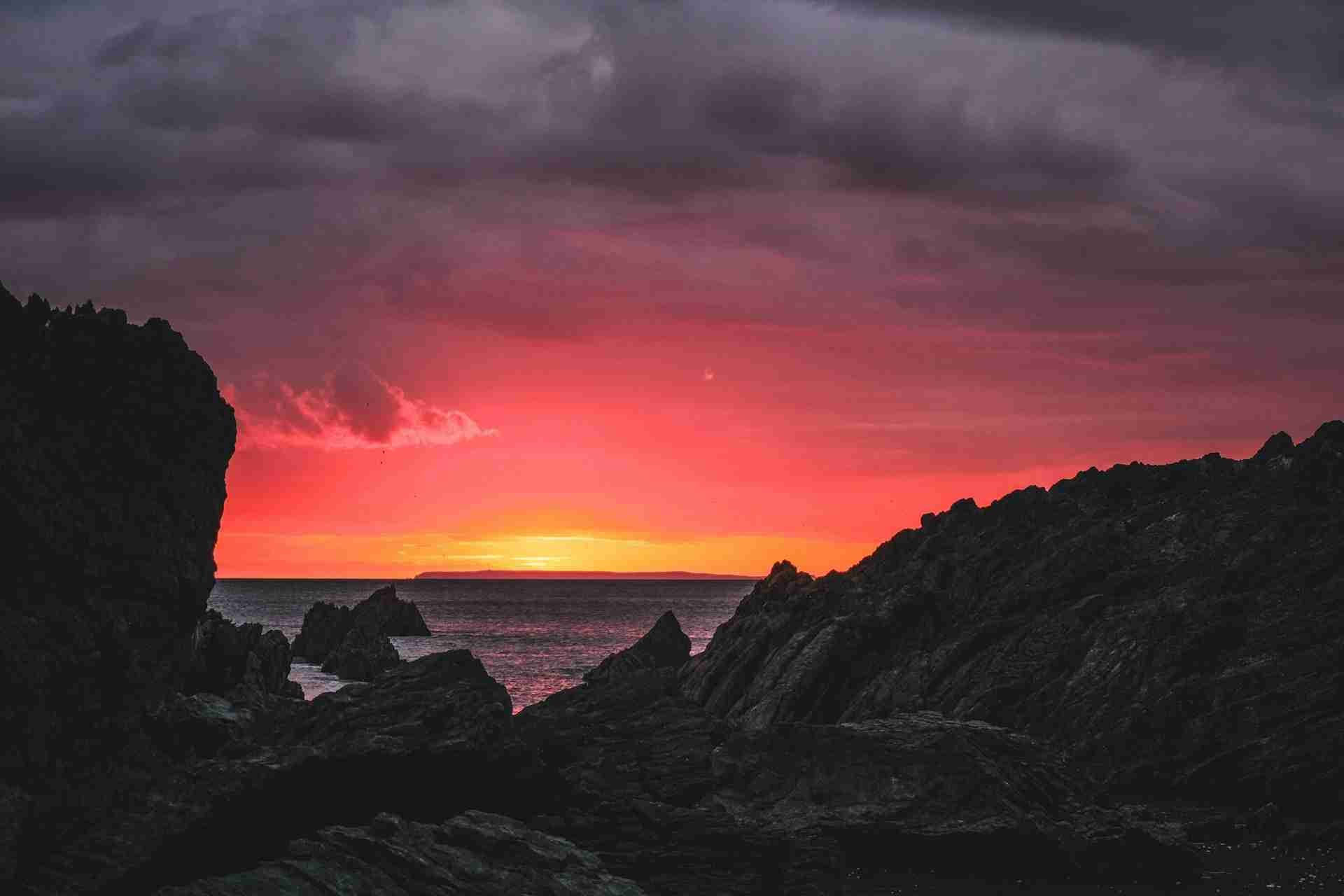
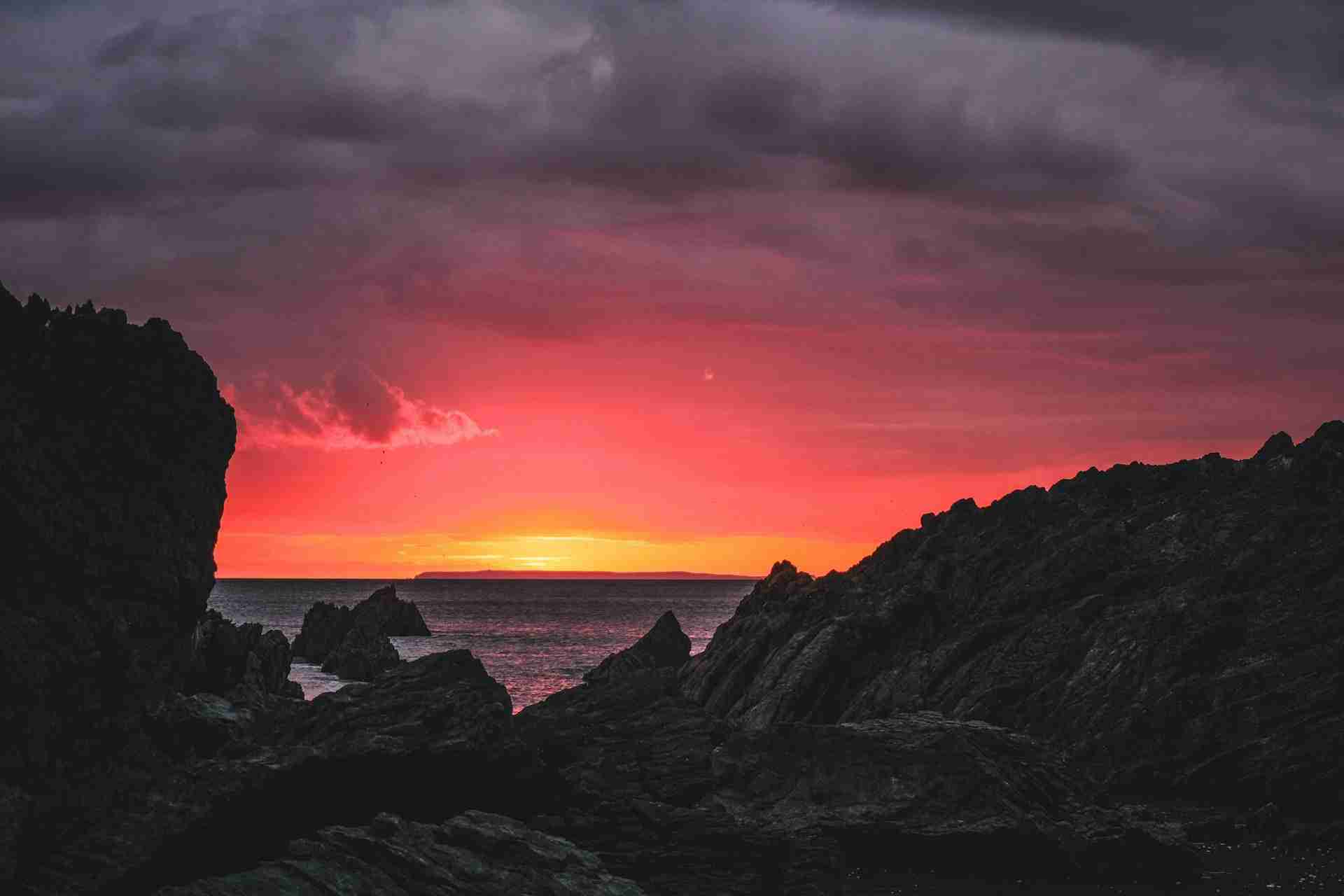
Baggy Point is a rugged headland on England's North Devon coastline, forming a dramatic divide between the sandy arc of Croyde Bay and the expansive stretch of Woolacombe. Managed by the National Trust, this windswept promontory offers a dynamic mix of steep sea cliffs, exposed rock shelves, grassy trails, and panoramic views across the Atlantic. The topography here is full of natural drama—fractured stone ridges plunge into the sea, waves crash against vertical walls, and the sky feels enormous above the open sea. For photographers, Baggy Point delivers a rich canvas of textures, tones, and compositions that change with the light, tide, and weather. It's a place where big coastal energy meets accessible, walkable terrain.
Best Photography Opportunities
• Sunrise Light Over Croyde Bay
Early morning light from the east spills across the sweep of Croyde Beach and lights the cliffs on the western side of the headland. From the lower path on the Croyde-facing side, you can frame the bay and distant dunes with warm golden light washing over the grass and rock. Use a wide-angle lens to incorporate natural curves and foreground detail like fence posts or wildflowers along the cliff edge. Shooting at low angles enhances the sense of depth and makes the coastline feel more expansive. This is also a great time to include surfers in the water or early walkers to add scale and narrative.
• Clifftop Views Toward Woolacombe
From the higher section of the coastal path, the view north toward Woolacombe Bay reveals a wide stretch of sea cliffs and open water. The cliffs here catch afternoon and early evening sidelight, bringing out the orange and ochre tones in the rock while the sea below shifts from deep blue to silver. Using a telephoto lens compresses the lines of the cliffs and lets you isolate textures and wave action. These compositions benefit from cloud movement and angled light, especially when waves break white against the rocks below. Longer exposures with an ND filter can soften the water and make the stone forms stand out in contrast.
• Wave Impact and Rock Formations Below the Path
Baggy Point is famous for its exposed geology and layered cliff faces, especially on the seaward side where waves hit with full force. From lower trail sections or safe ledges above, you can photograph wave bursts, rock shelves, and tide-washed surfaces. This is most productive at mid to high tide, when the sea has enough energy to crash against the stone. Use a fast shutter speed to freeze impact or a longer exposure to emphasize flow and mist. A mid-zoom lens gives you the flexibility to reframe quickly as waves roll in.
• Backlit Grass and Trail Lines at Sunset
The upper coastal path running along the ridge of the point is lined with thick grass and occasional stone features. As the sun sets behind the ocean, this grass becomes backlit and glows with warm color, creating beautiful side-lit leading lines toward the water. Framing the trail in the lower third of the frame, with the sun just above the horizon, creates balanced compositions that guide the viewer through the landscape. A polarizer can help control glare and saturate the color of the scene without over-darkening the sky. These shots work best in the last 20 minutes before sunset when the contrast begins to soften.
• Stormlight and Shifting Weather Systems
Baggy Point is particularly dramatic in stormy or transitional weather, when clouds race inland and light cuts through in broken shafts. These moments transform the landscape into a high-contrast, fast-changing subject. Wide compositions that include both sea and sky capture the scale of the headland and the energy of the weather, while tighter shots of cliffs under changing light emphasize mood and tension. Black-and-white conversions work well in these conditions, especially when combined with long shutter speeds to soften sea motion under fast-moving clouds. Always stay aware of trail conditions and wind strength, especially on exposed sections during storms.
Best Time to Visit
The most reliable photography conditions at Baggy Point occur in late spring and autumn, when skies are dynamic and the sun's angle is low enough to create side light across the cliffs and trails. Sunrise is ideal from March through June when the light rises behind Croyde and sweeps across the point from the east. During these months, early mornings often bring clean air, low wind, and the opportunity for golden light on both the sea and grassy foregrounds.
Autumn offers deeper light and stronger contrast, especially in the late afternoon. The sun sets out to sea, casting long shadows over the headland and warming the color of the rocks and cliffs. Cloud structure is often more complex during these months, adding variety and shape to sky compositions. Summer days are longer, which extends golden hour and blue hour conditions, but light during midday is harsh and flat. Crowds also increase, particularly near the main trail, so early and late sessions are best for avoiding foot traffic.
Winter provides unique opportunities when storms pass through or snow dusts the higher ridges. The lower sun stays at a better shooting angle all day, and fog or rain bands can add atmosphere. Just be aware of limited daylight hours, slippery trail sections, and high wind exposure during this time.
How to Get There
Baggy Point is located just north of Croyde village in North Devon, England, and is managed by the National Trust. If driving, follow signs from the village to the National Trust car park at the end of Moor Lane. From there, two main trails loop around the point: a lower path that hugs the edge of the cliffs and a higher one with elevated views inland and out to sea. The walk to the point itself takes about 20 minutes each way and is well-maintained, although rocky in places.
There is no entry fee to access Baggy Point, though the car park may have seasonal parking charges. Public toilets are located at the car park, and information boards provide trail guidance and background on local wildlife and geology. During peak months, it's best to arrive early or stay late to avoid the busiest hours and have more freedom to set up without interruption. The trail is open year-round, and the main route is suitable for most walking abilities with caution in wet conditions.
Recommended Photography Gear
A flexible and weather-ready kit is important when shooting at Baggy Point. A wide-angle lens in the 16–35mm range allows you to capture full headland scenes, sweeping skies, and trail compositions with leading lines. A 24–70mm standard zoom is ideal for quick changes in framing, especially when moving between wide vistas and closer coastal textures. A 70–200mm telephoto adds reach and helps compress cliffs, pick out wave action, or frame silhouetted walkers on the trail against the sky.
A tripod is strongly recommended for golden hour and long exposure work, especially when shooting into the light or smoothing sea motion. A circular polarizer is useful for cutting glare from wet rock and intensifying color in grassy areas or sky. A 6- or 10-stop neutral density filter will help extend exposures for softening waves and creating mood during cloud transitions. A lens hood or shield is helpful to avoid flare when shooting toward the sun at sunset.
Because the weather on the coast changes rapidly, bring a weather-resistant backpack, rain cover, and plenty of lens cloths to deal with salt spray and wind-driven mist. Footing can be uneven on the rockier parts of the trail, so wear supportive shoes with good grip. Extra batteries and memory cards are useful for long sessions, especially if you're shooting bursts of wave movement or bracketing exposures. Layers are essential, even in summer, as temperatures and wind can shift quickly along the cliffs.
Nearby Photography Locations
Just below the headland, Croyde Beach offers wide reflections at low tide, surfer silhouettes, and golden hour light that complements any shoot at Baggy Point. From the dunes or beach access near Down End, you can frame the cliffs of Baggy in the background with soft wave action in the foreground.
To the north, this expansive beach offers minimal compositions, dramatic skies, and sweeping views from the cliff paths above. It's best photographed at sunrise or after storms when the light plays across the wet sand and surf.
Connected to Woolacombe but more secluded, Putsborough features dark rock outcroppings and quieter shoreline. The light here is softest during early evening, and the cliffs provide good framing elements for backlit compositions.
South of Croyde, Saunton's endless beach and the textured dune system behind it offer great abstract opportunities, especially during low tide. Braunton Burrows is particularly compelling at sunrise or in diffused light when patterns in the sand and grass become more pronounced.
Located beyond Woolacombe, Morte Point has some of the most rugged, wave-battered rock formations in North Devon. It's an excellent place for storm photography and long exposures, especially when the sea is rough and the wind is driving across the cliffs.
Baggy Point is a place that encourages you to slow down, read the sky, and listen to the sea. Its mix of scale, texture, and elemental drama makes it one of the most compelling spots on the Devon coast for photographers who enjoy exploring the boundary between land and ocean. Whether you're working with golden light, grey skies, or crashing waves, the headland delivers scenes that are both powerful and personal.
Comments
Loading comments…