
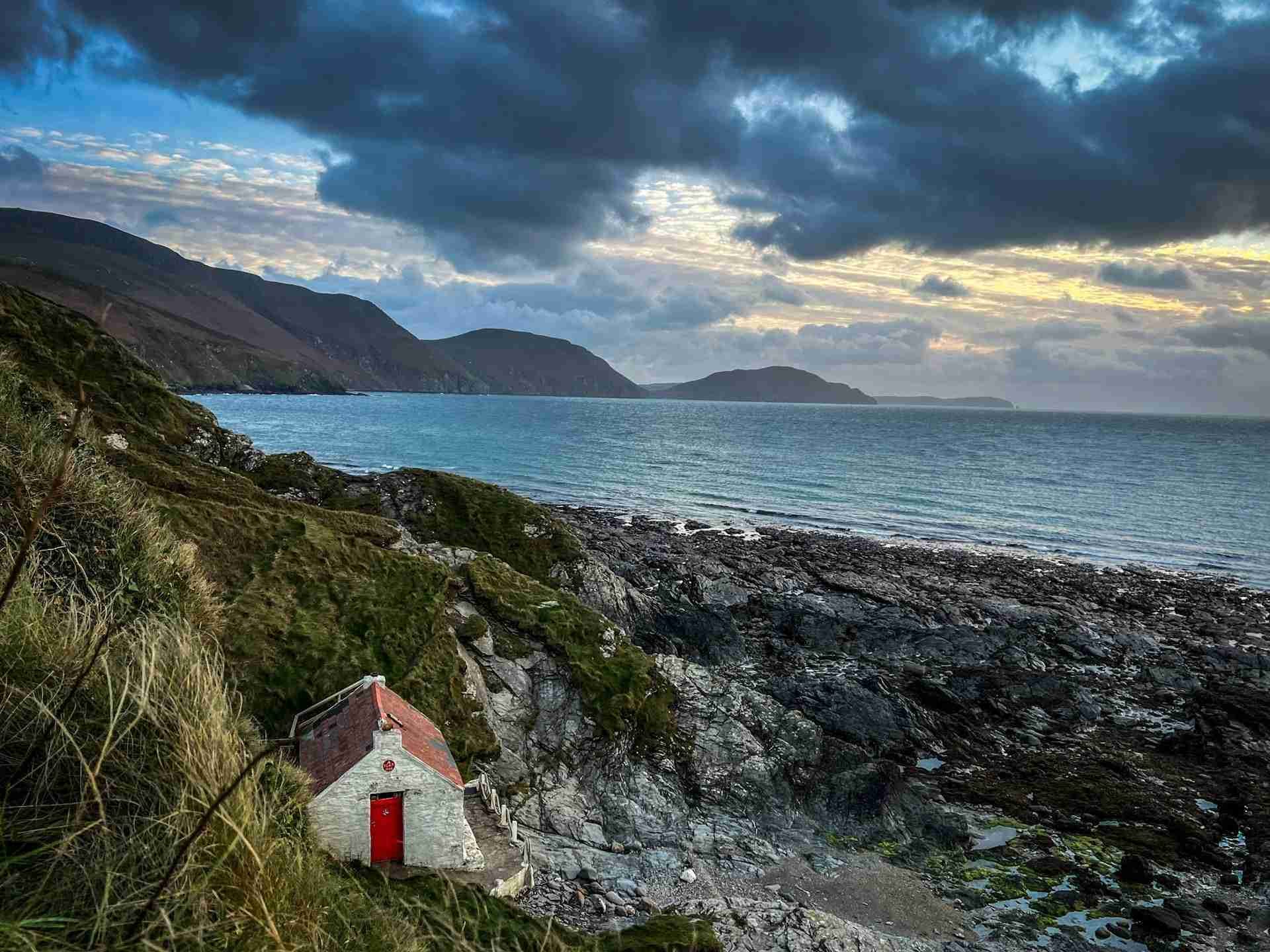
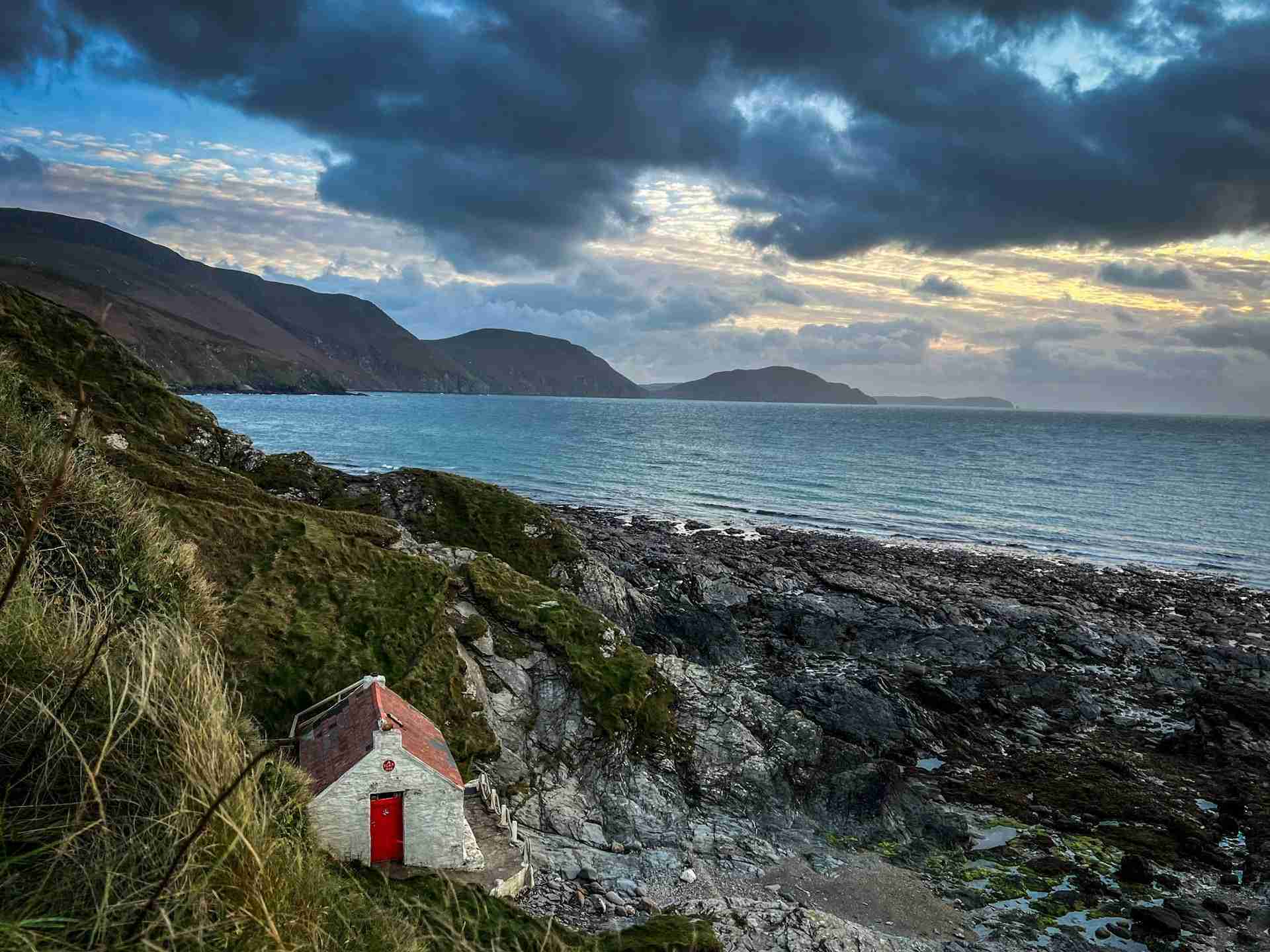
Tucked along the rugged western coastline of the Isle of Man, Niarbyl Beach is a tranquil and striking location where land, sea, and sky come together in beautiful harmony. With its sweeping ocean views, sea-sculpted cliffs, and characterful cottages, Niarbyl offers a rich palette of subjects for photographers drawn to coastal drama and soft light. From glowing sunsets that set the Irish Sea ablaze to rock pools teeming with texture and life, this secluded cove rewards a careful eye and an unhurried approach. The beach's isolation from more developed tourist areas allows for a quiet, contemplative shooting experience, especially in the off-season.
Best Photography Opportunities
The Whitewashed Fisherman's Cottage
The fisherman's cottage at Niarbyl is perhaps the beach's most enduring visual symbol. Its stark white walls, thatched roof, and remote position above the rocky shore give it a timeless, storybook quality. Photographically, the cottage works in both close-up and wide-angle compositions. Close up, you can focus on the weathered textures of its facade and the surrounding stonework. With a wider frame, it becomes part of the broader landscape, anchoring the scene against the dramatic curve of the coastline and the vastness of the Irish Sea beyond. Early morning mist often clings to the hills behind, adding atmosphere and a feeling of solitude. In golden hour light, the walls of the cottage glow warmly, contrasting beautifully with the cool tones of the ocean and the shadows in the rocks below. For storytelling imagery, this structure offers both historical depth and strong visual simplicity.
Niarbyl Fault Line and Folded Rocks
The beach is geologically significant, marking the visible fault where two ancient continents once collided. This fault line creates a visual seam across the rocks, with sharply contrasting colors and formations on either side. Photographers interested in abstract and detail-rich subjects will find a wealth of inspiration here. The folded rocks along the shore, twisted and layered over eons, can be photographed up close to highlight their intricate structure. A macro lens or a mid-range zoom will help you isolate these patterns, while low-angle sunlight enhances their relief. At low tide, more of these geological features become visible, and the addition of tide pools and marine life adds layers of complexity. Reflections in the wet stone or in still pools can mirror the sky above, creating surreal compositions. This section of the beach invites slow, thoughtful shooting and a careful study of texture, form, and light.
Tide Pools and Coastal Texture
At low tide, the beach becomes a sprawling canvas of coastal detail. Rock pools filled with seaweed, barnacles, and tiny marine life create micro-landscapes that are as engaging as any wide vista. Shooting these pools requires patience and a keen eye for natural geometry. Look for shapes created by water trapped in rock depressions or contrast between seaweed and stone. A tripod allows you to shoot at narrow apertures to maintain sharpness across the entire frame, while a polarizer helps reduce glare and bring out the subtle colors beneath the water's surface. This is also an excellent time to experiment with reflections. On calm days, the tide pools act as perfect mirrors, capturing the sky above or elements of the surrounding cliffs. You can spend hours here exploring different compositions, especially during the golden hour when low sunlight illuminates even the smallest details with warm clarity.
Sunset Over the Irish Sea
Niarbyl's westward orientation makes it one of the best sunset locations on the Isle of Man. On clear evenings, the sun sets directly into the ocean, casting a warm glow across the entire beach. During this time, the rocks take on a reddish hue, the water glistens with molten gold, and the sky fills with bands of orange, pink, and violet. A wide-angle lens is ideal for capturing the full expanse of sea and sky, but don't overlook the power of tighter compositions. Use foreground elements like textured rocks, the fisherman's cottage, or tide pools to lead the viewer's eye into the frame. A neutral density filter can help extend your exposure time, smoothing the sea into a reflective surface that emphasizes the stillness of the moment. Sunset at Niarbyl is never just about the horizon, it's about the way the light changes every surface it touches, turning even simple scenes into glowing studies in color and mood.
Stormy Seas and Moody Weather
Niarbyl is not only compelling in fair weather. In fact, the beach takes on a completely different character under stormy skies. When low clouds roll in and the wind stirs up the sea, the landscape becomes intensely dramatic. Waves crash against the rocks with force, sending spray into the air and carving new lines into the shoreline. These are the moments when long-exposure photography comes into its own. With a sturdy tripod and neutral density filter, you can stretch your shutter time to blur the motion of the waves into misty veils that contrast with the solidity of the rocks. Moody skies with deep shadows and backlit clouds add to the sense of power and isolation. Elevated viewpoints above the beach offer sweeping perspectives that take in both the rugged coast and the wild sky. These conditions are challenging but deeply rewarding, producing images that evoke the elemental energy of sea meeting land in all its untamed beauty.
Best Time to Visit
Niarbyl Beach offers a changing palette of photographic opportunities throughout the year, and understanding the seasonal rhythms is essential for capturing its full range of moods. Spring begins with bursts of color on the headlands, as wildflowers bloom and the grass takes on a fresh green. Morning light during this time is soft and indirect, casting delicate shadows and enhancing the subtle contours of the land. The cooler temperatures also bring less haze, giving crisper details in long-distance shots across the sea.
Summer is the season of long light, offering extended golden hours and glowing evenings that are perfect for beach photography. This is the time when the sun sets far to the northwest, casting long, warm rays across the beach and the cottage. While the days are brighter, the midday light can be harsh, so early mornings and late evenings remain the best periods for image-making. Low tides often occur at photogenic hours, exposing the full range of tide pools and geological features along the shore.
Autumn brings deeper tones and more dramatic weather. The vegetation shifts from green to golden-brown, and the skies often feature rich, textured cloud formations that add complexity to your compositions. Rain squalls move through quickly, often creating dramatic lighting contrasts as shafts of sunlight pierce through gaps in the cloud. This is the ideal time for dynamic seascapes and moody cliffside views.
Winter, while more demanding, offers the most powerful atmosphere. The sea becomes restless and brooding, the air crisp and cold. Snow occasionally dusts the surrounding hills, creating a rare combination of seascape and alpine textures. Sunrises and sunsets come late and early respectively, making them easier to shoot. However, gear must be protected from the elements, and conditions should be monitored carefully.
Regardless of the season, tide times and weather forecasts should guide your planning. A receding tide exposes the most interesting foreground elements, while approaching storms can create powerful skies and surf. Cloudy days are not to be dismissed here either. The diffuse light they provide can be perfect for capturing fine detail in the rocks and tide pools without harsh contrast. Every season offers something distinctive, and each visit will reveal a new side of Niarbyl's photographic charm.
How to Get There
Niarbyl Beach lies just south of the village of Dalby on the Isle of Man's rugged western coast. The most straightforward route by car is to take the A27 from Peel or Port Erin, following signs to Dalby and then onto the well-marked Niarbyl Road. This winding lane leads directly to the Niarbyl Bay Café and the main parking area above the beach. From there, a gently sloping paved path leads you past the fisherman's cottage and down to the shoreline. The walk is short, scenic, and accessible for most visitors.
There are no entrance fees to access the beach or the surrounding headlands, although parking charges may apply during certain times of the year. The café, open seasonally, provides refreshments and restrooms, and its terrace offers an elevated view of the coastline. If you're relying on public transportation, buses run to Dalby, though they are infrequent. A taxi from Peel or Castletown may be a more flexible option for early morning or late evening visits.
The beach itself is a mix of rock and shingle, with exposed areas at low tide that require careful footing. Footpaths continue beyond the main viewpoint, offering elevated perspectives and quiet corners for more secluded shooting. During wet or windy weather, conditions can become slippery and exposed, so sturdy boots and windproof clothing are strongly recommended. The area is popular with walkers and day-trippers during high summer, but you'll find solitude at dawn, dusk, and during the cooler months.
Gear That Makes the Shot
Photographing Niarbyl Beach requires a thoughtful combination of versatile, durable, and weather-resistant gear to make the most of its complex light and textures. Start with a camera that handles dynamic range well, such as a full-frame or high-end APS-C mirrorless or DSLR model. These sensors will allow you to manage the extremes of coastal lighting, from sunlit cliffs to shadowed rock pools. A weather-sealed body is preferable, as salt spray, sand, and sudden rain are common challenges along this shoreline.
In terms of lenses, a wide-angle zoom (typically 16–35mm) is essential for capturing broad landscapes, dramatic skies, and tight spaces around the cottage and rocks. Pair this with a standard zoom like a 24–70mm for flexibility, or a fast prime for low-light and night shots. A longer telephoto in the 70–200mm range allows you to isolate distant rock formations, cliffs, and even wildlife that frequents the area. Don't forget a macro lens or close-focusing lens for tide pool detail and geological textures, which are abundant and intricate at Niarbyl.
A robust tripod is a must for long exposures, especially when shooting in wind or at the water's edge. Choose one with spiked feet or a stable center column, and be prepared to rinse off salt residue after your session. A remote shutter release or smartphone app reduces vibration, and lens hoods or cloths will help manage flare from low-angle light. A circular polarizer enhances water clarity and rock detail, while graduated neutral density filters assist in balancing the exposure between sky and land. Bring a 6-stop or 10-stop ND filter if you're aiming to smooth wave motion or extend shutter times during brighter parts of the day.
For night photography, a headlamp with red light capability allows you to see without losing night vision. Keep lens wipes and microfiber cloths in your bag to manage condensation and spray. Waterproof pouches or dry bags are useful for storing gear safely while moving around slippery rocks. Always carry extra batteries, as cold coastal air can reduce their life, and a kneeling pad or foam seat makes shooting tide pools far more comfortable. With the right kit, Niarbyl offers endless creative potential, from sweeping drama to delicate detail.
Nearby Photography Locations
Peel Castle and Beach
Peel offers a powerful combination of historic architecture and dramatic coastal scenery just a short drive north of Niarbyl. The ruins of Peel Castle sit atop St. Patrick's Isle and are particularly striking at sunset when the warm light illuminates the stone against a backdrop of turbulent sea. The surrounding beach, harbour walls, and fishing boats add further photographic depth, while long exposures can smooth the tide around the ancient ramparts for a ghostly, timeless effect.
The Sound and Calf of Man
South of Niarbyl, the Sound is one of the most atmospheric viewpoints on the island, overlooking the Calf of Man across a churning channel of sea. The interaction between land, sky, and constantly moving water makes this an ideal location for long exposures and dramatic seascapes. Wildlife photographers will also appreciate the regular presence of seals, seabirds, and the occasional dolphin.
Glen Maye Waterfall and Woodland
For those looking to complement coastal imagery with woodland scenes, Glen Maye lies just inland. Its shaded paths lead to a charming waterfall, framed by mossy rocks and thick ferns. In spring and autumn, the glen becomes a lush tunnel of color and texture. Overcast light works best here, softening contrast and enhancing the richness of the forest tones.
Port Erin and Bradda Head
A vibrant coastal village to the south, Port Erin offers golden sand beaches backed by steep cliffs. From here, a short hike leads to Bradda Head, where the imposing tower and expansive views over the bay offer powerful compositions. Sunrise works beautifully from this angle, illuminating the shoreline and casting long shadows across the cliffs.
Just above Niarbyl, Dalby Mountain and Cronk ny Arrey Laa provide elevated views that take in the full western coastline. These are among the highest accessible points on the island, and the landscape below appears as a grand sweep of sea and hill. The climb is demanding but the reward is a vista that can encompass both coastline and inland moor, perfect for golden hour and panoramic captures.
Niarbyl Beach is a place where every visit feels unique. Whether under a brooding winter sky or bathed in summer's golden light, the shoreline here offers more than a view, it offers a chance to slow down and truly observe the meeting of sea and stone. Its quiet drama, ever-changing weather, and rich textures invite a kind of photography that is both patient and deeply connected to the landscape. For those willing to watch the tide roll in and the light shift across the rocks, Niarbyl offers not just images, but lasting impressions.
Comments
Loading comments…