
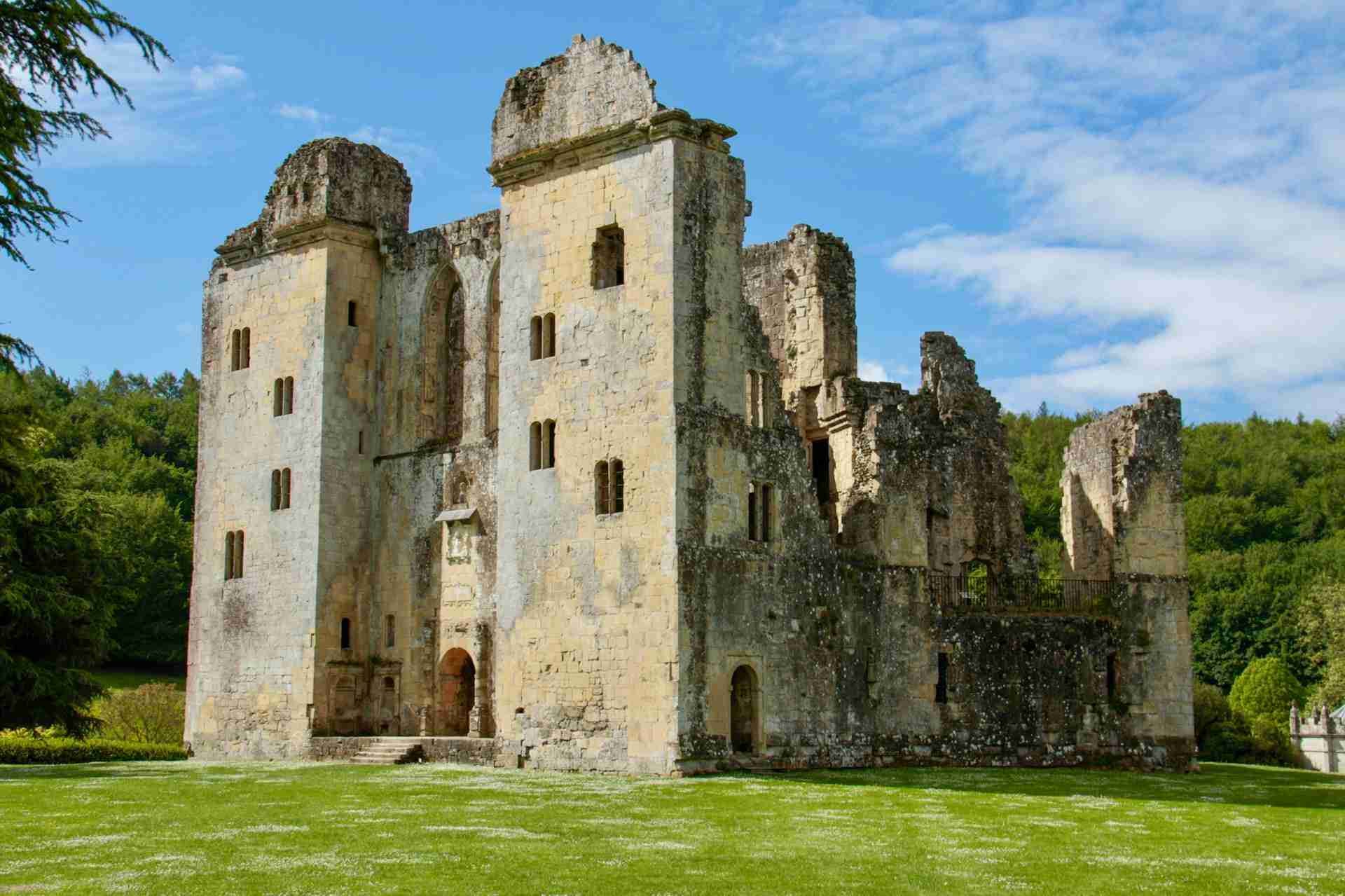
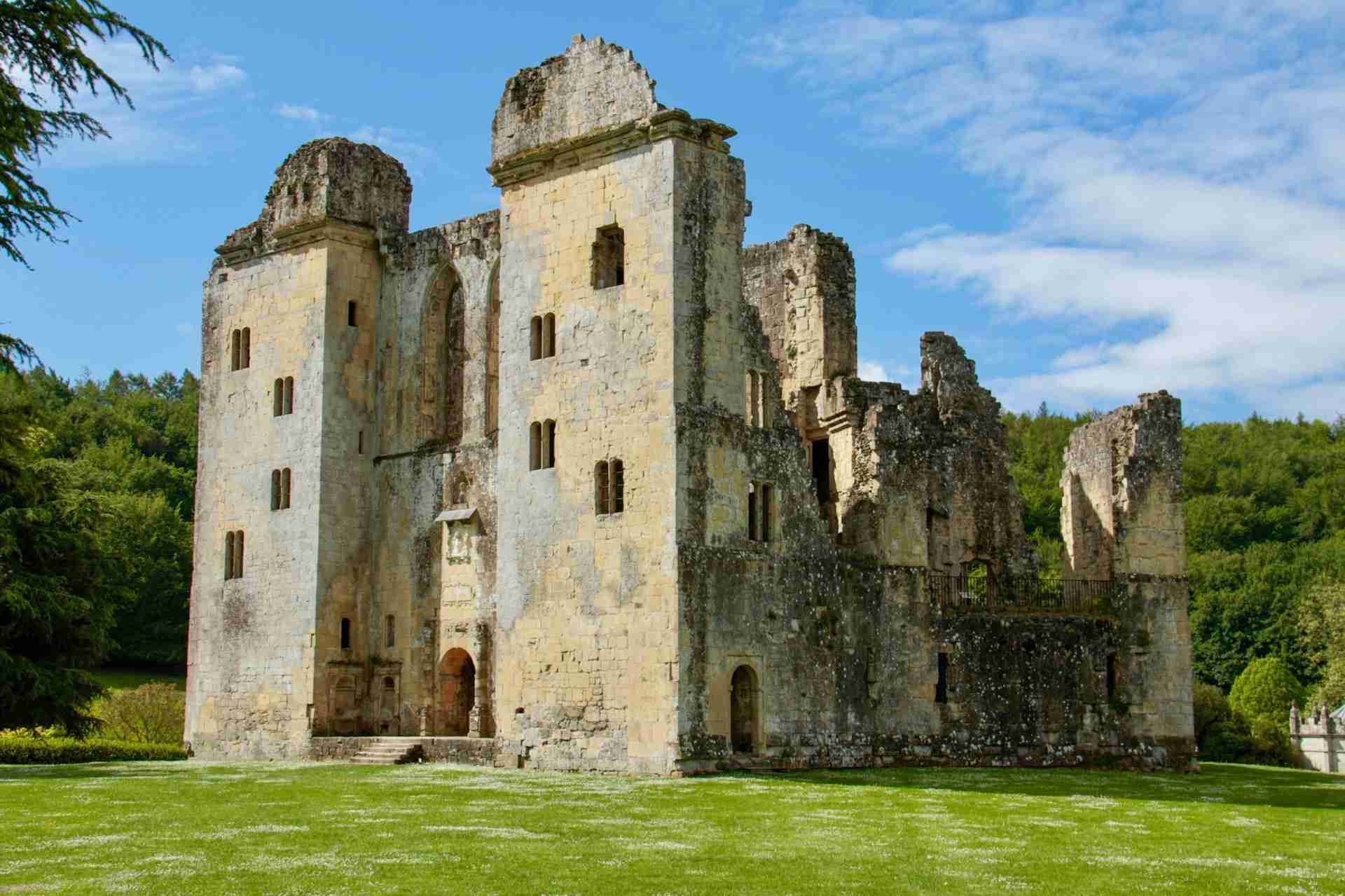
Set deep within the Wiltshire countryside, Old Wardour Castle is a 14th-century ruin where crumbling towers and open courtyards offer photographers the chance to work with shadow, form, and a sense of layered time. Surrounded by woodland and positioned beside a small lake, the castle's partial collapse creates both openness and texture, making it more visually dynamic than many intact medieval structures. Its asymmetric condition and scenic setting provide a rich range of compositions—from expansive landscapes that place the ruin within the natural surroundings to focused architectural studies that explore how light moves across worn stone. For those who enjoy shaping story through contrast and detail, Old Wardour Castle offers a rewarding and quiet photographic environment.
Best Photography Opportunities
Wide View from Across the Lake
One of the most balanced perspectives of the castle is found from across the small ornamental lake near the main entrance. From this position, the remaining towers rise above the trees and their reflection forms a soft, symmetrical layer across the water. Use a standard or wide-angle lens to pull in the scene and incorporate the landscape surrounding the structure. Early morning and late afternoon light work especially well here, offering side illumination that brings warmth to the stone and clarity to the mirrored surface. On windless days, the reflection can become a defining part of the composition, creating opportunities for simple yet compelling frames.
Interior Courtyard and Light Patterns
Inside the open-air courtyard, the exposed walls and window openings become tools for shaping light. Vertical lines, fragmented archways, and scattered stonework provide natural contrast against changing skies. A zoom lens between 24 and 70 millimeters is flexible enough to move between broader context and tighter compositions. In overcast conditions, light diffuses evenly across the stone, helping preserve detail and avoiding overly deep shadow. When the sun does emerge, look for contrast where light hits one wall while another remains in shadow. These shifts can turn a static ruin into a dynamic photographic subject.
Upper-Level Openings with Sky as Background
Climbing the accessible staircases gives photographers the chance to look outward through the castle's remaining windows or skyward through what once were ceilings. These openings, now framing cloud and light, create strong geometric opportunities. Use a wide-angle lens to exaggerate the spatial separation and give weight to the stone structure. When the sky is textured with soft cloud or directional light, these shots can show the relationship between permanence and openness. Under flat skies, compositions lean toward minimalism and quiet mood, while sharper light allows for silhouetted shapes and shadow edges.
Architectural and Textural Details
Old Wardour's surfaces are worn and richly varied. Cracked stone, moss-covered ledges, rusted fixtures, and eroded carvings offer a library of textures that photograph well under soft light. Bring a macro lens or short telephoto to isolate these details and explore their relationship to time and decay. These compositions are best made in overcast conditions or with diffused side lighting that brings out subtle shadows. Door hinges, crumbled archways, and plant growth around foundations all make for strong studies in visual aging. These images can build a quieter narrative around the broader architectural frames.
Framing the Castle with Seasonal Trees
The path leading toward the castle and the perimeter of the site are lined with deciduous trees that offer seasonal framing possibilities. In spring and summer, their fresh foliage acts as a natural border and softens the ruin's edges. In autumn, warm color builds visual contrast with the stone and adds emotional tone to wider compositions. In winter, bare branches increase visibility and help frame the structure with more defined lines. A moderate telephoto lens can compress the trees and the castle together, while wider lenses allow for placement of branches or trunks within the foreground to build depth.
Best Time to Visit
Old Wardour Castle is photographically rewarding throughout the year. Spring offers balanced lighting, soft green vegetation, and subtle reflections in the lake. Summer brings more direct light and cleaner skies, making it ideal for those looking to capture the structure in crisp conditions. Autumn is especially productive due to the contrast between golden tree color and the stonework, particularly during late afternoon when low light warms the entire scene. Winter, though more subdued, reveals more of the structure through bare trees and often presents atmospheric conditions such as mist or low cloud that enrich the mood of the site.
For the best light, plan to arrive shortly after sunrise or in the hour before sunset. Morning often brings calm water and low sun that lights the lake-facing walls. Overcast days are ideal for interior and detail photography, helping to maintain even tone and soft contrast across the stone. Avoid midday light when possible, especially in summer, as the overhead sun can flatten the texture and remove subtlety from both landscape and structure.
How to Get There
Old Wardour Castle is located near the village of Tisbury in Wiltshire. From Salisbury, follow the A30 west toward Shaftesbury, then turn off toward Donhead St. Andrew and Ansty. The final section of road is rural and narrow, so drive slowly and be aware of oncoming vehicles. Signage to the castle is clear in the immediate vicinity.
A small car park is available a short walk from the castle entrance. The site is managed by English Heritage and requires a ticket for access. There are no extra fees for personal photography equipment, and tripods are permitted. Commercial photography must be arranged in advance. The site includes basic visitor facilities and is generally quiet during mornings or weekdays. Some upper areas may be closed during bad weather for safety reasons, so plan accordingly and check site conditions before traveling.
Recommended Photography Gear
Bring a wide-angle lens to work with environmental compositions and foreground framing. A 24 to 70 millimeter zoom will offer versatility for medium scenes, while a 70 to 200 millimeter lens is excellent for compressing layers, isolating texture, and working with tree-framed perspectives. A macro or short telephoto lens is useful for surface details, carvings, and organic textures around the ruin.
A tripod is recommended for shooting in low light or when using longer exposures, especially for reflection or interior work. A circular polarizer helps manage water reflections and deepen contrast in vegetation. If you plan to shoot long exposures over the lake or in cloud-drifted conditions, a neutral density filter can be helpful. Weather protection for your gear is a good idea, as interior stone can be damp and mossy throughout the year. A microfiber cloth will help manage condensation on misty days.
Nearby Photography Locations
About half an hour from Old Wardour, this expansive landscape garden features temples, bridges, and a central lake that is perfect for working with reflection, symmetry, and seasonal color. In autumn, the tree-lined paths and classical structures provide one of the richest palettes in the region.
Located just outside Salisbury, this Iron Age hillfort includes ruins, earthworks, and broad views over the surrounding countryside. The raised elevation allows for long-lens work across rolling farmland, especially at sunrise or in foggy conditions.
Famous for its steep cobbled incline and thatched cottages, Gold Hill is a compact but visually rewarding streetscape. Best visited in the early evening, when the textures of the stone and brick catch soft angled light and the street quiets down.
These chalk-cut regimental emblems on a nearby hillside offer a unique perspective on military history and land use. Shoot in late afternoon when the side light reveals the carved forms and adds dimension to the slope.
Compton Abbas Airfield
Perched on a ridge to the southwest, this airfield includes sweeping views across the Blackmore Vale. On clear days, it is possible to photograph vintage aircraft in flight or parked, set against a wide rural backdrop. The site is most photogenic in late afternoon when light reaches across the open land.
Old Wardour Castle is not just a ruin but a place where structure and openness meet. The lack of a roof or intact outer walls does not diminish its presence. Instead, it provides photographers with space to explore the relationship between time, place, and light. Whether captured in a single frame across still water or documented in quiet detail through moss and stone, the castle rewards repeat visits and evolving vision. This is a site where the past remains visible not just in form but in the way it interacts with the landscape and invites photographers to work slowly and intentionally.
Comments
Loading comments…