
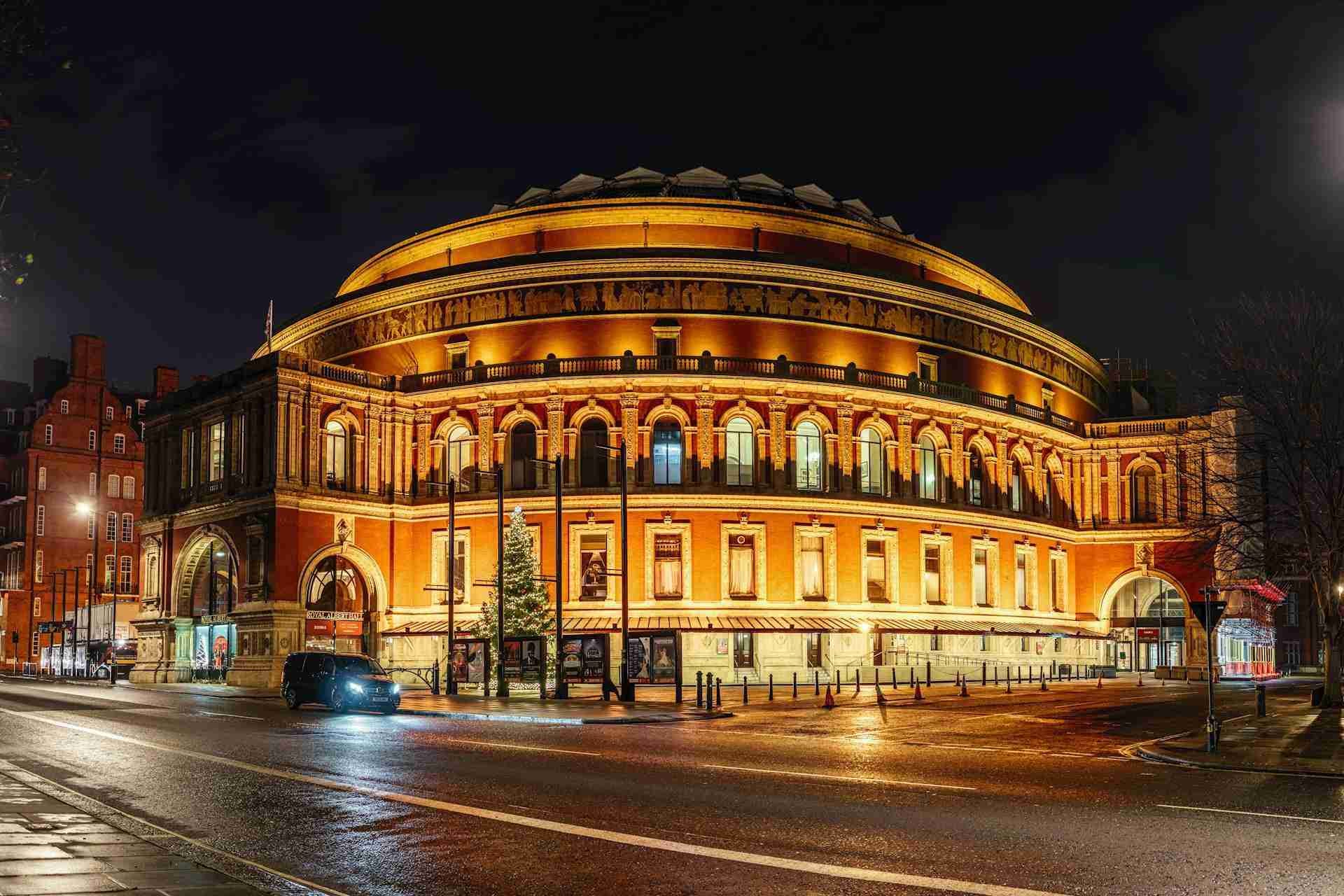
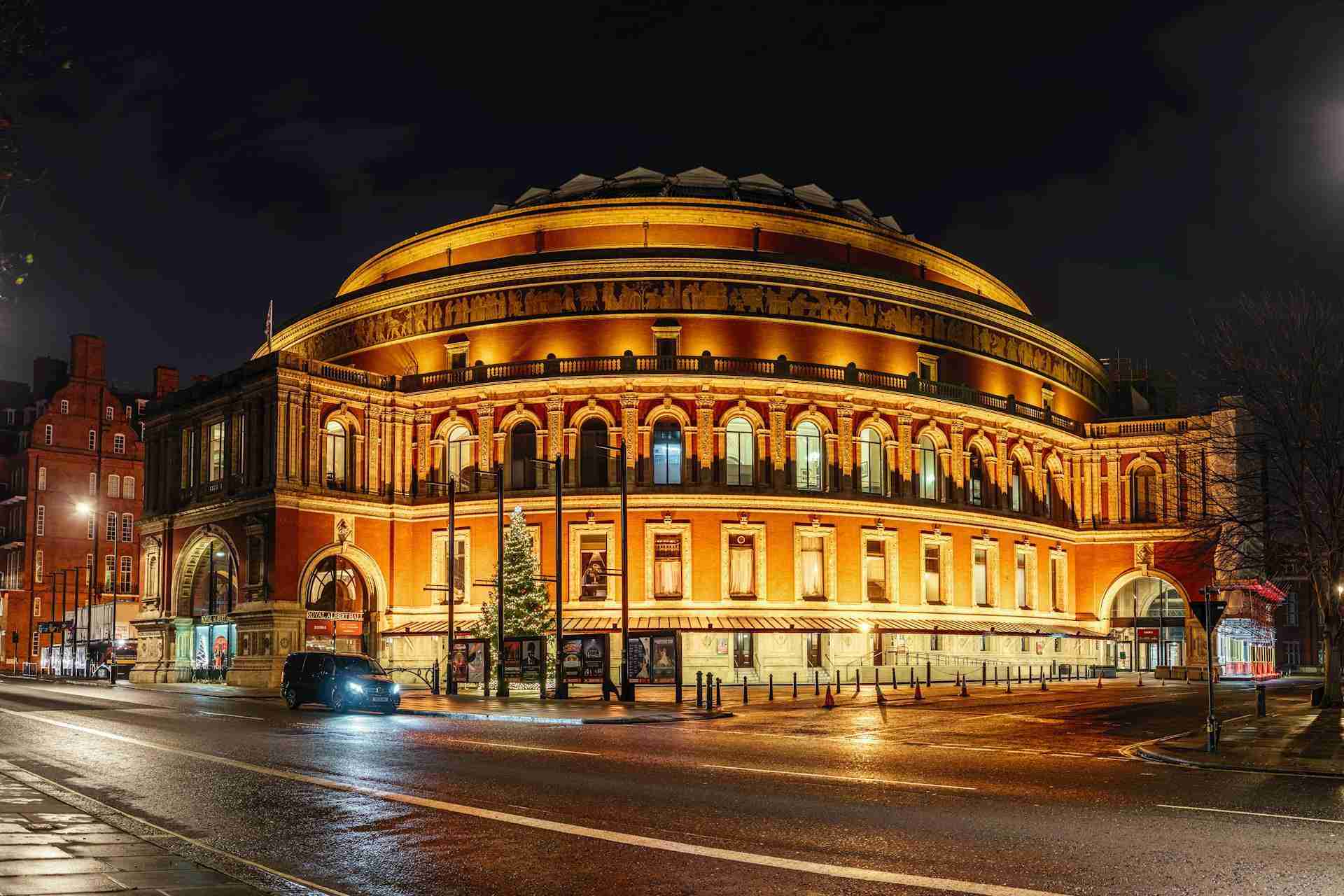
The Royal Albert Hall is one of London's most famous performance venues and a great place for photographers who enjoy shooting architecture with personality and history. Opened in 1871 and inspired by Italian Renaissance design, the building's round shape and richly detailed exterior stand out among London's more typical rectangles. Its ornate red brick and terracotta exterior, topped with a distinctive glass and iron dome, make for striking images any time of day. Nearby Exhibition Road gardens and tree lined streets give you plenty of space to step back and find your own angle on the hall. This location works well for photographers who want strong architectural detail, interesting light and shadow, and a connection between historic design and a busy modern city.
Best Photography Opportunities
• Exterior Views and Curved Form
One of the first things you'll notice about the Royal Albert Hall is its unusual circular shape. From across the surrounding gardens or open streets, you can frame the full round form with the dome and patterned exterior tiles in view. A wide angle lens helps you get the whole building in the frame without distortion, while a standard zoom can focus on specific sections of the facade. The light changes nicely throughout the day, so early morning and late afternoon cast soft shadows that bring out the relief in the stone and brickwork. Shooting around golden hour also gives you warm tones on the exterior that feel inviting and rich without being harsh.
• Detail Shots of Terracotta and Tile
The hall's exterior is rich with decorative terracotta and patterned detail that reward close attention. You can walk around the perimeter and find repeating tiles, sculptural flourishes, and ornamental arches that make great subjects for tighter compositions. These details work well in diffused light on overcast days when you don't have to worry about harsh shadows. Moving in close with a short telephoto or standard zoom lets you isolate patterns and shapes that might be lost in a wider shot. Working this way gives you a visual series that complements the broader architectural pictures.
• Framing from Kensington Gardens
One of the best places to photograph the Royal Albert Hall in its broader setting is from across Kensington Gore, near the Albert Memorial in Kensington Gardens. From this position, you can frame the hall through the trees or include the elaborate Victorian monument in the foreground for a layered composition that ties together two key landmarks. The morning and late afternoon light angles work well from here, highlighting the hall's curved facade and catching reflections off the dome. A wide or standard lens helps you place both the memorial and the hall into context, while longer lenses let you zoom in on architectural details. This area also gives you enough space to move around and experiment with different angles as the light changes.
• Interior Auditorium and Curved Lines
If you visit during a performance or on a tour, the inside of the Royal Albert Hall offers a completely different but equally rewarding set of photo subjects. The sweeping circular auditorium, rows of seats, and intricate ceiling details give you strong lines and layered shapes to work with. A fast lens helps if you're shooting in low light during a concert, while a standard zoom is useful for framing the curve of the stage and audience areas. Look for moments when light from the stage or house lighting creates patterns on the seats or architecture, as these often make more interesting photos than a straightforward interior shot.
• Nighttime and Light Play
The hall is beautifully lit after dark, with gentle floodlights that highlight its round shape and decorative surface. Night photography here is approachable because the lighting is even and never too harsh. Using a tripod helps you get clean images as soon as the light fades, and long exposures along the street let you include passing buses or cars for a bit of motion. Reflections from nearby wet pavement after rain also add interest and mood. The contrast between the warmth of the building's lights and the night sky can make for memorable evening scenes.
Best Time to Visit
The building is photogenic any time of year, but light conditions matter most for how your images turn out. Early morning offers calm streets and soft light on the hall, which is great for quieter compositions. Late afternoon and golden hour bring warmth and long shadows that emphasize texture and shape. Night and twilight are excellent for capturing the building's exterior lighting and reflections. Overcast days work well for detail shots because the even light keeps shadows soft and lets you focus on patterns and surfaces.
How to Get There
The Royal Albert Hall is located on Kensington Gore in central London, near Exhibition Road and Hyde Park. It is easily reached by public transport, with several Tube stations within walking distance including South Kensington, High Street Kensington, and Knightsbridge. Buses and taxis serve the area as well, and the surrounding streets offer places to pause with your camera. There is no cost to photograph the exterior, though interior images may require a ticket for a performance or a tour. The paths around the hall are flat and easy to navigate with camera gear.
Recommended Photography Gear
A wide angle lens is useful for capturing the full round structure and including surrounding context like gardens or street scenes. A standard zoom lens gives you flexibility to jump between architectural detail and mid‑range framing. A short telephoto can help isolate decorative elements and patterns without getting too close. A tripod is helpful for interior work in low light and for night photography of the exterior. A polarizing filter can assist on bright days by reducing reflections on glass and deepening sky tones.
Nearby Photography Locations
Just a short walk away, these two landmarks offer grand architecture and sculptural detail. Both work well in soft light and are great for detailed architectural studies.
• Hyde Park and Kensington Gardens
These adjacent parks provide expansive landscapes, formal paths, and open skies. Sunrise and sunset are particularly rewarding times to shoot here.
• Science Museum Exterior and Courtyard
The modern lines and clean surfaces of the Science Museum contrast nicely with the Victorian style of the Royal Albert Hall. It gives you a chance to work with varied architectural languages.
• Albert Memorial in Kensington Gardens
This ornate memorial opposite the hall offers strong formal lines and sculptural detail in a green setting. Early morning light works especially well here.
A few minutes away by foot, this historic cemetery provides quiet, atmospheric stonework and tree‑lined lanes that work beautifully in softer light.
The Royal Albert Hall is a place where old and new meet, offering both architectural strength and approachable public space. Whether you focus on its curving form, ornamental surface, or how it sits amid London's cultural quarter, it gives you plenty of material to explore with your camera.
Comments
Loading comments…