
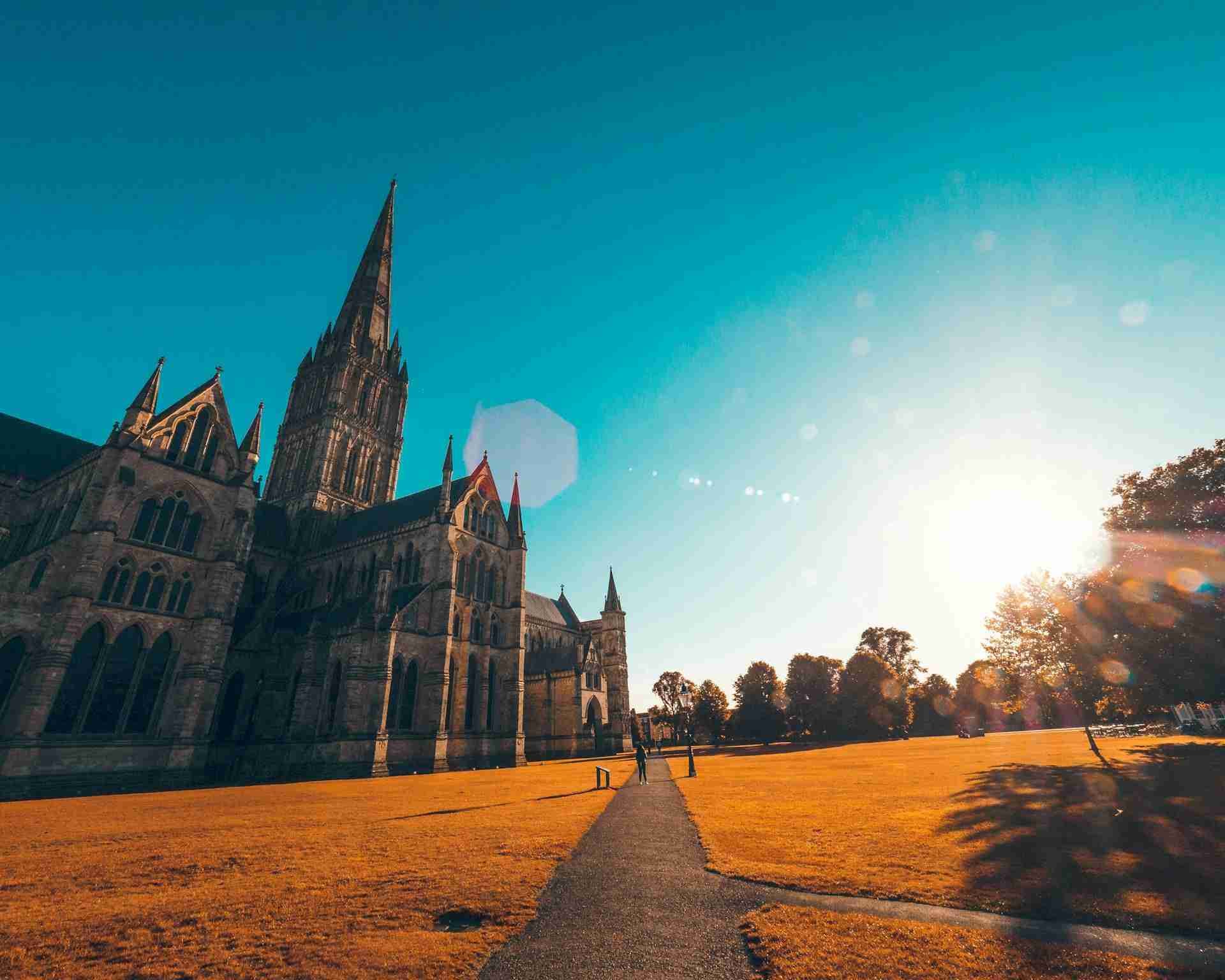
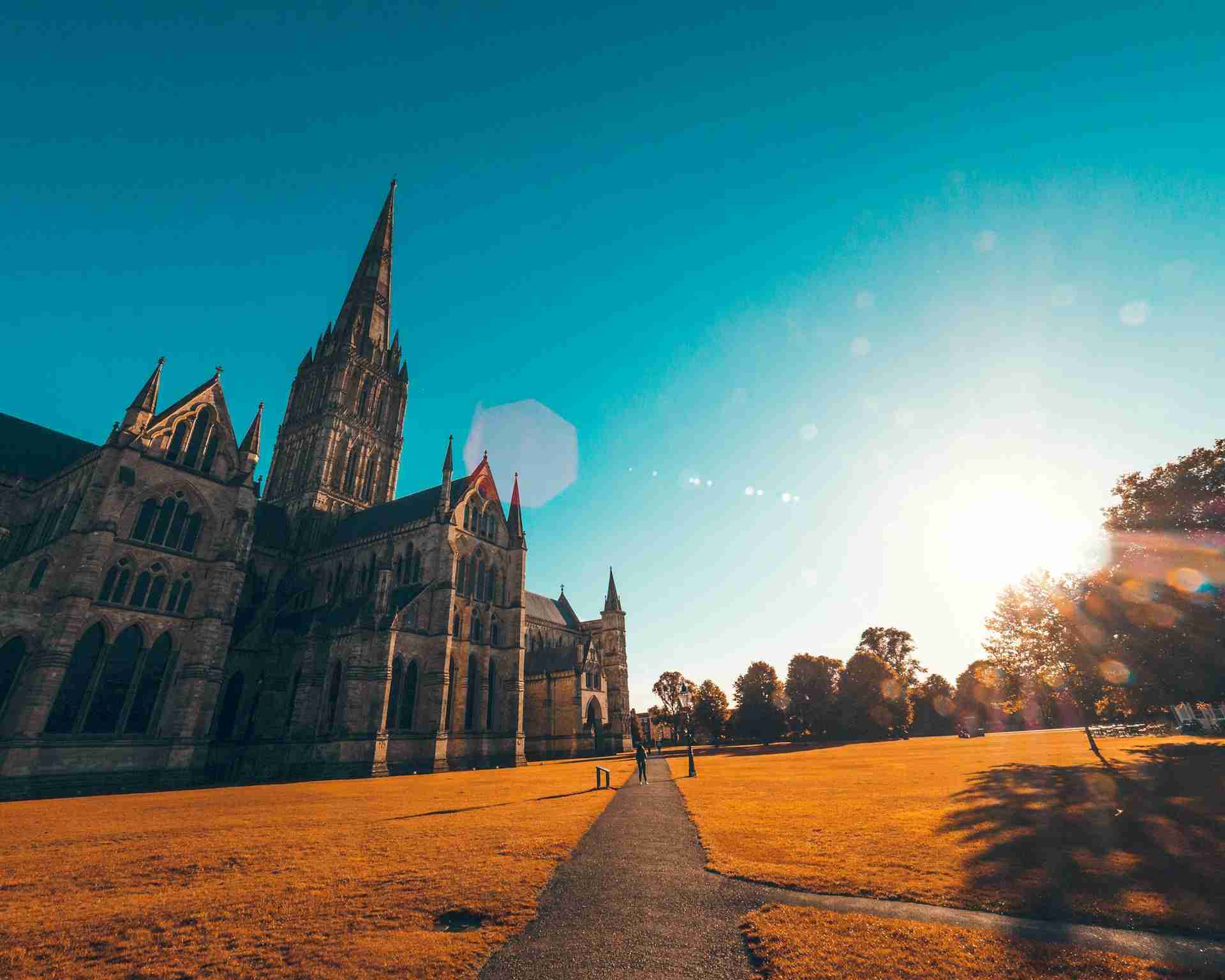
Salisbury Cathedral dominates the skyline of its namesake city with a spire that climbs higher than any other in the United Kingdom. Constructed primarily in the 13th century, the cathedral's Early English Gothic style is defined by sharp verticals, intricate stone tracery, and an interior nave flooded with natural light. Surrounded by the largest cathedral close in Britain and set against the low hills and changing skies of Wiltshire, it offers photographers a compelling balance between architectural grandeur and open landscape. Whether shooting wide compositions of the spire from the surrounding meadows or capturing the subtle play of light and shadow inside the cloisters, Salisbury Cathedral rewards patience and precision in every frame.
Best Photography Opportunities
• The Cathedral Spire from the Water Meadows
One of the most celebrated views of Salisbury Cathedral comes from the west, across the River Nadder and the surrounding water meadows. This location provides open sightlines to the spire rising above trees and rooftops, especially striking during sunrise when light hits the stone at a low angle. A standard zoom lens allows for both tight vertical compositions and wide scenic shots with river reflections and grazing animals. Mist is common in early morning, adding soft atmosphere to the scene. Framing with branches or fences in the foreground helps establish depth and context.
• The Cloisters and Chapter House
Inside the cathedral close, the cloisters provide a peaceful space for exploring rhythm and symmetry. The repeating arches and ribbed vaults create strong leading lines that draw the eye toward the center of the frame. Midday light filtering through the stone windows offers soft illumination that brings out texture without harsh contrast. Adjacent to the cloisters, the octagonal Chapter House contains one of the four surviving copies of the Magna Carta, and offers ornate carvings and stained glass that reward close, detail-oriented work. A wide-angle lens and tripod are especially useful here.
• Interior Nave and Choir Vaulting
The main nave of the cathedral rises with layered stone columns and delicately ribbed vaulting that leads the eye toward the high altar. Use a symmetrical central composition to emphasize the vertical lift and architectural rhythm. The interior benefits from abundant natural light that enters through clerestory windows, but a slower shutter speed may be required to balance exposure. Including visitors in the frame can help provide scale, while a longer lens allows you to isolate patterns in the stone or pick out sculptural details. Overcast days are excellent for reducing contrast and preserving the soft palette of the interior.
• Details of Carvings, Ironwork, and Stained Glass
Salisbury Cathedral rewards close-up photography with finely crafted elements throughout its structure. Look for decorative ironwork on doors, foliage carvings in capitals, and intricately patterned stained glass windows. Use a macro or standard lens with a fast aperture to isolate these subjects and create pleasing background blur. Morning and afternoon provide the most flattering light angles for these shots, especially near side chapels and entranceways. Working at slower shutter speeds can enhance texture in stone and leaded glass.
• Cathedral Close and Lawn Views
The open lawns and perimeter paths surrounding the cathedral provide space for clean, balanced compositions that showcase the building's full height. These locations work well during golden hour, especially with soft backlighting or long shadows. Use trees, statues, or low walls to build a foreground, or place people at a distance to emphasize the scale of the structure. A polarizing filter can help deepen the sky and reduce reflections on windows. Seasonal variations in foliage and light direction can dramatically change these scenes, making them worth revisiting.
Best Time to Visit
The cathedral is open year-round, and each season offers distinct photographic opportunities. Spring and autumn provide the most pleasing light conditions, with lower sun angles, gentle skies, and warmer color tones on the stone. These seasons also bring subtle changes in the surrounding foliage that frame the building beautifully.
Summer offers longer daylight hours and more consistent access to the interior, but mid-day light can be harsh, especially on the west-facing exterior. Early mornings and late afternoons remain the best times for exterior work. Winter can bring dramatic skies, bare tree framing, and the potential for frost or snow, though daylight hours are limited and interior lighting becomes more critical.
Interior photography is permitted for personal use, but tripods are only allowed with prior arrangement. Early weekday mornings are the quietest times to shoot inside, especially in the cloisters and nave. Seasonal services, exhibitions, and concerts may affect access to certain areas, so check ahead when planning a detailed shoot.
How to Get There
Salisbury Cathedral is located in the center of Salisbury, Wiltshire, and is easily accessible by train, car, or bus. The cathedral is a fifteen-minute walk from Salisbury railway station, which has regular service from London Waterloo and other major cities. Public parking is available at several pay-and-display lots within walking distance of the cathedral close.
The entrance to the cathedral close is open to pedestrians, with the main entrance off St. Ann Street. Access to the interior is available during visiting hours, and while entry is free, donations are encouraged. Commercial or tripod-based photography requires advance permission from the cathedral office. The entire area is well-signposted, and maps are available online and on-site to help orient photographers.
The cathedral sits within a large enclosed green space, so expect to spend time walking around the perimeter to find optimal compositions. The surrounding meadows and riverside paths extend west and south of the cathedral grounds, making it easy to combine architectural work with more natural and atmospheric landscapes.
Recommended Photography Gear
A wide-angle lens is crucial for capturing the full scope of both the exterior and interior, particularly in the nave and cloisters. A standard zoom (24–70mm) provides flexibility for tighter compositions and allows for seamless transitions between landscape and detail work. A telephoto lens (70–200mm) is useful for compressing architectural elements and isolating features in the spire or stonework from a distance.
A tripod is highly recommended for shooting in low light inside the cathedral, though usage may be restricted to certain times or with permission. A polarizing filter is useful outdoors to control sky contrast and reduce window glare. Bring lens cloths and a blower for dust, as conditions can shift between damp grass and old stone. A lightweight bag and quiet shutter mode are helpful when working inside the cathedral to minimize disruption.
Footwear with good grip is useful for walking along wet or muddy paths in the surrounding fields. Be prepared for a range of lighting conditions, especially if combining indoor and outdoor shooting in one visit.
Nearby Photography Locations
Located just north of the city, this Iron Age hillfort offers wide views across the Wiltshire countryside and toward Salisbury Cathedral's spire. It's especially good for sunrise and sunset shots with dramatic sky potential and historic earthworks.
These fields southwest of the cathedral offer the classic Constable-inspired view of the spire from across the River Nadder. Misty mornings and soft evening light make this one of the best spots for landscape compositions featuring the cathedral.
• The Cathedral Close
Beyond the main structure, the close includes historic buildings, tree-lined paths, and quiet corners with framed views. This area is perfect for more intimate storytelling and layered street-style compositions.
A short drive west, Wilton House features landscaped gardens, reflecting pools, and a stately home with classical facades that provide a refined counterpoint to the cathedral's gothic lines.
Though a very different kind of location, Stonehenge is under thirty minutes away by car and offers otherworldly sunrise opportunities. Combining both sites in a day allows for a rich contrast in scale, history, and photographic texture.
Salisbury Cathedral stands as one of the most visually and structurally rewarding religious sites in England. With its towering spire, thoughtful design, and generous surrounding space, it offers photographers a wealth of material in every season and under any sky.
Comments
Loading comments…