
Saunton Sands stretches three miles along the Atlantic with golden tones that shift throughout the day. Backed by the Braunton Burrows Biosphere Reserve, this beach is more than just a popular surf and walking destination. It is a dynamic landscape of reflection, movement, and open space. The flat, expansive sand at low tide becomes a mirror for the sky, while the rolling dunes behind it provide form and texture under soft, directional light. Whether you are drawn to wide seascapes, abstract minimalism, or the quiet narrative of human presence within nature, Saunton offers scenes that are both technically rich and creatively open. It is a location that encourages photographers to think in layers, observe closely, and return often.
Best Photography Opportunities
• Low Tide Mirror Effects
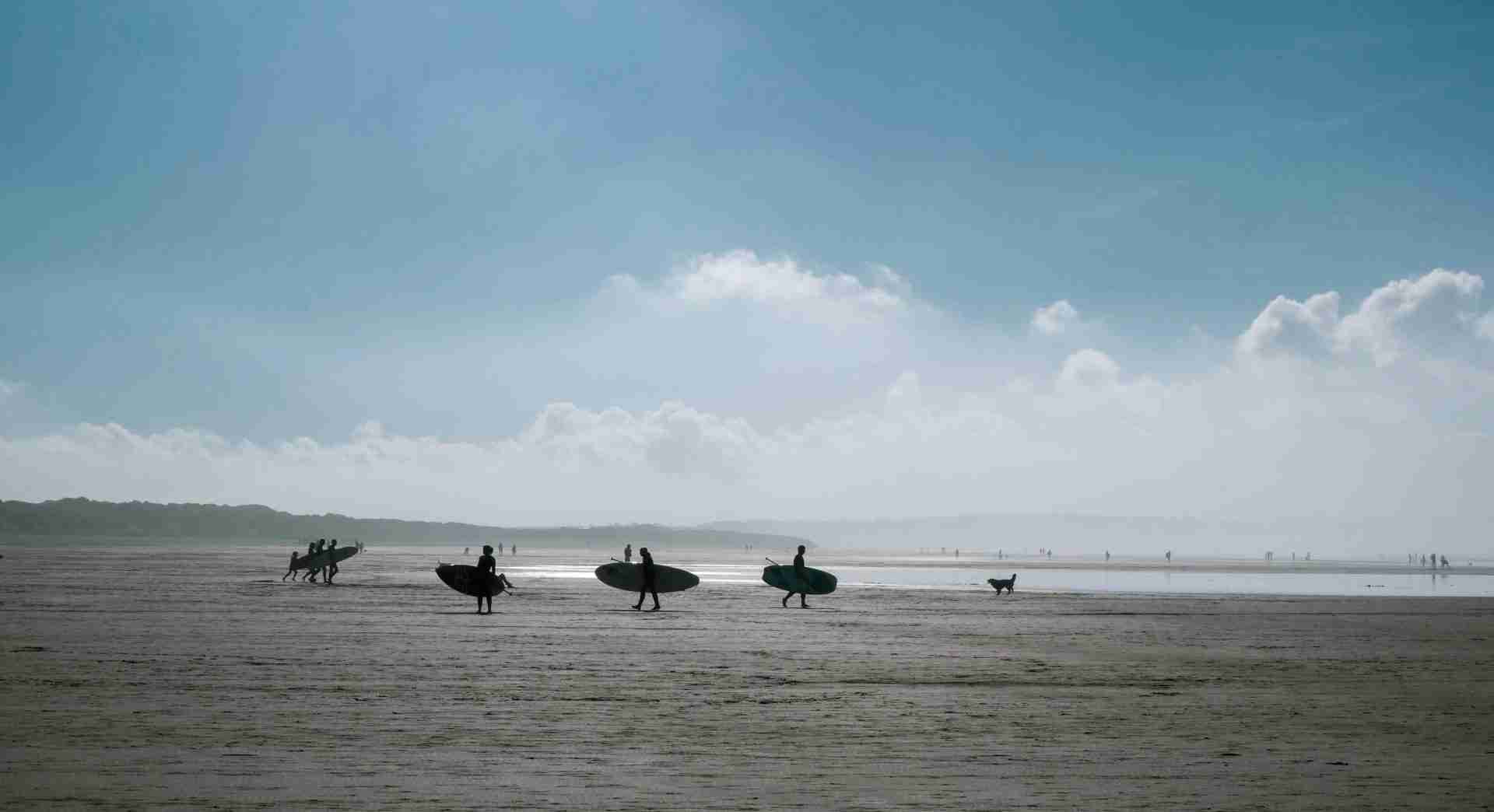
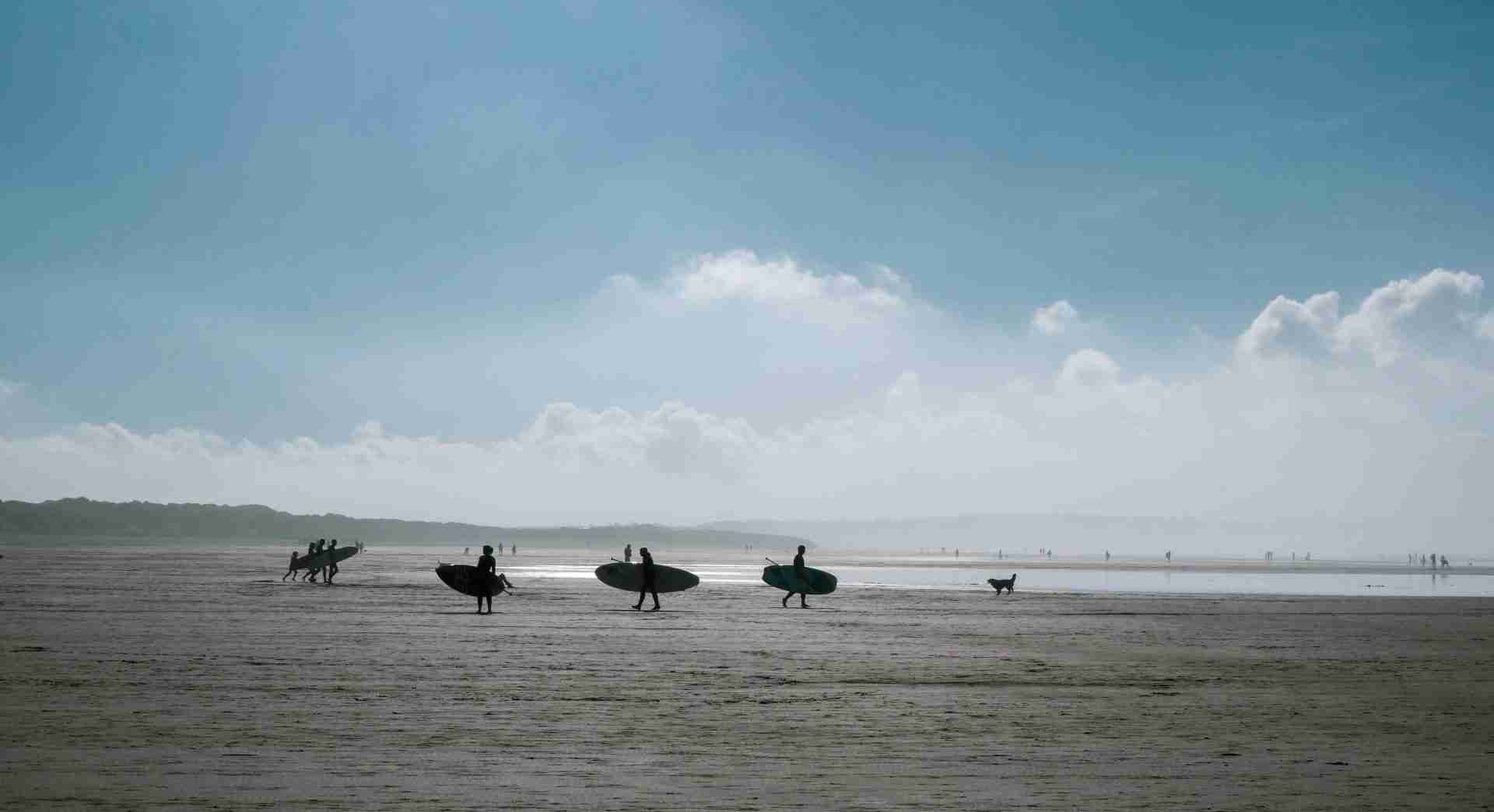
As the tide pulls out, Saunton reveals a flat stretch of wet sand that reflects the sky perfectly. These conditions are ideal for minimalist compositions, silhouettes, and abstract light studies. Position your camera low to the ground to emphasize depth, and work with wide focal lengths to exaggerate the scale of the beach. Human subjects walking across the flats can serve as small but powerful focal points, emphasizing the sense of space. Golden hour adds warmth and contrast, while overcast skies create a soft, painterly tone.
• Shifting Textures and Light in Braunton Burrows
The dune system behind the beach is one of the largest in the UK and provides a striking contrast to the openness of the shoreline. Early morning or evening light grazes the ridges and grasses, creating lines and shadows that shift with the sun. A short walk into the burrows reveals trails, wind blown sand, and natural patterns that reward both wide landscape framing and close up detail work. Overcast days are excellent for focusing on texture and subtle color without harsh shadows. Keep an eye out for native plant life, especially in spring when wildflowers begin to dot the slopes.
• Silhouettes of Surfers and Beach Walkers
Saunton's popularity with longboarders and casual surfers makes it a perfect location for documenting quiet, informal moments along the water. Use a mid range telephoto lens to photograph figures against the glowing surf during late afternoon light. Silhouettes of surfers walking across the shallows are particularly strong when paired with reflections or rippled textures in the sand. These images benefit from a simple background and a clean horizon to highlight gesture and form. When the light is low and directional, even everyday movements become visually compelling.
• Aerial Views of Sand Patterns and Coastal Flow
Flying a drone over Saunton reveals the scale and rhythm of the beach in a new way. At low tide, the retreating water leaves behind layered textures that resemble topographic drawings, and these abstract shapes are especially strong in soft side light. The contrast between the structured lines of the dunes and the smooth openness of the beach creates a natural visual tension. From above, you can also frame surfers paddling out, or walkers casting long shadows across the sand. Always check local drone regulations and avoid flying over crowds, especially during the summer season.
• Long Exposure Seascapes and Cloud Movement
With such a wide horizon and consistent tidal motion, Saunton is an excellent place for slow shutter photography. Use a neutral density filter and sturdy tripod to extend your exposure time, smoothing out the sea while allowing clouds to drift through the frame. Early morning and late evening provide the best light, but overcast days can create subtle, moody results with soft contrast. Position large foreground elements like driftwood or rocks to anchor your frame and provide scale. These images often benefit from a lower perspective and careful attention to symmetry.
Best Time to Visit
Saunton Sands is photogenic throughout the year, but the shoulder seasons of spring and autumn offer the most balanced light and manageable conditions. During these times, the dunes are rich with texture and color, and the beach is less crowded than in the peak of summer. Early morning shoots are particularly productive, as low tides often coincide with sunrise and the beach is quiet. Autumn brings warmer tones in both the grasses and sky, while winter can deliver dramatic cloud formations and isolated scenes ideal for minimalist compositions. Summer sunrises are early but can be worth the effort, as long light sweeps across the flats and surf. Always consult tide charts before your visit, as the visual character of the beach changes completely depending on water level.
How to Get There
Saunton Sands is located on the North Devon coast, near the village of Braunton. It is accessible by car via local roads, with a public car park directly above the beach. From there, a wide path leads down to the shoreline. The beach is open access and free to explore, though parking fees may apply during peak seasons. The area is popular, especially in summer, so early morning visits are best for photographers seeking quiet and uninterrupted conditions. There are basic facilities near the car park, including restrooms and a café, which makes longer shoots more manageable.
Recommended Photography Gear
A wide angle lens is essential for capturing the scale of the beach and the dramatic reflections during low tide. A mid range zoom works well for framing surfers, walkers, and more isolated sections of the dunes or sea. For long exposure work, pack a neutral density filter, circular polarizer, and a sturdy tripod that can handle wind and shifting sand. A drone is a valuable tool here, revealing aerial compositions that are otherwise impossible to see from the ground. Make sure your drone is rated for coastal wind conditions and that you have extra batteries, as the vastness of the site can quickly drain power. Waterproof footwear and a weather sealed bag or rain cover for your gear are strongly recommended, especially when walking across tidal flats or working close to the water's edge.
Nearby Photography Locations
This protected dune system stretches inland from Saunton and offers unique textures, seasonal plant life, and wildlife. Early morning is best for soft light and long dune shadows.
Just north of Saunton, Croyde offers a tighter, more enclosed beach with rocky headlands that work well for dramatic compositions and surf action photography.
A short drive or hike from Saunton, this headland offers panoramic views back over the coast and works well for sunset, especially when clouds are moving through the sky.
Located further around the estuary, Instow is a quieter shoreline that provides wide estuary views, anchored boats, and soft pastel skies in the evening.
Known for its surf and size, this beach offers varied shooting conditions, from rock pools and cliffs to sweeping golden sand. It is especially good at sunrise when the tide is low.
Comments
Loading comments…