
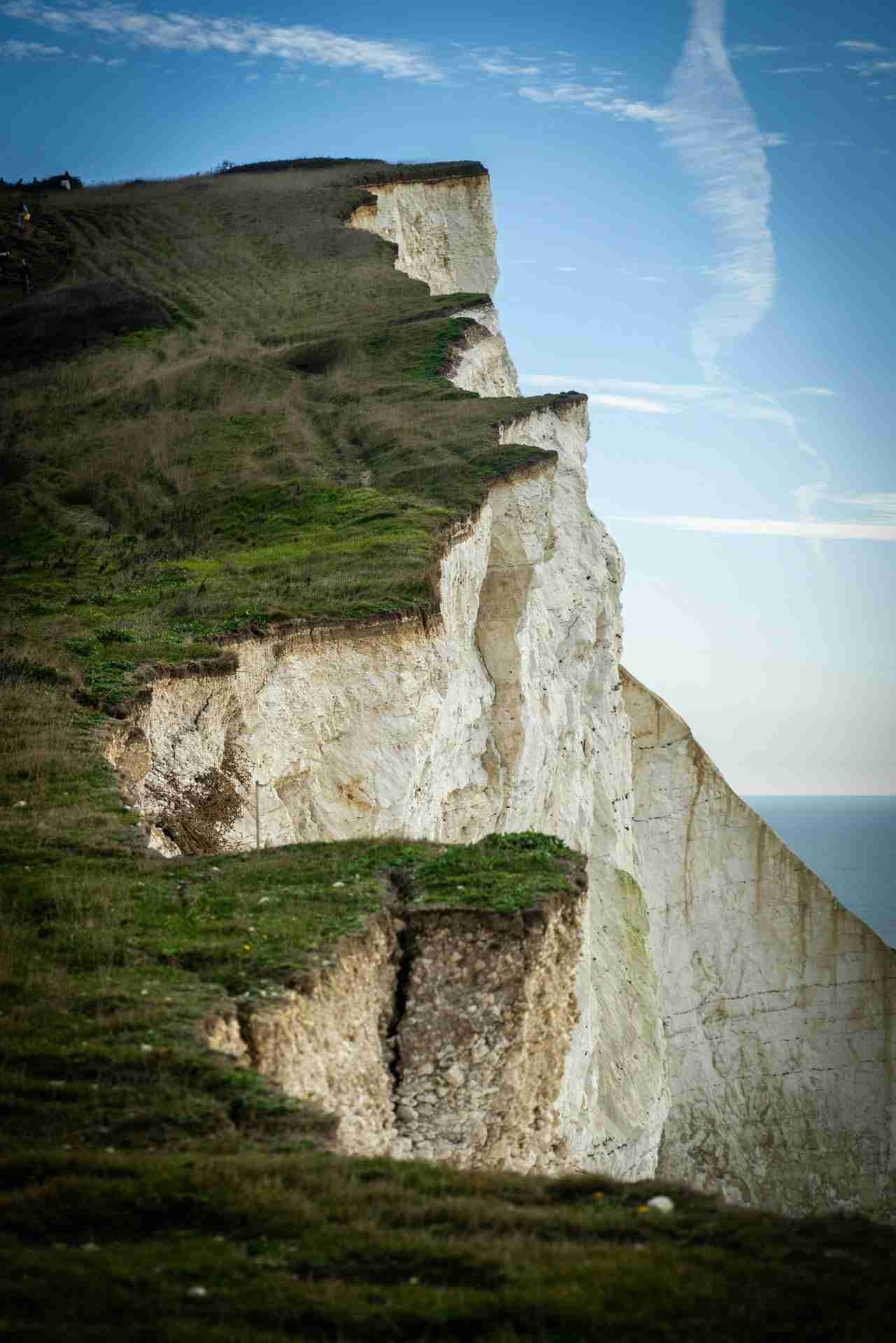
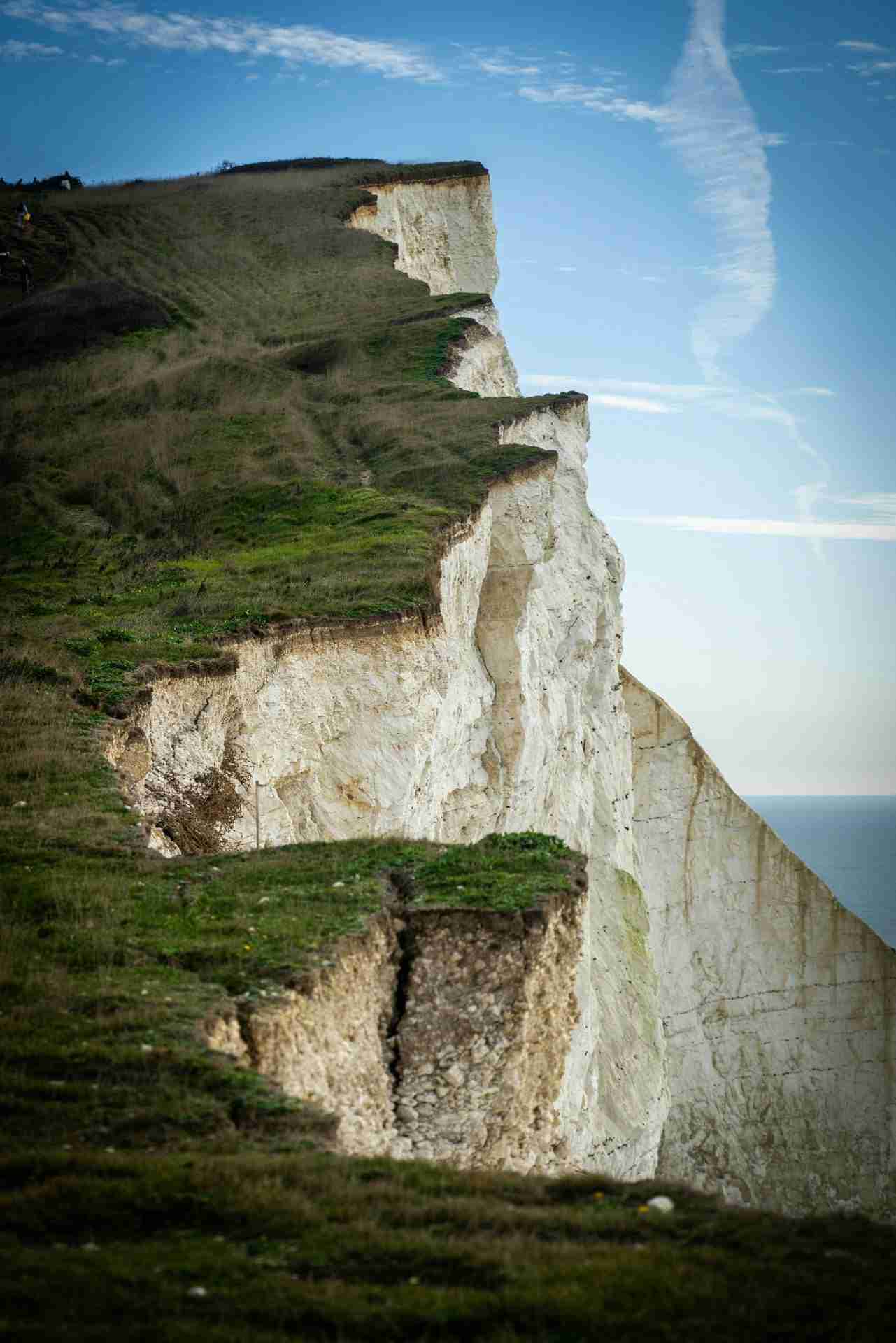
Rising in sheer white walls above the English Channel, the Seven Sisters Cliffs are one of England's most photogenic coastal landscapes. Stretching between Seaford and Eastbourne in East Sussex, these dramatic chalk cliffs command attention with their clean vertical faces, rhythmic formation, and the way light dances across sea and slope throughout the day. Their setting within the South Downs National Park lends a sense of openness and grandeur, with uninterrupted horizons and a constant interplay of land, sea, and sky. Photographers will find opportunities for both sweeping panoramas and finely composed vignettes—especially where cliff edges, tidal flows, and inland curves intersect to create dynamic natural geometry.
Best Photography Opportunities
• Expansive Cliffline from Seaford Head
: Perhaps the most widely captured view of the Seven Sisters begins at Seaford Head, where the undulating line of chalk cliffs stretches eastward across the landscape, meeting the sea in a succession of clean, vertical faces. From the trails above South Hill Barn, the foreground is rich with textural grasslands and weather-beaten wooden fences—ideal for anchoring wide-angle compositions. A lens in the 16–35mm range captures the full breadth of the cliffline, while longer focal lengths (70–200mm) compress the sequence of headlands, emphasizing repetition and form. This location is particularly productive in early morning or late afternoon, when soft directional light sculpts the chalk faces and reveals subtle contours in the valley floor below. Wait for moments when the sky casts moving shadows across the cliffs to add drama and variation.
• Tide-Worn Drama at Hope Gap
: At low tide, descend the stepped path at Hope Gap to stand beneath the towering cliffs themselves. This is one of the few places where you can shoot upwards at the chalk walls and fully appreciate their scale. The beach here is strewn with large boulders and chalk debris, creating strong visual contrast with the clean lines above. Use a wide-angle lens from a low position to make the cliffs rise dramatically in the frame, and bracket exposures if the light varies significantly between sky and shadowed cliff face. Foreground elements—such as tide pools, algae-covered stones, or weathered wooden posts—add grounding interest and can help lead the viewer's eye toward the vertical mass above. On overcast or misty days, the setting takes on a moody, minimal character well suited to long exposures and monochrome work.
• Layered Landscapes from the Cuckmere Valley Ridges
: Inland footpaths on either side of the Cuckmere Valley offer raised vantage points where the valley's sweeping curve and meandering river can be framed against the backdrop of the sea cliffs. These elevated perspectives are perfect for capturing layered compositions, especially in soft light or mist. Use a medium telephoto (100–300mm) to compress elements like grazing sheep, winding paths, or the famous coastguard cottages perched on the bluff near the cliff edge. In spring and autumn, ground mist often fills the lower portions of the valley at sunrise, allowing the hills and cliffs to emerge in silhouette or golden rim light. Composing with a mix of natural geometry—meanders, ridgelines, and fence posts—lets you create rhythm and depth across the frame.
• Dynamic Motion and Abstracts at Birling Gap
: This part of the coast offers not only clifftop views but access down to the pebble beach, where motion-based compositions come into their own. Long exposures work particularly well here—set up during mid or low tide to blur the waves around chalk boulders or to smooth the sea into a tonal field beneath the towering backdrop. A 10-stop ND filter combined with a tripod will allow exposures of 30 seconds or more, rendering moving clouds as streaks and adding a surreal stillness to the waterline. Look for strong juxtapositions—like sharp cliff edges rising from a softened sea surface—or isolate textures in wet stone and lichen-covered rock using a telephoto lens. These studies of light, line, and contrast often work best under moody skies when the light is soft and evenly diffused.
• Sunset Silhouettes and Maritime Atmosphere at Beachy Head
: The highest and most exposed section of the headland, Beachy Head provides commanding views out across the Channel and westward back along the Seven Sisters. From here, the vast chalk faces fall away toward the distinctive red-and-white lighthouse far below. As the sun begins to drop, the cliff edges glow with side light while the sea flattens into gold and pastel tones. Position yourself to include the lighthouse in your frame—either as a central anchor or offset for a more open, minimalist composition. A medium telephoto (70–200mm) works well here to frame the lighthouse against the sea and compress the vertical drop. Alternatively, use an ultra-wide to capture the vast open skies and layered clifftop textures. Blue hour can be especially rewarding, as the final light in the sky reflects off the chalk and highlights the path contours winding along the edge.
Best Time to Visit
The Seven Sisters Cliffs reward visits year-round, but the character of the landscape varies significantly with the season, weather, and time of day. Spring (April to June) is one of the most photogenic periods. Grassy headlands are lush and vibrant, wildflowers bloom along footpaths, and early mornings often bring mist or dew that softens the valley floors. Sunrise light strikes the cliff faces directly, creating ideal conditions for side-lit compositions from Seaford Head and Cuckmere Haven.
Summer provides longer days and clearer skies, but harsher midday light can flatten detail and contrast. Early and late in the day remain the best windows for image-making, especially when warm tones bathe the cliffs and tidal patterns emerge in low light. In autumn, the grasses shift to gold and rust, and the sun stays low in the sky for longer, increasing your shooting hours. Morning ground fog often settles in the Cuckmere Valley, offering beautiful layers of mist and hill.
Winter brings drama—stormy seas, fast-moving skies, and high-contrast lighting. If you're willing to brave the wind, the payoff includes dynamic skies and the chance to shoot under quickly changing conditions. This is the best season for monochrome interpretations or long-exposure work under turbulent clouds.
The cliffs face south-southeast, so sunrise and morning light will strike them most directly. For strong side-lighting and warm tones, aim for golden hour either early or late, and always consult tide charts before planning beach-level shots. Low tide reveals rock shelves and beach access, while high tide obscures foreground options and may block certain return routes entirely.
How to Get There
The Seven Sisters are located within the South Downs National Park between Seaford and Eastbourne in East Sussex. For access to Seaford Head and Cuckmere Haven, begin at South Hill Barn car park, at the end of Chyngton Way in Seaford. From here, well-marked footpaths lead directly to the clifftop trails and down to the Cuckmere estuary. The Hope Gap steps are also accessible from this point, offering beach-level access at low tide.
Exceat Bridge, home to a visitor centre and large car park, is another excellent starting point, especially for exploring the inland trails and river valley. From here, a well-maintained footpath follows the river to the coast, where you can approach the cliffs via Cuckmere Haven.
Birling Gap and Beachy Head are best accessed from Eastbourne via Beachy Head Road. Both locations have parking, and Birling Gap also includes a National Trust café and facilities. The area is well served by local buses from Brighton and Eastbourne, though a car offers more flexibility, particularly for sunrise or golden hour photography.
There are no entrance fees for walking the trails or visiting the viewpoints, though car parks may charge, particularly at National Trust sites. Drones are restricted in certain parts of the park due to safety concerns and wildlife preservation—check current regulations before planning aerial work.
Essential Gear for Coastal Drama and Minimalist Composition
Shooting the Seven Sisters Cliffs demands a versatile and weather-resistant kit. A wide-angle zoom (16–35mm) is vital for expansive views from the clifftops and shoreline, especially when incorporating sky and foreground detail. A fast standard zoom (24–70mm) works well for environmental context and framing smaller compositions with strong foreground interest like grass patterns or trail lines.
A long telephoto (70–200mm or longer) is essential for cliff compression, lighthouse isolation, and abstract studies of layered landforms or sky. A sturdy carbon-fibre tripod is non-negotiable—coastal winds can be intense even in calm weather. Neutral density filters (6- and 10-stop) expand creative options for long exposures of sea and sky, while a polarizer helps reduce glare on water and enhance contrast in clouds.
Coastal conditions can change quickly. Bring waterproof protection for your gear and wear weather-appropriate layers. Footwear with good grip is important on slick grass and rock surfaces. A lightweight packable rain cover or poncho is also useful, especially in winter or on exposed headlands. Keep a tide tracking app and OS map on hand, and always have a route planned to exit beach-level spots safely before the tide returns.
Nearby Photography Locations
: This wide, sweeping estuary with its snake-like river patterns offers exceptional landscape compositions. The interplay between marshland, water, and distant cliffs makes it a strong location for both panoramic and telephoto work.
: Best captured from above during golden hour or from beach level at low tide, the lighthouse stands as a clean vertical counterpoint to the chalk cliffs. Changing tides and weather provide endless variations in mood and atmosphere.
: Inland from the cliffs, this beech woodland offers quiet trails and dappled light—an excellent alternative location in variable weather. Autumn and spring foliage are particularly photogenic here.
• Newhaven Breakwater
: A stark industrial counterpart to the Seven Sisters, Newhaven offers strong geometric compositions, wave action, and long exposure opportunities around its concrete seawalls and lighthouse.
: Victorian structures, coastal promenades, and nighttime light trails make this urban setting an excellent complement to the wildness of the cliffs. Best visited at dusk or during blue hour for maximum atmosphere.
Few places in England offer the same balance of scale, simplicity, and visual drama as the Seven Sisters. The cliffs are not static—they evolve with every tide, light change, and cloud pattern. Whether you're composing expansive cliffscapes or isolating the shapes within shadow and stone, this landscape continually challenges you to see more—and to see differently.
Comments
Loading comments…